Rhyming skills development Normal Rhyming Words Worksheets for 5-Year-Olds
3 filtered results
-
From - To
Unlock your child's potential with our Rhyming Skills Development worksheets, specifically designed for 5-year-olds! These engaging and fun activities help young learners enhance their reading and phonemic awareness by focusing on normal rhyming words. Each worksheet encourages creativity while reinforcing essential language skills. Children will enjoy identifying rhyming pairs, completing fun exercises, and developing a love for language through playful practice. Designed by early education experts, our resources provide a perfect balance of learning and enjoyment, setting a strong foundation for future literacy success. Explore our collection today and watch your child's confidence grow through rhyming mastery!
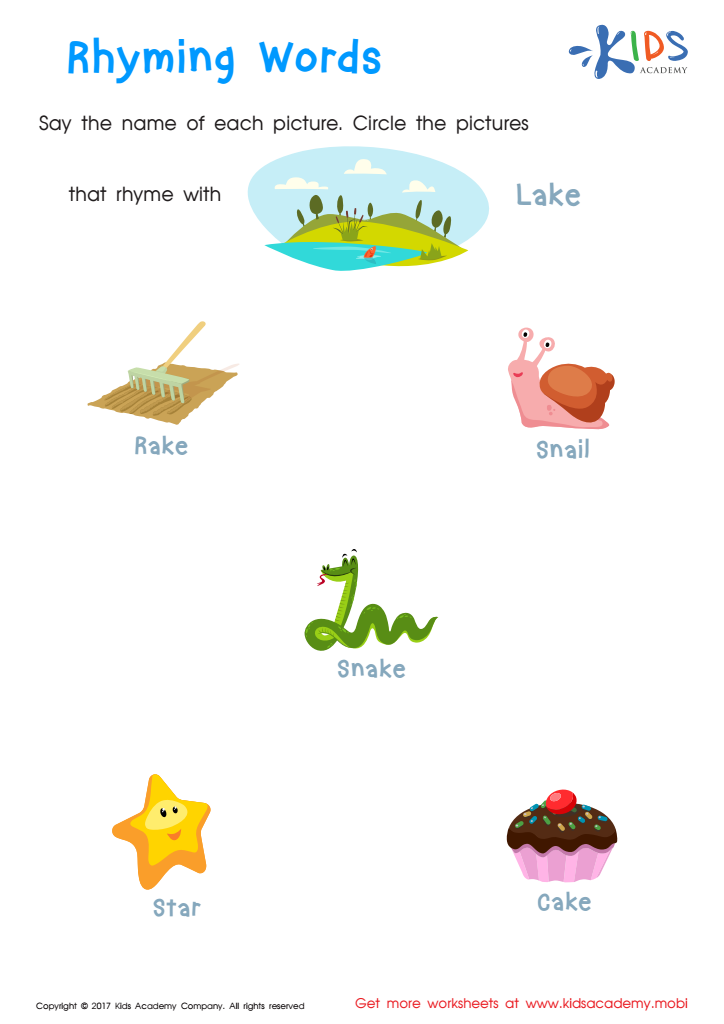
Rhyming Words Rhyming Worksheet
 Assign to My Students
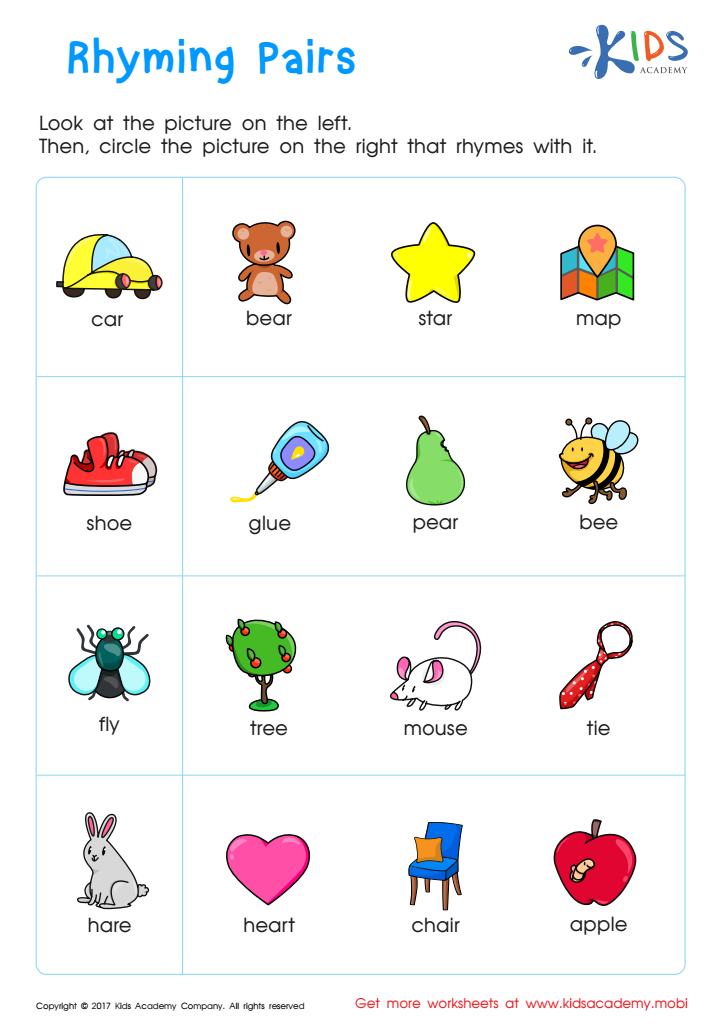
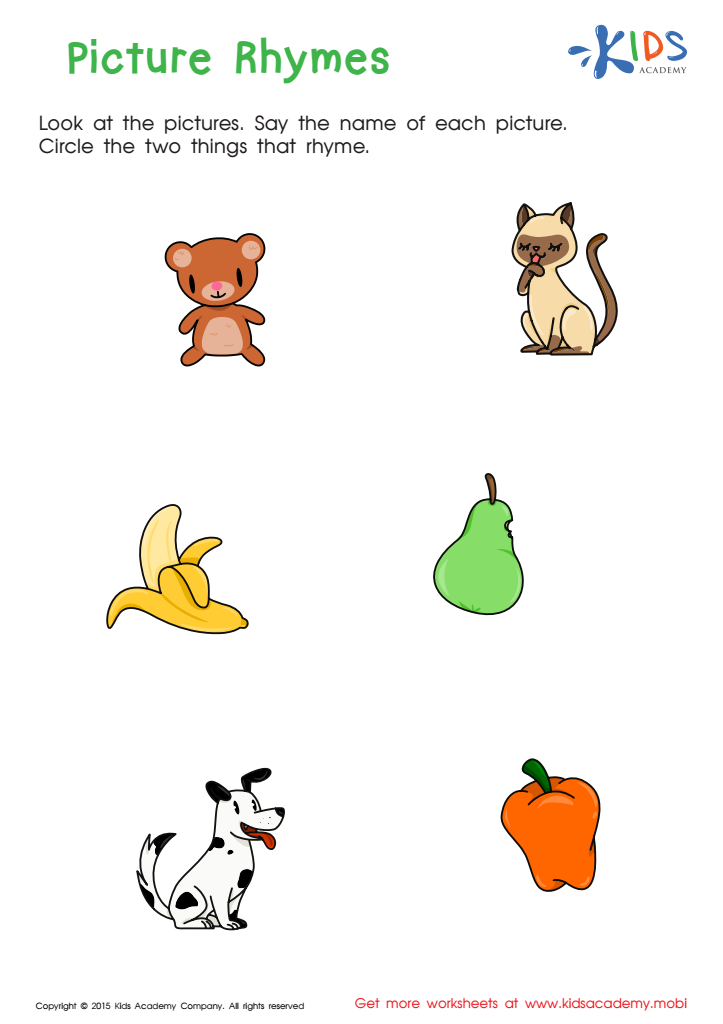
First Words: Picture Rhymes Worksheet







Rhyming skills play a crucial role in early literacy development for 5-year-olds, making it essential for parents and teachers to focus on this aspect of learning. Firstly, rhyming enhances phonemic awareness, which is the ability to recognize and manipulate sounds in spoken language. This skill is foundational for reading, as it helps children understand how words are constructed and learn to decode new words effectively.
Engaging in rhyming activities fosters vocabulary expansion, as children are introduced to new words through fun songs, poems, and stories. This process encourages creativity and language play, igniting a child's imagination and making learning enjoyable. Furthermore, rhyming strengthens memory and listening skills, as children begin to identify and recall patterns in language.
Rhyming also enhances social skills and encourages positive interactions, as group activities centered around rhyming can promote teamwork and communication among peers. Additionally, children who excel in rhyming often perform better in future literacy tasks, laying the groundwork for successful reading and writing.
Ultimately, emphasizing rhyming skills in early education paves the way for a lifelong love of language, nurturing confident communicators who can engage with the world around them.








