Categorization skills Normal Animals Worksheets for 5-Year-Olds
3 filtered results
-
From - To
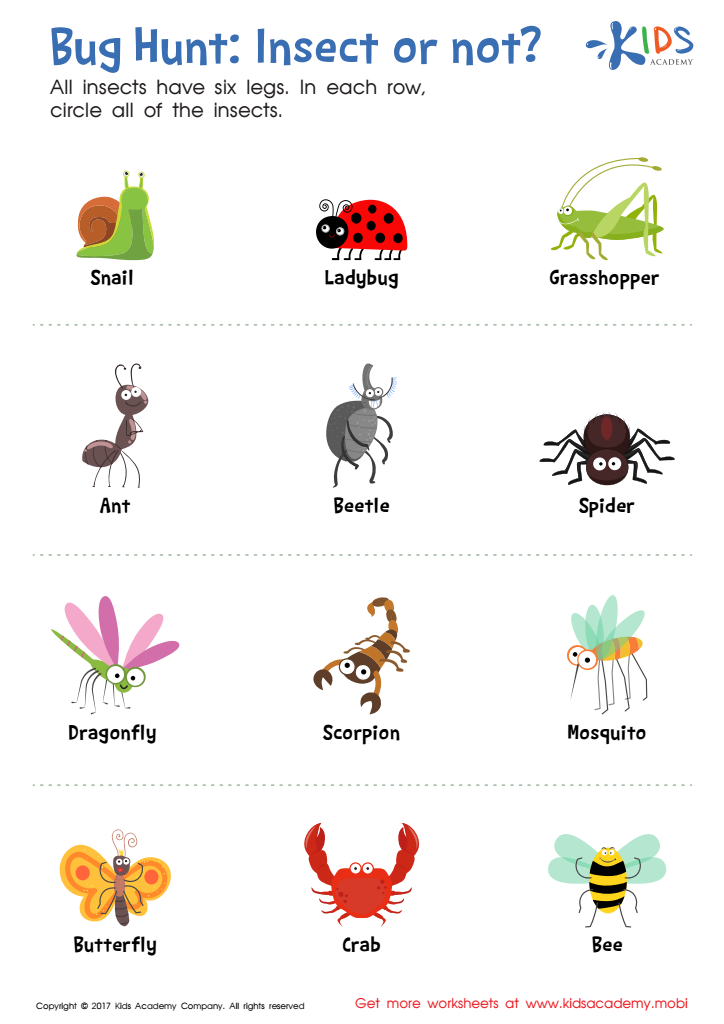
Nurture your child's critical thinking with our Categorization Skills Normal Animals Worksheets for 5-Year-Olds. These engaging worksheets from Kids Academy are designed to teach young learners how to identify, classify, and organize common animals. Through colorful and interactive activities, children will develop essential skills such as observation, comparison, and logical reasoning. Perfect for use at home or in the classroom, these resources encourage curiosity and foster a love for science. Prepare your little one for academic success with these fun and educational worksheets, tailored specifically to fit the learning needs of 5-year-olds.
 Assign to My Students

Identifying Living or Non–living Worksheet
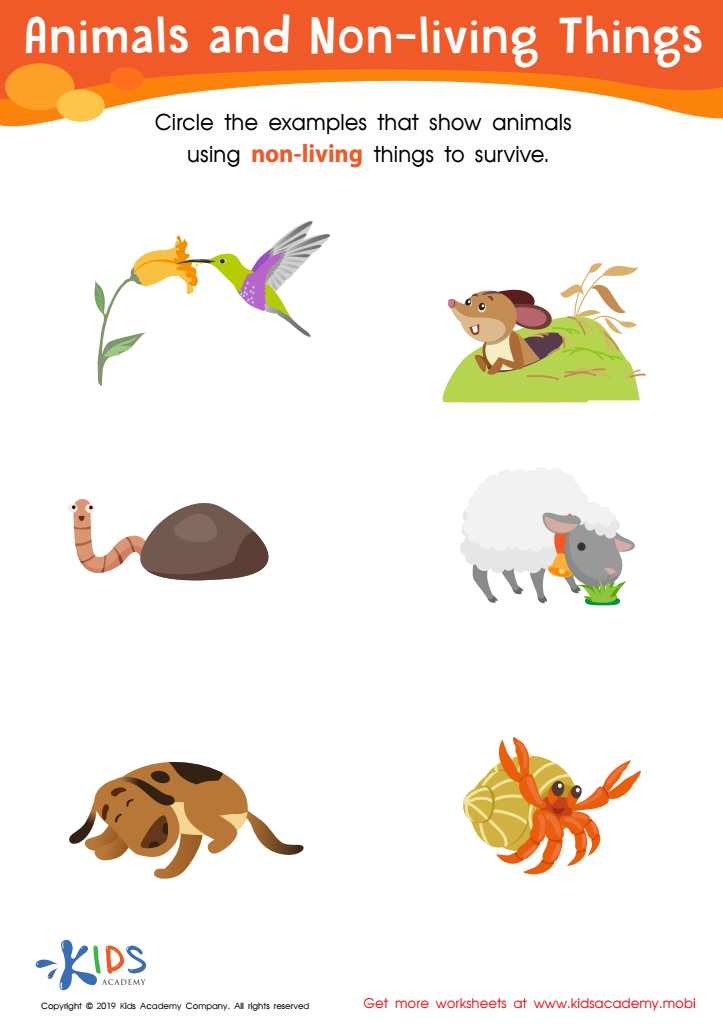
Animals and Non-Living Things Worksheet


%20(1).jpg)




Categorization skills are vital for a 5-year-old's cognitive development, offering a foundational framework for organizing and making sense of their expanding world. Parents and teachers should prioritize nurturing these skills, especially in relation to normal animals, for several reasons. Firstly, categorizing animals helps children enhance their vocabulary and language skills, as they learn to label, describe, and group different species based on shared characteristics. This activity promotes critical thinking and problem-solving abilities as children observe, compare, and contrast.
Moreover, understanding animal categories boosts a child’s knowledge of the natural world, fostering a sense of curiosity and appreciation for living things. Such awareness can spur interest in science and biology, planting early seeds for future academic pursuits. Additionally, categorization reinforces memory skills, since children repeatedly engage in recognizing and sorting animals. This repeated practice hones their concentration and attention to detail.
Engaging in categorization activities provides social and emotional benefits too. It often involves discussions and teamwork, enhancing communication skills and social interaction. Importantly, mastering basic categorization instills confidence, encouraging children to tackle more complex tasks with a positive mindset. Overall, animal categorization is a multifaceted tool that supports holistic development in early childhood.








