
Alphabet understanding Normal Alphabet Worksheets for Ages 6-7
6 filtered results
Difficulty Level
Grade
Age
-
From - To
Subject
Activity
Standards
Enhance your child's literacy skills with our engaging Alphabet Understanding Worksheets designed for ages 6-7. Tailored to foster an early love for learning, these worksheets help children identify, recognize, and articulate letters from A to Z. Each activity promotes letter comprehension through fun exercises like matching, tracing, and filling in the blanks, ensuring effective practice and retention. Perfect for classroom or homeschool settings, our printable resources are both educational and entertaining, making learning the alphabet a delightful experience. Support your child’s reading journey and boost their confidence with our user-friendly worksheets that make mastering the alphabet an enjoyable adventure!
Favorites
With answer key
Interactive
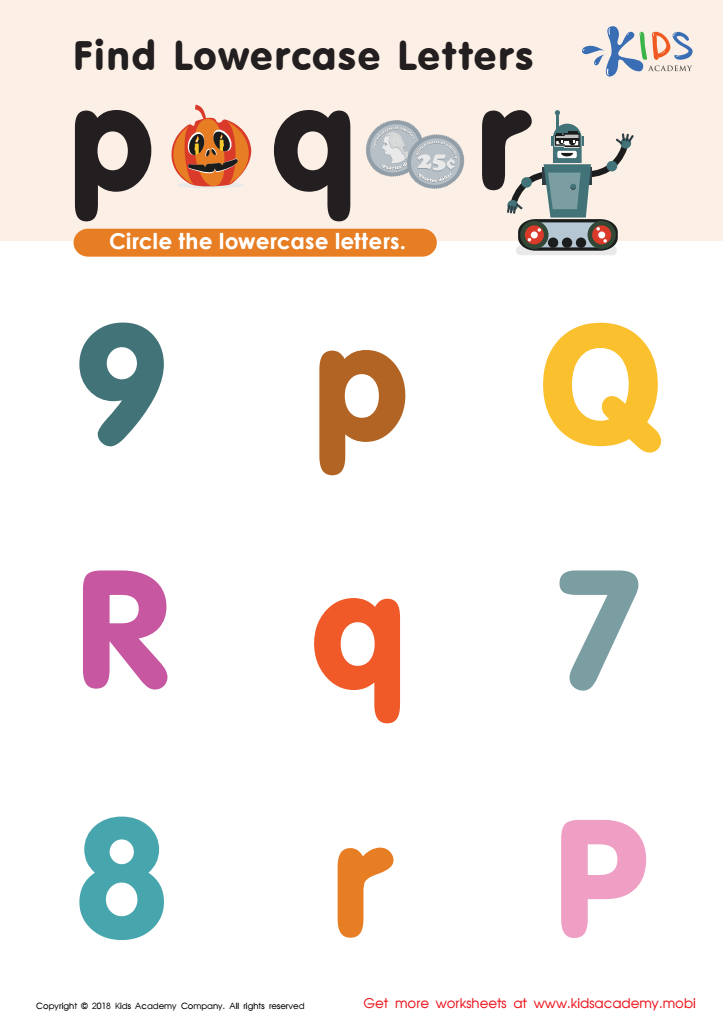
Find lowercase Letters p q r Worksheet
Help your child spot the lowercase letters among the numbers and uppercase letters in this worksheet. It's a great way to teach them to identify and write the lowercase and uppercase letters. Assist them in completing the exercise to give them a better understanding of the alphabets.
 Assign to My Students
Find lowercase Letters p q r Worksheet
Worksheet
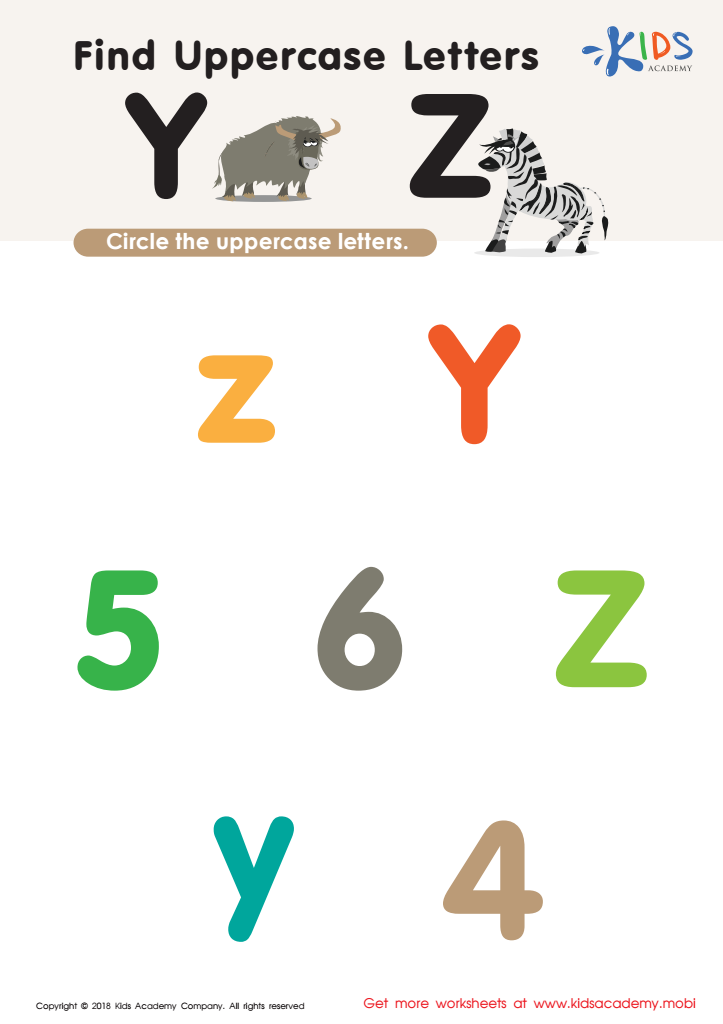
Find Uppercase Letters Y Z Worksheet
Download the worksheet! Help your youngster to learn the alphabet and distinguish uppercase from lowercase letters by having them circle the uppercase ones. It's an important first step towards reading and writing success!
Find Uppercase Letters Y Z Worksheet
Worksheet
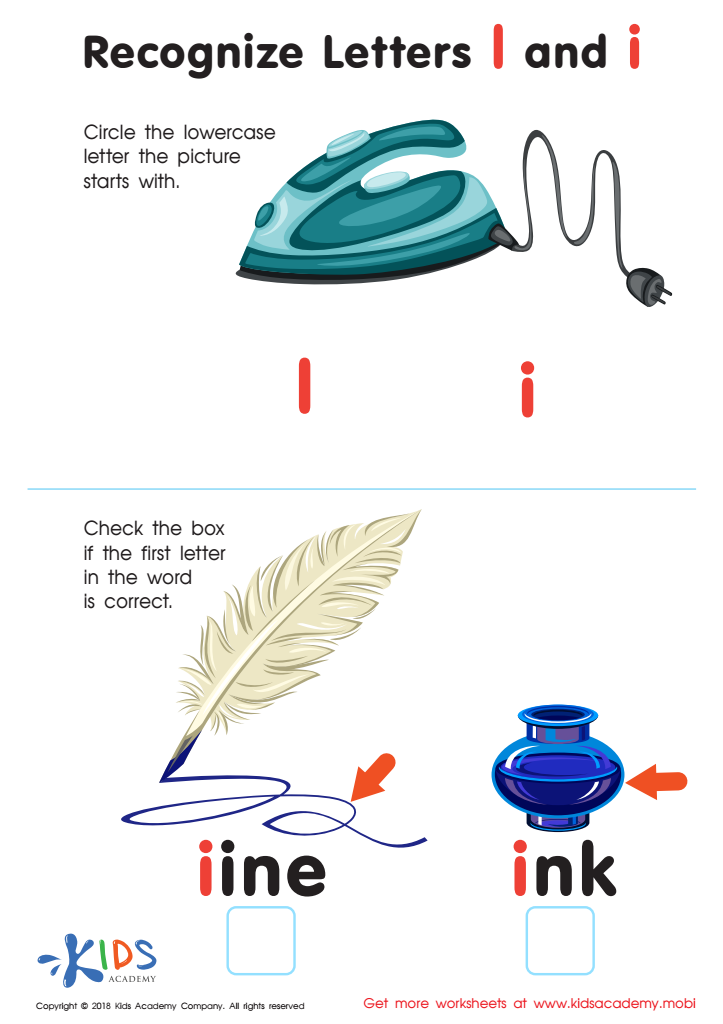
Recognize Letters l and i Worksheet
Help your child become familiar with uppercase and lowercase letters. Have them look at the pictures in the worksheet and circle the lowercase letter the picture starts with. For example: which one is the lowercase "i", the capital "I" or the small "i"?
Recognize Letters l and i Worksheet
Worksheet
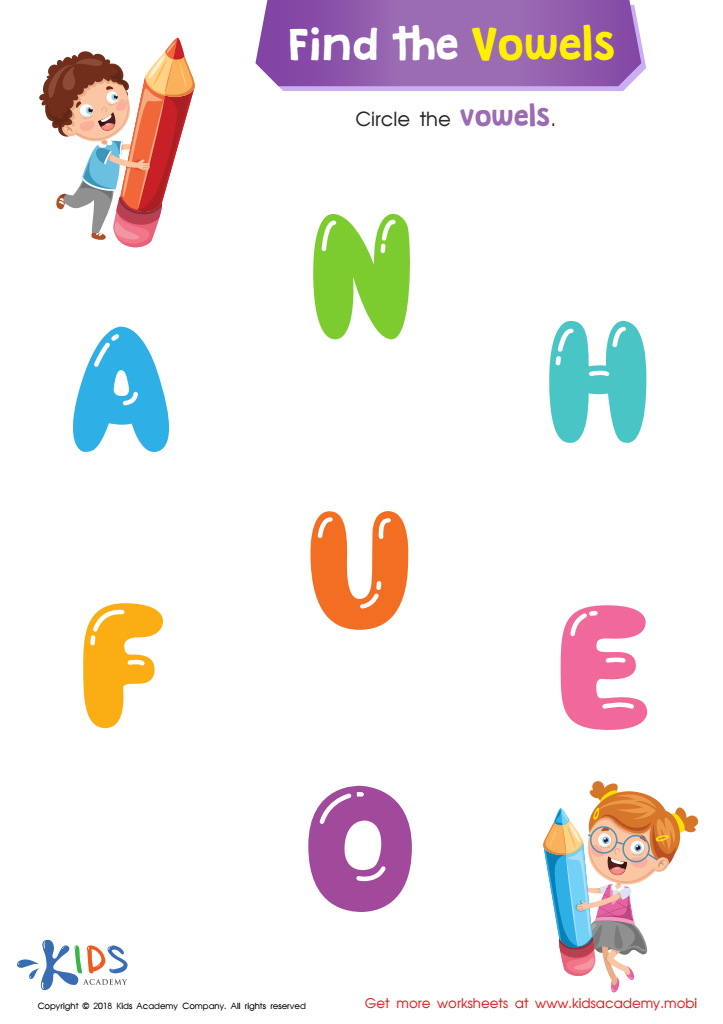
Find the Vowels Reading Worksheet
This worksheet helps kids identify vowels with bright colors and engaging activities to strengthen their visual discrimination and fine motor skills. Young learners will find it easy to succeed and be excited to keep reading!
Find the Vowels Reading Worksheet
Worksheet
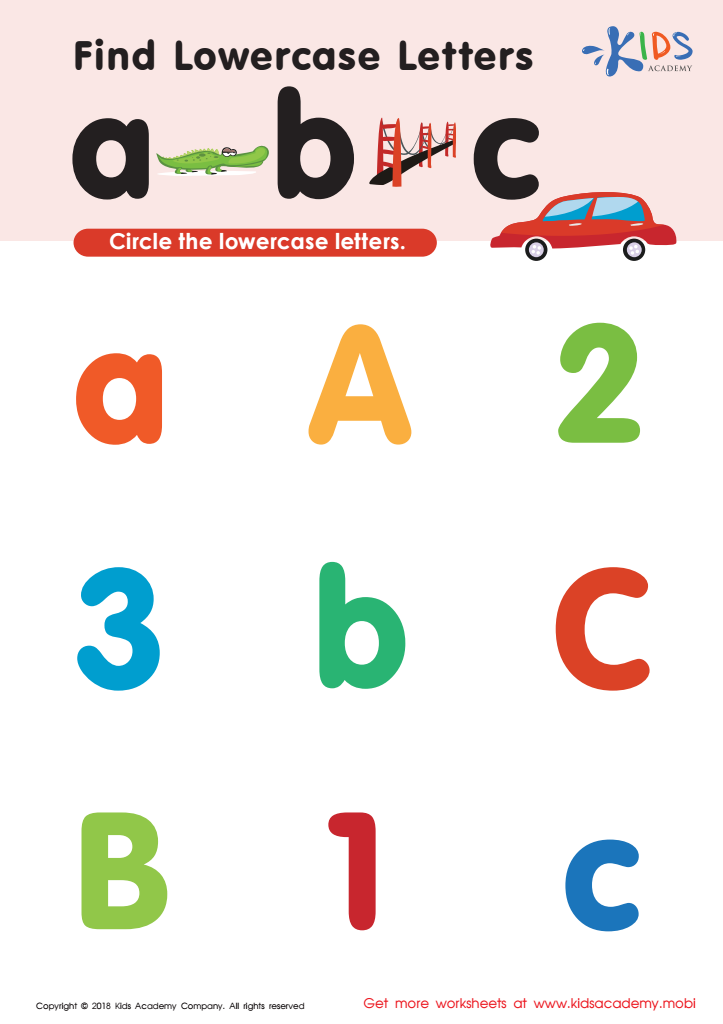
Find lowercase letters a b c Worksheet
Help your child identify lowercase letters with this worksheet. Carefully look at each letter and have your child circle the lowercase ones. This exercise is vital in helping them understand the alphabet and the difference between lower and uppercase letters.
Find lowercase letters a b c Worksheet
Worksheet
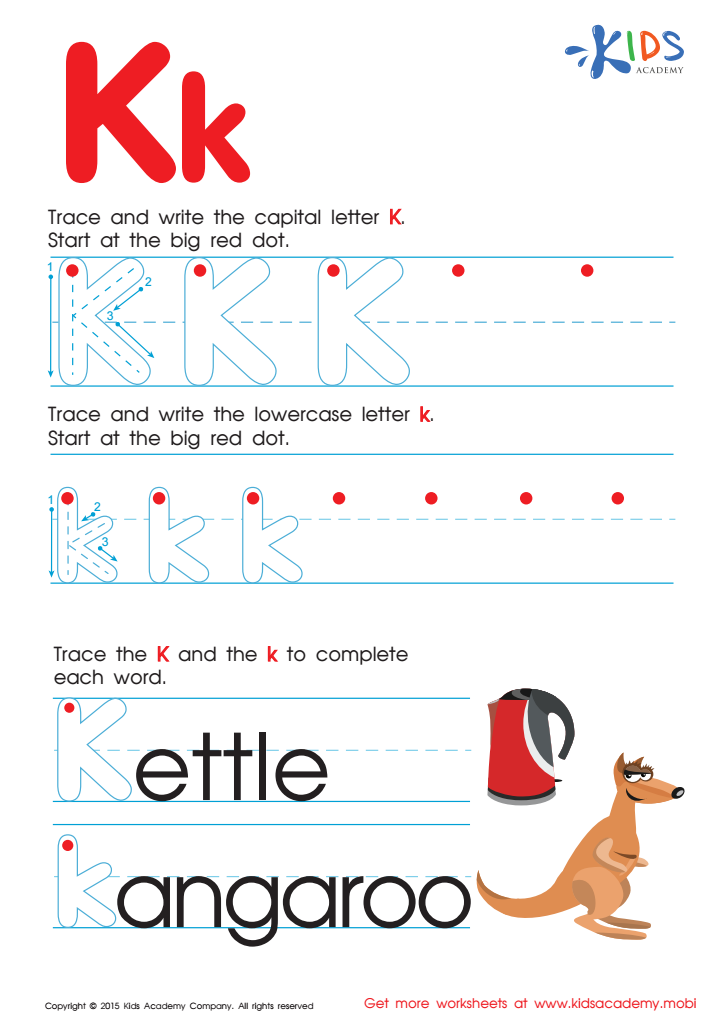
Letter K Tracing Page
Trace and write the letter K; start at the big red dot. Use it to complete words like "Kettle" and "Kangaroo". Visit Kids Academy for more free alphabet worksheets for kindergarten.
Letter K Tracing Page
Worksheet
Join Kids Academy for Free
Who is primarily going to use this learning content?








Understanding the alphabet is crucial for children ages 6 to 7 as it forms the foundation for their literacy development. At this age, children are transitioning from recognizing letters to using them in reading and writing. Parents and teachers should prioritize alphabet literacy because it not only enhances language skills but also supports overall cognitive development.
The ability to recognize and understand letters enables children to decode words, improving their reading fluency and comprehension. It allows them to express themselves through writing, enhancing their communication skills. Additionally, mastering the alphabet fosters important skills such as critical thinking, problem-solving, and creativity, as children engage in storytelling and language play.
Moreover, early proficiency in the alphabet can positively impact a child’s confidence and motivation. Feeling competent in reading and writing encourages a love for lifelong learning. Furthermore, foundational skills are essential for later academic success; struggling with basic literacy skills can lead to challenges in more advanced subjects.
Involving parents and teachers in this process creates a supportive environment that reinforces learning through daily activities, reading together, and engaging in educational games. Collective efforts promote a positive attitude toward learning, making alphabet understanding an essential focus during this developmental stage.







