Lowercase identification Normal Lowercase/Small Letters Worksheets for Ages 6-7
4 filtered results
-
From - To
Discover our engaging Lowercase Identification worksheets designed specifically for children aged 6-7. These printable resources help young learners recognize and familiarize themselves with normal lowercase letters through fun activities and illustrations. Ideal for reinforcing phonics skills, our worksheets combine learning with play, ensuring that kids remain excited and motivated while mastering their alphabet. Each activity encourages thoughtful interaction and growth, making lowercase letter identification both enjoyable and effective. Enhance your child's reading and writing foundation with these accessible and visually appealing worksheets, perfect for at-home learning or classroom use. Help your child embrace the world of letters today!
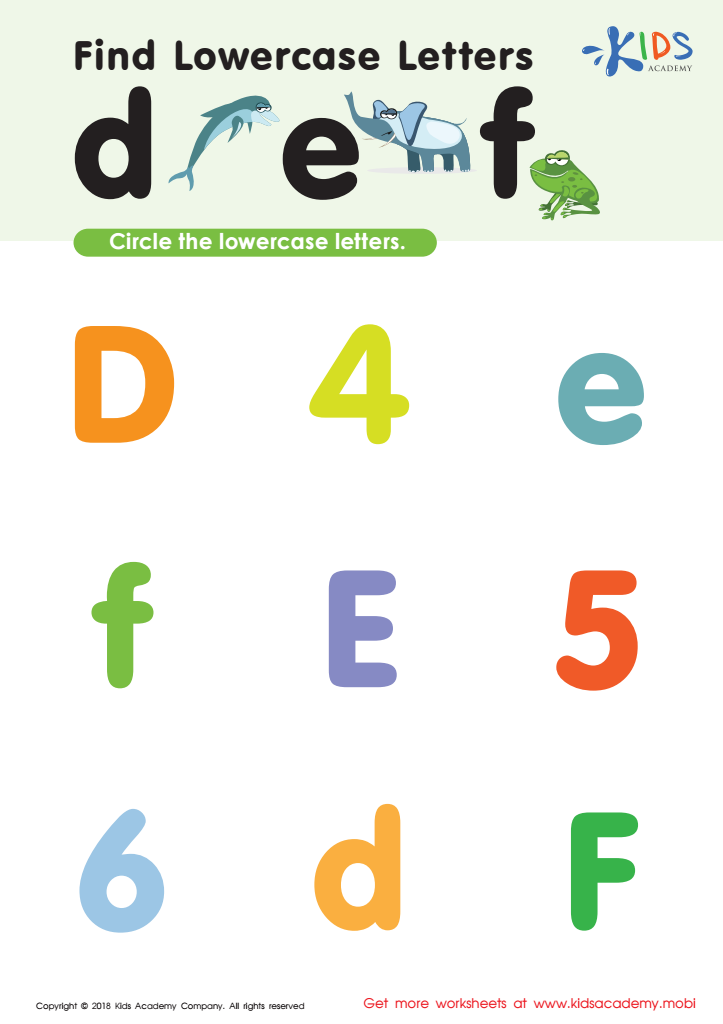
Find Lowercase Letters d e f Worksheet
 Assign to My Students
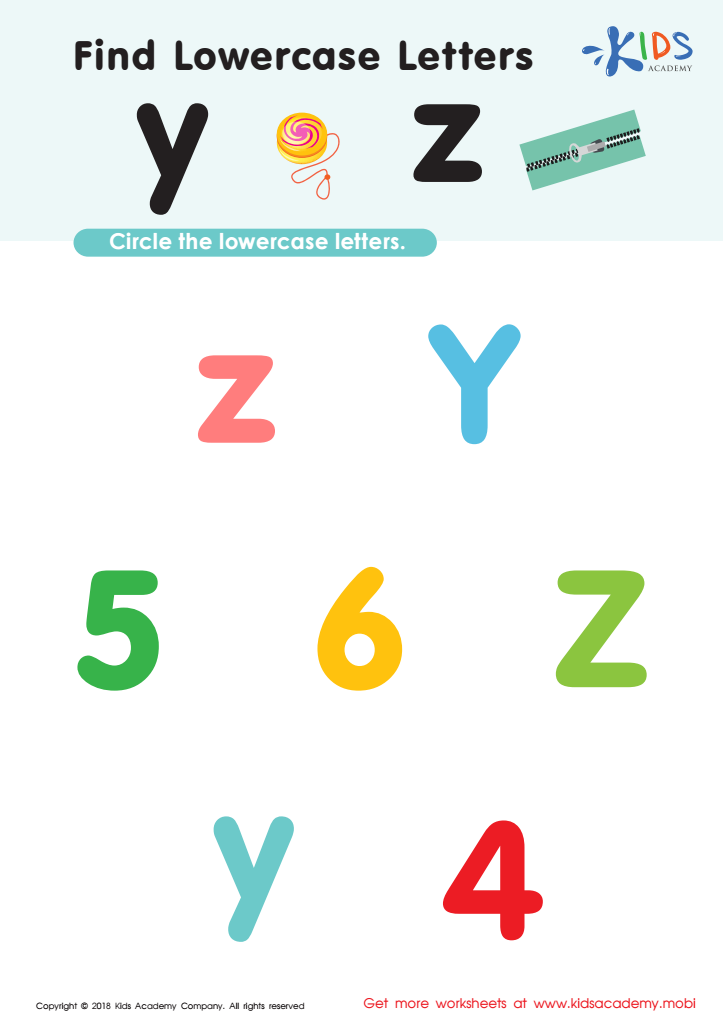
Find Lowercase Letters y z Worksheet
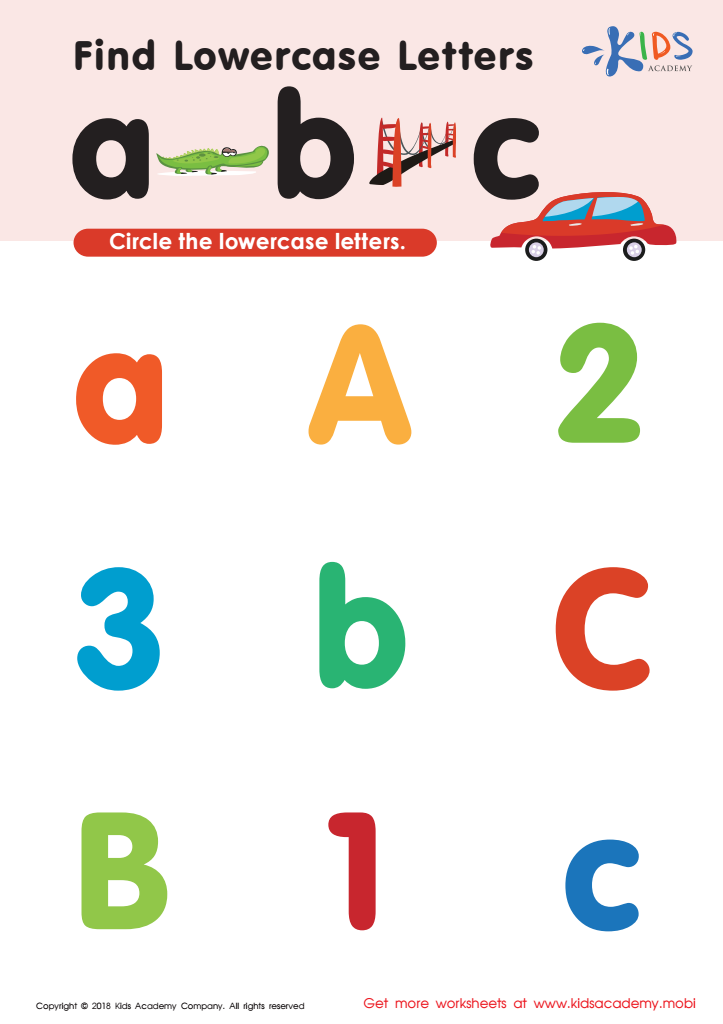
Find lowercase letters a b c Worksheet
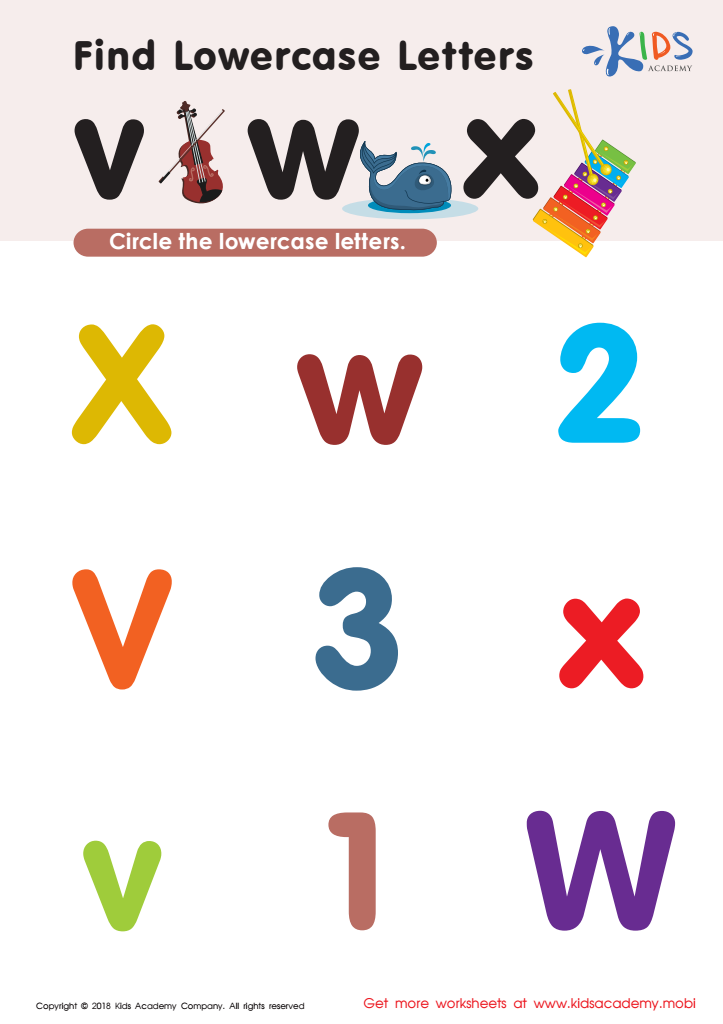
Find Lowercase Letters v w x Worksheet


Understanding and identifying lowercase letters is essential for children aged 6-7, as it forms the foundation for their reading and writing skills. At this age, children begin reading simple texts and writing sentences, which often include lowercase letters. Familiarity with lowercase letters facilitates smoother reading fluency, as most printed texts predominantly feature them.
Moreover, recognizing lowercase letters supports spelling and phonics instruction. Children learn that letter shapes, sizes, and forms vary, thereby enhancing their visual discrimination skills, which are critical for reading development. Mastery of these letters enables kids to transition effectively from sounding out words to reading whole sentences, boosting their confidence and enjoyment of literacy.
Furthermore, in everyday writing and communication, lowercase letters are crucial. Teachers and parents should foster an environment where knowledge of lowercase letters is emphasized, ensuring children can use writing skills for personal expression, assignments, and future educational pursuits.
By prioritizing lowercase letter identification in early education, adults can effectively equip children with the essential tools needed for academic success and a lifelong love of reading and writing. Encouraging this knowledge lays the groundwork for effective communication and self-assuredness in emerging young learners.