
Letter-sound recognition Normal Phonics Worksheets for Ages 6-7
3 filtered results
Difficulty Level
Grade
Age
-
From - To
Subject
Activity
Standards
Discover our engaging Letter-Sound Recognition Normal Phonics Worksheets, specially designed for children ages 6-7. These interactive resources help young learners master the critical skill of associating letters with their corresponding sounds, laying a strong foundation for reading and language development. Our worksheets feature a variety of fun activities, including matching, coloring, and tracing exercises that captivate children's attention while reinforcing their learning. Perfect for classroom use or at-home practice, these worksheets encourage independent study and enhance phonemic awareness. Encourage your child's journey towards literacy with these thoughtfully crafted phonics worksheets that make learning enjoyable and effective! Start exploring today!
Favorites
With answer key
Interactive
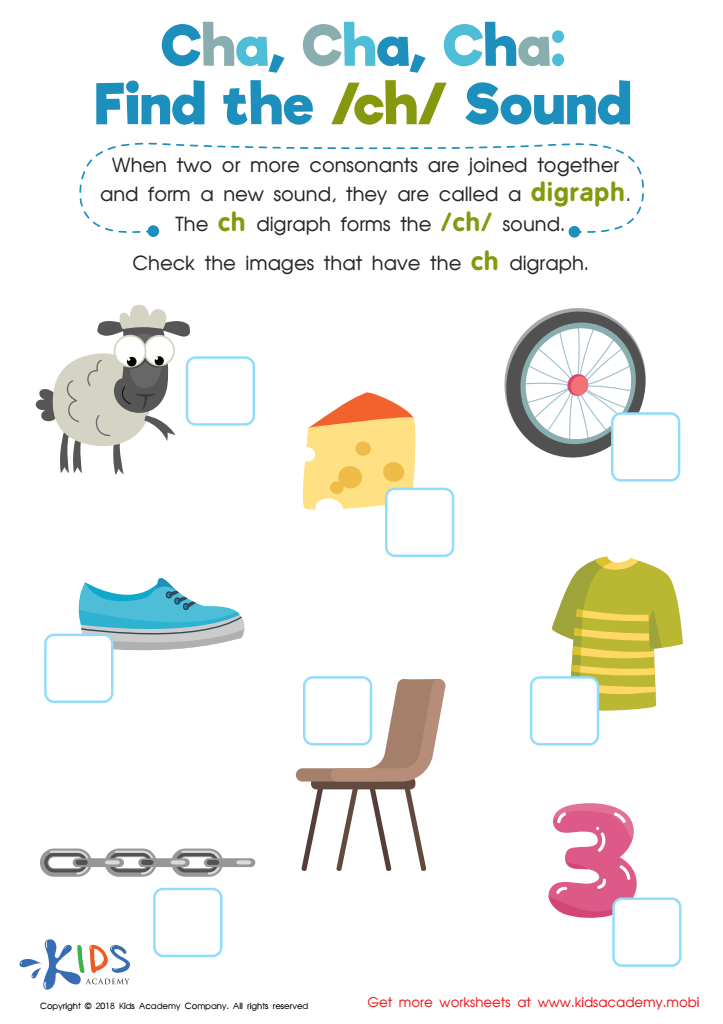
Cha, Cha, Cha: Find the /Ch/ Sound Worksheet
Have your students identify the objects in the images and if they struggle, help them check for the /ch/ digraph. This digraph forms a new sound when two or more consonants are combined, so it can be helpful to point it out to them in the colourful printout.
 Assign to My Students
Cha, Cha, Cha: Find the /Ch/ Sound Worksheet
Worksheet
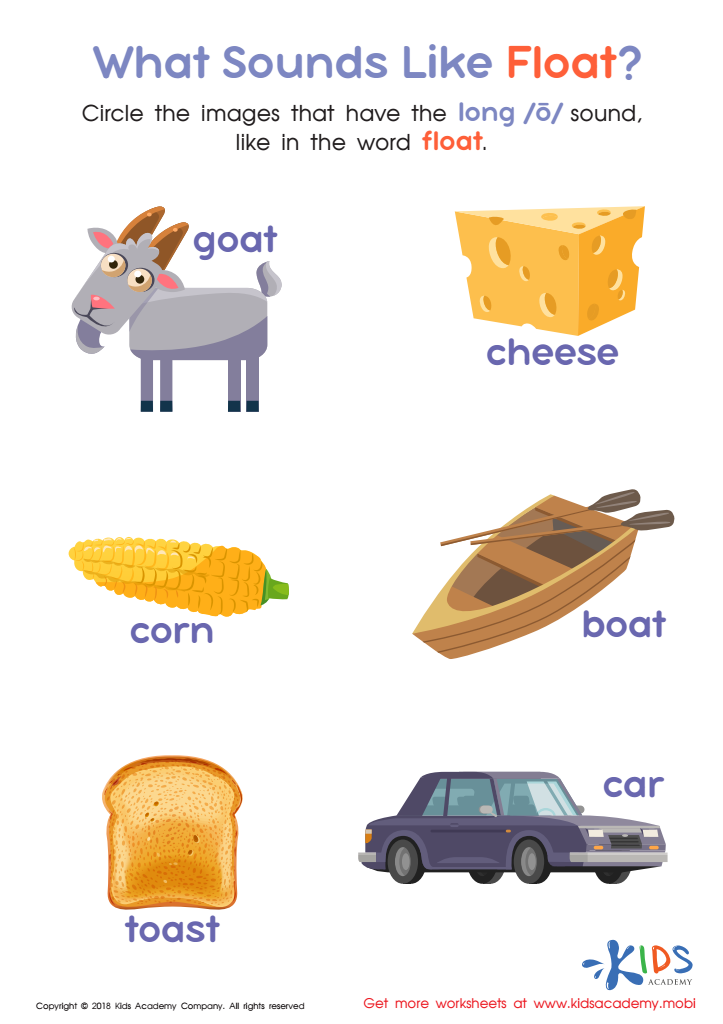
What Sounds Like Float? Worksheet
Help your kids practice the long /o/ sound with words such as 'boat', 'goat' and 'float'. Ask them to identify and circle the images in the worksheet that have the same sound. Award bonus points if they come up with more words with 'oa' spelling!
What Sounds Like Float? Worksheet
Worksheet
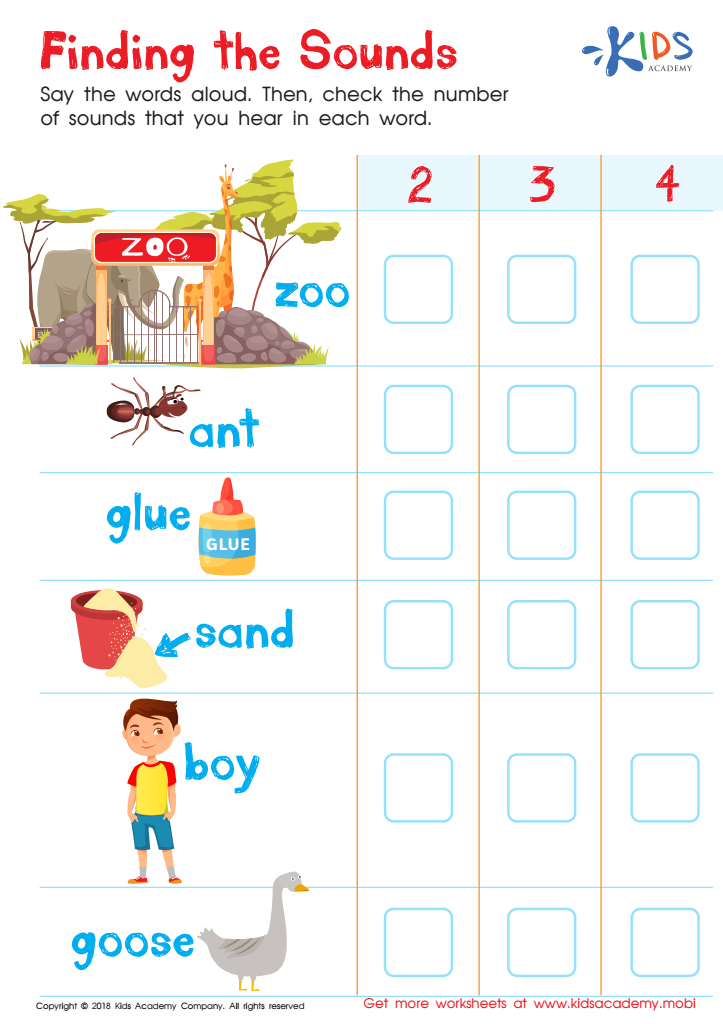
Finding the Sounds Worksheet
This free colorful worksheet assists children in learning words and breaking them down into sounds. It boosts auditory discrimination, phonological awareness and fine motor skills. Picture clues help them read confidently, and they can check the appropriate boxes to practice their reading skills.
Finding the Sounds Worksheet
Worksheet
Join Kids Academy for Free
Who is primarily going to use this learning content?








Letter-sound recognition is a fundamental skill in early literacy development, particularly in the age group of 6 to 7 years. This stage is crucial as children transition from learning to read to reading to learn. Strong letter-sound recognition helps children decode words, which is essential for fluency and comprehension. When children understand that letters represent specific sounds, they can tackle new words independently, greatly enhancing their reading confidence and ability.
Parents and teachers should care about normal phonics because it lays the groundwork for future academic success. Mastery of phonics facilitates better writing skills, as children who can segment and blend sounds will find it easier to construct words correctly. Additionally, phonics instruction encourages a love for reading; when children can read stories on their own, they are more likely to engage with books and develop a lifelong interest in reading.
Moreover, early phonics education also supports cognitive development, improving problem-solving and critical thinking skills as children learn to manipulate language. By fostering letter-sound recognition through normal phonics techniques, adults can help cultivate competent readers who are prepared for the challenges of higher engagement with both literacy and education in general.







