Phonics Skills Normal Vowel Blends Worksheets for Ages 6-7
5 filtered results
-
From - To
Enhance your child's phonics skills with our engaging Normal Vowel Blends Worksheets designed specifically for ages 6-7. These worksheets provide an interactive and enjoyable way for young learners to develop their understanding of vowel blends, a crucial step in mastering reading and writing. Each activity focuses on enhancing phonetic recognition, pronunciation, and comprehension through fun exercises and illustrations. Ideal for homeschooling or classroom use, our resources promote independent learning while reinforcing core phonics concepts. Download our printable worksheets today and watch as your young readers gain confidence in their skills and discover the joy of reading!
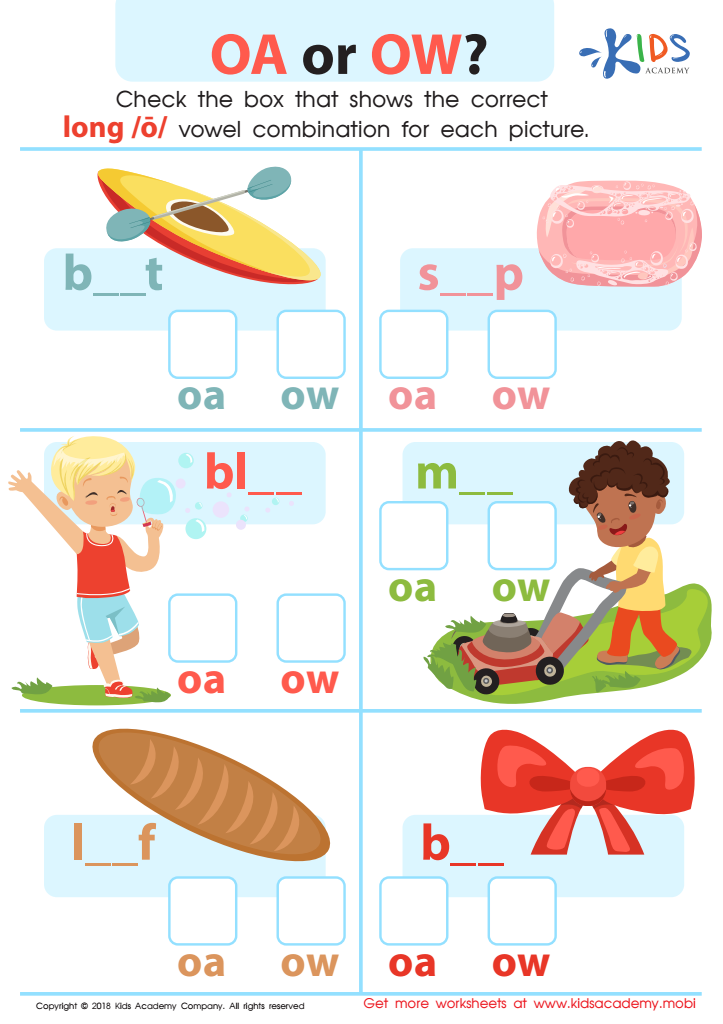
Reading: OA or OW Worksheet
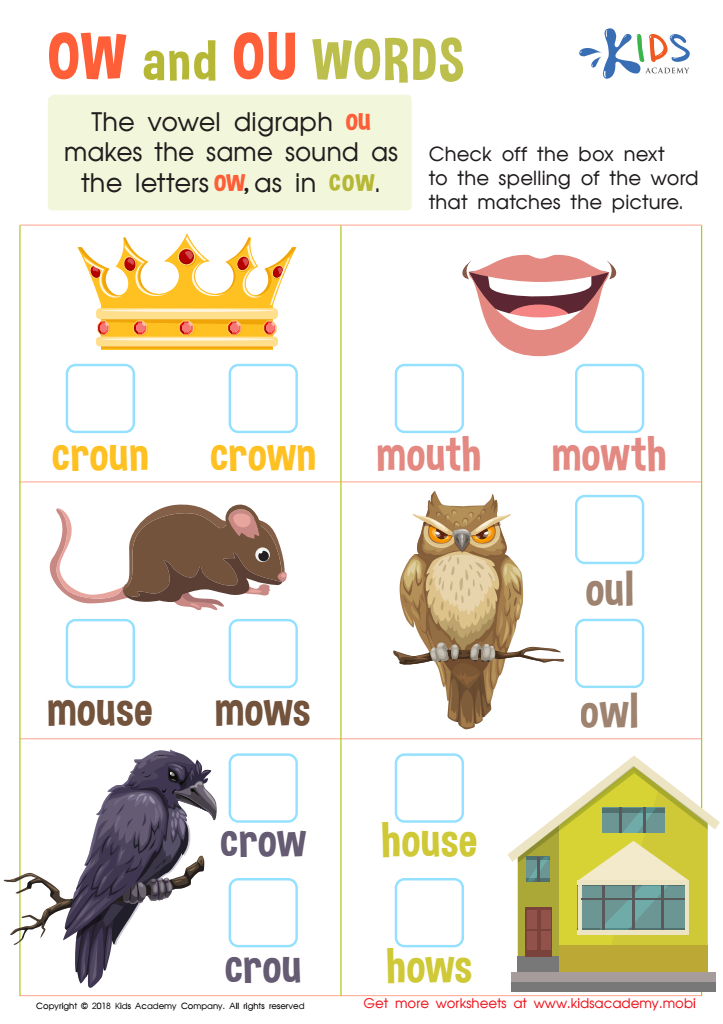
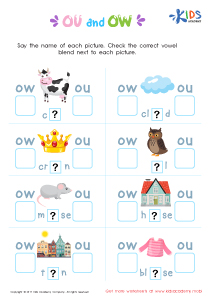
Reading: OW and OU Words Worksheet
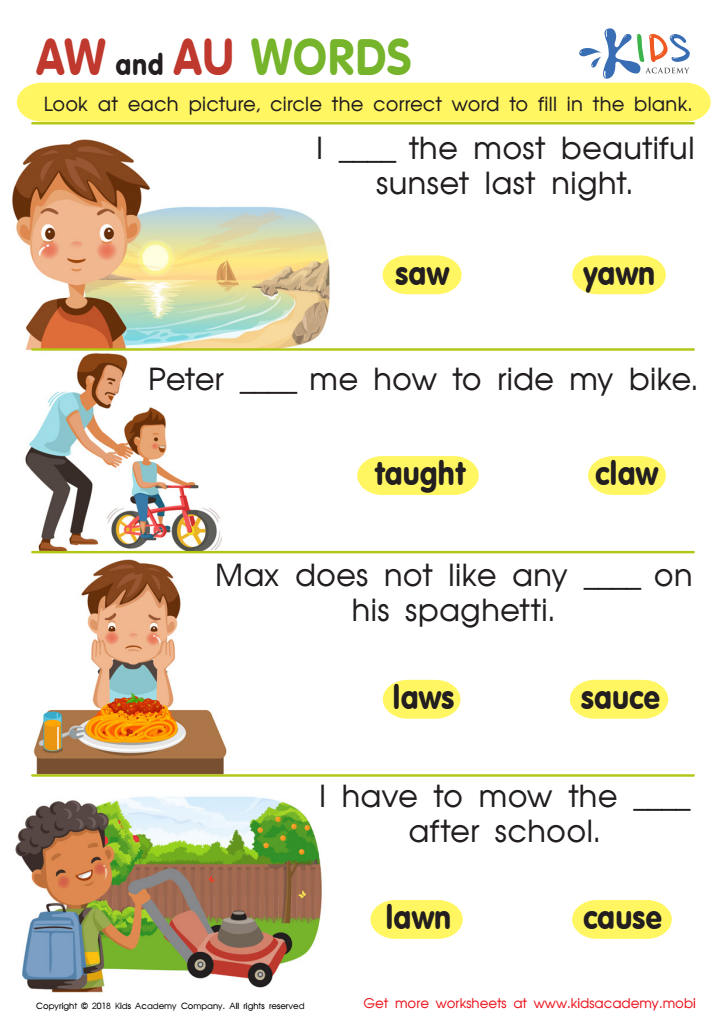
Reading: AW and AU Words Worksheet
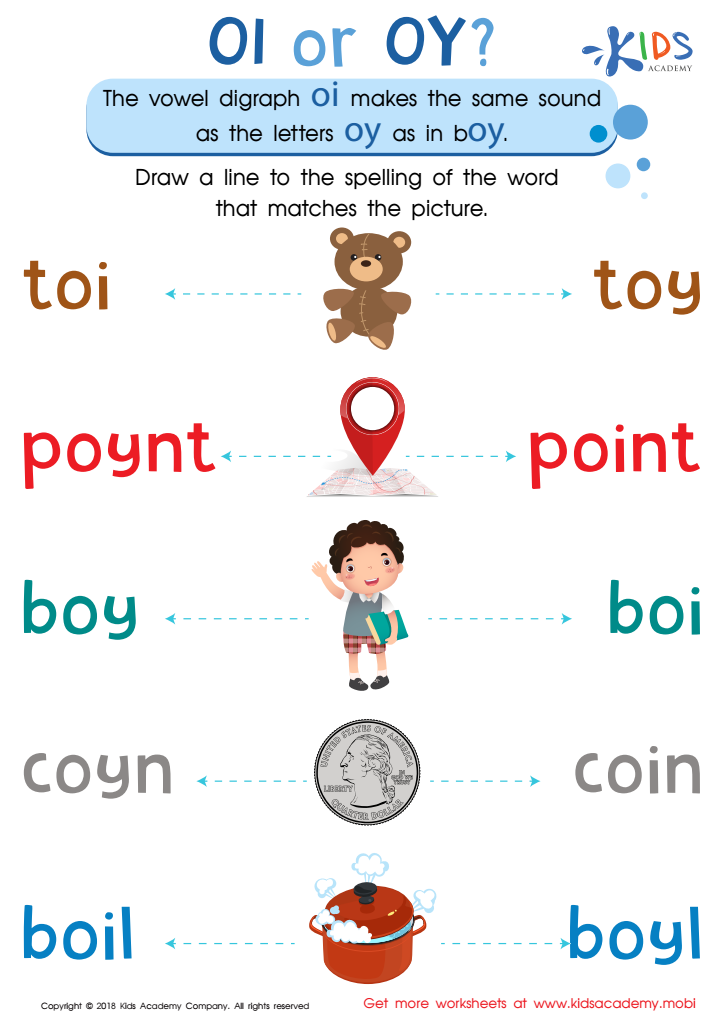
Reading: OI and OY Worksheet

Long and Short E Worksheet
 Assign to My Students





Phonics skills, particularly normal vowel blends, are crucial for children aged 6-7 as they lay the foundation for effective reading and writing. At this age, children transition from learning to read to reading to learn. Mastering vowel blends—combinations like "bl," "cl," and "st"—helps them decode words more easily and enhances their confidence in reading independently.
Understanding these blends allows children to recognize and use broader vocabulary with increased fluency, encouraging a love for reading. For parents and teachers, fostering strong phonics skills not only supports literacy development but also contributes to overall academic success. When children are competent in phonics, they experience less frustration while reading, leading to better engagement and comprehension across all subjects.
Moreover, early phonics skills support spelling and writing as children learn how sounds connect to letters. Engaging in activities that promote normal vowel blends cultivates critical thinking, auditory discrimination, and language skills important for effective communication. Ultimately, investing time and resources in phonics during these formative years establishes a strong literacy foundation, positively impacting children’s educational journeys and lifelong learning.