Reading proficiency Normal Vowels Worksheets for Ages 6-7
5 filtered results
-
From - To
Boost your child's reading skills with our engaging Normal Vowels Worksheets designed specifically for ages 6-7. These interactive resources focus on enhancing reading proficiency through fun and engaging exercises that highlight the importance of vowels. Each worksheet includes activities that promote phonemic awareness, vocabulary building, and effective decoding strategies. By encouraging children to practice identifying and working with normal vowels, these worksheets help lay a solid foundation for their reading journey. Perfect for classroom use or at-home practice, our worksheets ensure that learning remains enjoyable while fostering a love for reading. Equip your little learners with valuable skills today!
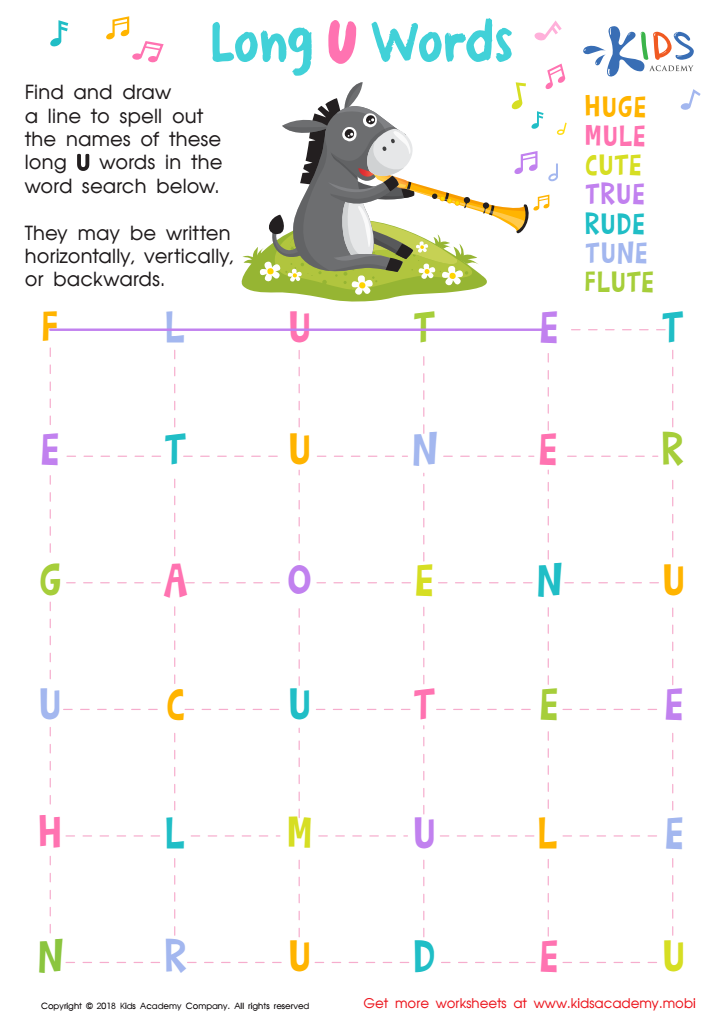
Long /u/ Words Worksheet
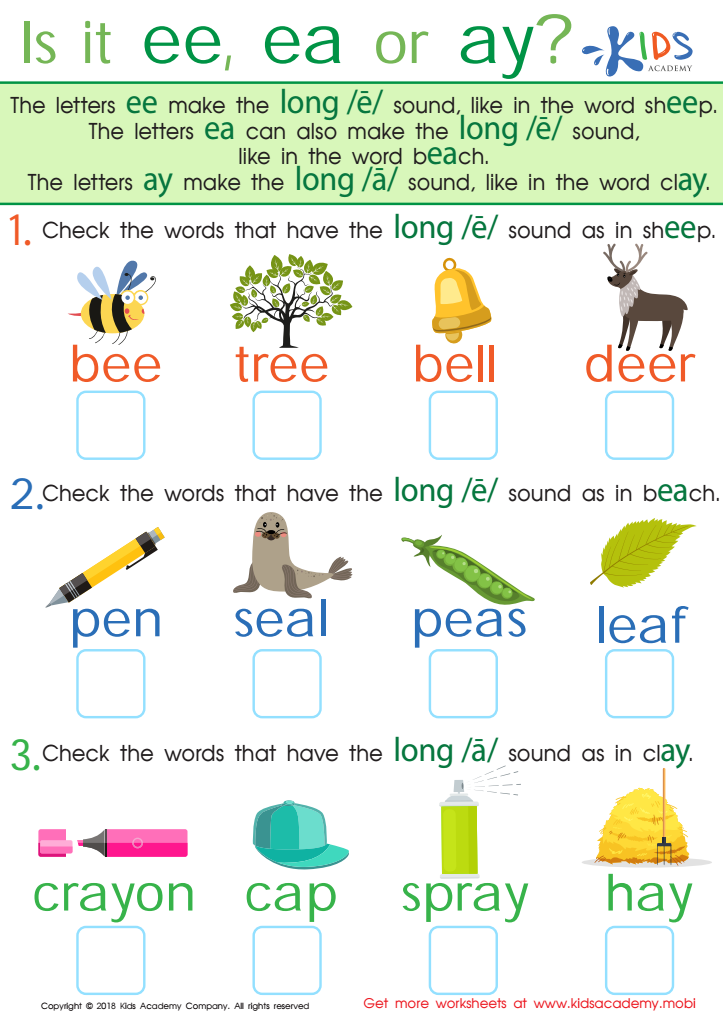
Is It EE, EA, or AY? Worksheet
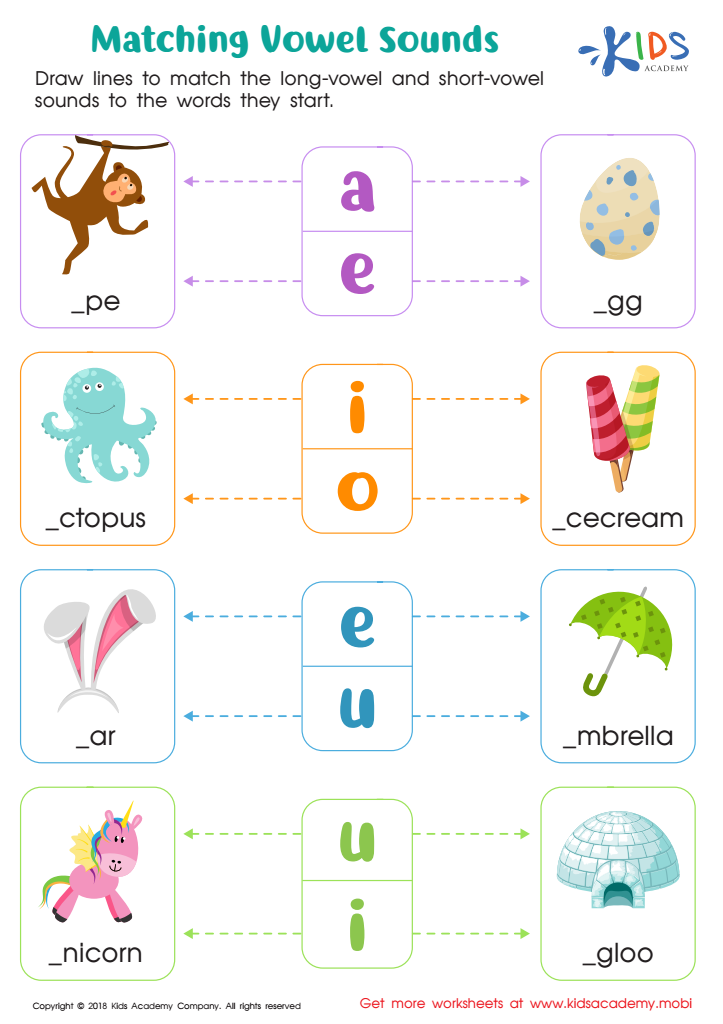
Matching Vowel Sounds Worksheet
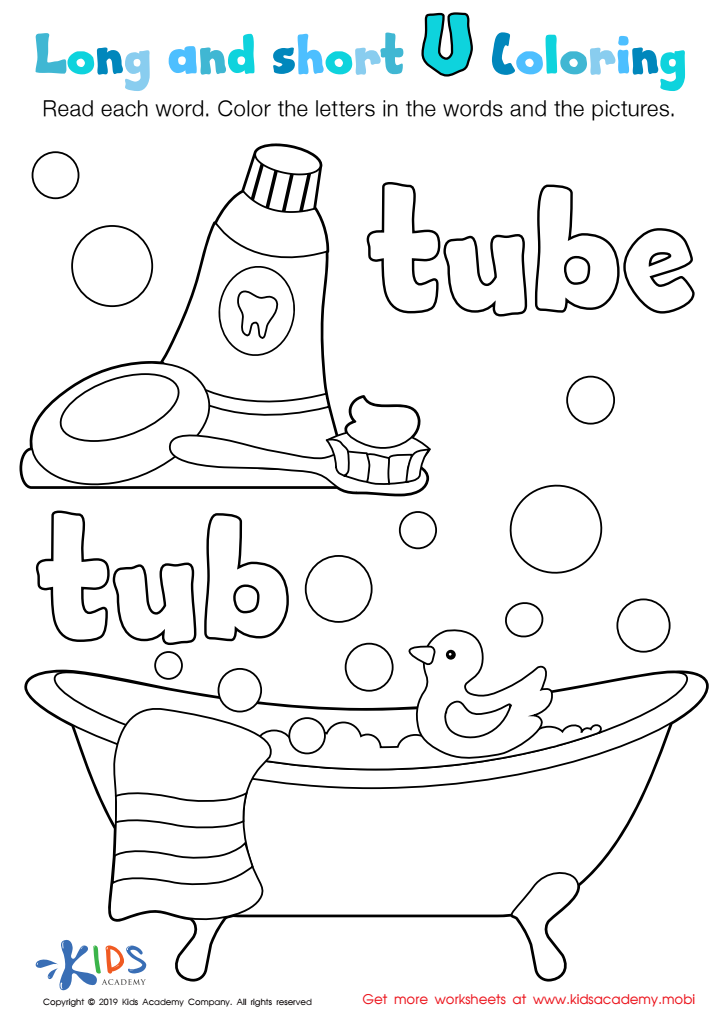
Long and Short U Worksheet
 Assign to My Students
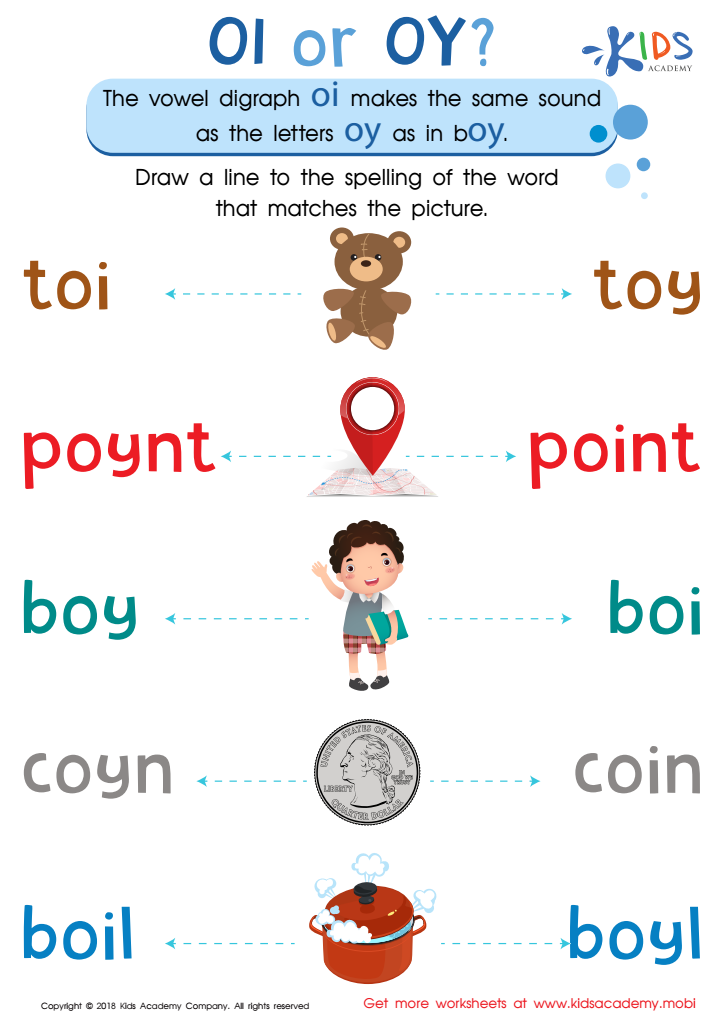
Reading: OI and OY Worksheet





Reading proficiency, specifically understanding normal vowels, is crucial for children aged 6-7 due to its foundational role in literacy development. At this age, children are transitioning from learning to read to reading to learn. Proficient vowel recognition and usage are essential because they directly impact a child's ability to decode words and understand their meanings.
Understanding normal vowels allows children to make sense of various word structures, aiding their vocabulary growth. As they become more confident readers, they are equipped to engage with a wider range of texts, enhancing comprehension skills. This proficiency builds a bridge to more complex reading tasks they will encounter in later grades.
Moreover, reading proficiency fosters cognitive skills such as critical thinking and communication, essential not only for academics but for life. Children who excel in reading can participate more actively in classroom discussions, contribute to group projects, and express their thoughts and ideas effectively.
Parents and teachers play a pivotal role in supporting this literacy foundation. By focusing on vowel sounds and encouraging reading at home and school, they create an environment that nurtures a lifelong love for reading, ultimately setting children up for success in their educational journey and beyond.






