Astronomy basics Normal Worksheets for Ages 6-7
3 filtered results
-
From - To
Explore the wonders of the universe with our Astronomy Basics Worksheets designed for children aged 6-7! These engaging resources introduce young learners to fundamental concepts of astronomy, including planets, stars, and the solar system. Each worksheet is tailored to support early learning skills, combining fun activities with educational content to inspire curiosity about space. With colorful illustrations and interactive exercises, children will enjoy identifying different celestial objects and understanding their roles in the universe. Perfect for classroom settings or at-home learning, our astronomy worksheets foster a love for science while providing a solid foundation in basic astronomical concepts. Ideal for inquisitive young minds!
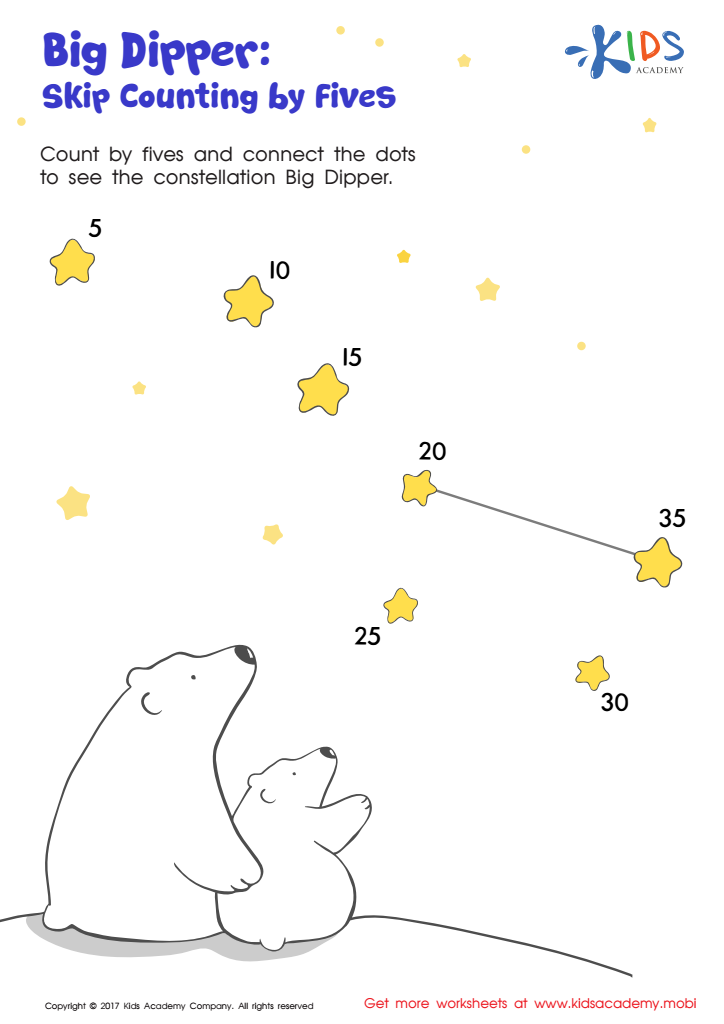
 Assign to My Students
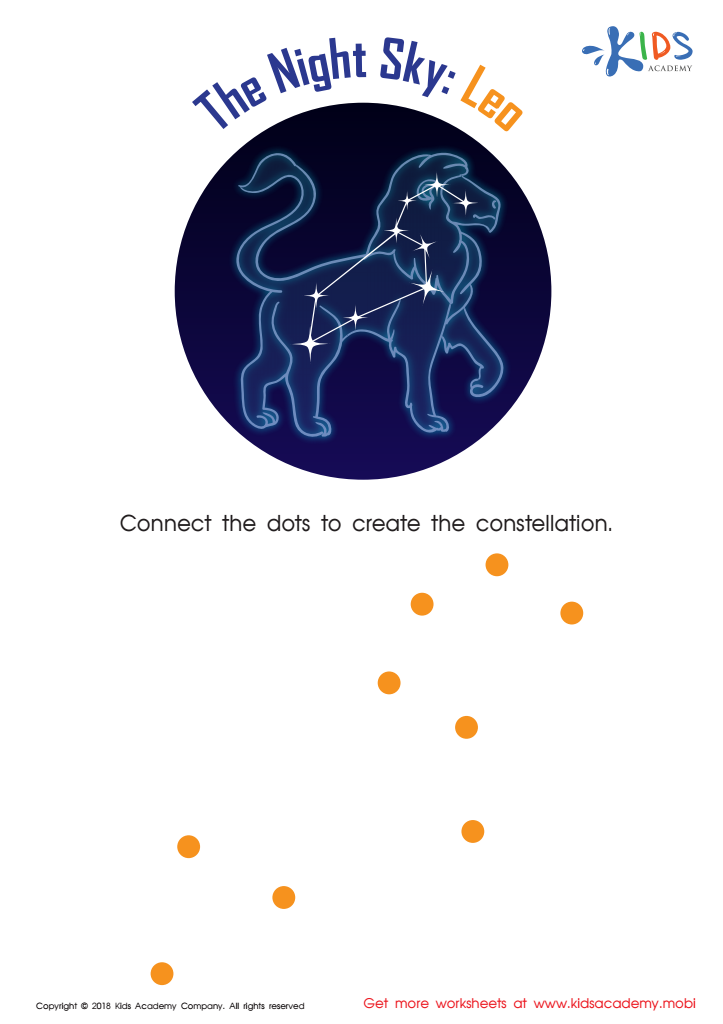
The Night Sky: Leo Worksheet
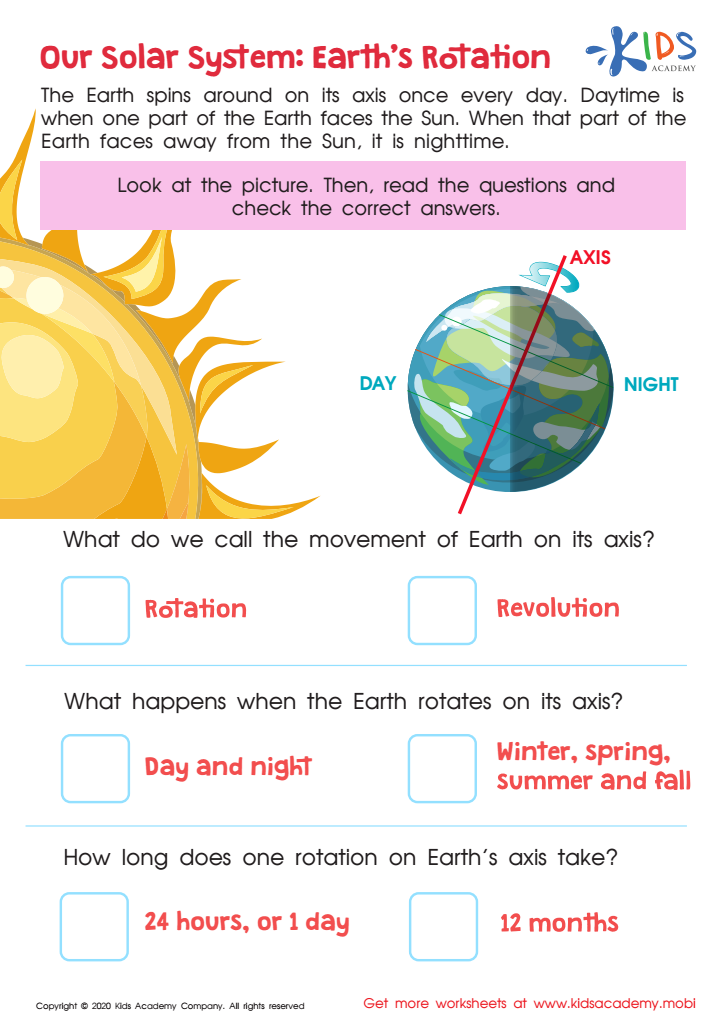
Our Solar System: Earth's Rotation Printable








Parents and teachers should care about the basics of astronomy for children aged 6-7 because it sparks curiosity and wonder about the universe. At this young age, children are naturally inquisitive, and learning about the stars, planets, and galaxies can foster a sense of awe and discovery. This curiosity is essential for early development, as it encourages exploration, critical thinking, and a desire to learn more about the world around them.
Furthermore, astronomy introduces key concepts in science and promotes STEM (Science, Technology, Engineering, and Mathematics) education. Understanding simple concepts—like the difference between day and night, or how the moon changes shape—builds a foundation for future scientific learning. Astronomy also can help improve literacy and numeracy skills as children learn to read star maps or measure distances in space.
Moreover, introducing astronomy cultivates a sense of responsibility for our planet and sparks conversations about environmental stewardship. It helps children appreciate their place in the universe and fosters a connection with nature. Through engaging activities, children develop social skills while sharing ideas and experiences. Overall, teaching astronomy basics can be a fun and enriching way to inspire young minds.








