
Capitalization rules Normal Worksheets for Ages 6-7
3 filtered results
Difficulty Level
Grade
Age
-
From - To
Subject
Activity
Standards
Explore our engaging "Capitalization Rules Normal Worksheets" designed for young learners aged 6-7! These worksheets provide an interactive way for children to master essential capitalization rules in a fun and educational format. Each activity encourages kids to identify proper nouns, capitalize the first letter of sentences, and understand the importance of capitalization in writing. Our thoughtfully crafted exercises are perfect for classroom or home use, helping to develop foundational literacy skills. Watch your child gain confidence in their writing abilities as they complete these colorful, age-appropriate worksheets! Start your child's journey to becoming a proficient writer today!
Favorites
With answer key
Interactive
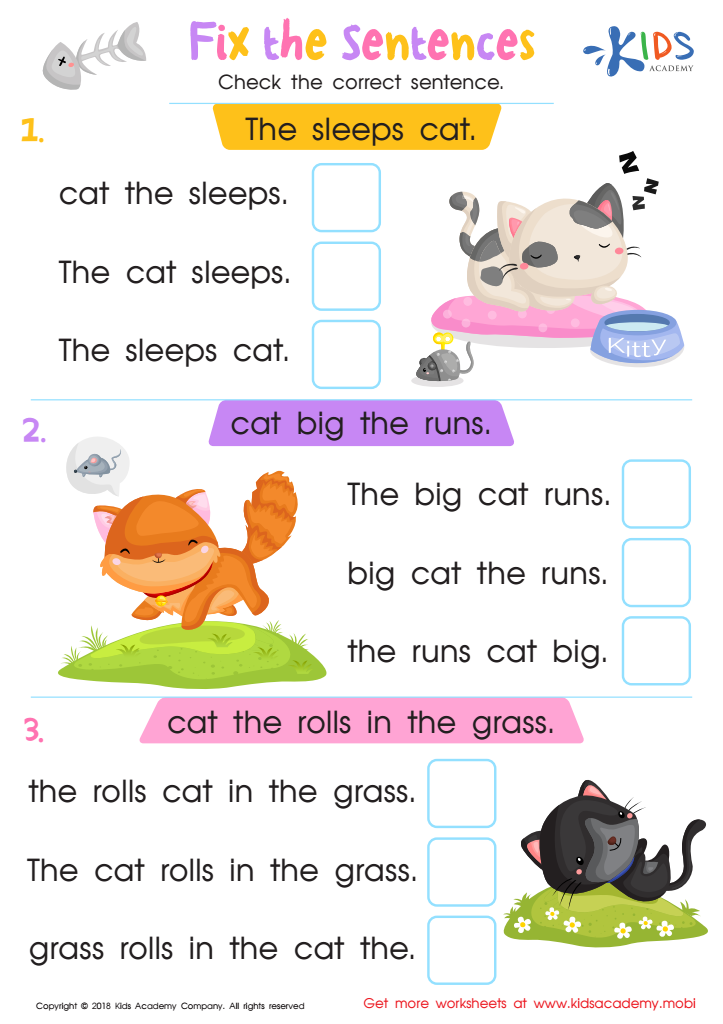
Fix the Sentences Worksheet
Once your students know the alphabet, teach them words. Then move on to constructing sentences. If they have a handle on sentence structure, give them this worksheet. Ask them to read the sentences and check the correct one.
 Assign to My Students
Fix the Sentences Worksheet
Worksheet
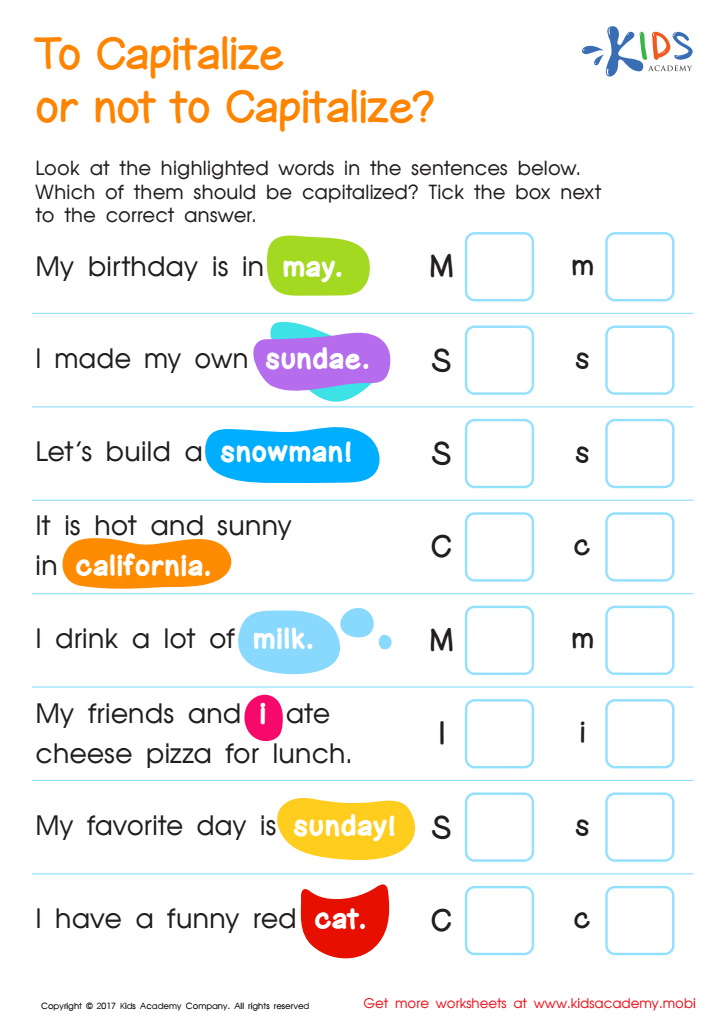
Capitalization: To Capitalize or Not? Printable
Have them answer the questions in "To Capitalize or Not to Capitalize" to check their understanding.
Capitalization: To Capitalize or Not? Printable
Worksheet
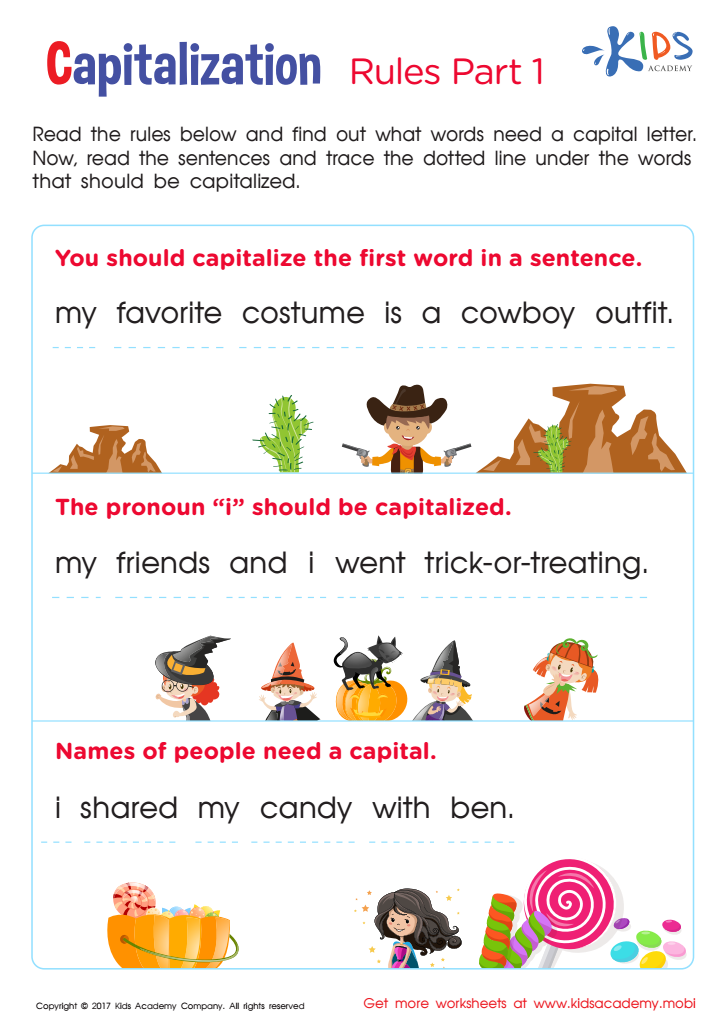
Capitalization Rules: Part 1 Worksheet
Kids entering high school with poor capitalization skills? Equip your 1st grader with the tools to combat this now! This capitalization worksheet will give them the knowledge they need to understand the importance of proper grammar rules and get their writing up to scratch.
Capitalization Rules: Part 1 Worksheet
Worksheet
Join Kids Academy for Free
Who is primarily going to use this learning content?






Capitalization rules are fundamental for young learners, typically ages 6-7, and they play a crucial role in fostering communication skills. Understanding when to use capital letters helps children recognize the beginning of sentences, proper nouns, and important concepts, making their writing clearer and more understandable. This clarity is essential for effective communication, whether in written assignments or informal notes.
Moreover, mastering capitalization can boost a child's confidence in their writing abilities. As they learn to convey their thoughts more accurately, they become more enthusiastic about sharing their ideas, which enhances their overall literacy development. Additionally, capitalization serves as an early introduction to grammar, laying a foundation for more complex language skills later on.
Parents and teachers should prioritize teaching capitalization because it contributes to a child’s educational journey. It can also promote critical thinking—children learn to identify proper nouns, understand the significance of names, places, and events, and recognize when to emphasize specific ideas. By focusing on capitalization rules, we equip our children with essential communication tools that will serve them across all subjects, not just language arts, paving their path to becoming confident, articulate individuals.








