Counting skills Normal Worksheets for Ages 6-7 - Page 5
98 filtered results
-
From - To
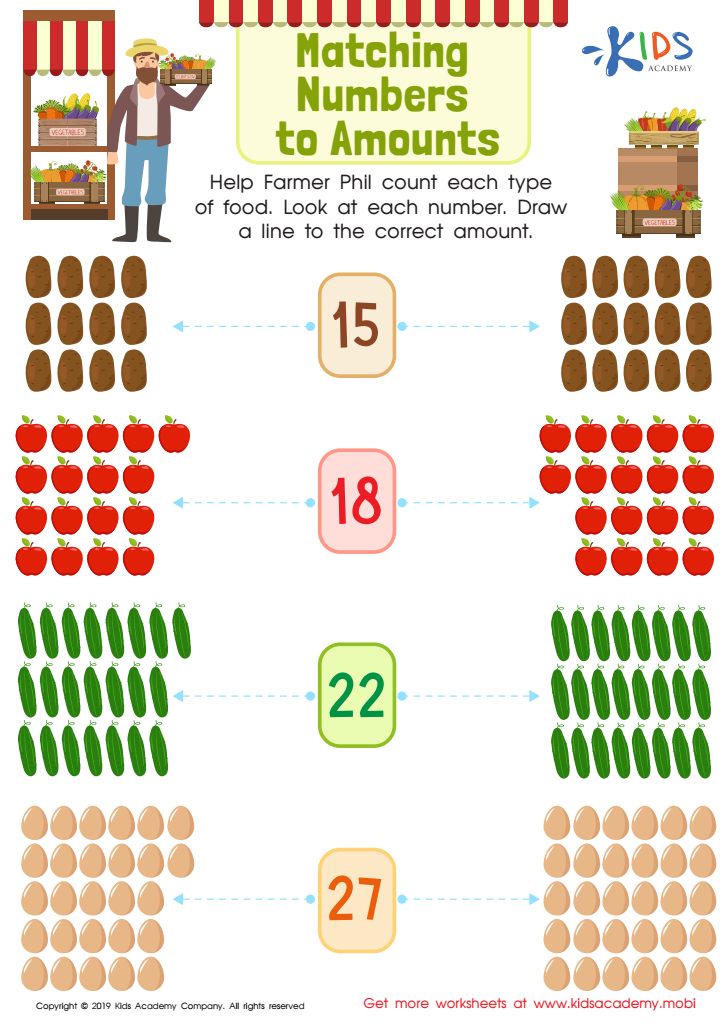
Matching Numbers to Amounts Worksheet
 Assign to My Students
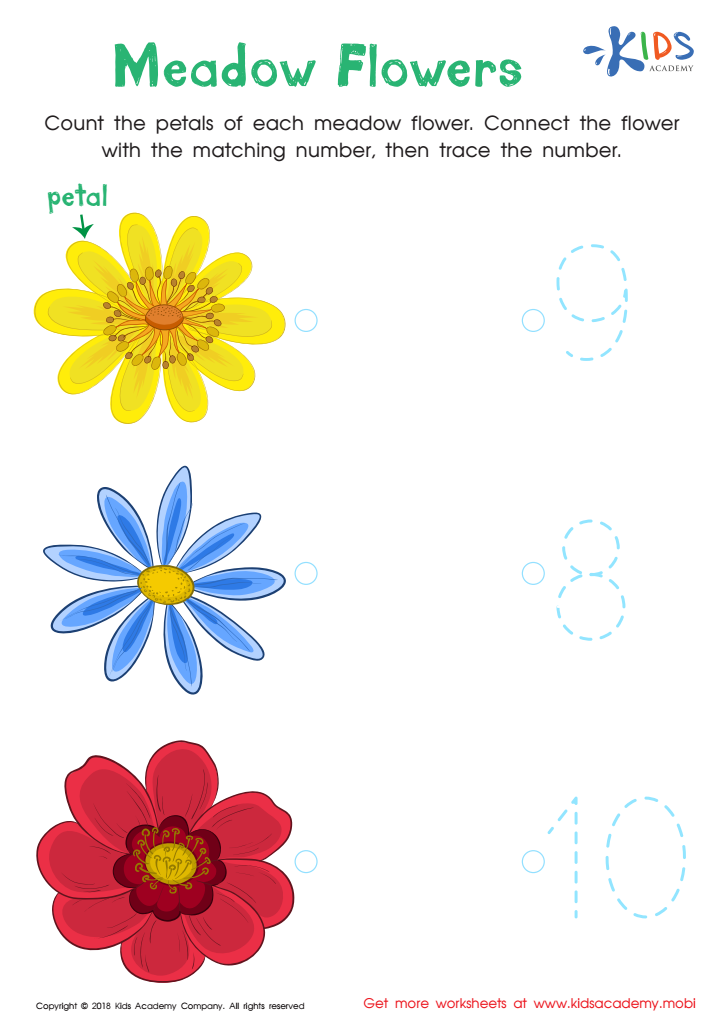
Kindergarten Number Tracing: Medow Flowers Worksheet








Counting skills are foundational for children aged 6-7, impacting their overall math ability and cognitive development. At this age, children typically transition from early counting techniques to more advanced mathematical concepts, including addition and subtraction. Proficient counting helps them develop number sense, which is the understanding of how numbers relate to one another.
When parents and teachers nurture counting skills, they empower children to solve everyday problems, enhancing their logical thinking and critical reasoning abilities. Counting lays the groundwork for more complex skills, such as patterns and basic operations, which are crucial for future academic success in mathematics and other subjects.
Additionally, strong counting skills are linked to better academic performance overall. Children who struggle with counting may face challenges in their self-esteem, social interactions, and subsequent learning experiences. By emphasizing counting in both structured and playful ways—through games, songs, and hands-on activities—adults make learning engaging while reinforcing essential skills.
Moreover, early intervention in counting skills can prevent future academic difficulties, fostering a positive attitude towards learning and confidence in their mathematical abilities. Thus, caregivers must prioritize counting skills to enhance children's educational journeys and lifelong proficiency in math.








