
Mental math practice Normal Worksheets for Ages 6-7
6 filtered results
Difficulty Level
Grade
Age
-
From - To
Subject
Activity
Standards
Unlock the power of mental math with our engaging worksheets tailored for ages 6-7! Designed to enhance critical thinking and foundation skills, these normal worksheets are perfect for young learners. Each activity focuses on essential math concepts, promoting quick calculations and improving problem-solving abilities. With fun, interactive exercises, children will discover the joy of math while reinforcing their understanding of numbers. Our resources stimulate interest in mathematics and build confidence, setting the stage for future academic success. Ideal for classroom or at-home practice, these worksheets support the development of essential mental math skills in an enjoyable and accessible way!
Favorites
With answer key
Interactive
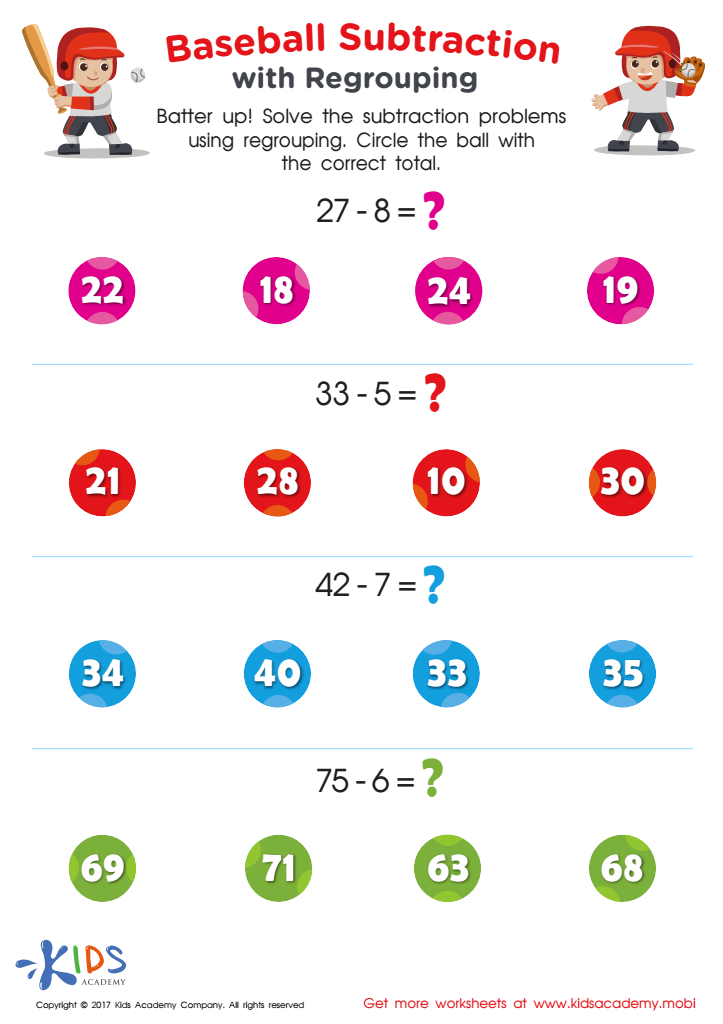
Subtraction With Regrouping for 2nd Grade Worksheet
Kids solve two-digit subtraction problems using regrouping and color in the baseballs.
2nd graders may find regrouping for subtraction tricky, so give them a helping hand with this fun worksheet! They practice two-digit subtraction and regrouping by coloring in baseballs as they solve the problems. Let them practice the skill and enjoy the game at the same time.
 Assign to My Students
Subtraction With Regrouping for 2nd Grade Worksheet
Worksheet
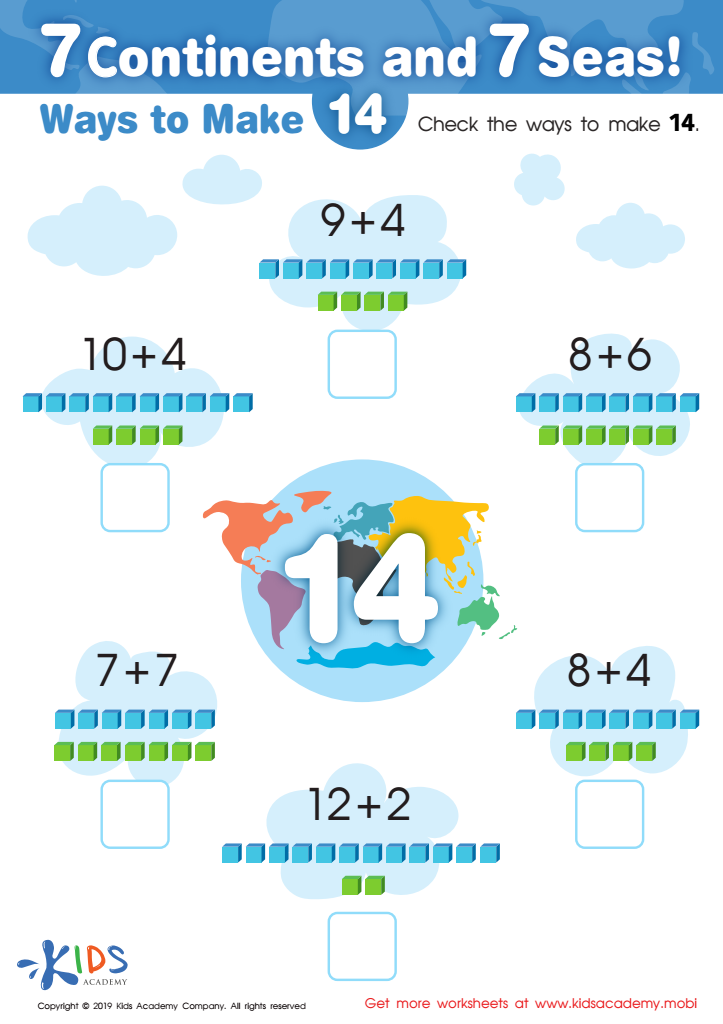
7 Continents and 7 Seas Worksheet
Remind kids of the continents and show them how different numbers can add up to the same figure. Give examples, like 2+2 =4, and 3+1 =4. Ask if they can provide other examples, then work through the simple additions in this worksheet with them. Ask them to circle all equations that make 14.
7 Continents and 7 Seas Worksheet
Worksheet
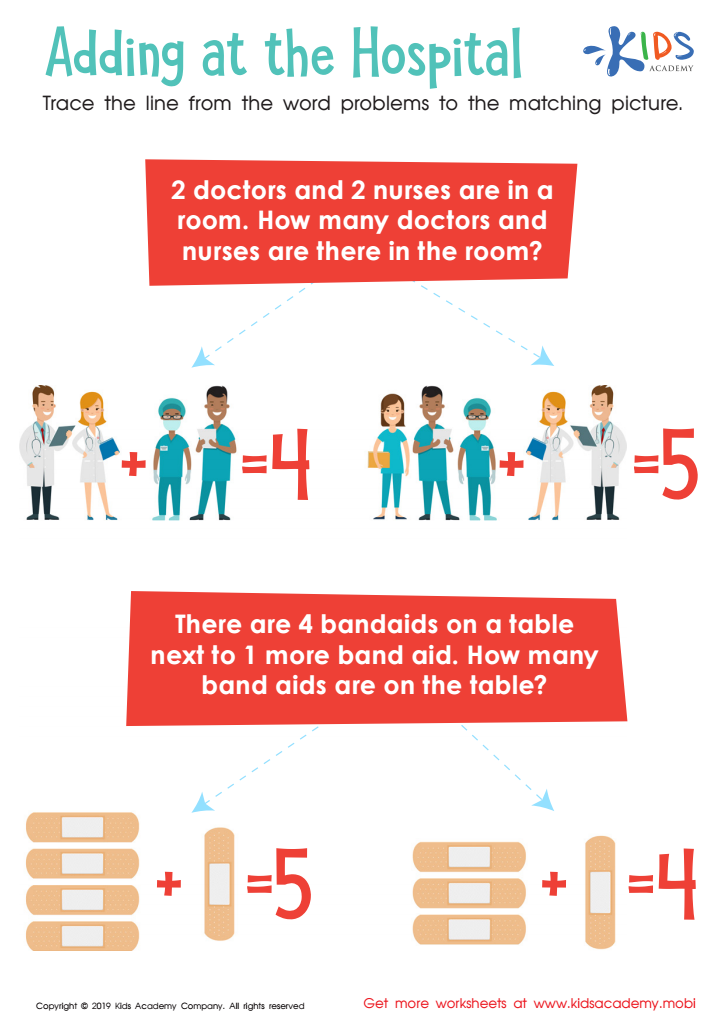
Adding at the Hospital Worksheet
A hospital visit doesn't have to be scary for kids. With this worksheet, they can count along with doctors and nurses, by reading the word problems and tracing lines to the corresponding picture. Guide them through it and you'll help them have a fun experience.
Adding at the Hospital Worksheet
Worksheet
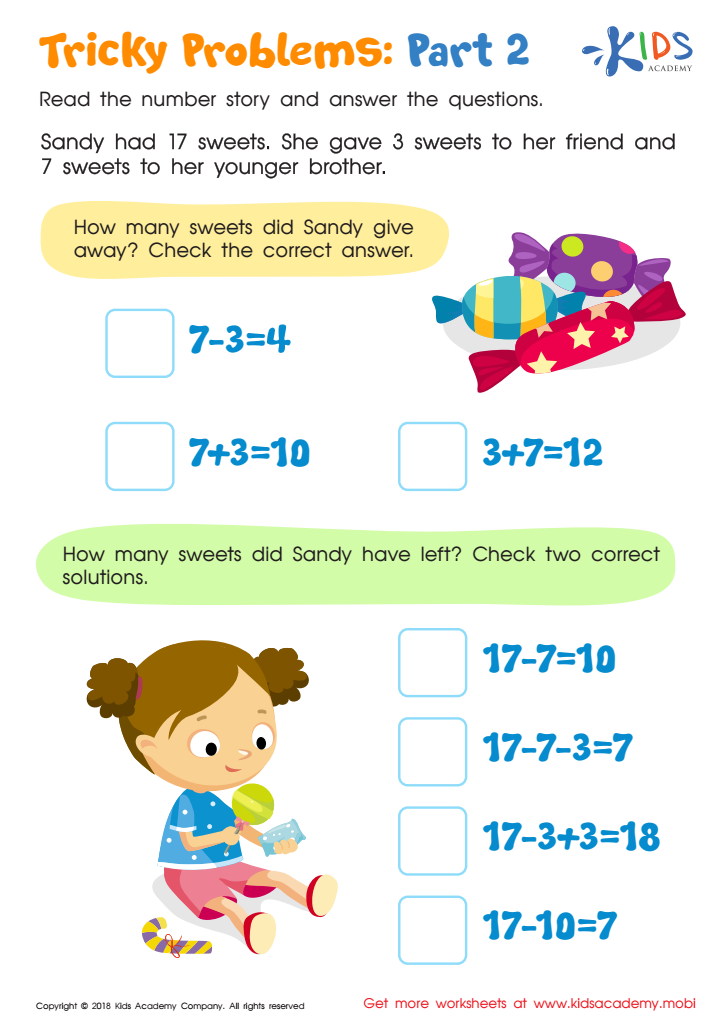
Tricky Problems Worksheet: Part 2
Help your little math learner visualize number stories with this engaging worksheet. They'll connect pictures to the story and use math facts to find the sums. After that, they'll be able to identify the correct number sentences to match. Let them practice and get better at problem solving!
Tricky Problems Worksheet: Part 2
Worksheet
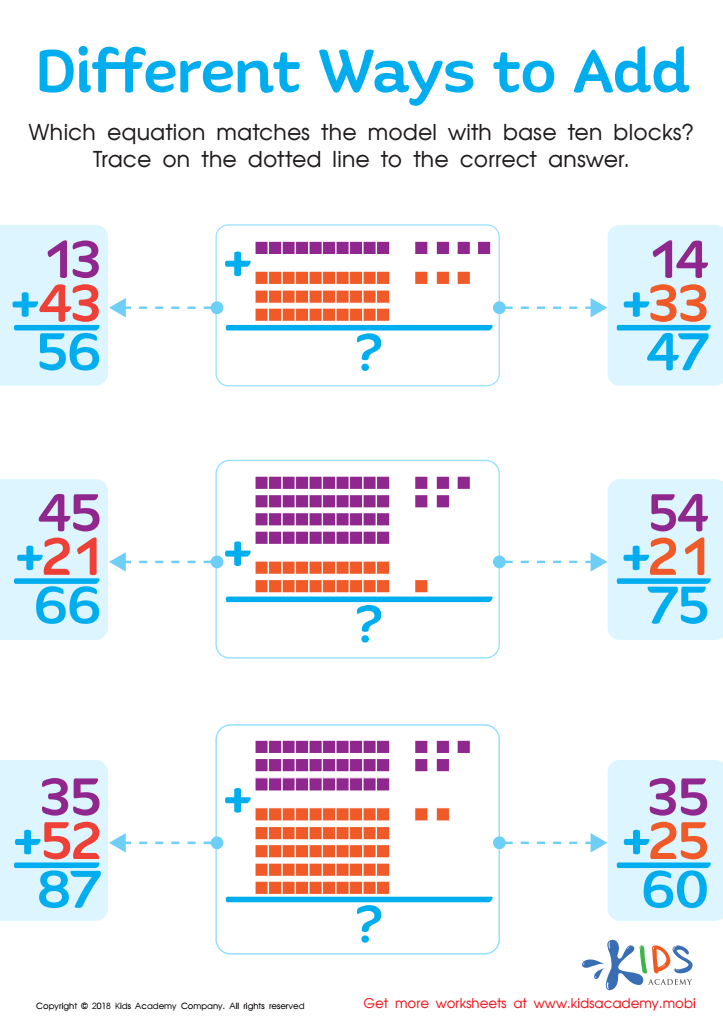
Different Ways to Add Worksheet
This worksheet enhances math skills by having students match equations to base ten pictures and tracing lines. It not only helps with fine motor skills, but also encourages number sense, with various ways to add and build upon existing math knowledge.
Different Ways to Add Worksheet
Worksheet
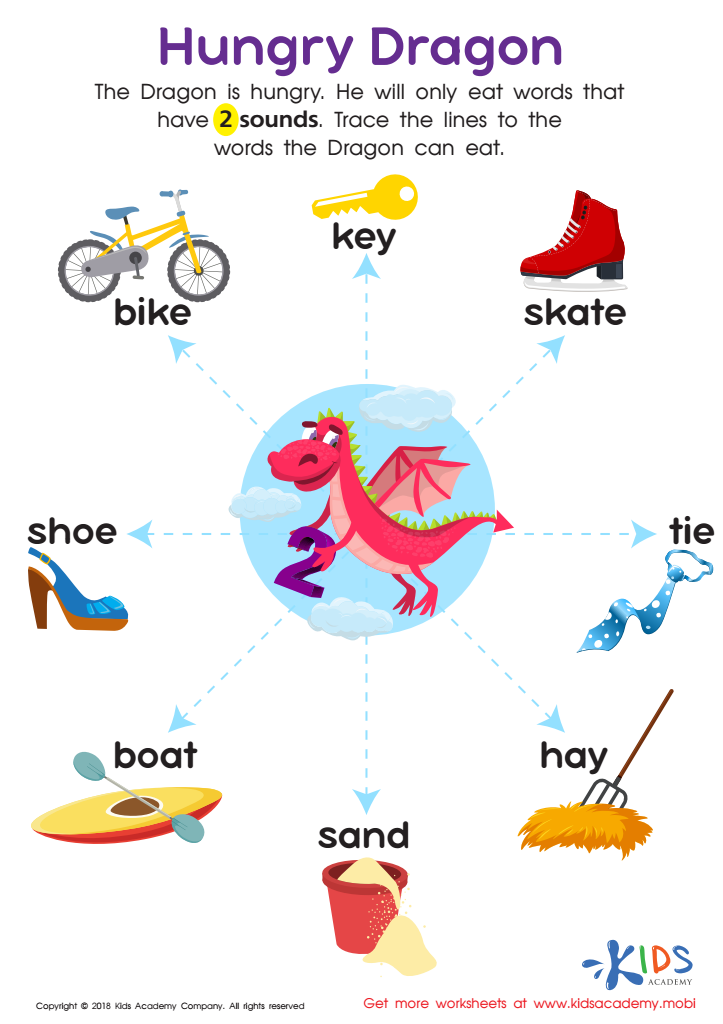
Hungry Dragon Worksheet
Feed the dragon words and watch your child strengthen their phonological awareness and auditory discrimination skills! Download this free PDF for tracing exercises that build their fine motor skills too. Kids will love spending time with the cute dragon while they unwittingly learn reading skills!
Hungry Dragon Worksheet
Worksheet
Join Kids Academy for Free
Who is primarily going to use this learning content?







Mental math practice is essential for children aged 6-7, as it lays a strong foundation for their mathematical understanding and overall cognitive development. Engaging in mental math helps young learners develop fluency with numbers, which is crucial for their future academic success. This practice enhances critical thinking skills, enabling children to solve problems quickly and efficiently without relying on calculators or written methods.
Parents and teachers should prioritize mental math because it encourages confidence and independence in young learners. As students practice mental calculations, they become more comfortable with numerical concepts, fostering a positive attitude toward math. Additionally, this skill aids in everyday situations, from counting change to measuring ingredients in cooking, ultimately promoting practical life skills.
Moreover, mental math strengthens working memory, which is essential for multitasking and retaining information, not just in mathematics but across various subjects. By nurturing mental math abilities, parents and teachers contribute to the development of resilient, adaptable learners who can tackle challenging concepts as they progress academically. In summary, mental math practice is not merely about computations; it supports holistic growth in children, empowering them to excel in both school and life beyond the classroom.








