Recognizing number patterns Normal Worksheets for Ages 6-7
4 filtered results
-
From - To
Discover our "Recognizing Number Patterns Normal Worksheets," specially designed for children aged 6-7. These engaging worksheets help young learners identify, understand, and extend number patterns, laying a strong foundation for future math concepts. Each activity promotes critical thinking and enhances problem-solving skills while making learning fun! From simple sequences to interactive challenges, our worksheets cater to various learning styles. Ideal for classroom use or at-home practice, these resources support early math development essential for this age group. Foster your child's confidence in math by downloading our friendly and vibrant worksheets today and watch them succeed in recognizing number patterns effortlessly!
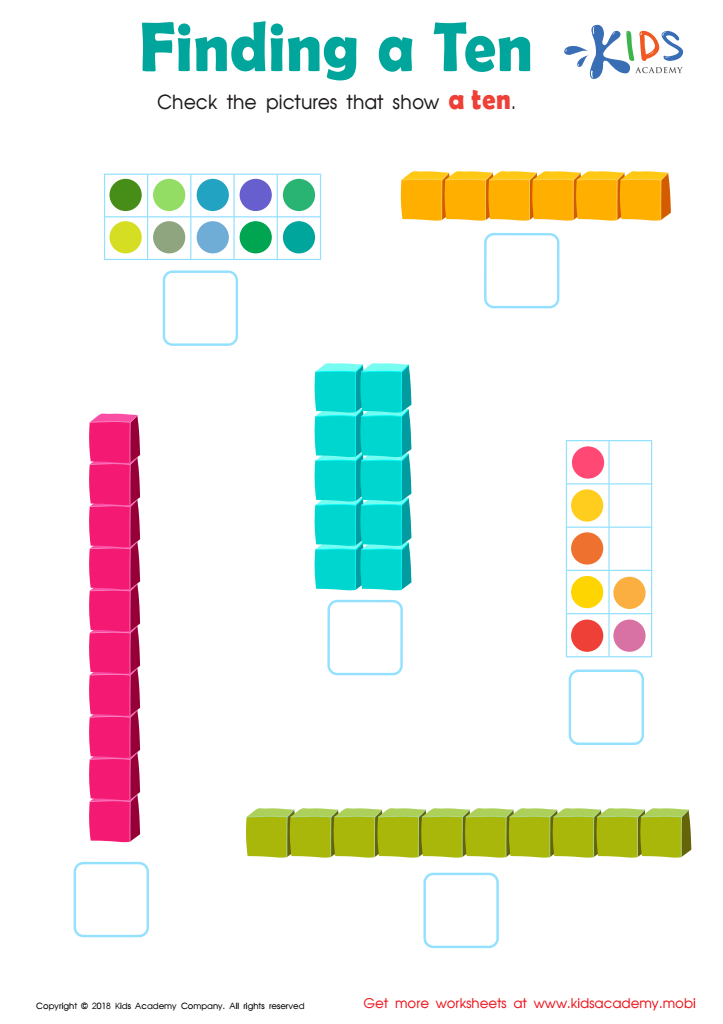
Finding a Ten Worksheet
 Assign to My Students
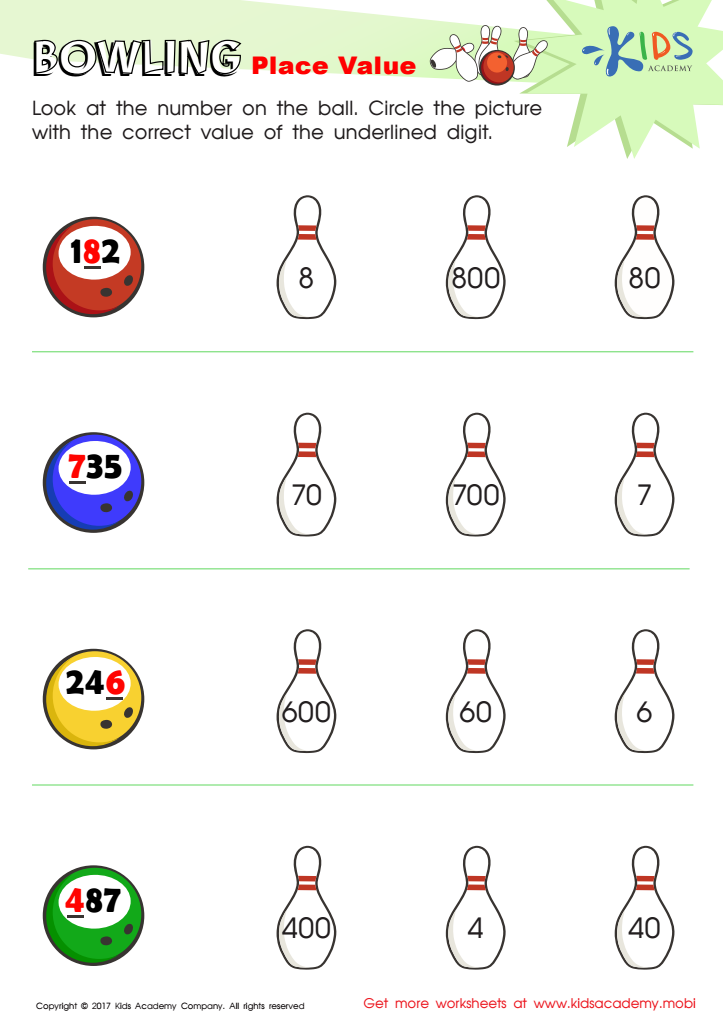
Place Value Worksheet
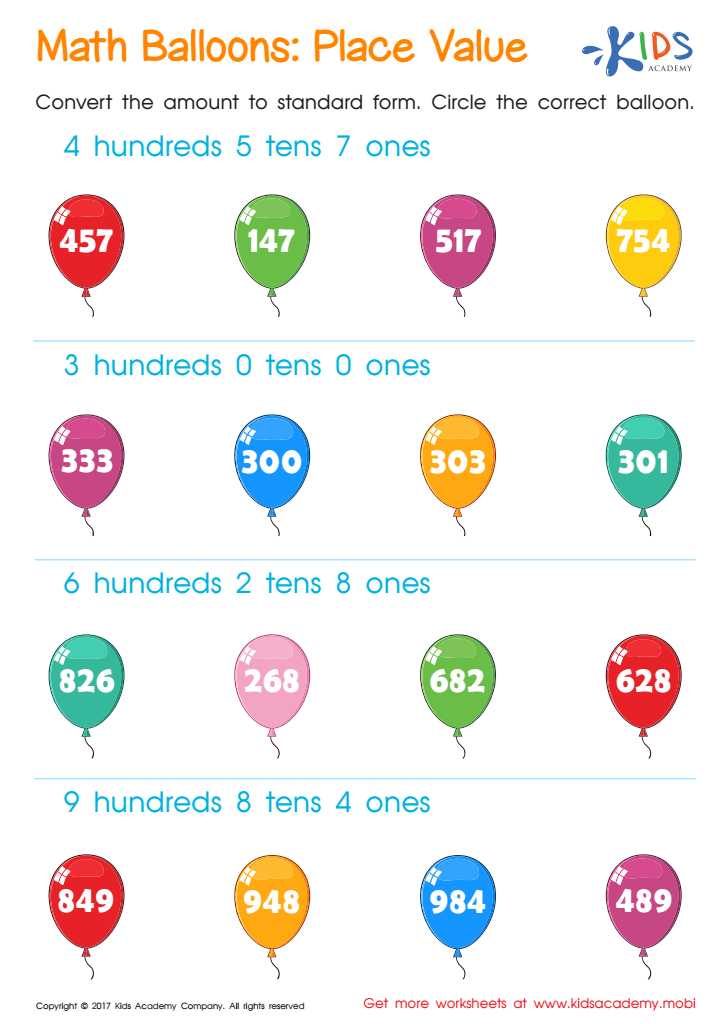
Place Value Printable Worksheet
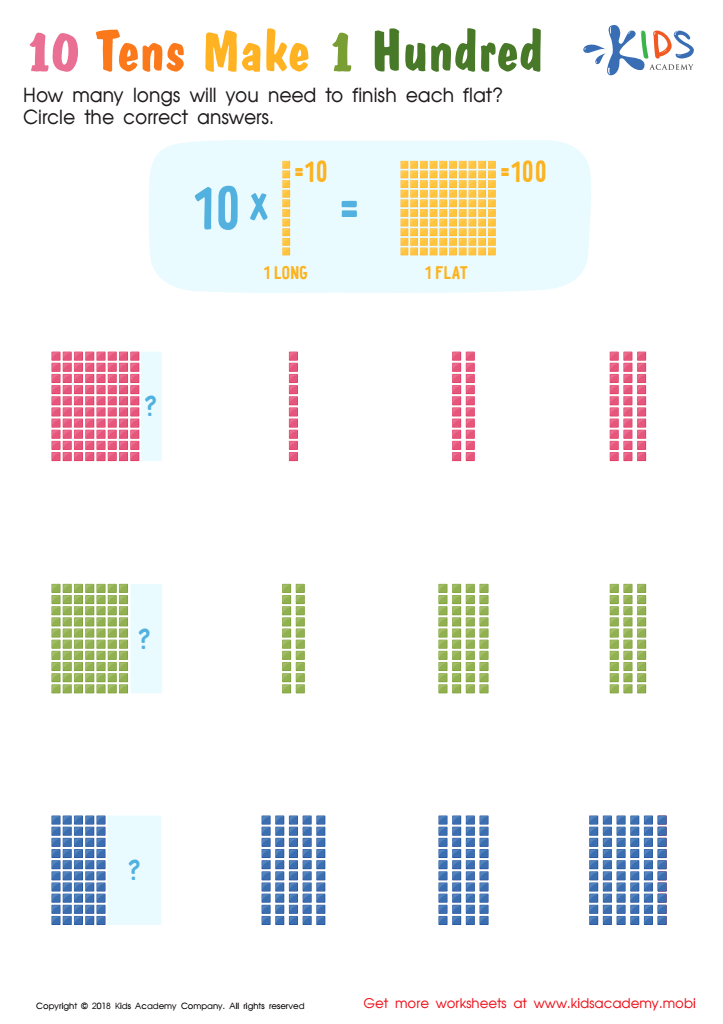
10 Tens Make 1 Hundred Worksheet








Recognizing number patterns is a crucial skill for children aged 6-7, and parents and teachers should prioritize its development due to the many cognitive benefits it offers. Firstly, understanding number patterns enhances children's numerical fluency, paving the way for more complex mathematical concepts later on. Establishing a foundation in pattern recognition helps children identify relationships between numbers, improving their problem-solving skills.
Moreover, recognizing patterns fosters critical thinking, enabling students to make predictions and solve mathematical problems efficiently. From simple sequences to more complicated arrangements, patterns are embedded in everyday life, making this skill both practical and relevant. When children learn to find symmetry and repetition, they build a deeper understanding of mathematics that extends beyond rote memorization.
Additionally, this skill helps enhance memory retention. Engaging with patterns allows children to store and retrieve information more effectively, aiding their overall learning process. Finally, recognizing number patterns can kick-start early algebraic thinking, fostering an early appreciation for math.
By supporting children in this area, parents and teachers not only contribute to their immediate academic success but also equip them with essential life skills, laying the groundwork for future learning and critical thinking in a wide variety of fields.








