Sight word recognition Normal Worksheets for Ages 6-7
11 filtered results
-
From - To
Discover our engaging Sight Word Recognition Normal Worksheets, specially designed for children aged 6-7. These fun and interactive worksheets help young learners develop essential reading skills by focusing on sight words—the most frequently used words that students need to recognize instantly. Each worksheet offers a variety of exercises, including word hunts, fill-in-the-blanks, and matching activities that cater to different learning styles. Our resources promote both independent learning and support from parents or educators, ensuring a well-rounded approach to mastering sight words. Foster a love for reading while building confidence with our Sight Word Recognition worksheets! Perfect for home or classroom use.
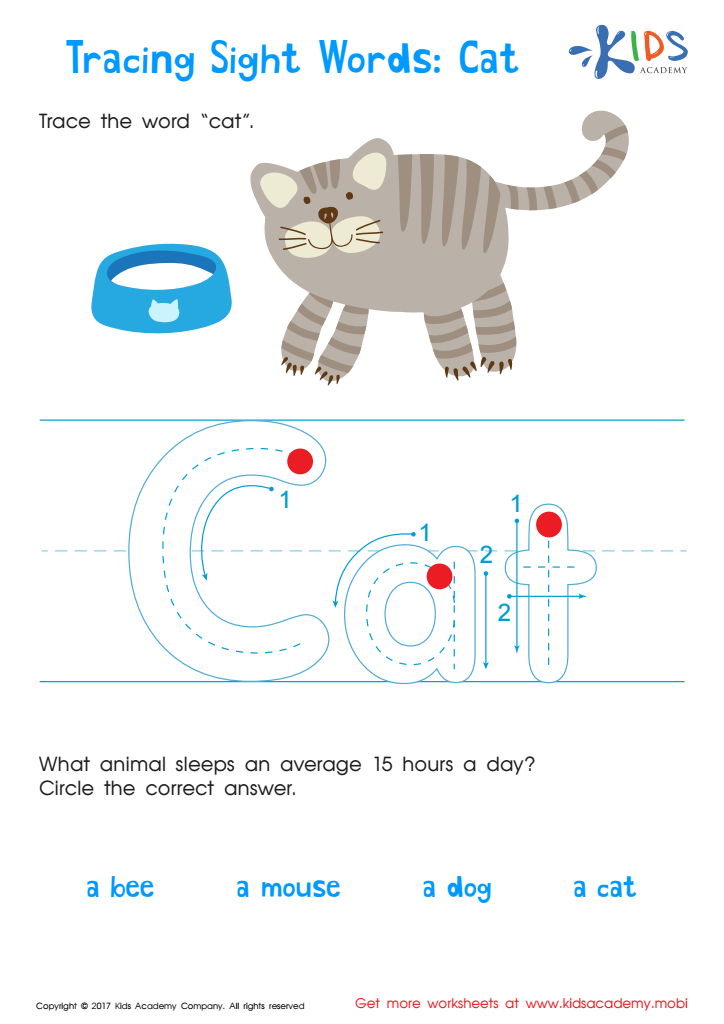
Cat Printable Sight Words Worksheet
 Assign to My Students
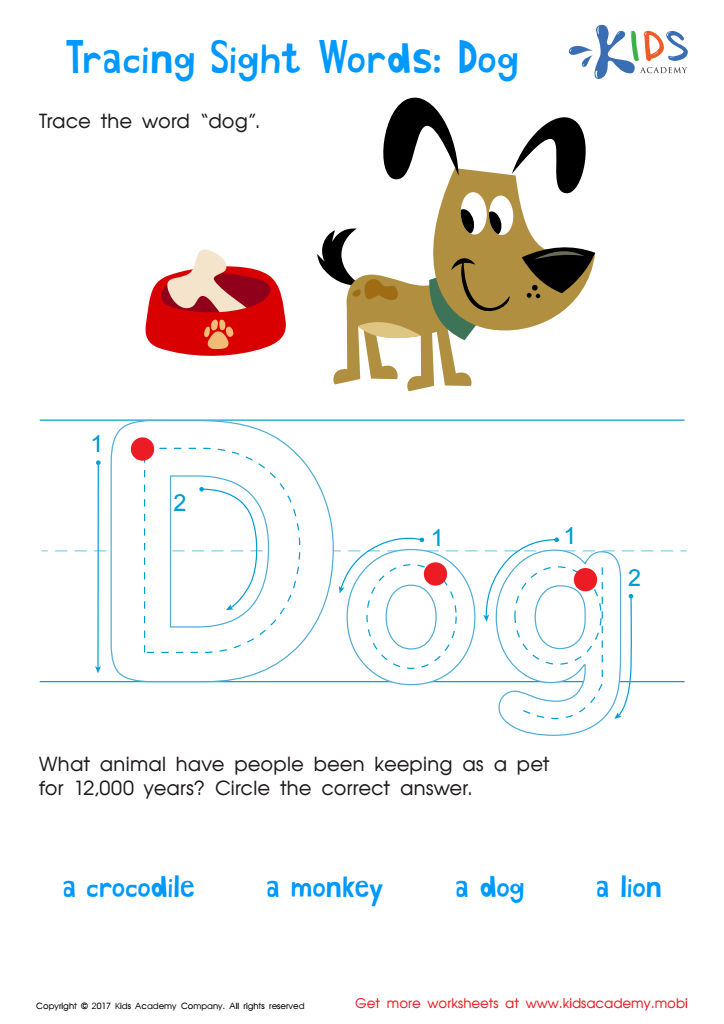
Dog Worksheet Sight Words Worksheet
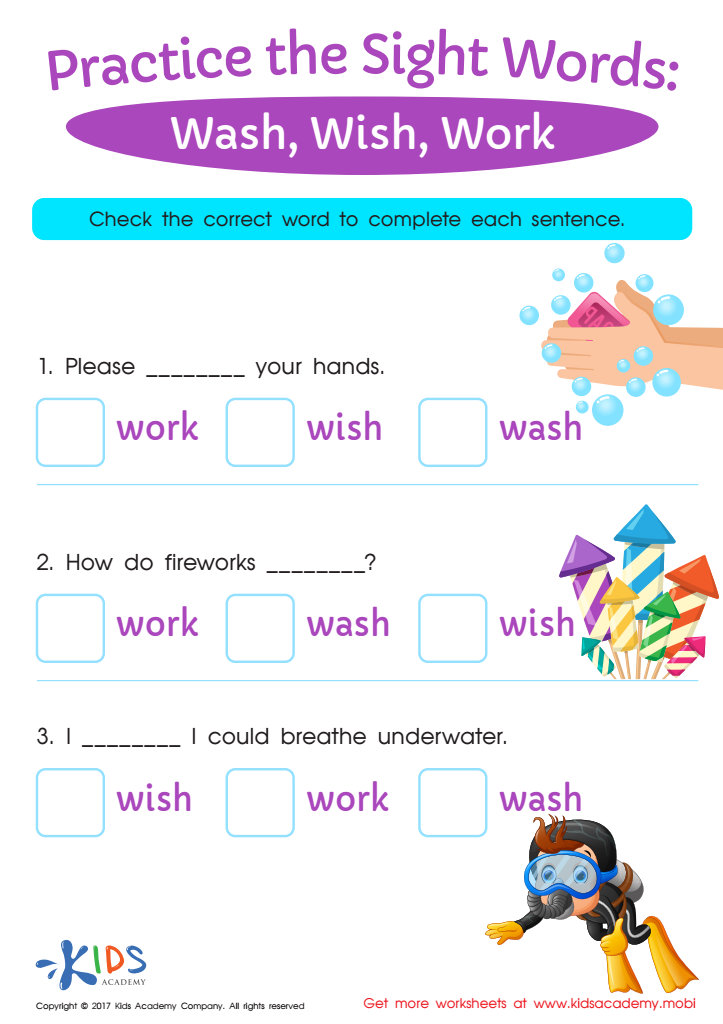
Wash, Wish, Work Sight Words Worksheet
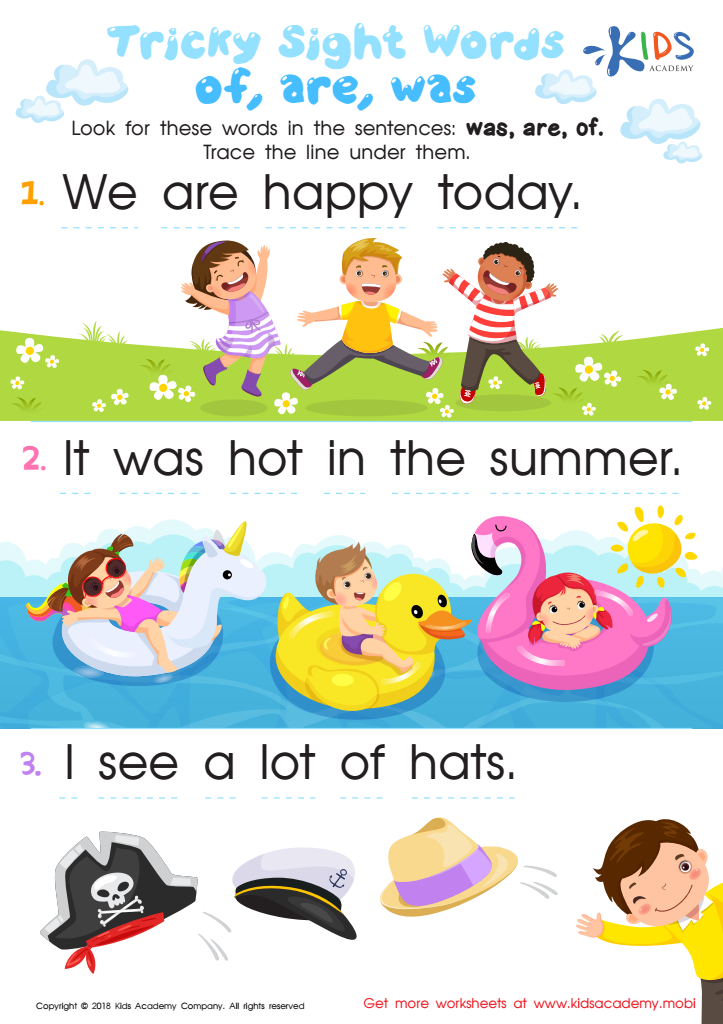
Tricky Sight Words Worksheet
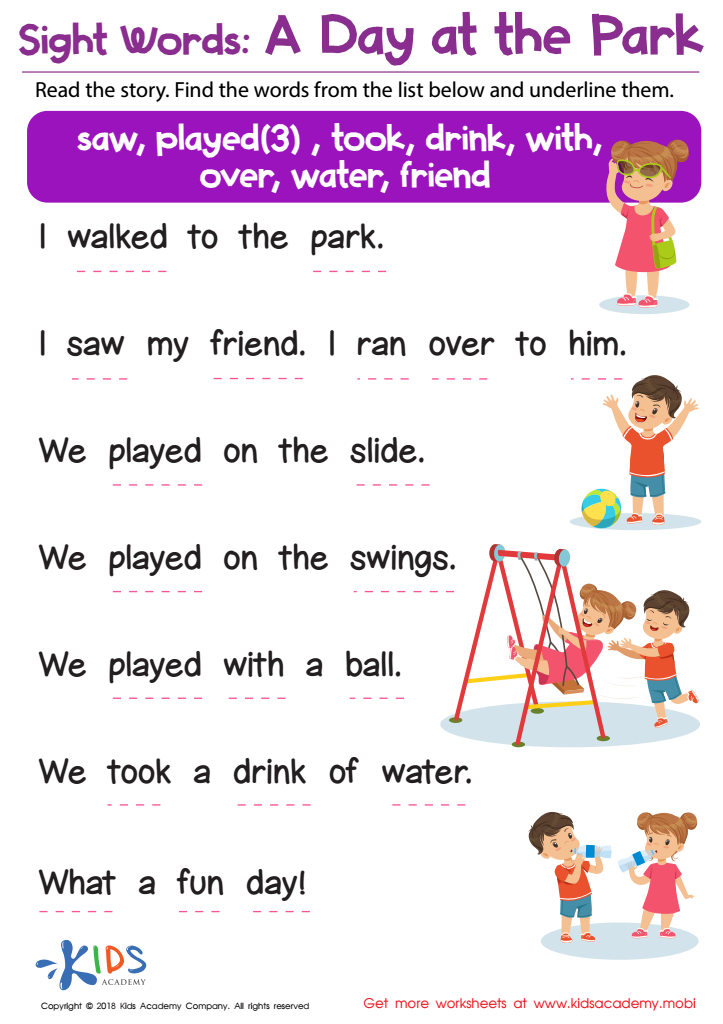
Sight Words: A Day at the Park Worksheet
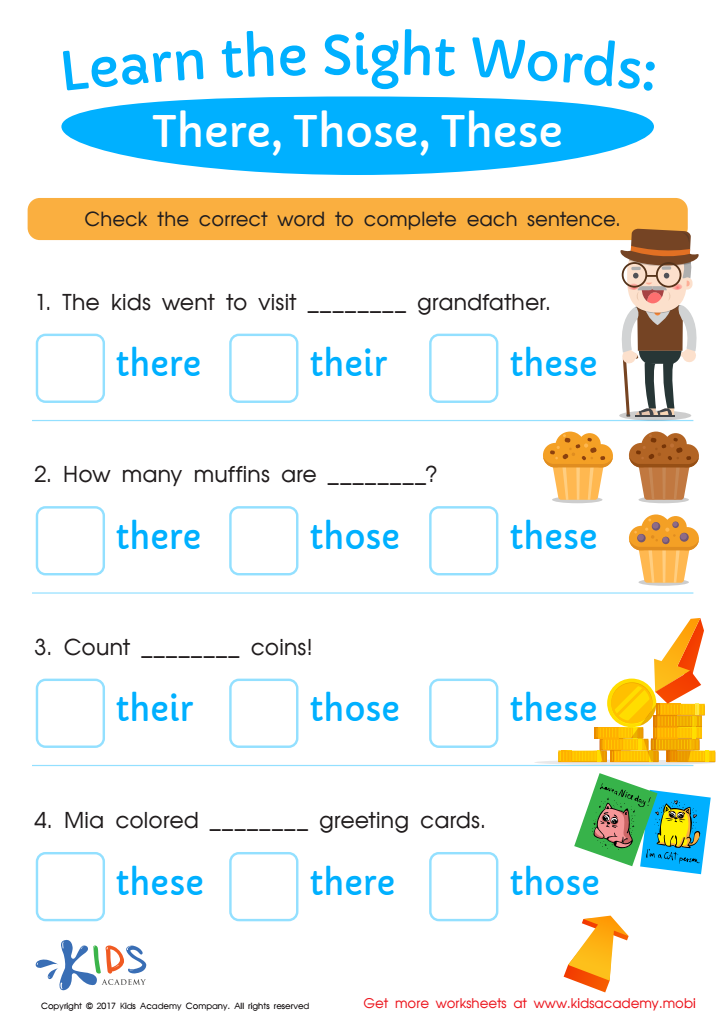
There, Those and These Sight Words Worksheet
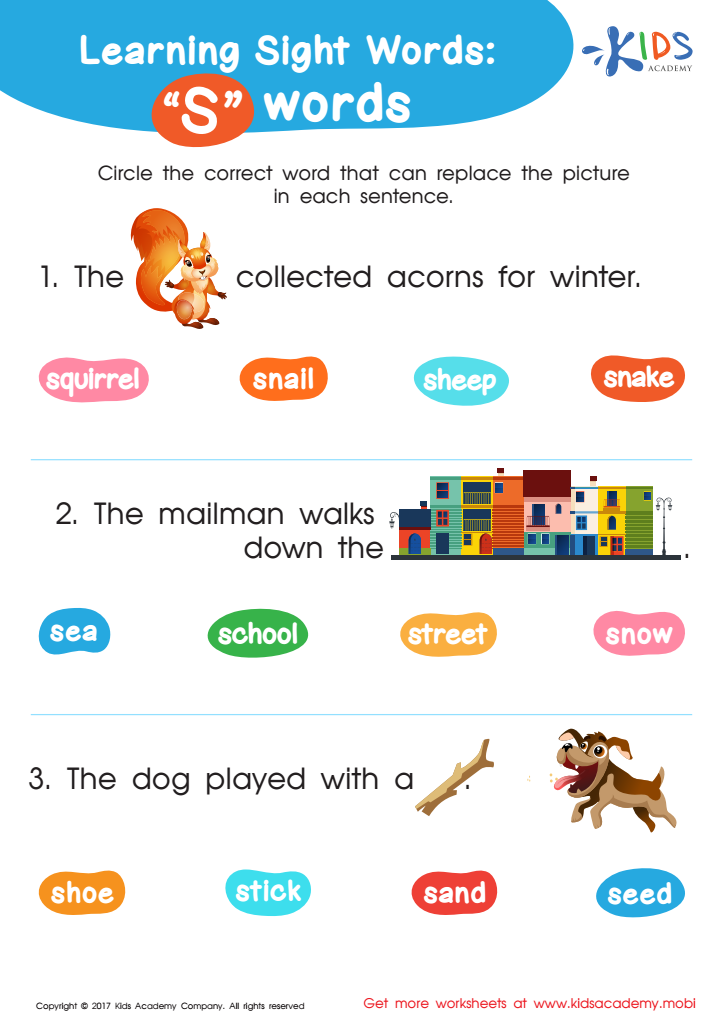
S Words Sight Words Worksheet
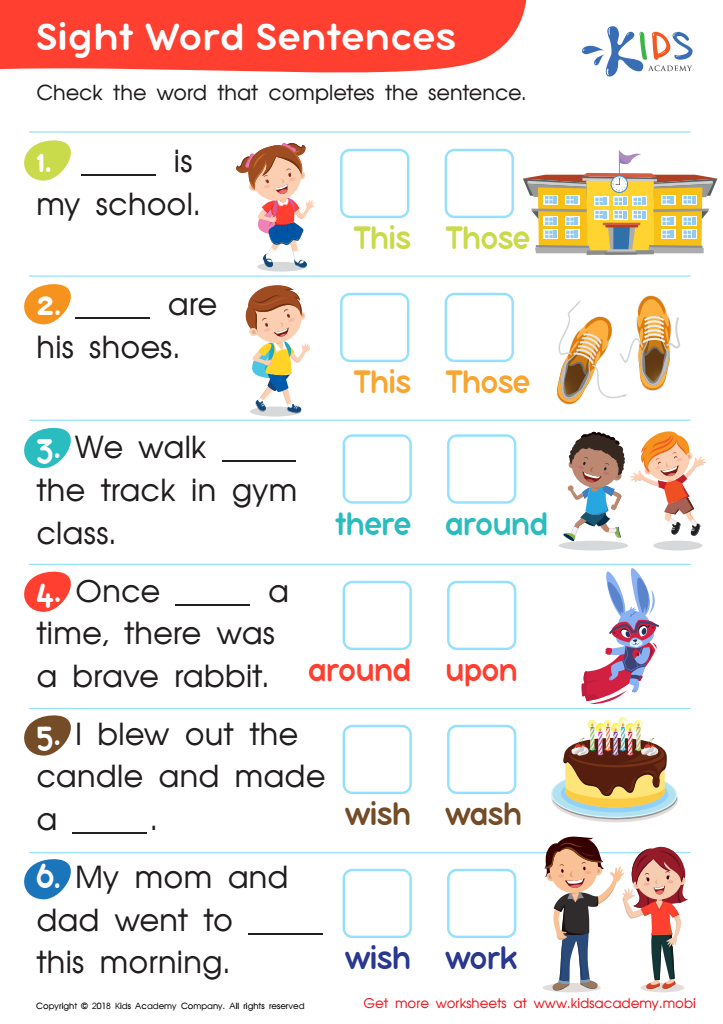
Sight Word Sentences Worksheet
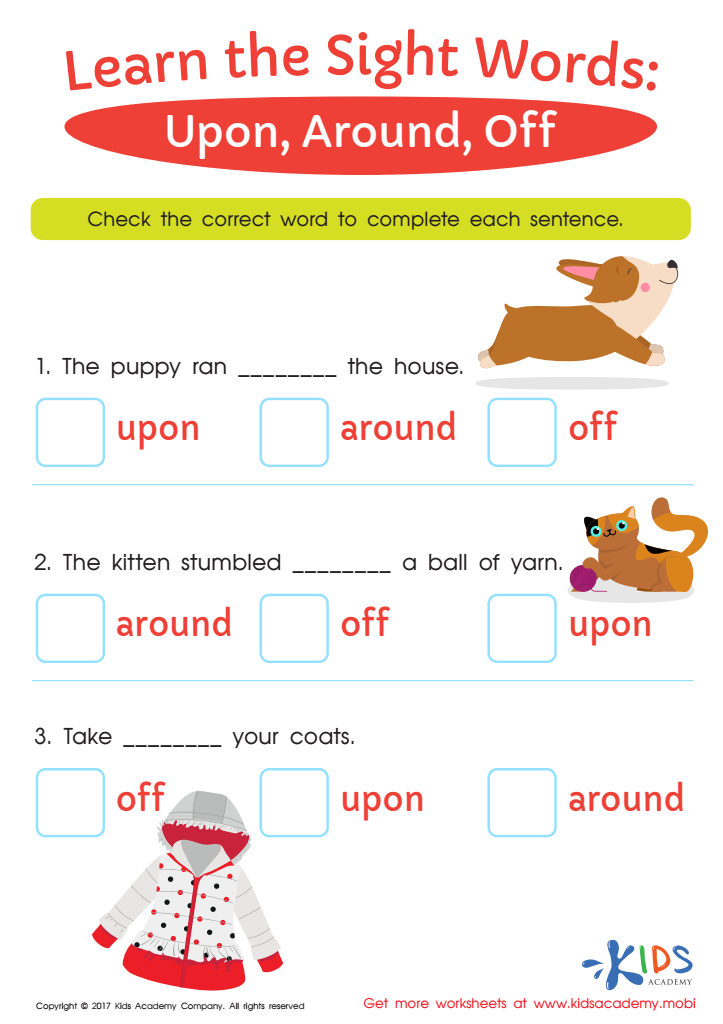
Upon, Around, Off Sight Words Worksheet
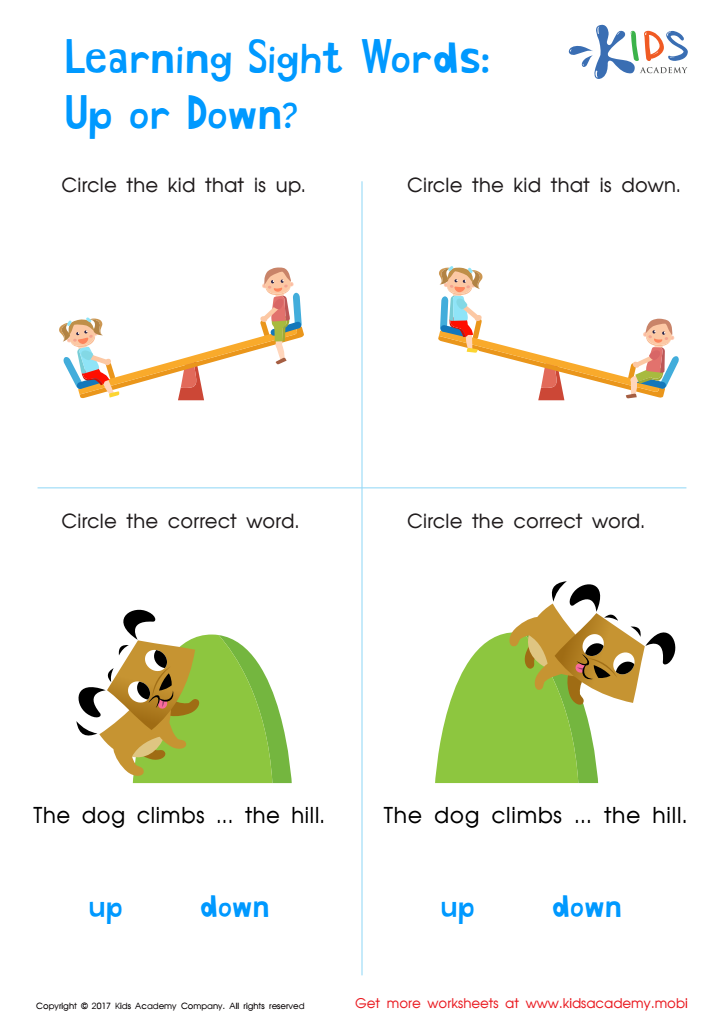
Up or Down Printable Sight Words Worksheet








Sight word recognition is crucial for children ages 6-7 as it lays the foundation for their reading development. At this stage, children are transitioning from learning to read to reading to learn. Mastery of sight words—those commonly used words that readers recognize instantly without needing to sound them out—supports fluency and comprehension.
When children can quickly identify these words, they spend less cognitive energy decoding individual words and can focus more on understanding the text's meaning. This leads to greater engagement and confidence in their reading abilities. Additionally, realizing that many sight words bear no phonetic significance, atmospheres that prioritize early literacy through sight word recognition help develop children’s phonemic awareness alongside their safe practice.
This literacy skill fosters academic success, as reading proficiency influences numerous subject areas. Parents and teachers have a vital role in helping children practice and reinforce sight word recognition through interactive methods such as games, flashcards, and context puzzles.
By being active participants in reinforcing sight word familiarity, caregivers can encourage a lifelong love of reading, ensuring children gain the essential tools they need for future educational challenges. Ultimately, prioritizing sight word recognition significantly contributes to overall literacy development for young learners.








