Spatial Orientation Normal Worksheets for Ages 6-7
3 filtered results
-
From - To
Welcome to our Spatial Orientation Normal Worksheets for ages 6-7! Designed specifically for young learners, these engaging worksheets help children develop essential spatial awareness skills. Through fun activities, kids will explore concepts like direction, position, and distance, enabling them to understand how objects relate to one another in space. Our carefully crafted exercises encourage critical thinking and enhance problem-solving abilities while keeping children entertained. Perfect for at-home learning or classroom use, these worksheets ensure that your child builds a solid foundation in spatial orientation. Help your child thrive with our interactive, age-appropriate resources today!
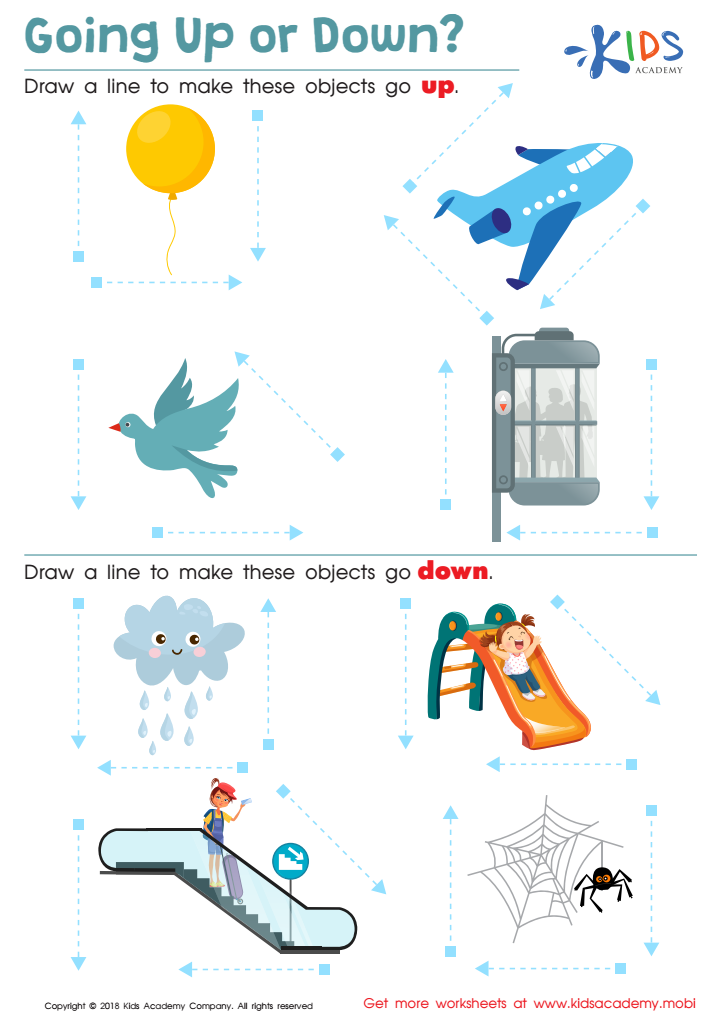
Going up or Down? Worksheet
 Assign to My Students
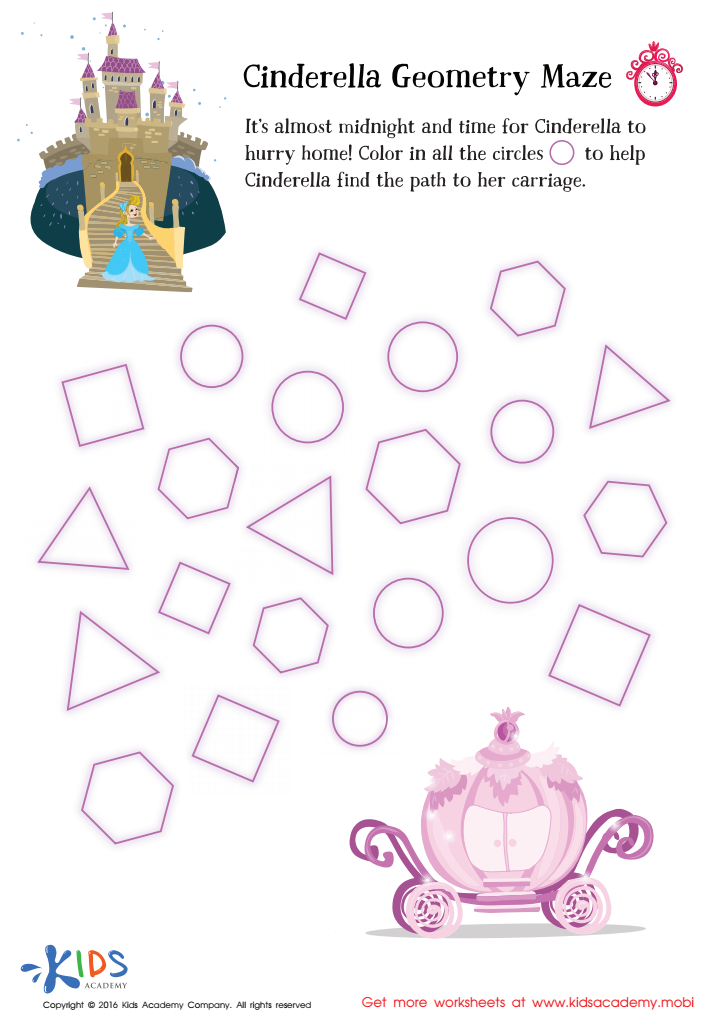
Cinderella Geometry Maze Worksheet
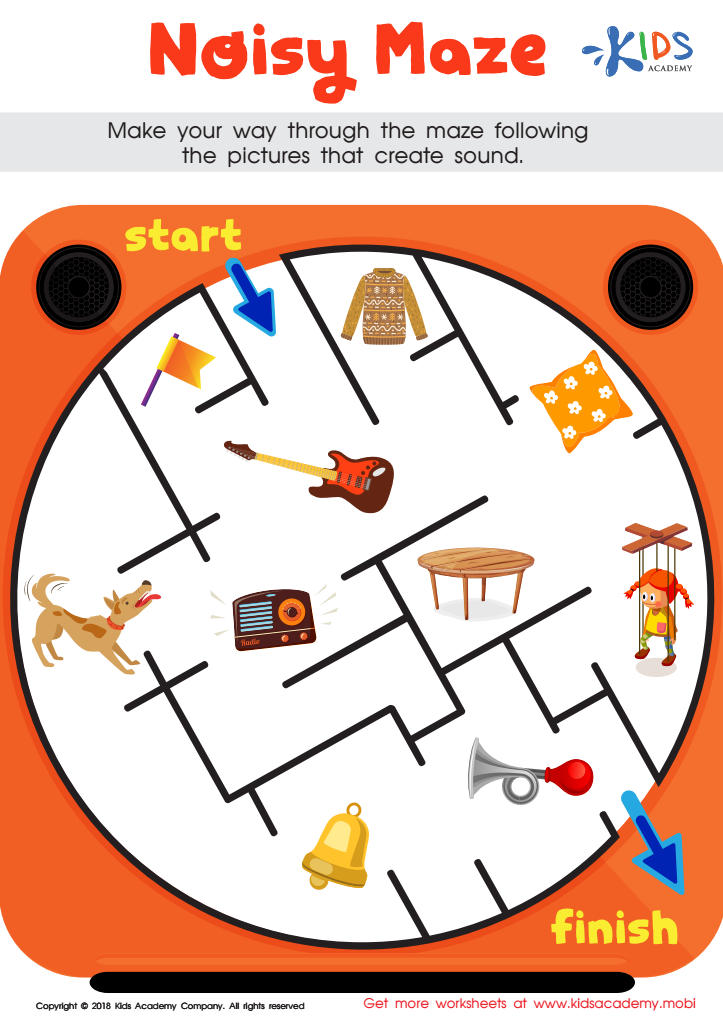
Noisy Maze Worksheet




.jpg)



Spatial orientation is essential for children aged 6-7 as it significantly influences their cognitive development and learning processes. During this critical period, children's brains are wired to understand the world around them, and a strong grasp of spatial orientation aids in this understanding. It allows them to internalize concepts like direction, distance, and location, which underpin skills in mathematics, problem-solving, and science.
Parents and teachers should care because early mastery of spatial orientation helps children excel in tasks such as reading maps, solving puzzles, and grasping geometrical figures. Furthermore, these skills are foundational for later academic subjects, including geometry and physics, where spatial concepts are paramount.
Encouraging activities like drawing maps, playing with building blocks, and participating in physical games fosters spatial awareness and can have long-lasting positive effects on a child's academic trajectory. Additionally, strong spatial skills contribute to confidence and independence, as children learn to navigate their environments.
By prioritizing spatial orientation development, adults can equip children with vital skills—not just for academic success but also for navigating the complexities of everyday life. This holistic support nurtures a well-rounded learner, ready to explore and engage with the world creatively and intellectually.








