Spatial reasoning Normal Worksheets for Ages 6-7
5 filtered results
-
From - To
Spatial Reasoning Normal Worksheets for Ages 6-7 are expertly designed to nurture your child's ability to understand and manipulate shapes, spaces, and positions. These worksheets offer engaging activities to enhance critical thinking, problem-solving, and cognitive skills. Your child will enjoy tasks like puzzle completion, pattern recognition, and shape sorting, all tailored to their developmental stage. Perfect for home or classroom use, these printable resources provide a fun, interactive way to boost spatial awareness and lay a solid foundation for future math and science learning. Spark your child's curiosity with these dynamic, easy-to-follow worksheets!
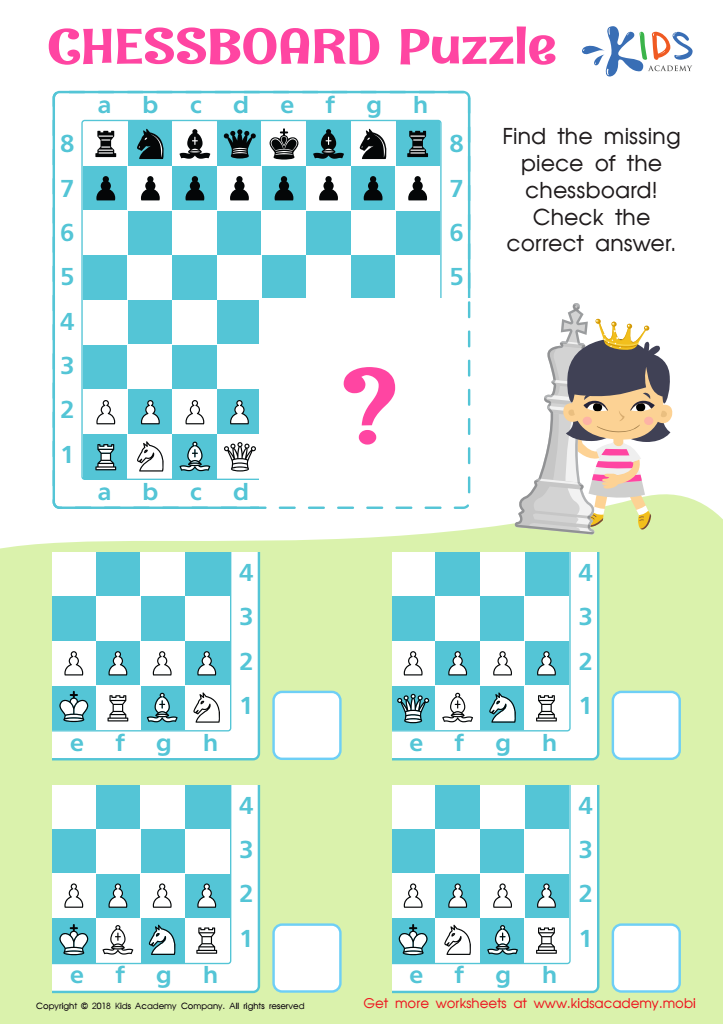
Chessboard Puzzle Worksheet
 Assign to My Students
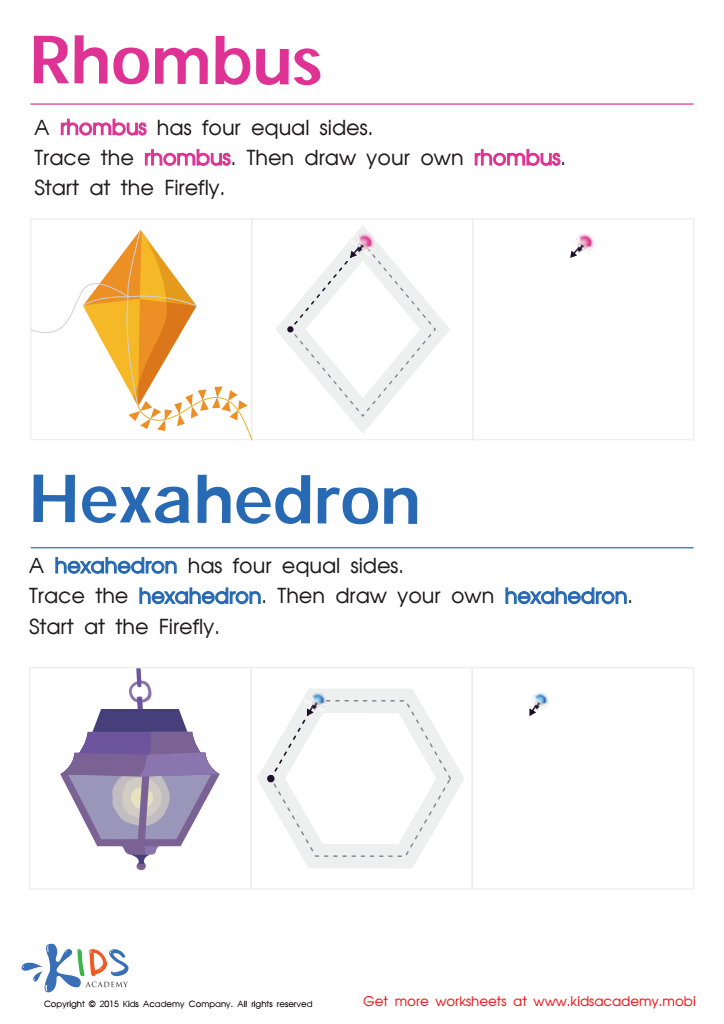
Draw a Rhombus And a Hexahedron Printable
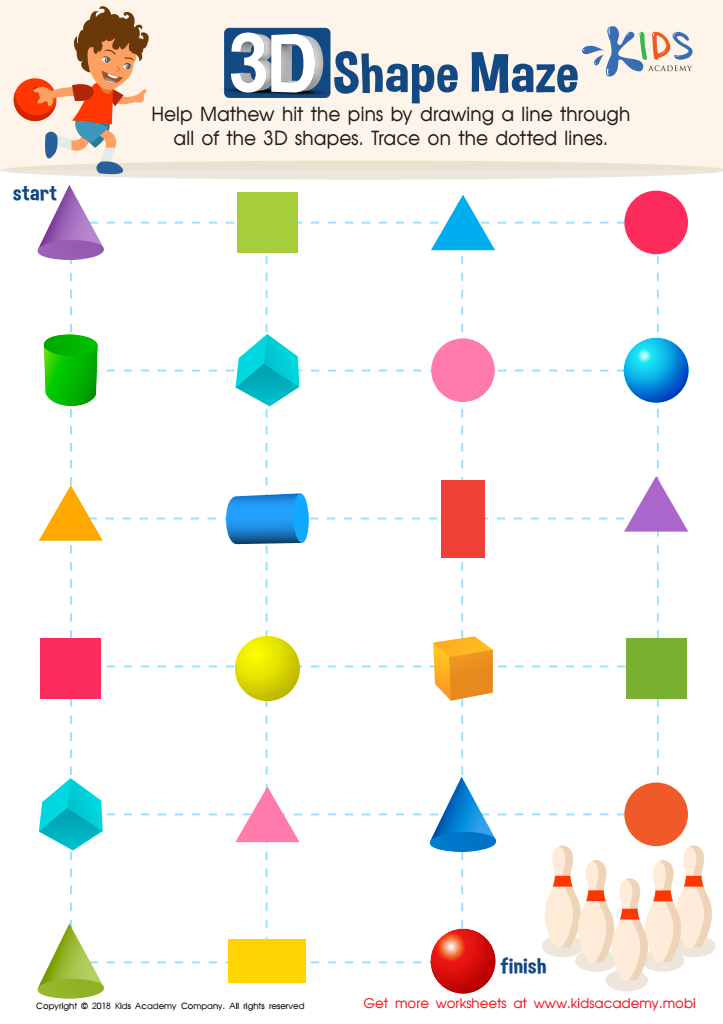
Shapes Maze Geometry Worksheet
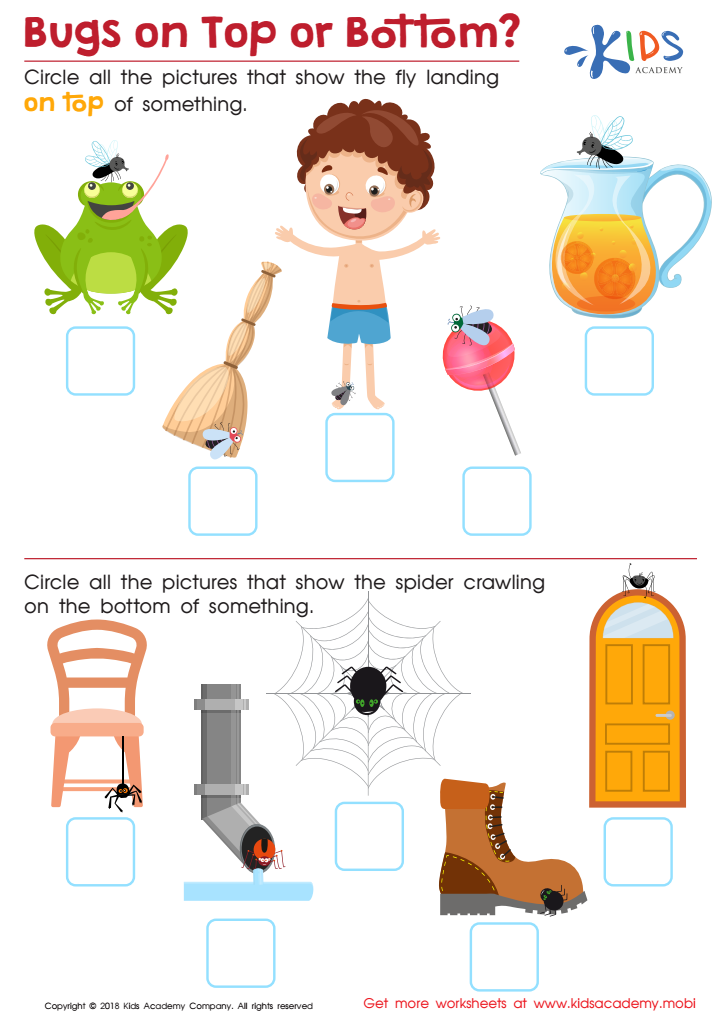
Bugs on Top or Bottom? Worksheet
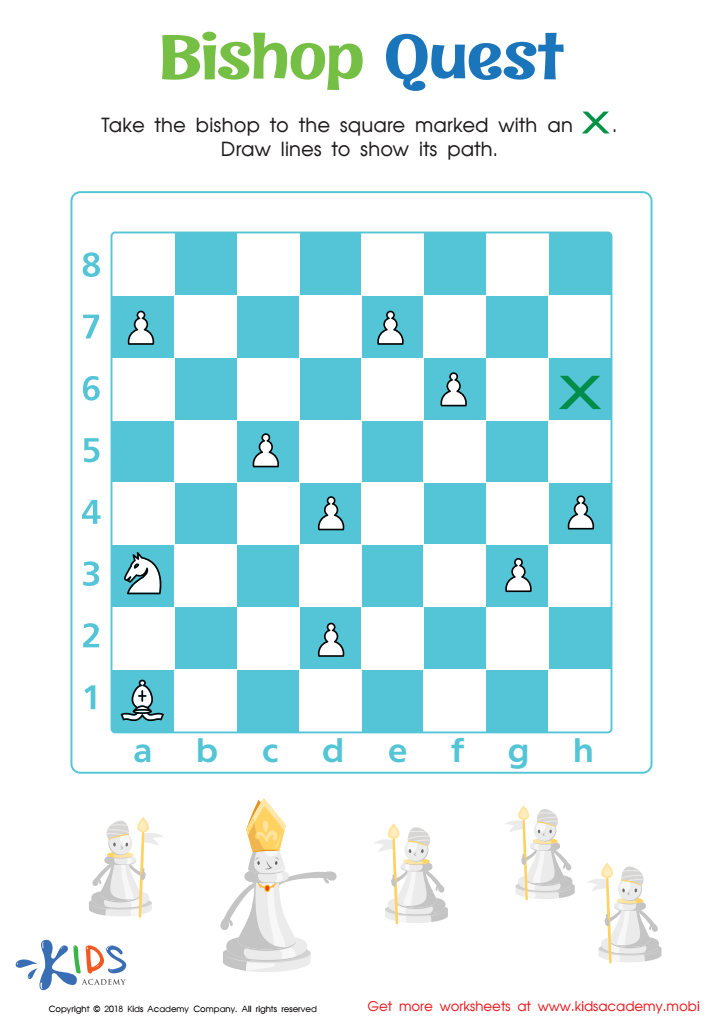
Bishop Quest Worksheet


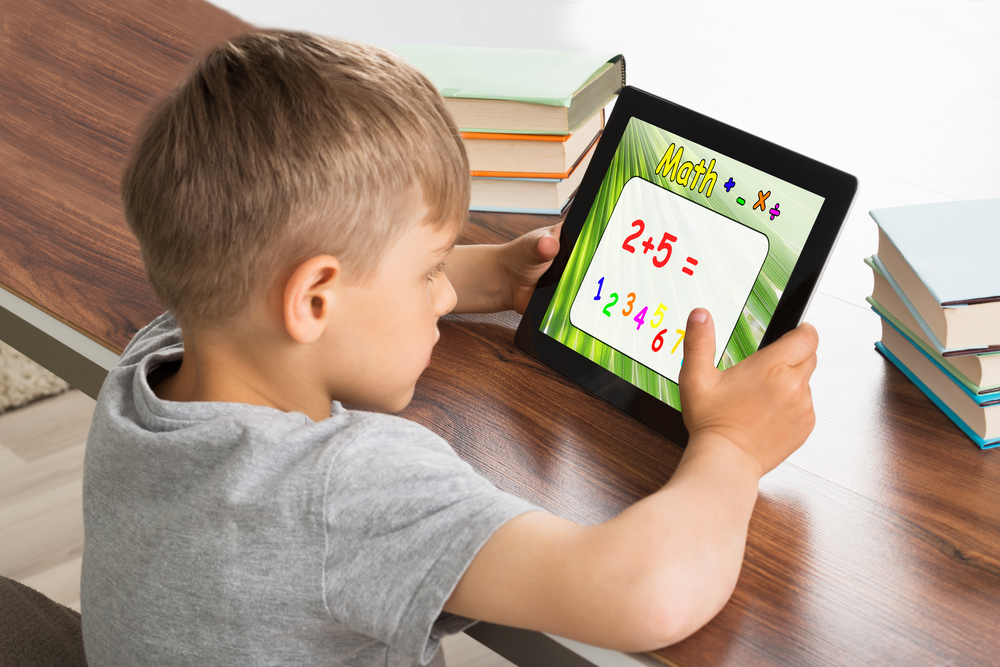



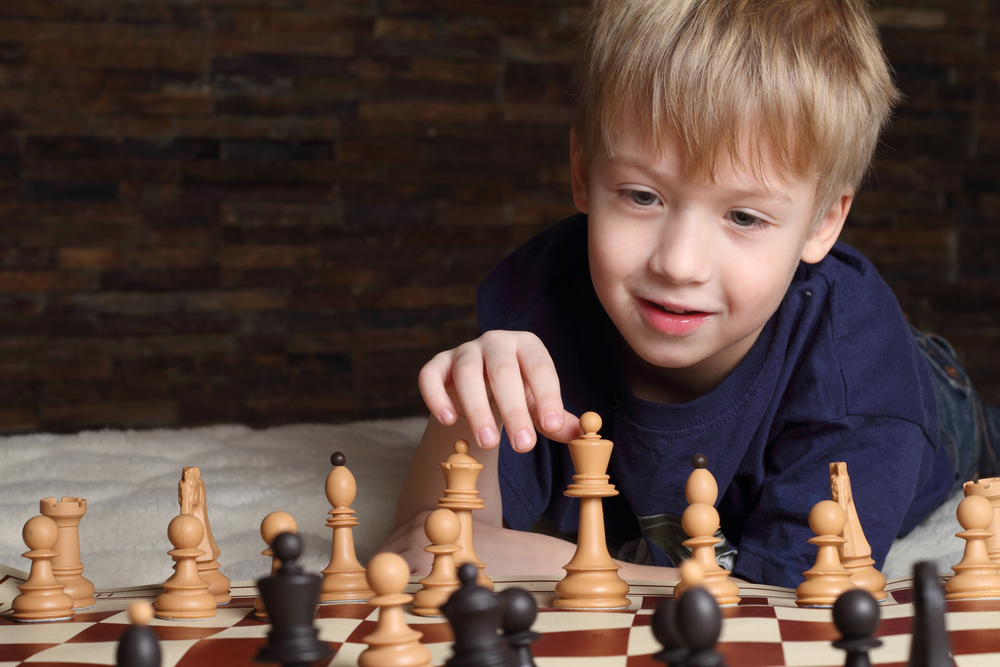

Parents and teachers should prioritize the development of spatial reasoning in children ages 6-7 because it forms a crucial foundation for learning and cognitive growth. Spatial reasoning entails understanding and manipulating shapes and spaces, skills essential for tasks ranging from reading and writing to Math and Science. For example, children use spatial skills to differentiate between letters and numbers, interpret graphs and charts, and solve puzzles.
Furthermore, spatial reasoning is closely linked to success in STEM (Science, Technology, Engineering, and Mathematics) fields. Early proficiency in spatial skills often translates into better performance in complex problem-solving and analytical tasks later in educational life. Engaging children in activities such as block building, drawing, and using tangrams helps reinforce these abilities.
Supporting spatial reasoning also enhances a child's everyday practical skills. It assists in navigating environments, understanding geometric relations, and even choreographing movements in sports and dance. Activities that improve spatial awareness can also boost creativity and imagination, nurturing a more holistic and engaging learning experience.
Given these significant impacts, actively fostering spatial reasoning through guided play, targeted activities, and intentional curriculum choices prepares children not just for academic challenges but for practical, real-world tasks, setting a strong groundwork for future learning and development.








