Understanding context Normal Worksheets for Ages 6-7
5 filtered results
-
From - To
Discover our "Understanding Context" normal worksheets designed for ages 6-7, available at Kids Academy. These expertly crafted printable worksheets are perfect for fostering vital learning skills in young children. They focus on enhancing comprehension by teaching kids to interpret and understand the context within stories and sentences. Engaging activities and colorful illustrations make learning enjoyable, motivating children to practice and improve their reading abilities. Suitable for both classroom and home use, these worksheets support parents and teachers in helping kids build a strong foundation in language arts. Explore our comprehensive collection today and boost your child's literacy journey!
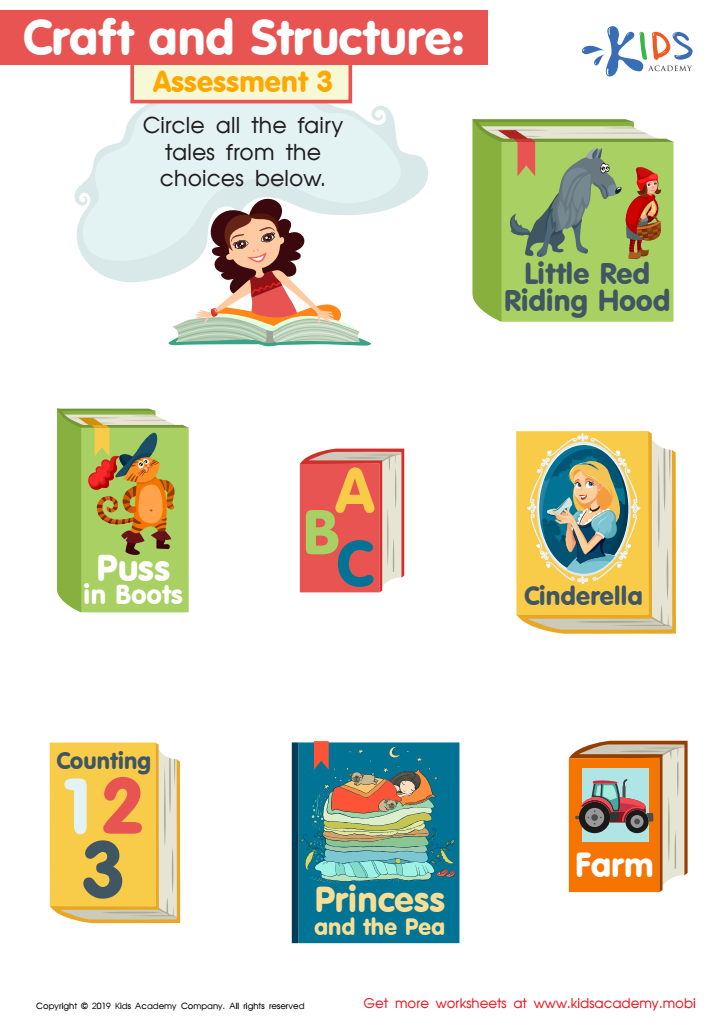
Craft and Structure: Assessment 3 Worksheet
 Assign to My Students
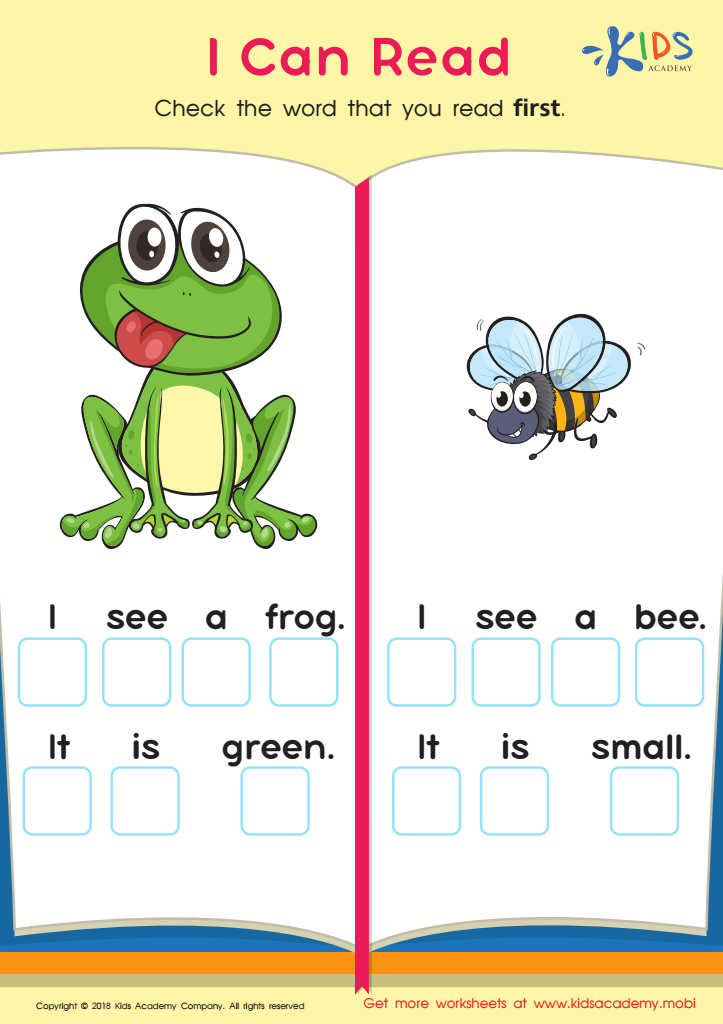
I Can Read Worksheet
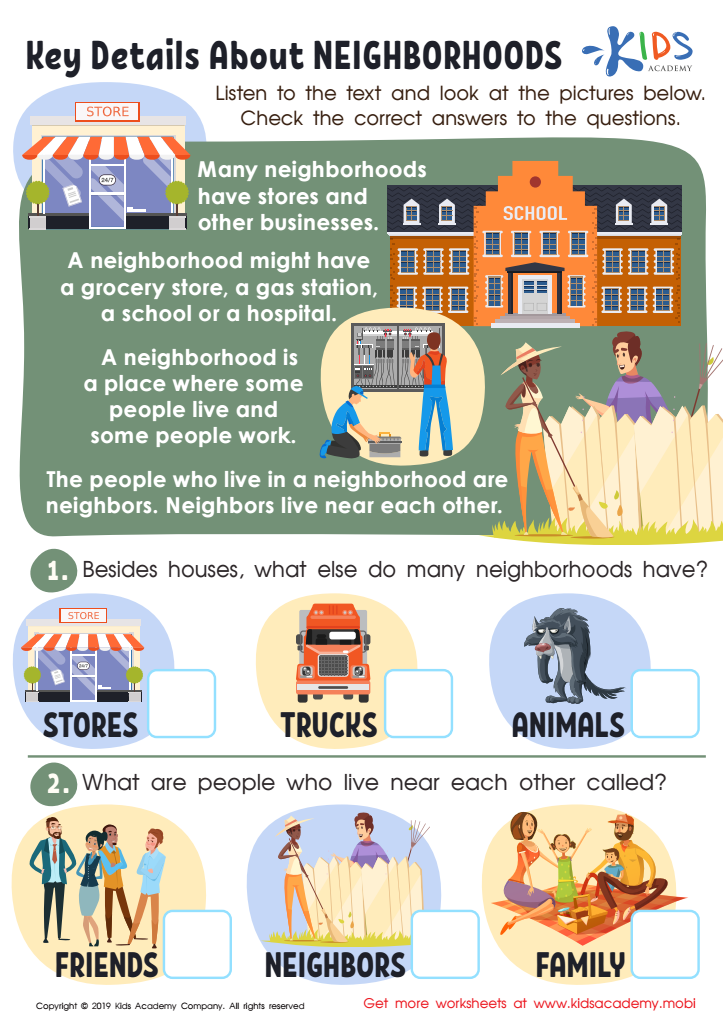
Key Details Neighborhoods Worksheet
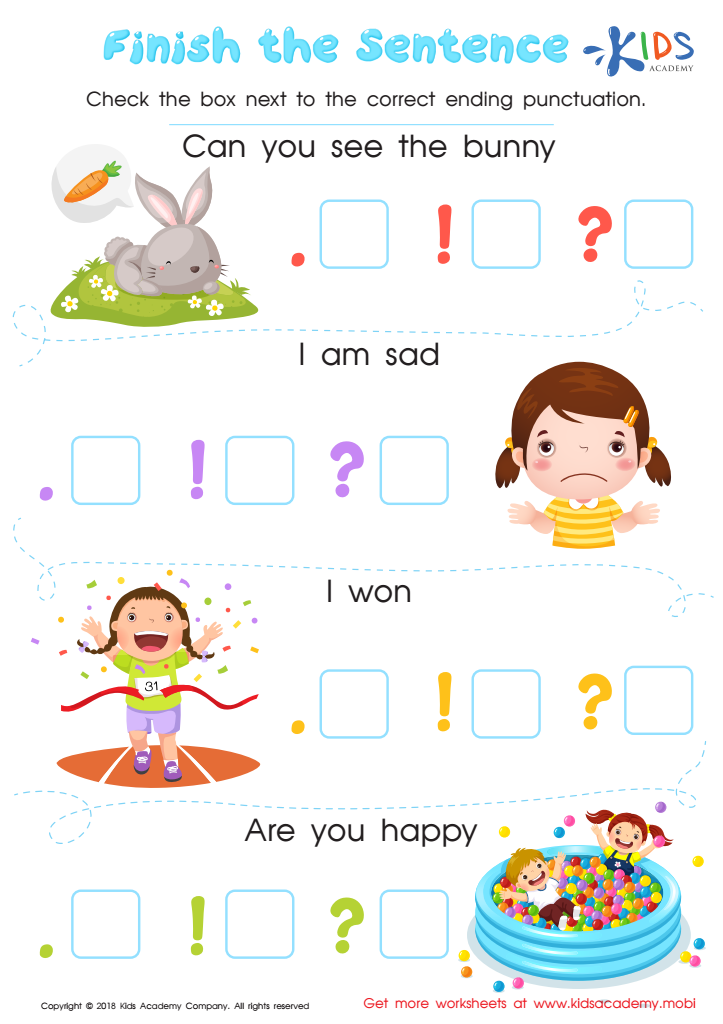
Finish the Sentence Worksheet
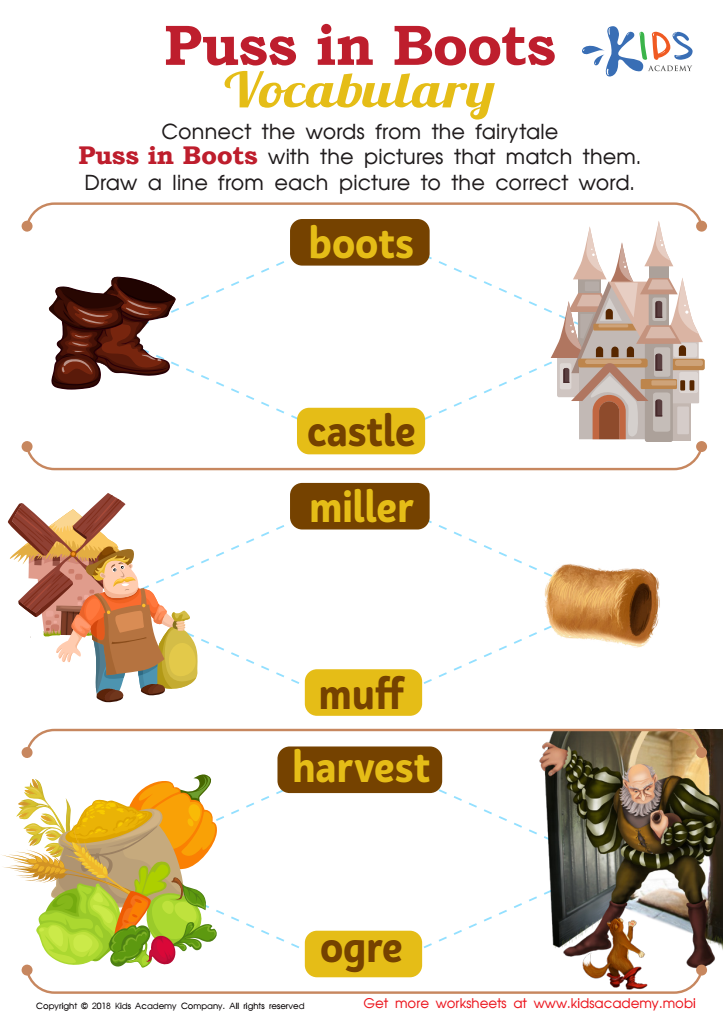
Puss in Boots Vocabulary Worksheet




.jpg)



Understanding context is crucial for children aged 6-7 as it directly influences their cognitive, social, and emotional development. At this age, kids are in a critical stage of learning where they begin to make connections between their experiences and the world around them. Being able to understand context helps children to grasp the meaning behind words, sentences, and situations. This skill enhances their reading comprehension by allowing them to infer meanings and predict outcomes.
For parents and teachers, nurturing this ability can significantly bolster a child's academic success and social skills. At home and in the classroom, children encounter various contexts –from storybooks and conversations to instructions and everyday scenarios. By guiding kids to recognize these contexts, adults help them develop more robust critical thinking and problem-solving abilities. For instance, understanding why telling someone, "I don't know," may be appropriate in some settings but not others equips children with the flexibility to interact more effectively in diverse environments.
Moreover, a child's ability to understand context supports emotional regulation and empathy. It allows them to interpret social cues accurately, fostering better peer relationships and reducing conflicts. Therefore, investing time in cultivating this skill can create a foundation for lifelong learning and emotional intelligence.








