Understanding natural resources Normal Worksheets for Ages 6-7
5 filtered results
-
From - To
Explore our "Understanding Natural Resources" worksheets crafted for ages 6-7. These engaging activities help young learners recognize different natural resources and their importance. Through vibrant illustrations and simple explanations, kids grasp concepts such as renewable vs. non-renewable resources, the role of water and air, and conservation practices. Our worksheets are designed to foster critical thinking, environmental awareness, and practical knowledge. Ideal for both classroom and home use, they offer a fun, interactive way for children to build foundational science skills. Start your child's journey towards environmental stewardship with our expertly curated worksheets today!
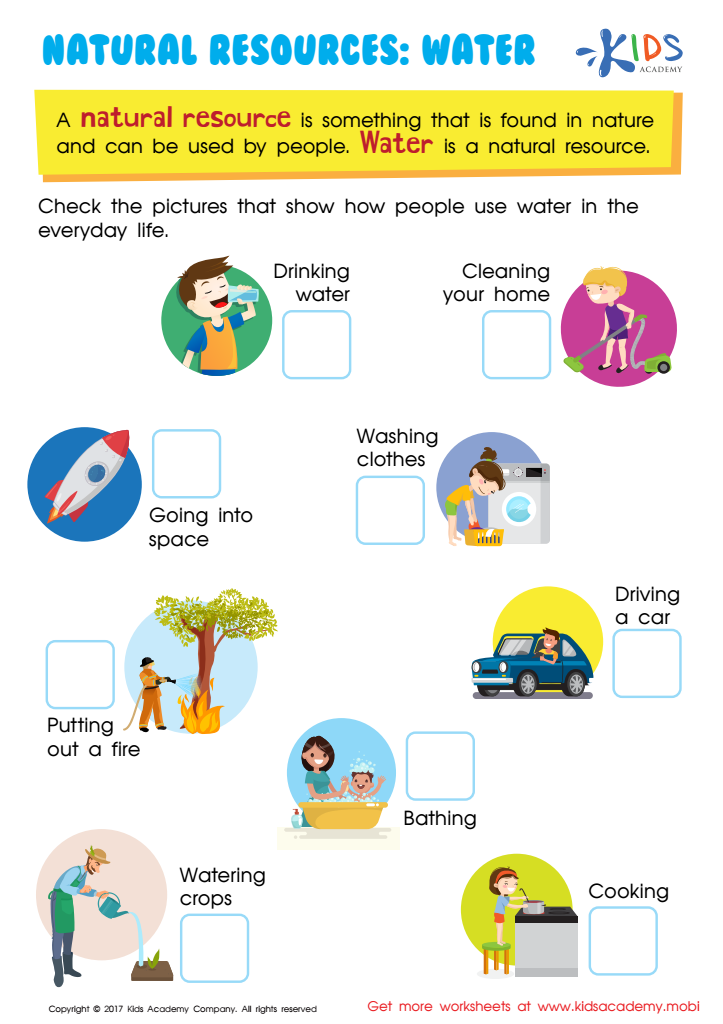
Natural Resources: Water Worksheet
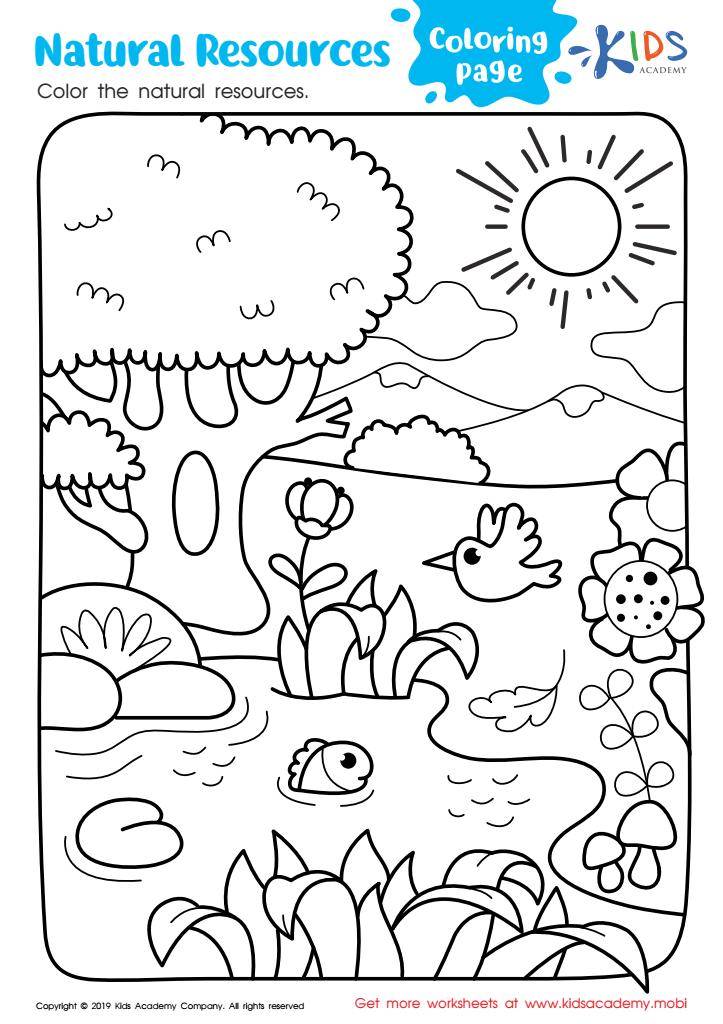
Natural Resources Coloring Page Worksheet
 Assign to My Students
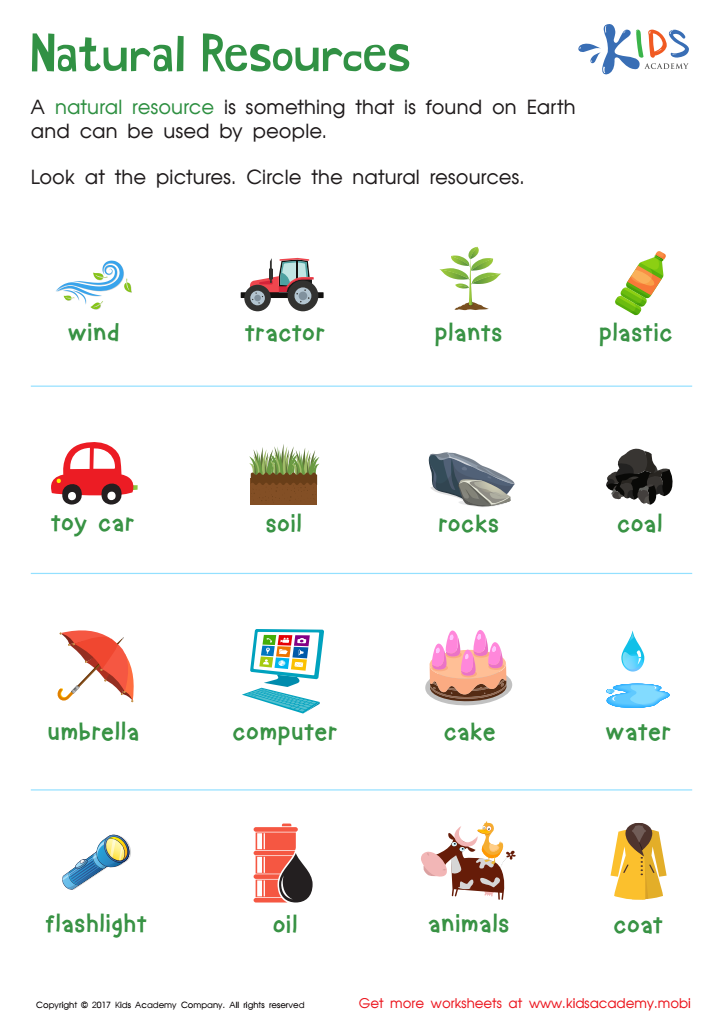
Natural Resources Worksheet
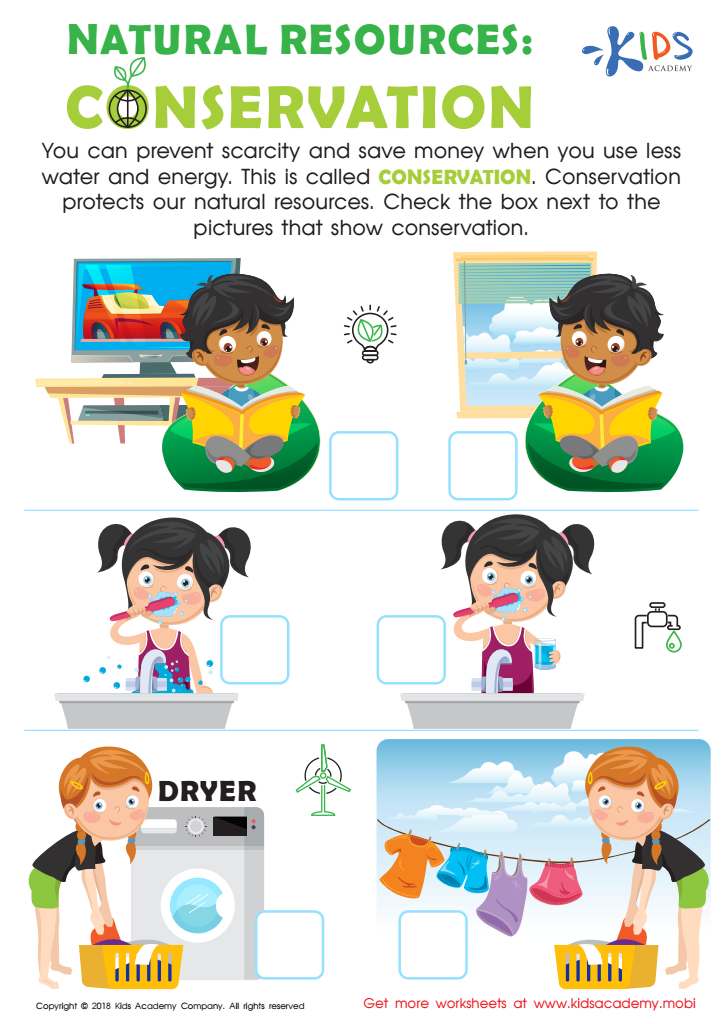
Natural Resources: Conservation Worksheet
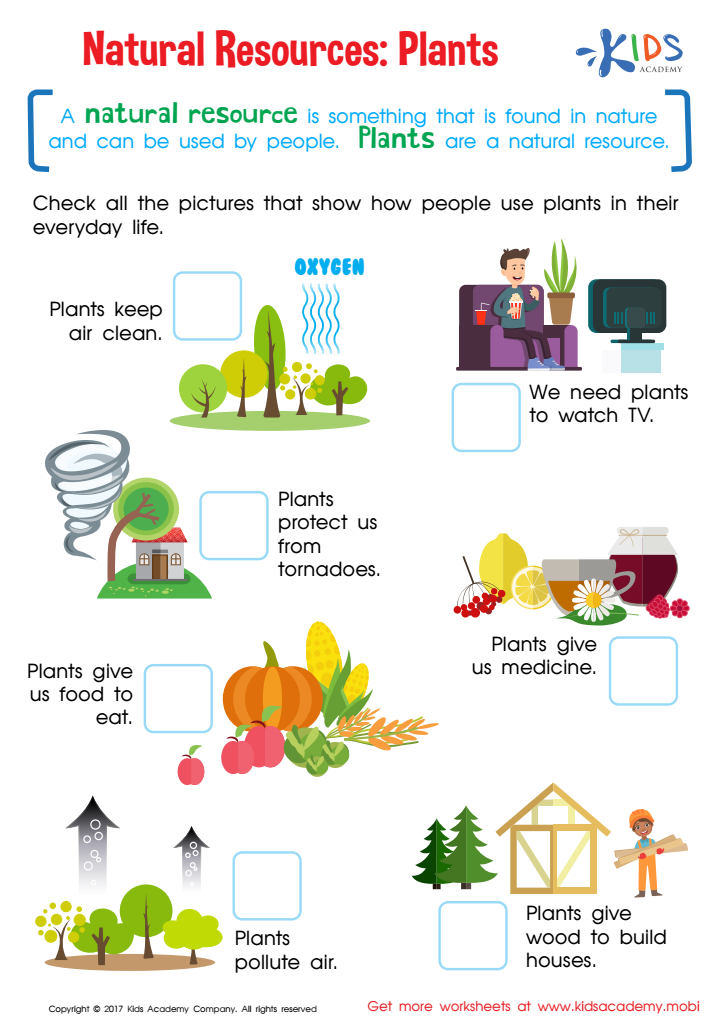
Natural Resources: Plants Worksheet







Parents and teachers should care about helping children aged 6-7 understand natural resources because it lays a foundation for responsible environmental stewardship from an early age. At this stage, kids are naturally curious and learning rapidly; this is an ideal time to introduce concepts that will shape their values and behaviors. Learning about natural resources—such as water, trees, and soil—helps children appreciate the world around them and understand that these resources are not infinite.
Knowing about natural resources fosters a sense of responsibility and can lead to actions like recycling, conserving water, and protecting nature. It also integrates concepts from science and social studies, developing critical thinking and problem-solving skills. For instance, children might learn how trees produce oxygen, providing them a tangible reason to care about deforestation.
Moreover, understanding where resources come from and how they're used impacts everyday decisions, from the food they eat to the toys they play with. This knowledge fosters appreciation for how things grow and the effort that goes into producing everyday items. It can even lay the groundwork for future learning in environmental science or sustainability, encouraging lifelong habits and attitudes that contribute to the health of our planet. In essence, caring about our natural resources creates knowledgeable, conscientious individuals who are better prepared to face tomorrow's environmental challenges.








