Understanding plant growth Normal Worksheets for Ages 6-7
3 filtered results
-
From - To
Explore our "Understanding Plant Growth Normal Worksheets" designed for children aged 6-7! These engaging worksheets aim to enhance young learners' knowledge of how plants grow, promoting curiosity about the natural world. Through age-appropriate activities, students will discover key concepts like the life cycle of plants, the importance of sunlight and water, and factors that affect growth. Our thoughtfully crafted resources provide a fun, interactive way to reinforce science skills while encouraging observation and critical thinking. Ideal for classroom use or at-home learning, these worksheets offer teachers and parents valuable tools to nurture early science education effectively. Dive into the green world today!
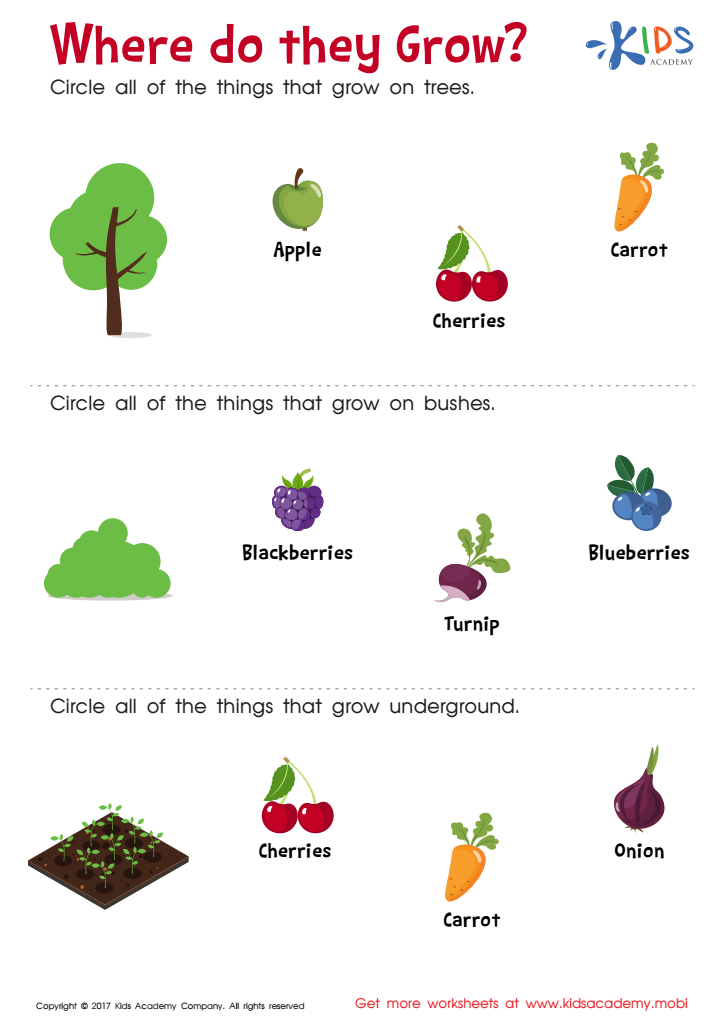
Where Do They Grow Worksheet
 Assign to My Students
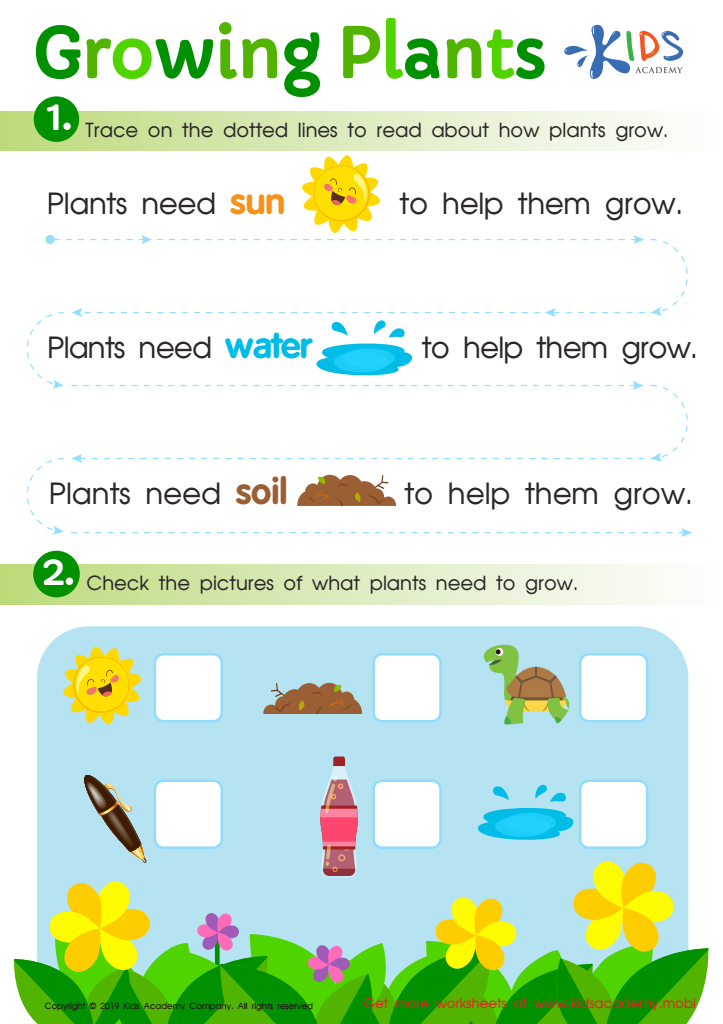
Growing Plants Worksheet
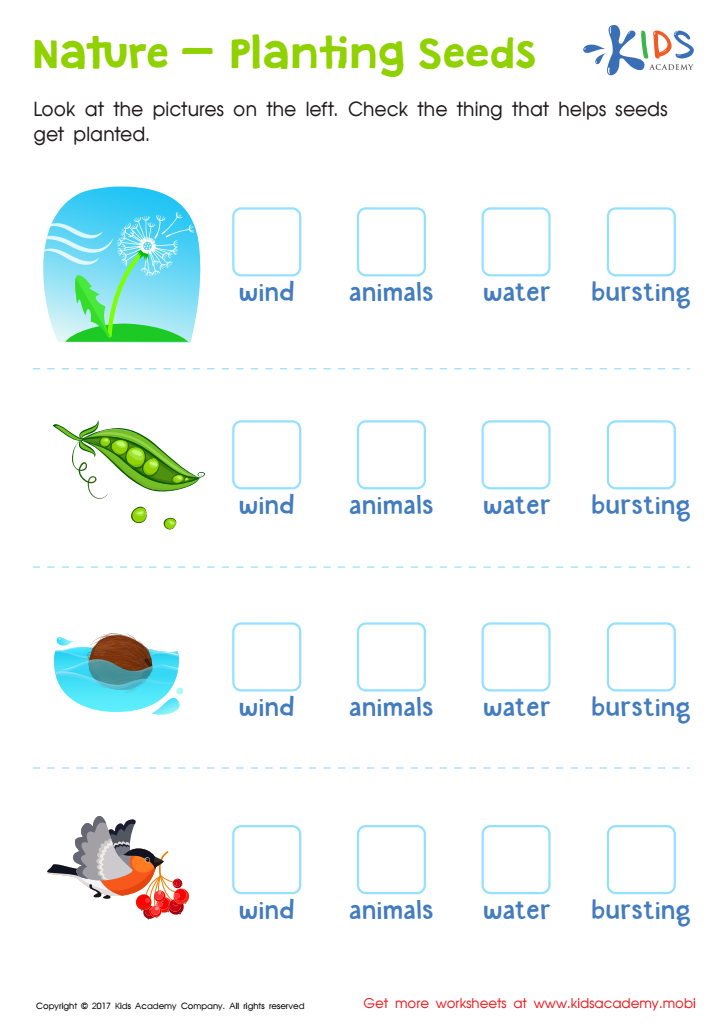
Nature Planting Seeds Worksheet








Understanding plant growth is essential for children aged 6-7 because it lays the groundwork for their basic scientific knowledge and environmental awareness. At this age, children are curious explorers, and learning about how plants grow can ignite their fascination with nature.
Teaching kids about plant growth fosters observation skills, as they learn to notice changes and factors that affect a plant's health, such as sunlight, water, and soil types. This not only hones their critical thinking but also instills a sense of responsibility and care for living things. Moreover, it helps them make connections between plants and their role in our ecosystem, reinforcing the importance of biodiversity and sustainability from an early age.
Additionally, involving parents or teachers in hands-on activities like planting seeds or maintaining a small garden cultivates teamwork and shared learning experiences, strengthening relationships. Encouraging children to reflect on their observations also enhances their communication skills as they describe their findings. Ultimately, by fostering a basic understanding of plant growth, we equip young learners with knowledge that promotes curiosity about the world around them, encourages environmental stewardship, and nurtures their scientific literacy.








