
Weather identification Normal Worksheets for Ages 6-7
3 filtered results
Difficulty Level
Grade
Age
-
From - To
Subject
Activity
Standards
Welcome to our Weather Identification Normal Worksheets for ages 6-7! Designed to engage young learners, these printable activities help children explore various weather conditions such as sunny, rainy, and snowy days. Our worksheets feature colorful illustrations and simple exercises that encourage kids to identify weather patterns, fostering essential observational skills and vocabulary development. As children complete the fun tasks, they build a strong foundation in understanding how different weather types affect their daily lives. Ideal for classroom or home learning, these worksheets aim to make learning about the weather exciting and interactive. Let’s dive into the world of weather together!
Favorites
With answer key
Interactive
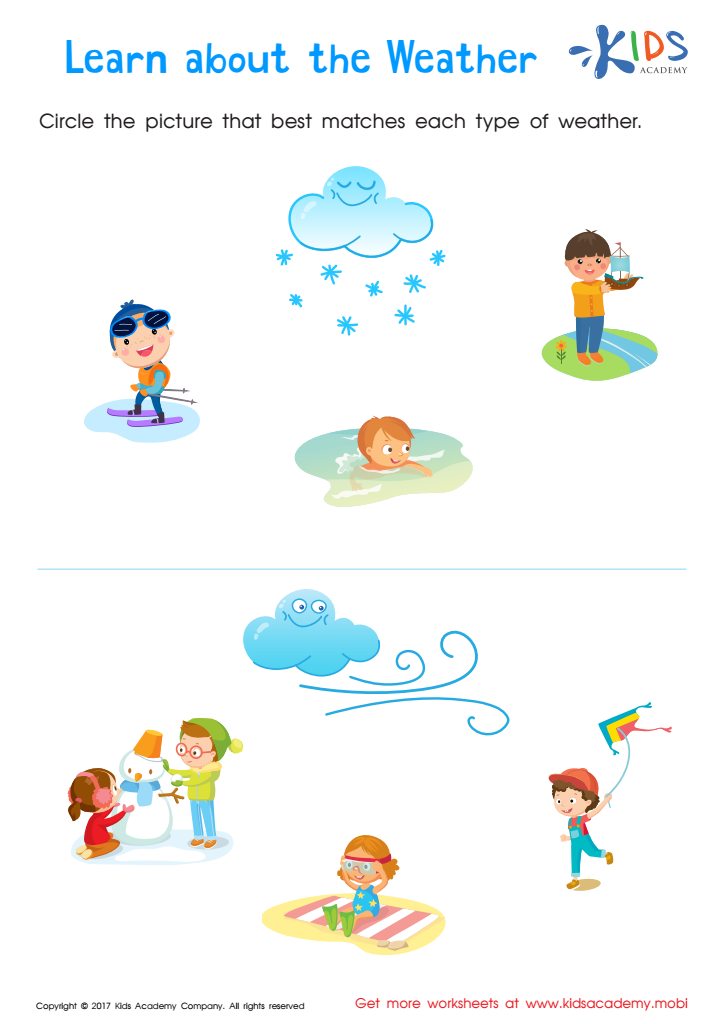
About the Weather Printable
This worksheet is perfect for reinforcing knowledge about changing weather and activities that suit each season. Help your child use their life experiences to observe the weather and complete the worksheet. Fun and colorful, it's a great way to learn about weather and seasons. Let's get started!
 Assign to My Students
About the Weather Printable
Worksheet
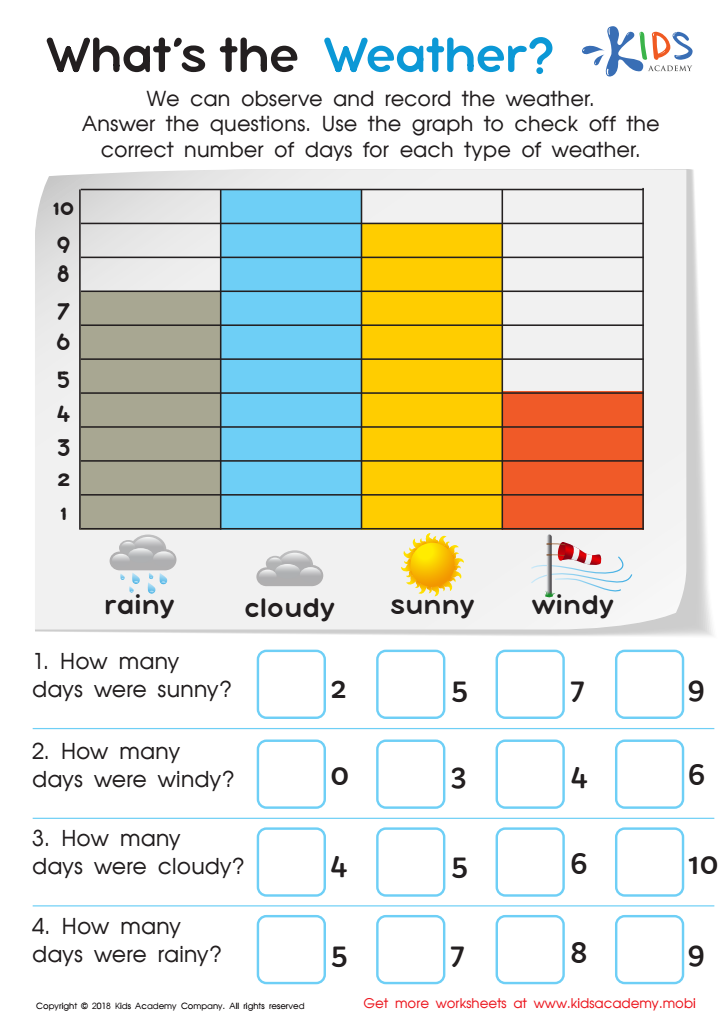
What's the Weather? Worksheet
Check the weather outside. Help kids learn and practice science and math by tracking different types of days using this printable worksheet. Have them count bars next to weather types like cloudy, sunny, windy, and rainy. Answer the questions and take the lesson further by creating a bar graph to show the monthly weather.
What's the Weather? Worksheet
Worksheet
Join Kids Academy for Free
Who is primarily going to use this learning content?







Understanding weather identification is crucial for young children, aged 6-7, as it lays the foundation for their awareness and interaction with the world around them. By learning about different weather conditions—sunny, rainy, snowy, windy, and cloudy—children can develop critical observational skills that enhance their cognitive abilities. This knowledge helps them make informed decisions about daily activities, such as dressing appropriately for the weather or planning outdoor play.
Additionally, weather education promotes safety—children who can identify warning signs of severe weather, like thunderstorms or heavy snowfall, are more likely to respond appropriately, ensuring their safety and the safety of those around them. Engaging in weather discussions can also stimulate curiosity about environmental sciences, fostering a love for nature and an understanding of the Earth’s systems.
Furthermore, these lessons create opportunities for hands-on, experiential learning through activities like crafting weather charts, making forecasts, or conducting simple experiments. Such interactions reinforce literacy and numeracy skills through practical applications. Involving parents reinforces learning at home, strengthening family bonds while discussing weather-related topics. Overall, weather identification serves as a vital building block for children’s cognitive growth, safety awareness, and appreciation of their environment.








