Fine Motor Skills Normal Addition & Subtraction Worksheets for Ages 6-7
7 filtered results
-
From - To
Enhance your child's learning experience with our Fine Motor Skills Normal Addition & Subtraction Worksheets designed for ages 6-7. These engaging and educational worksheets combine essential math practice with activities that improve fine motor skills. Through gripping pencils, precise coloring, and careful number tracing, children strengthen their hand-eye coordination while mastering addition and subtraction. Perfect for young learners, these worksheets make math fun and interactive. Turn learning into an enjoyable journey and build a solid foundation in both math and fine motor skills. Download now to help your child succeed in school and beyond!
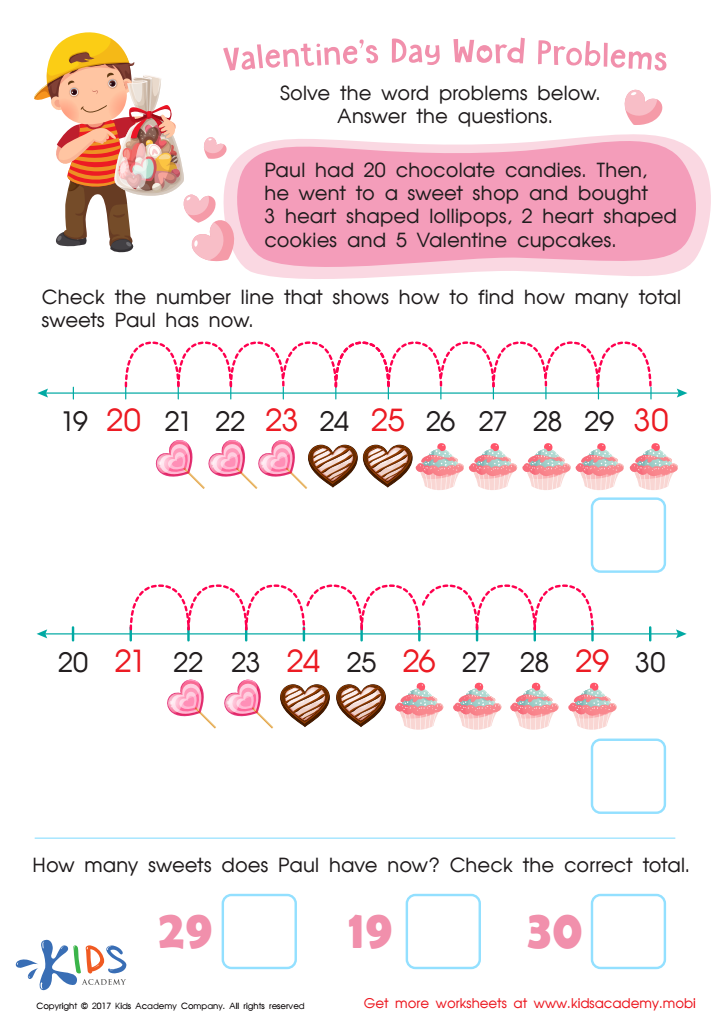
Valentines Day 2 Printable
 Assign to My Students
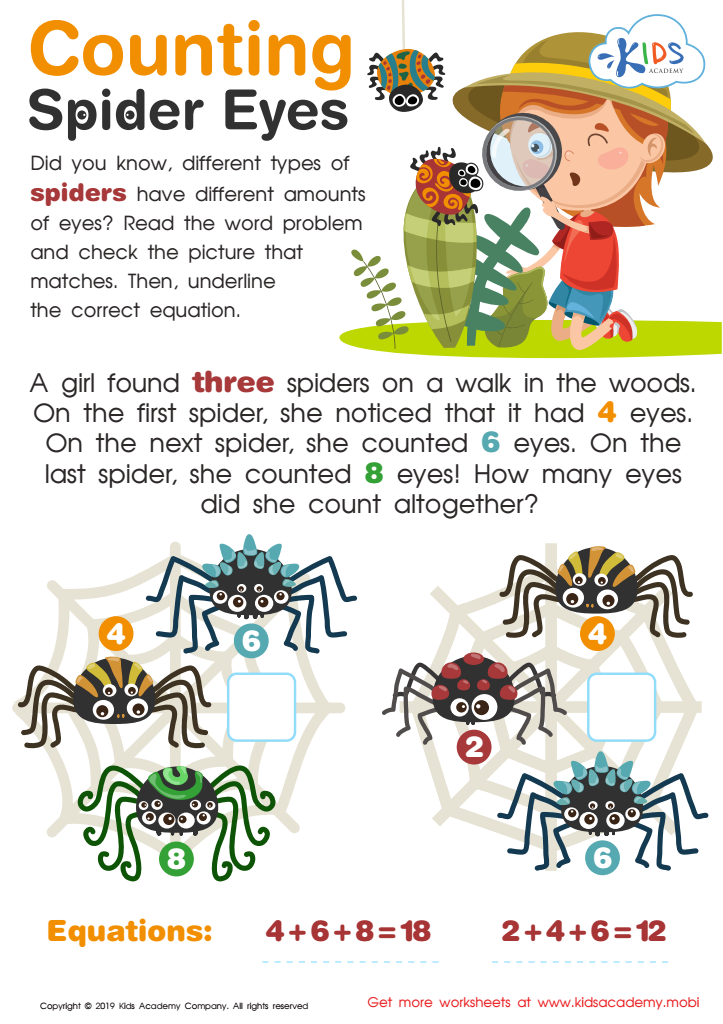
Counting Spider Eyes Worksheet

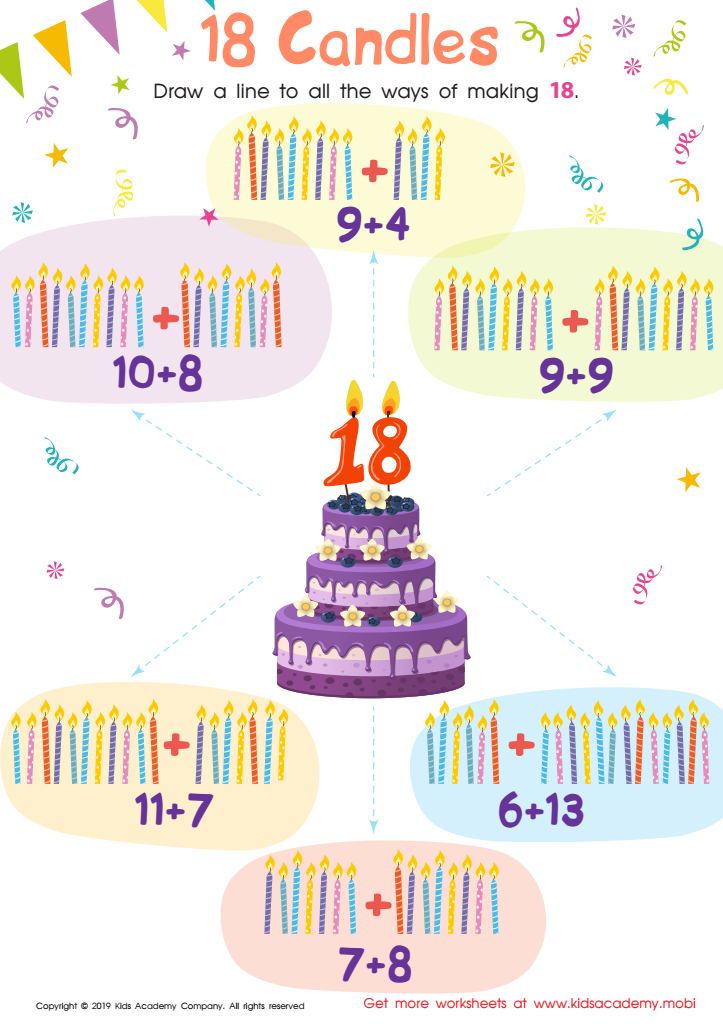
18 Candles Worksheet
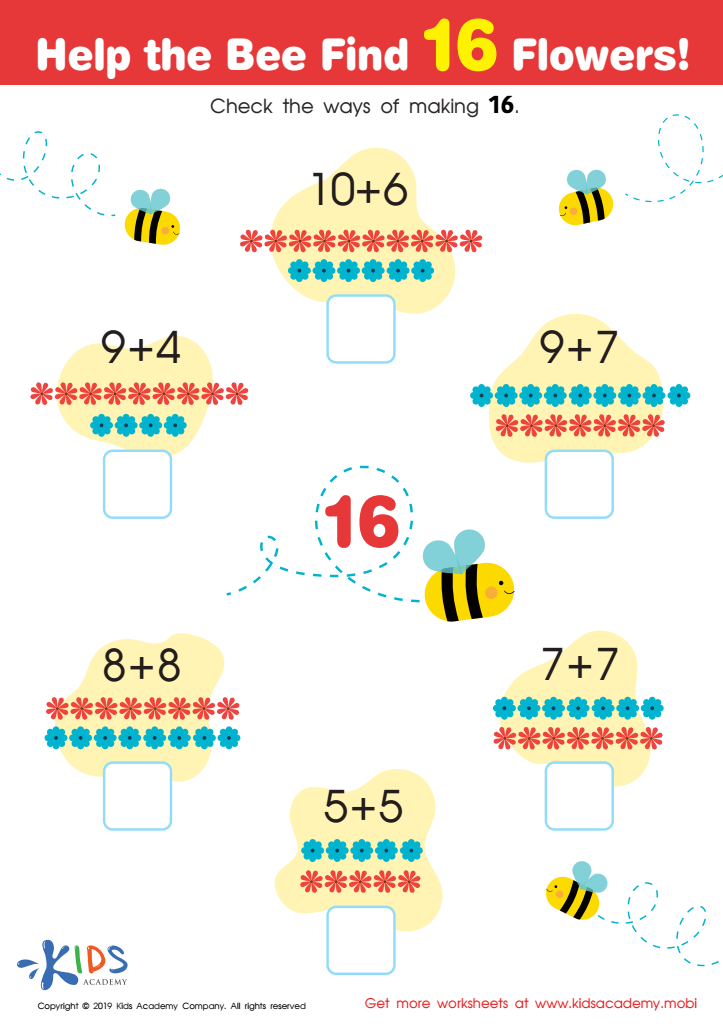
Help the Bee Find 16 Flowers Worksheet
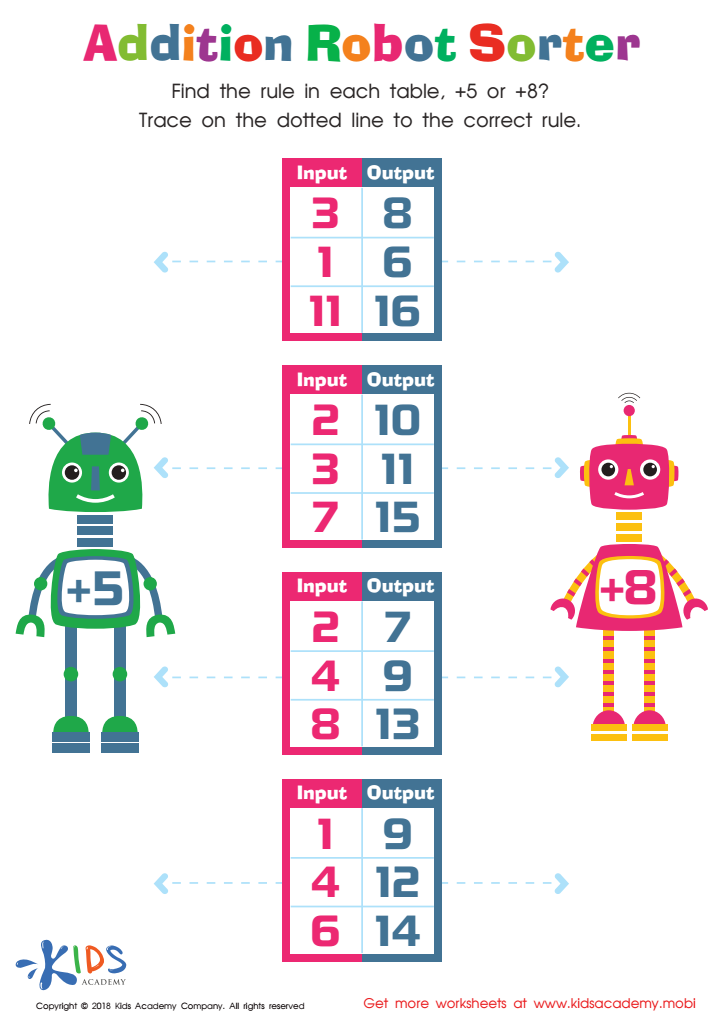
Addition Robot Sorter Worksheet








Fine motor skills are essential for young children, particularly those aged 6-7, because they involve the small muscles in the hands and fingers that are critical for performing tasks such as writing, buttoning clothes, and using utensils. Developing strong fine motor skills at this age is crucial for academic and everyday success.
For ages 6-7, focusing on normal addition and subtraction through activities that engage fine motor skills can offer multiple benefits. Firstly, activities like bead threading for counting or writing out math problems help children improve their hand-eye coordination, dexterity, and control. These basic mathematical operations also reinforce cognitive development, critical thinking, and problem-solving abilities, all of which are foundational for future more complex math tasks.
Additionally, mastering fine motor skills is linked to better academic performance in reading and writing. Children who struggle with these skills may find it challenging to keep up in the classroom, leading to frustration and decreased self-esteem. Regular practice through hands-on activities, such as drawing numbers, using manipulatives like blocks or counters, and playing with math-related games, can make learning math more enjoyable and less overwhelming.
In summary, integrating fine motor skill development with simple math tasks not only boosts children's hand functionality but also lays a solid groundwork for both academic and personal growth. Therefore, parents and teachers should actively engage 6-7 year-olds in fine motor skill activities to foster overall developmental success.








