Differentiating shapes Normal Geometry Worksheets for Ages 6-7
3 filtered results
-
From - To
Discover our interactive Differentiating Shapes Normal Geometry Worksheets designed specifically for ages 6-7! These engaging worksheets aid young learners in identifying and distinguishing various shapes, such as circles, squares, triangles, and more. Perfect for enhancing math skills, our resources promote visual recognition and critical thinking while making learning fun. With a variety of activities, kids will enjoy exploring shapes through tracing, coloring, and matching exercises. Ideal for classrooms or homework, these worksheets cater to diverse learning styles and capabilities, ensuring every child can confidently develop their geometry skills. Start fostering a love for shapes and STEAM concepts today with our user-friendly resources!
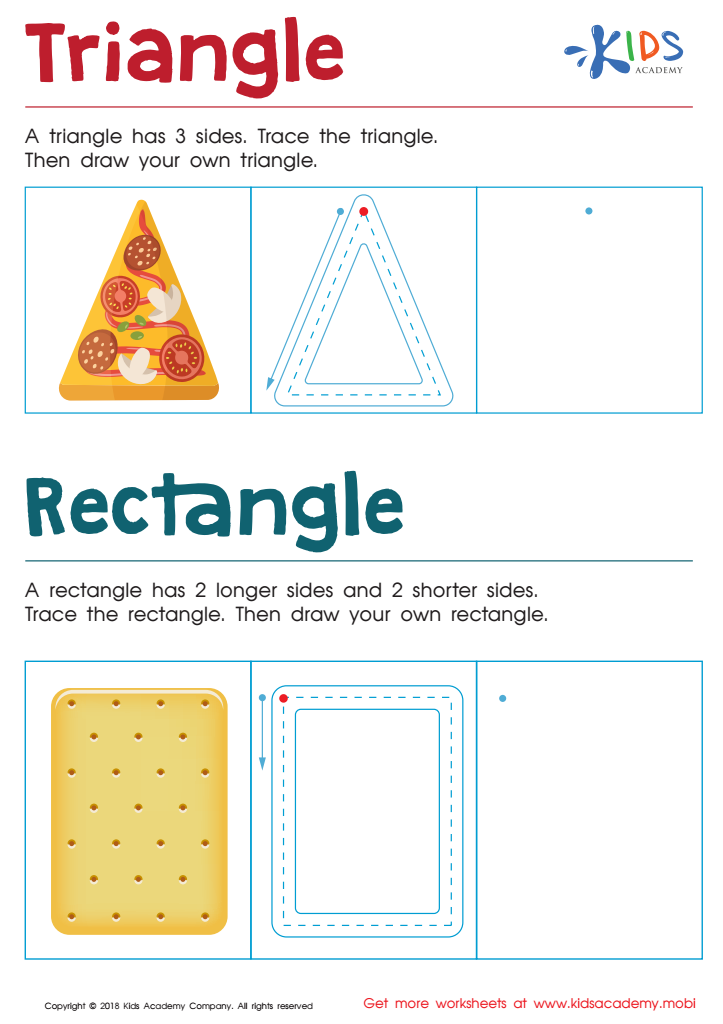
Triangle Rectangle Worksheet
 Assign to My Students











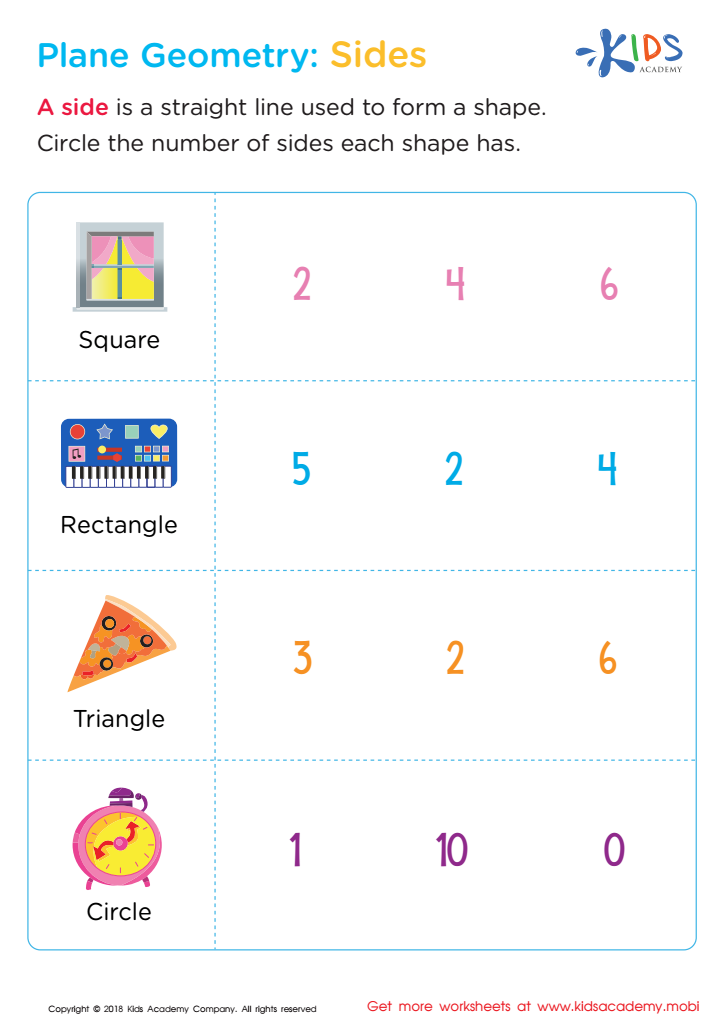
Plane Geometry: Sides Worksheet
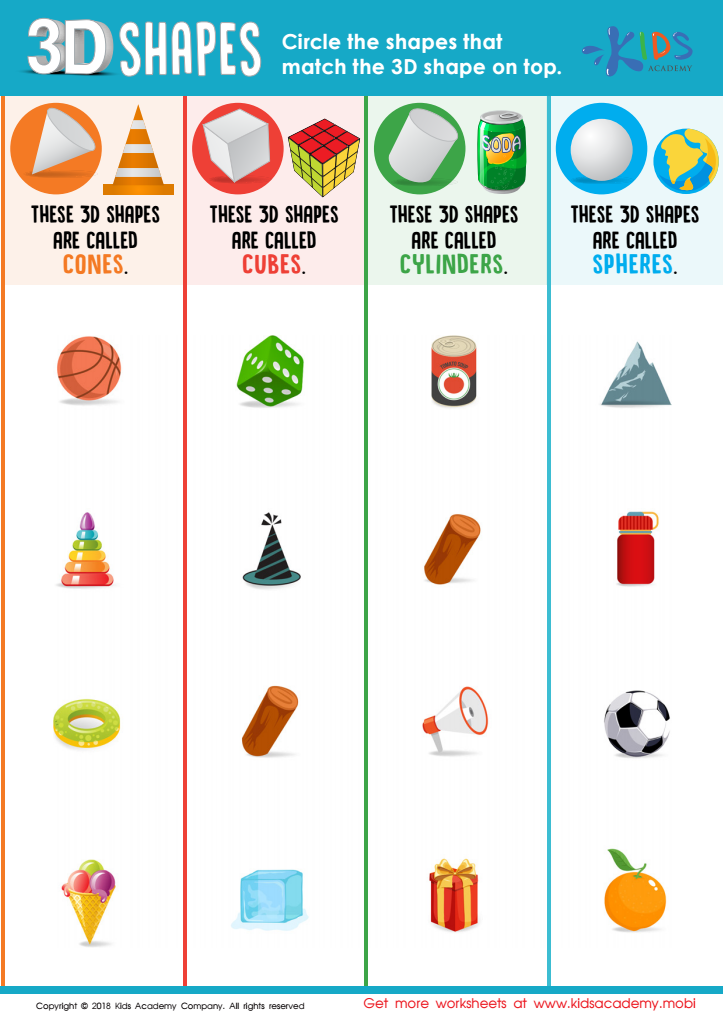
3D Shapes Worksheet








Differentiating shapes in Normal Geometry for children aged 6-7 is crucial for their cognitive and spatial development. At this age, children begin to develop foundational math skills, and understanding different shapes is vital. This differentiation helps them recognize and categorize various shapes, fostering critical thinking and problem-solving skills essential for mathematical reasoning.
When parents or teachers implement shape differentiation, they engage children through hands-on activities, making learning enjoyable and interactive. This approach supports a deeper understanding of geometry and helps children grasp concepts such as symmetry, angles, and properties of shapes. Additionally, recognizing shapes prepares children for more complex geometric ideas in later grades.
Furthermore, shape recognition is vital in real-world applications. Children learn to identify and describe shapes around them, leading to improved observational skills and creativity. For instance, discussing how shapes are used in art, design, or nature can spark their interest in various fields.
In essence, differentiating shapes in Normal Geometry ensures children build a solid math foundation while boosting confidence, curiosity, and a love for learning. Parents and teachers play a pivotal role in facilitating this developmental milestone, ultimately contributing to their children's holistic educational journey.








