Color Identification Normal Numbers Worksheets for Ages 6-7
4 filtered results
-
From - To
Explore our engaging Color Identification Normal Numbers Worksheets designed specifically for ages 6-7, tailored to enhance your child's learning experience! These worksheets facilitate the development of essential skills such as color recognition and number understanding through interactive activities. Each worksheet combines vibrant colors and fun exercises that captivate young minds, making learning enjoyable and effective. As children practice identifying colors while working with numbers, they also boost their fine motor skills and critical thinking abilities. Perfect for both classroom and home use, these worksheets offer a valuable resource for parents and teachers aiming to support early childhood education. Download now and watch your child thrive!
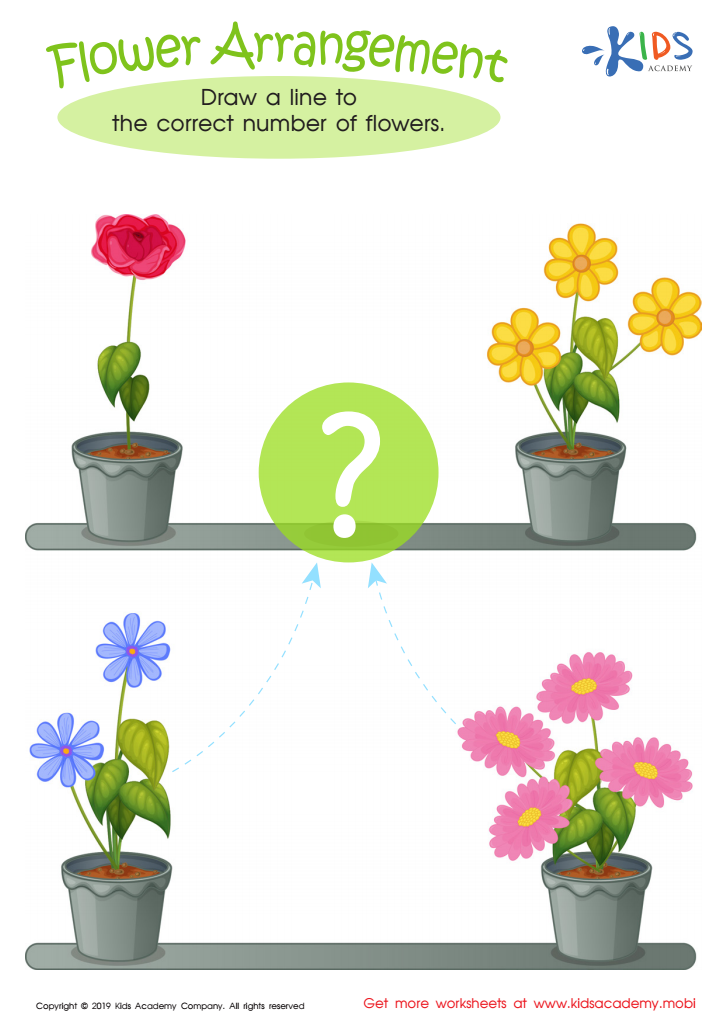
Flower Arrangement Worksheet
 Assign to My Students
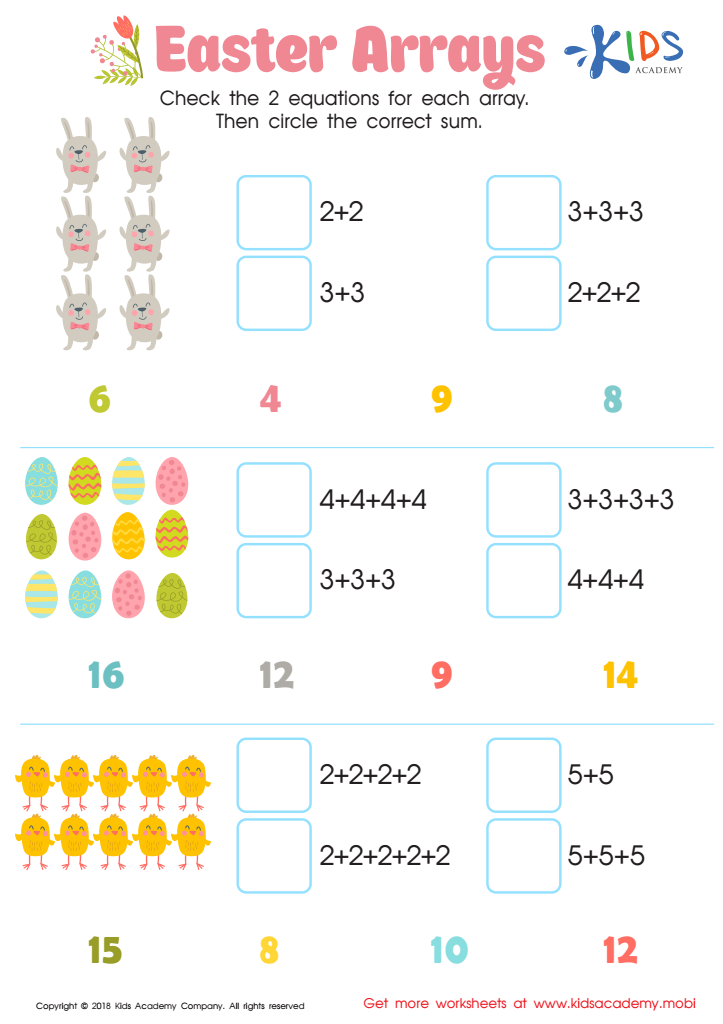
Easter Arrays Worksheet
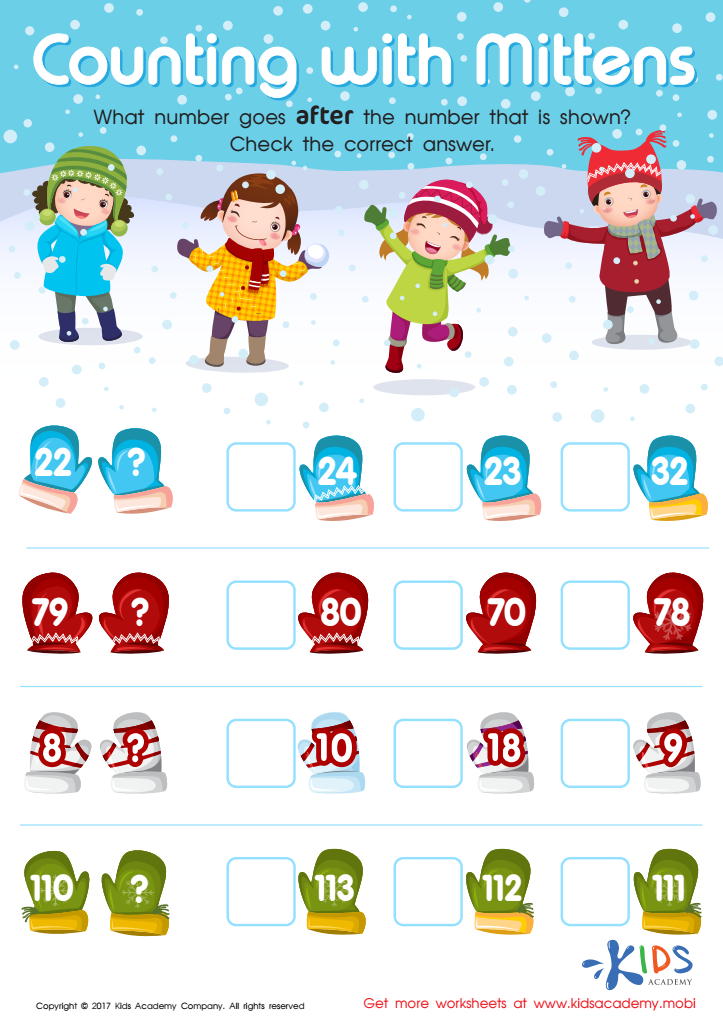
Counting with Mittens Worksheet
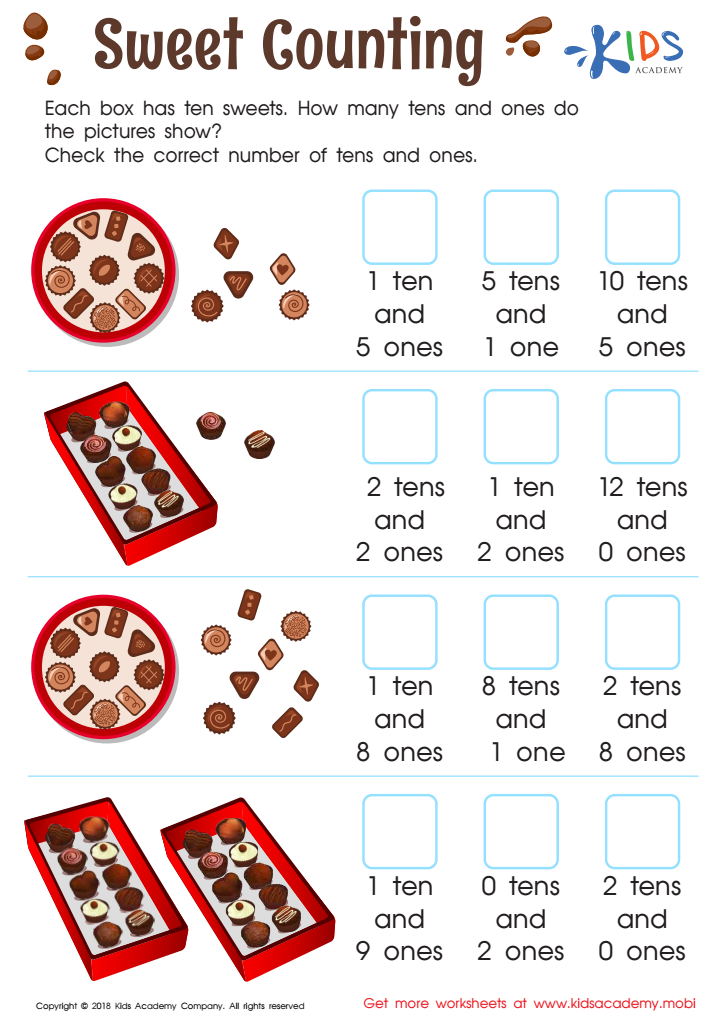
Sweet Counting - Part 2 Worksheet


.jpg)





Color identification and recognition of normal numbers is crucial for children ages 6-7 as it serves as the foundation for their cognitive development and early literacy skills. At this age, children are beginning to refine their visual recognition abilities, which are essential for learning in various subjects, including math, art, and language.
Understanding colors allows children to categorize and recognize similarities and differences in the world around them. It enhances their creative expression and helps them communicate their feelings and ideas effectively. Furthermore, colors are often used in instructional materials; thus, a solid understanding of color can aid in following directions and completing tasks.
Likewise, normal number identification plays a pivotal role in early mathematics. Recognizing numbers helps children build the essential skills of counting, comparing quantities, and basic arithmetic operations. These skills are not only vital for academic success in future grades but also in everyday situations, such as telling time and managing money.
Parents and teachers should care about fostering these skills because they promote critical thinking and problem-solving abilities. Encouraging proficiency in color identification and number recognition lays the groundwork for children's future learning experiences, helping them develop a positive attitude toward education and a sense of confidence in their abilities.








