Understanding comparisons Normal Numbers Worksheets for Ages 6-7
3 filtered results
-
From - To
Discover our engaging "Understanding Comparisons Normal Numbers Worksheets" designed for children ages 6-7. These worksheets help young learners grasp fundamental concepts of comparing numbers through fun and interactive activities. Students will enhance their skills in recognizing greater than, less than, and equal relationships with numerals. Our colorful, visually appealing worksheets provide step-by-step practice to reinforce understanding while maintaining enthusiasm for learning. Perfect for parents and teachers alike, these resources foster a solid foundation in math that supports future academic success. Equip your child with the tools they need to confidently compare numbers and enjoy the learning process! Access the worksheets today.
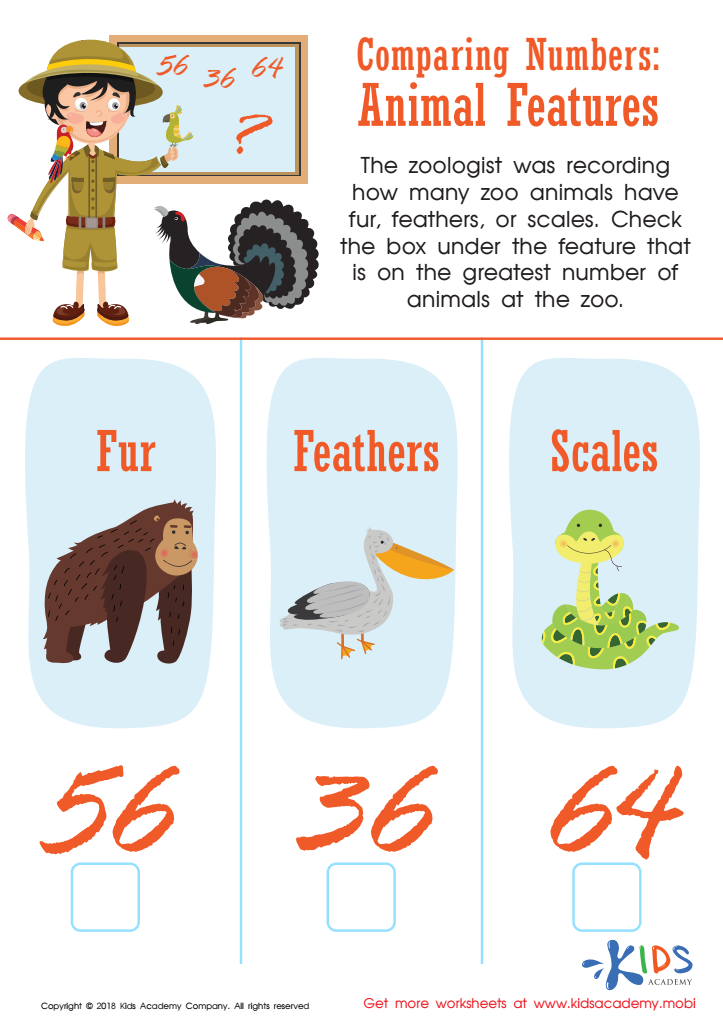
Animal Features Worksheet
 Assign to My Students
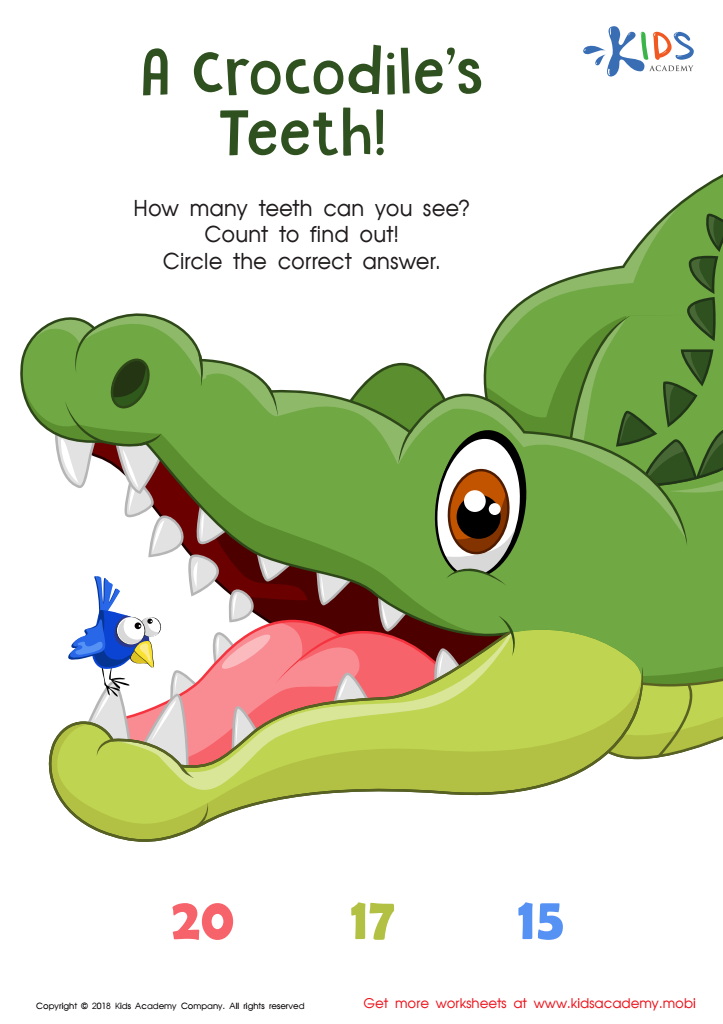
A Crocodile's Teeth Worksheet
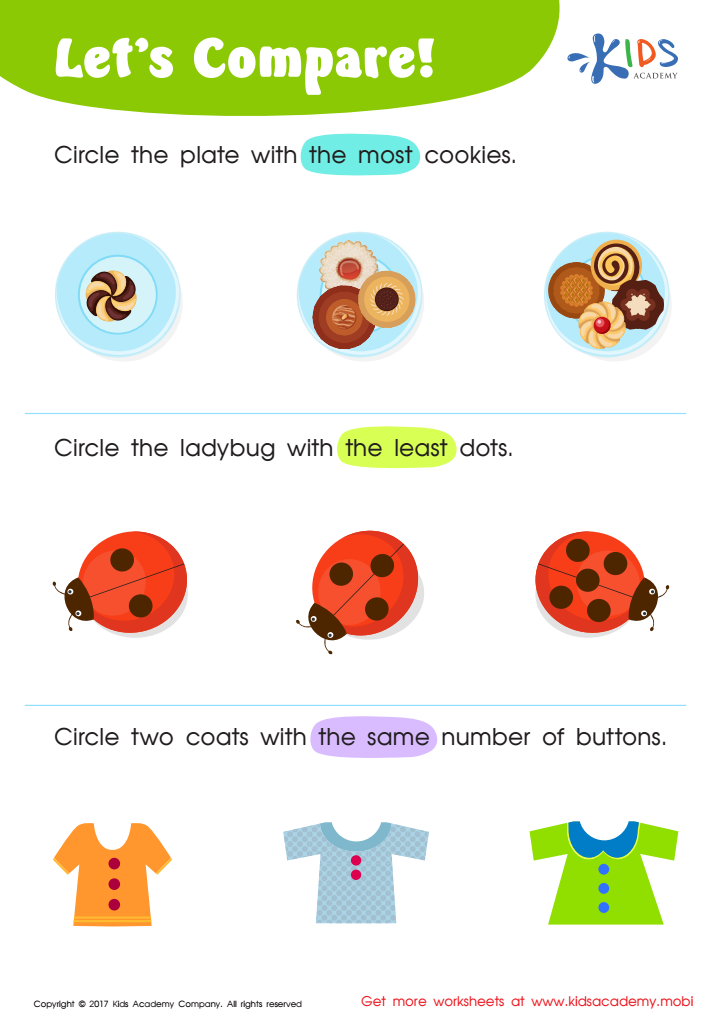
Matching: Classifying Toys by Size Worksheet



%20(1).jpg)




Understanding comparisons and normal numbers at ages 6-7 is crucial for children's cognitive and mathematical development. At this age, children begin to grasp foundational math concepts such as greater than, less than, and equal to, which are essential for problem-solving and critical thinking.
When parents and teachers emphasize these comparisons, they help kids understand the world around them in measurable ways. For instance, gauging differences in quantities, sizes, or even times prepares them for real-life situations, like sharing resources fairly or estimating time for activities. Mastery of these skills promotes confidence in young learners and sets the stage for more complex math concepts in later grades.
Furthermore, engaging children in discussions about comparisons fosters language development and enhances their ability to articulate their thoughts. It encourages them to use descriptive vocabulary and reason logically, essential skills for both academic success and everyday interactions.
By nurturing this understanding, parents and teachers play a key role in cultivating a mindset geared towards inquiry and exploration, crucial components for lifelong learning. Thus, prioritizing comparisons and numeracy in curriculums for ages 6-7 is not only beneficial for initial academic success but also invaluable for holistic child development.








