Animal recognition Normal Math Worksheets for Ages 6-7
7 filtered results
-
From - To
Discover our engaging Animal Recognition Normal Math Worksheets designed specifically for children ages 6-7. These interactive worksheets blend fun and learning, helping young learners enhance their math skills while exploring various animals. Your child will tackle essential math concepts such as counting, addition, and categorization through colorful illustrations and exciting activities that involve recognizing and relating to animals. Ideal for at-home practice or classroom enrichment, these worksheets foster critical thinking and nurture a love for learning. Equip your child with the tools they need to succeed in math, all while enjoying the fascinating world of animals! Start today and ignite their curiosity!
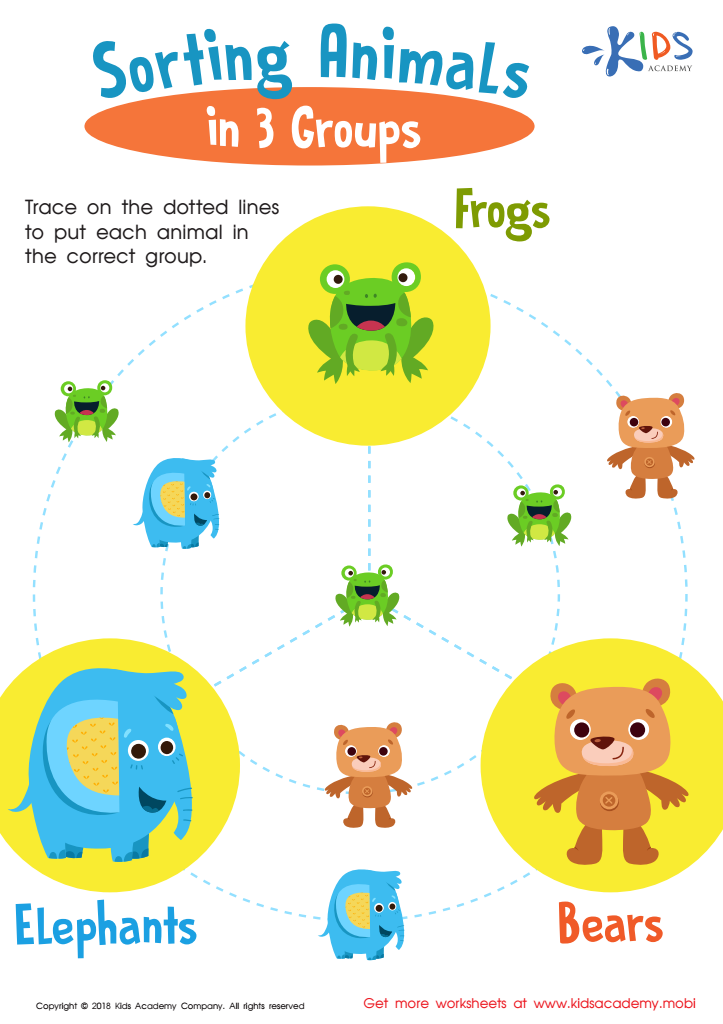
Sorting Animals in 3 Groups Worksheet
 Assign to My Students
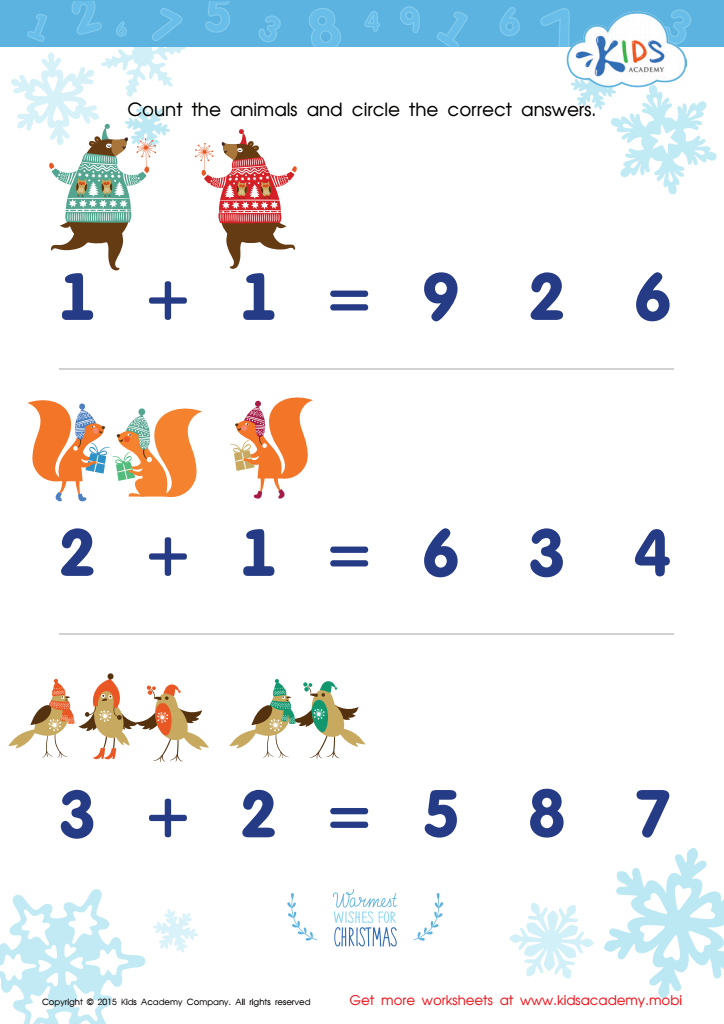
Count Funny Animals Worksheet
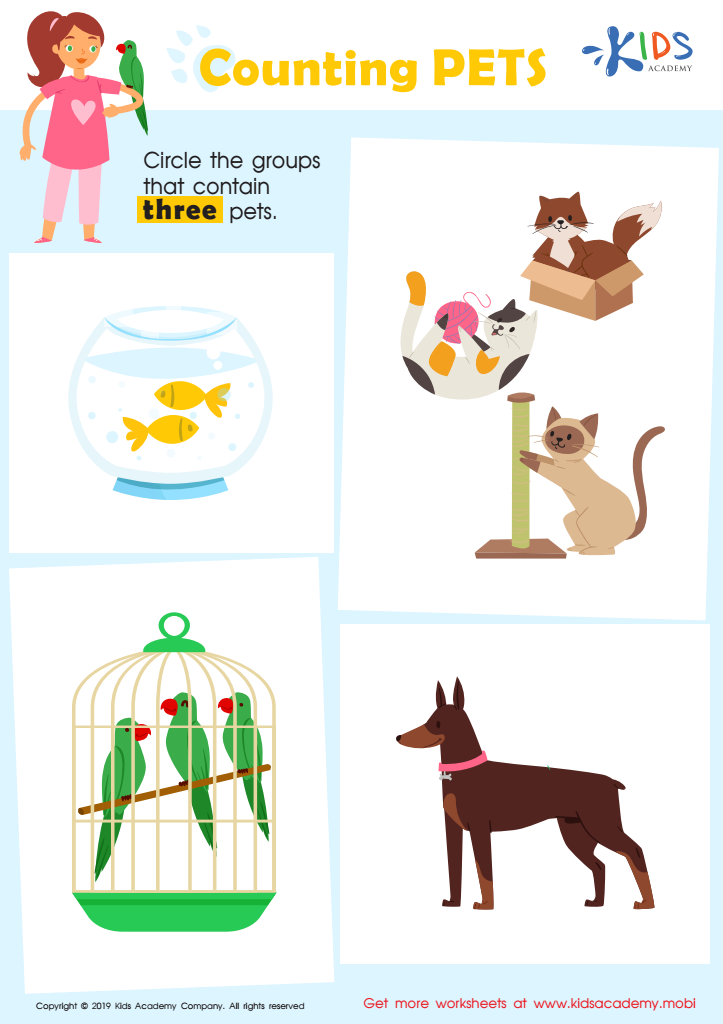
Counting Pets Worksheet
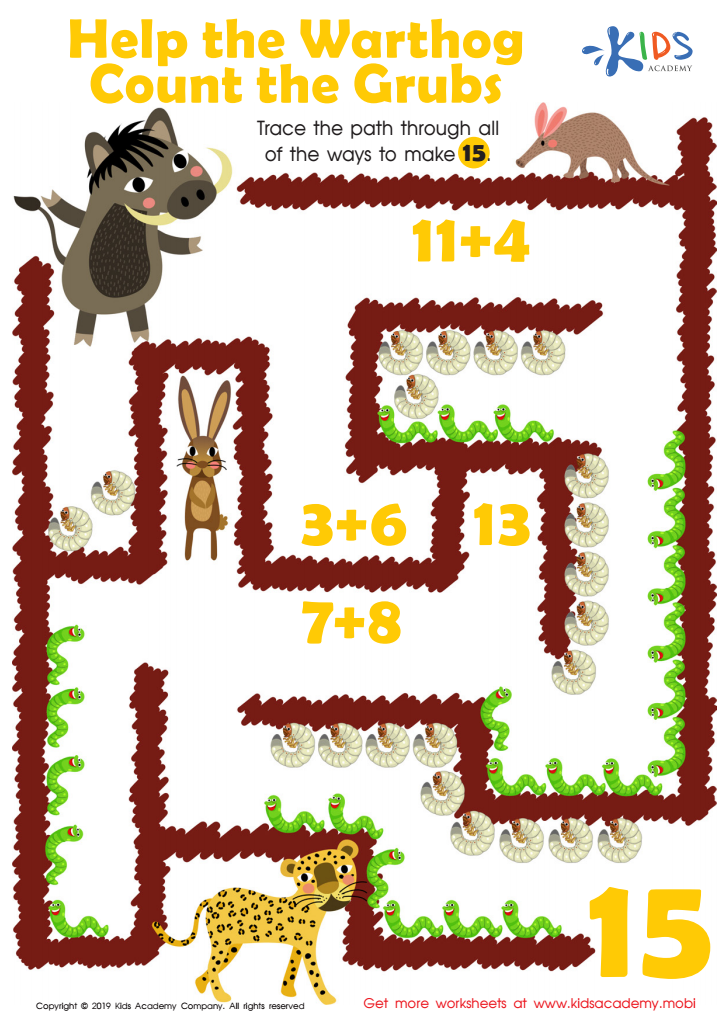
Help the Warthog Count the Grubs Worksheet
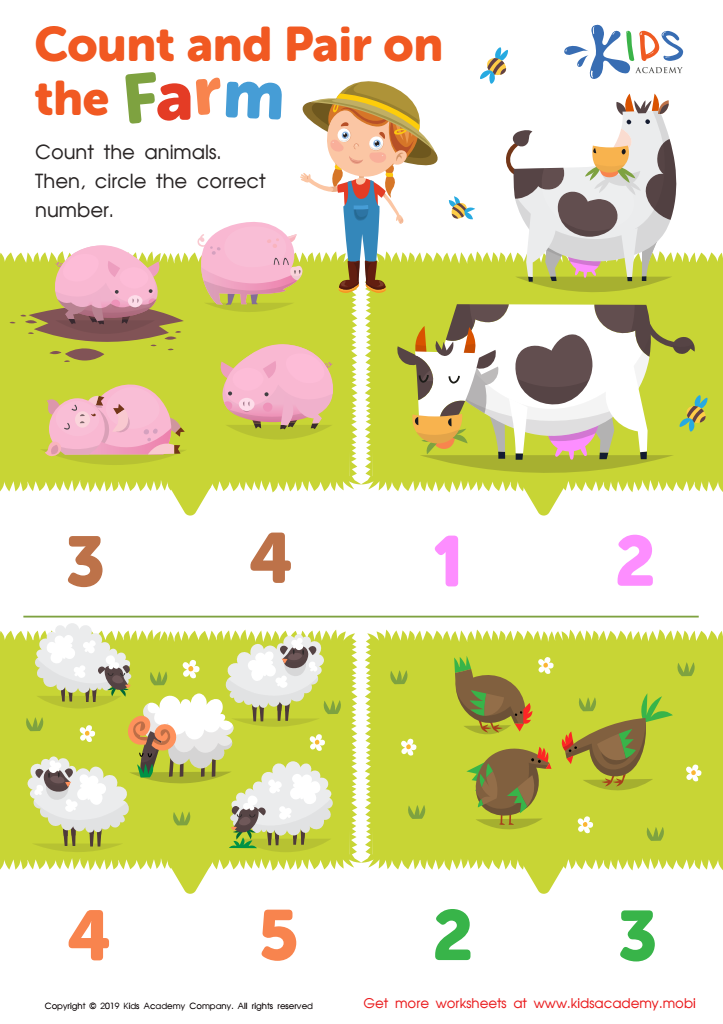
Count and Pair on the Farm Worksheet
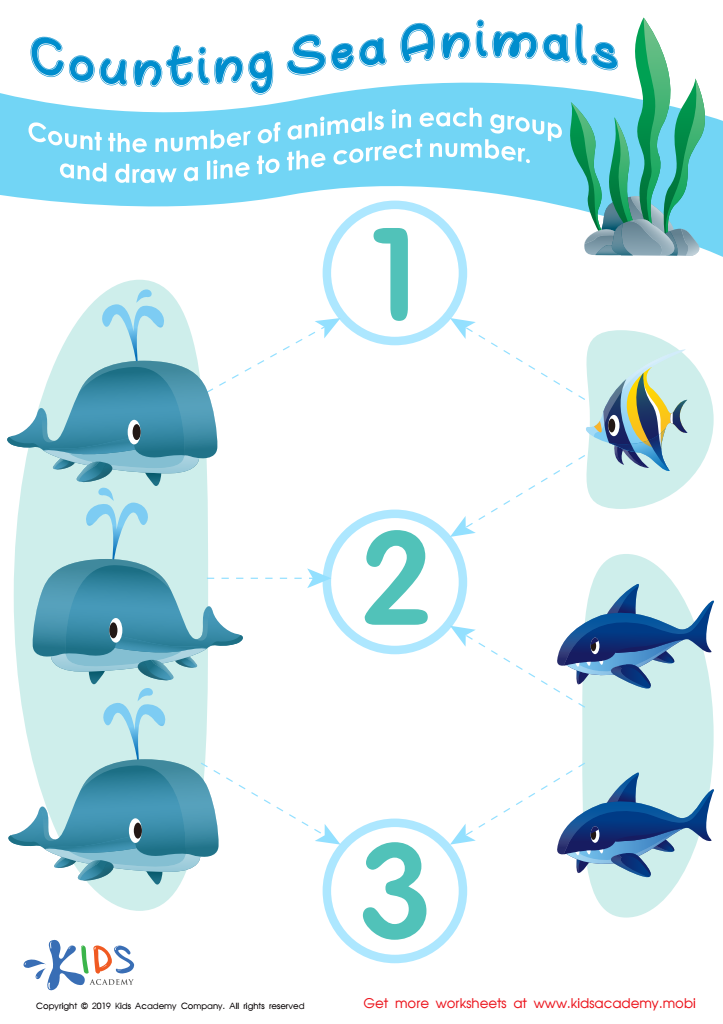
Counting Sea Animals Worksheet
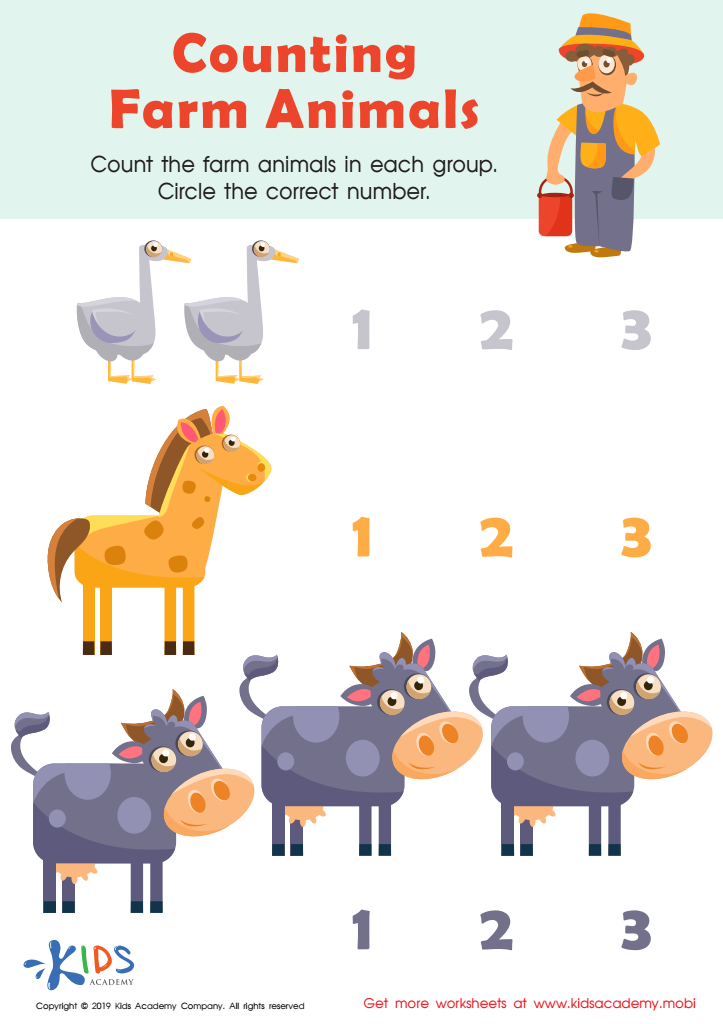
Counting Farm Animals Worksheet




.jpg)


Animal recognition combined with normal math for ages 6-7 plays a crucial role in early childhood education, offering multifaceted benefits. First, harnessing children's natural fascination with animals helps to engage their interest and makes learning enjoyable. When math concepts, such as counting or addition, are tied to animals—like counting the number of elephants or adding cats—students are more likely to stay focused and retain information.
Furthermore, animal recognition enhances visual learning and memory, allowing children to connect mathematical concepts with real-world examples they can relate to. This hands-on approach deepens understanding, especially when integrating visuals into lessons, like using animal pictures to illustrate math problems.
Additionally, understanding animals foster empathy and awareness of biodiversity, encouraging children to care for living creatures and their environment. This holistic educational approach also boosts social skills, as collaborative activities involving animals can help develop teamwork and communication.
By embedding animal themes within math instruction, parents and teachers can address various learning styles, making math more approachable and fun. Ultimately, this strategy not only builds foundational math skills but also supports emotional, social, and cognitive development in young learners.








