Counting practice Normal Math Worksheets for Ages 6-7 - Page 2
26 filtered results
-
From - To
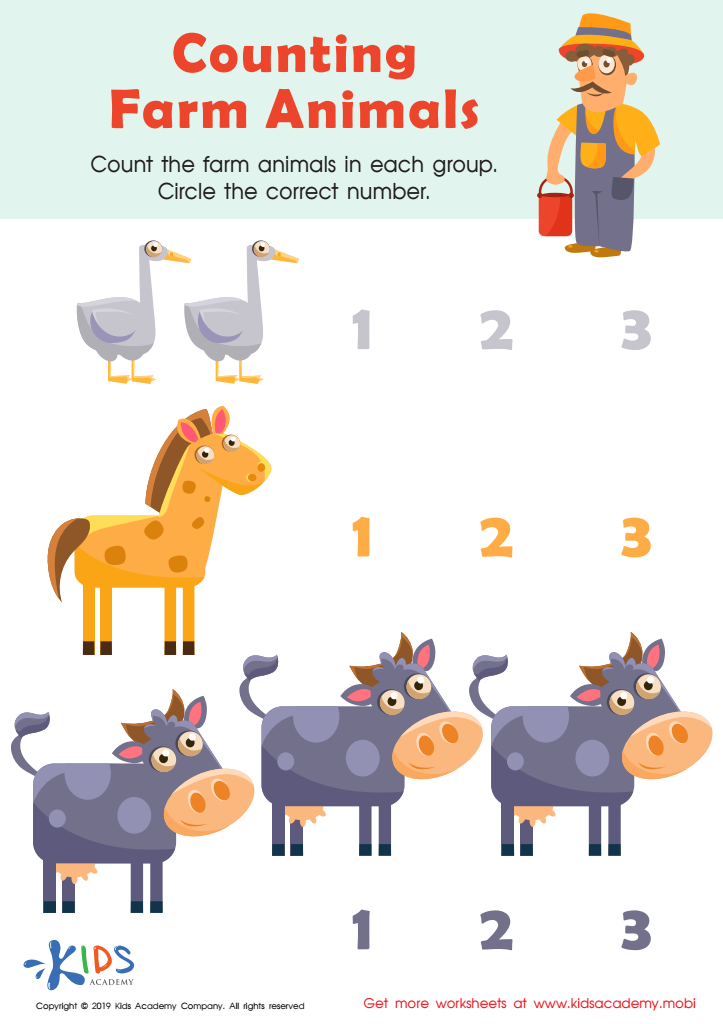
Counting Farm Animals Worksheet
 Assign to My Students
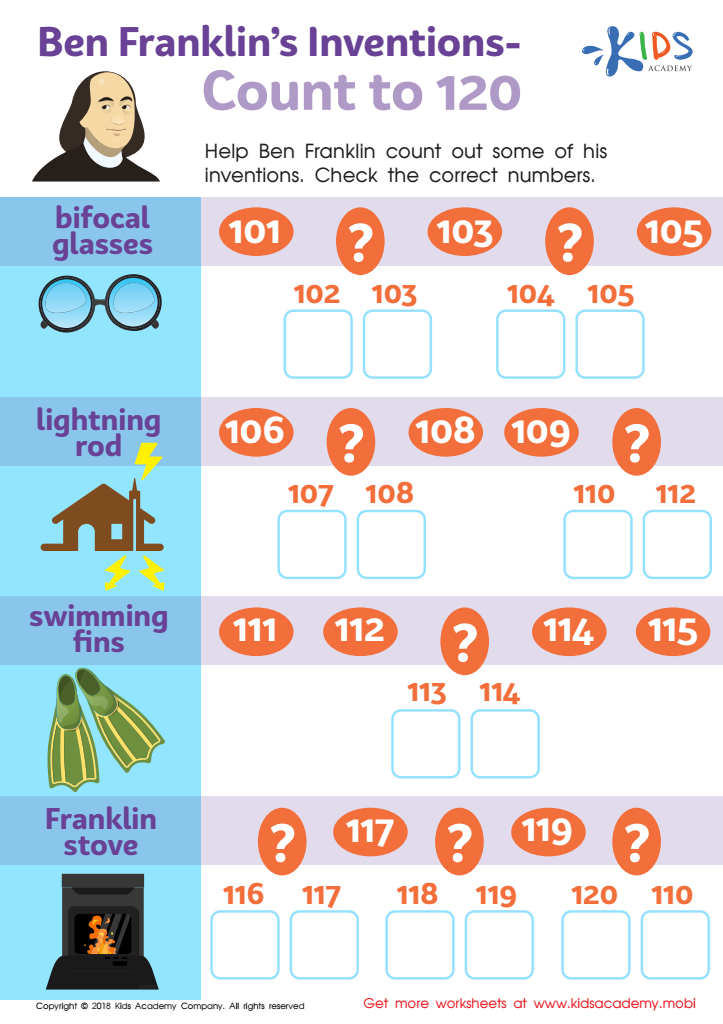
Ben Franklin’s Inventions – Count to 120 Worksheet



.jpg)




Counting practice is a foundational skill for children aged 6-7, which is crucial for their overall mathematical development. At this stage, children are beginning to explore more complex mathematical concepts, and a solid grasp of counting lays the groundwork. Understanding how to count not only aids in number recognition and sequencing but also enhances their ability to perform basic arithmetic operations such as addition and subtraction.
Parents and teachers should care about counting practice because it helps develop critical cognitive skills, including problem-solving, logical thinking, and spatial awareness. Engaging in counting activities can also promote a positive attitude toward math, fostering confidence and motivation in young learners. Additionally, counting practice can be tied to real-world experiences, making learning more relevant and fun—whether it's counting snacks during playtime or tallying items in the classroom.
Moreover, regular counting practice can identify gaps in understanding early on. This proactive approach allows for timely interventions and personalized teaching strategies, ensuring each child builds a strong mathematical foundation. Overall, prioritizing counting practice for young children not only supports their academic growth but also cultivates essential life skills that extend beyond the classroom.








