Reading analog clocks Normal Math Worksheets for Ages 6-7
3 filtered results
-
From - To
Help your child master the essential skill of reading analog clocks with our engaging worksheets designed specifically for ages 6-7. These normal math worksheets offer a fun and interactive way to teach young learners how to tell time using traditional clock faces. Each worksheet incorporates colorful illustrations and age-appropriate exercises that encourage children to practice recognizing hour and minute hands, distinguishing between AM and PM, and solving simple time-related problems. Ideal for both classroom and home use, our resources support early math development and foster a sense of accomplishment. Download now and give your child a valuable tool for understanding time!
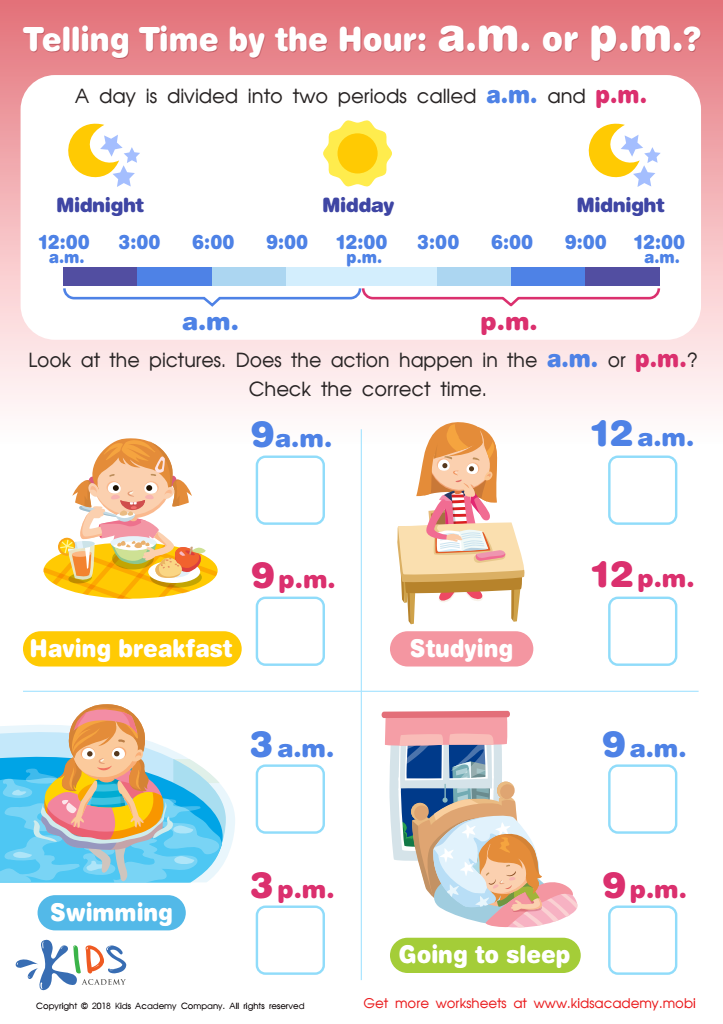
Tilling Time by the Hour: a.m. or p.m.? Worksheet
 Assign to My Students
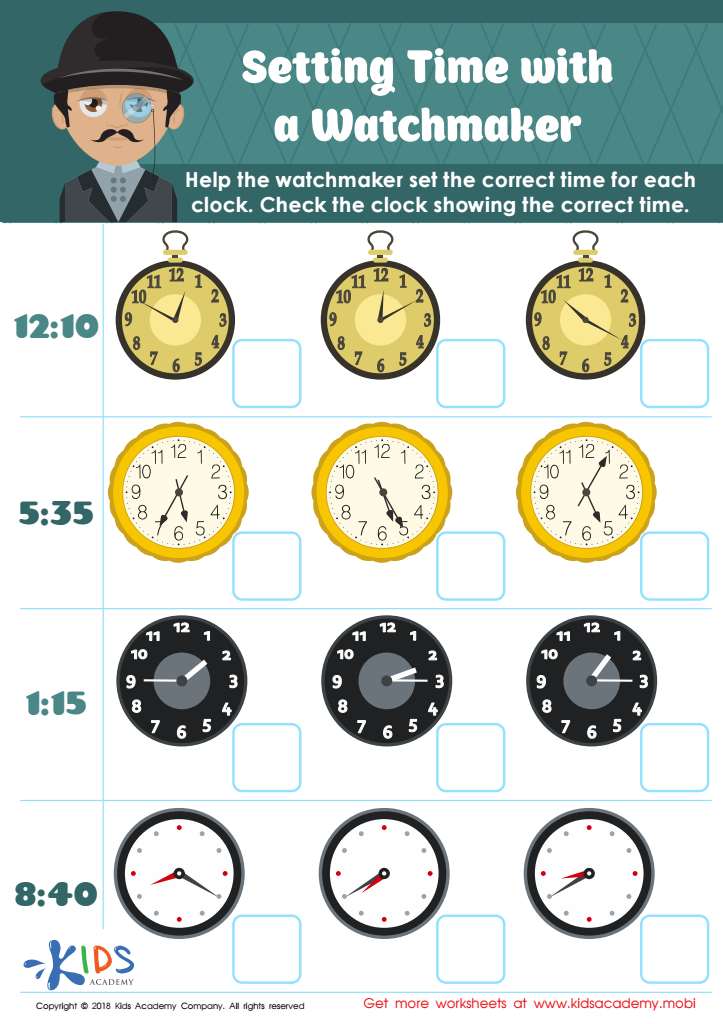
Setting Time with Watchmaker Worksheet
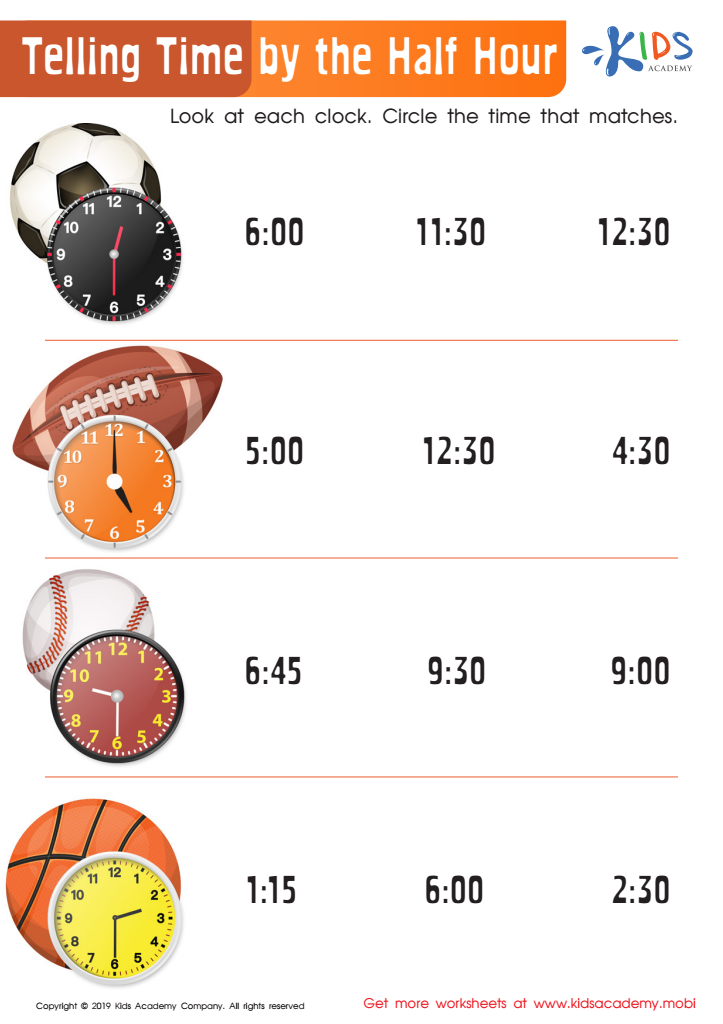
Telling Time by the Half Hour Worksheet






Teaching children to read analog clocks is an essential skill that lays the foundation for various mathematical and cognitive abilities. For parents and teachers of 6- to 7-year-olds, recognizing the importance of this task is crucial for their development.
Firstly, reading analog clocks enhances a child's understanding of time, which is fundamental for daily routines and planning. This ability aids in punctuality and helps youngsters develop a sense of responsibility. Math skills are closely intertwined with time; understanding hour and minute divisions fosters numerical literacy and reinforces concepts like addition, subtraction, and fractions.
Moreover, learning to interpret analog clocks cultivates critical thinking and problem-solving skills. Children must learn to analyze and interpret visual information, which helps boost their overall cognitive development. Additionally, introducing analog clocks amidst the digital age offers children a unique historical perspective and nurtures appreciation for traditional methods.
Engaging children in this process can also strengthen parent-child or teacher-student bonds, as it provides an opportunity for shared learning. Furthermore, developing this skill early on can build children's confidence in their abilities, preparing them for more complex tasks in mathematics and real-world scenarios.








