Subtraction skills Normal Math Worksheets for Ages 6-7
5 filtered results
-
From - To
Explore our Subtraction Skills Normal Math Worksheets designed for children ages 6-7. These engaging and educational worksheets are tailored to help young learners develop essential subtraction skills crucial for their mathematical journey. With a variety of exercises, including picture-based problems and traditional numerical approaches, children will master fundamental subtraction concepts while having fun. Our resources cater to different learning styles, ensuring that every child can progress at their own pace. Watch your child's confidence and proficiency in math grow as they build a solid foundation in subtraction. Visit Kids Academy now to unlock the key to your child's success in math!
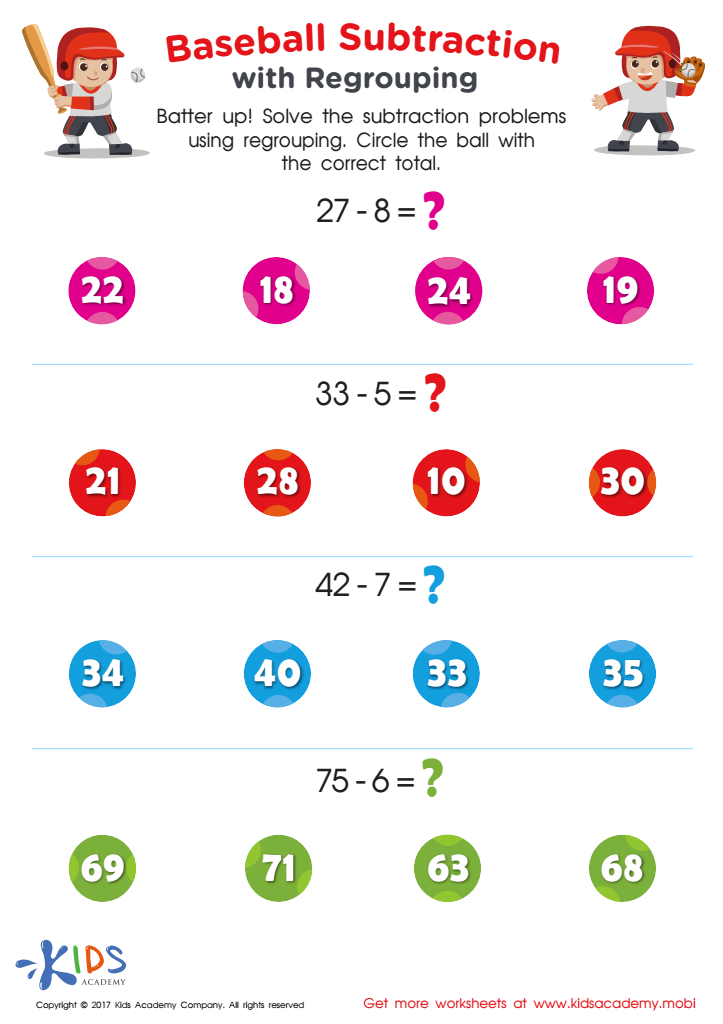
Subtraction With Regrouping for 2nd Grade Worksheet
 Assign to My Students
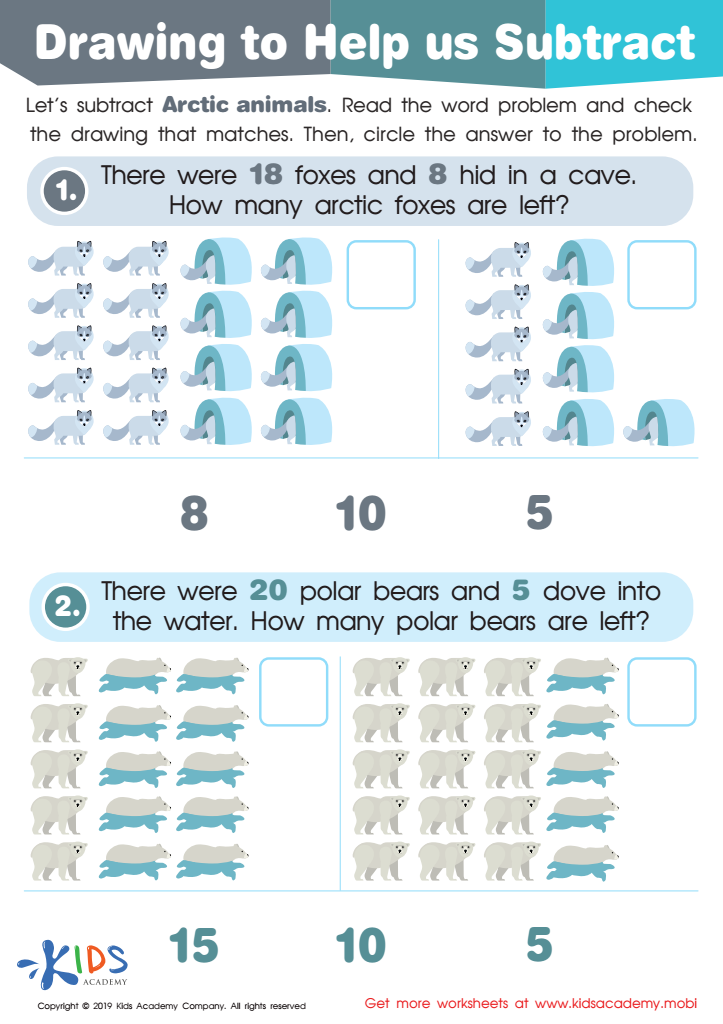
Drawing to Help Us Subtract Worksheet
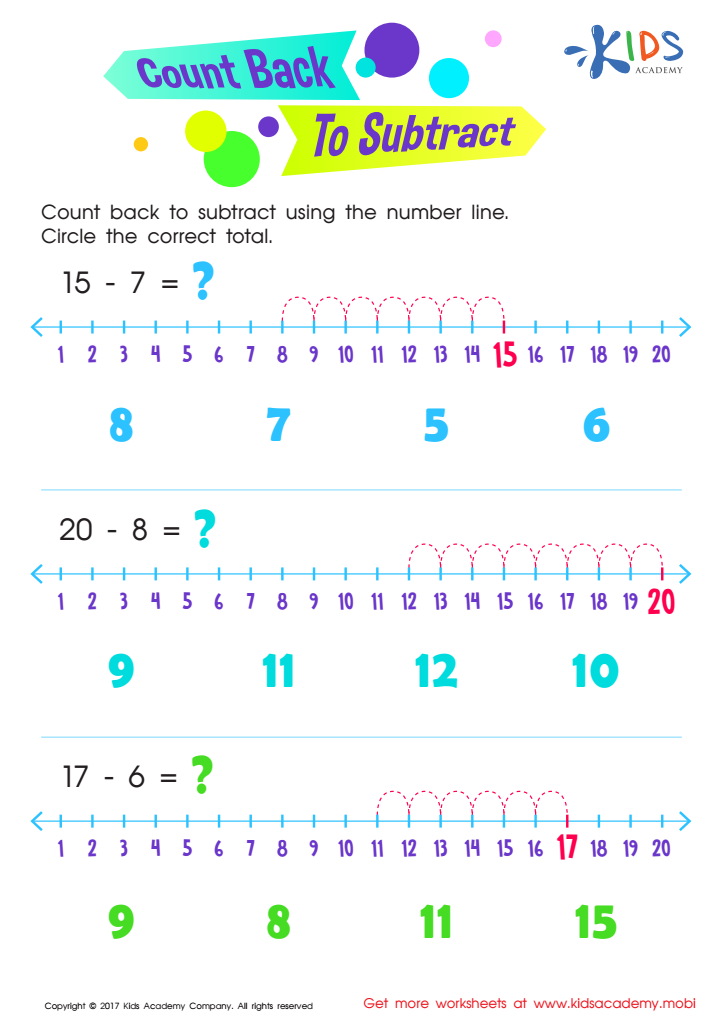
Count Back to Subtract Substraction Worksheet
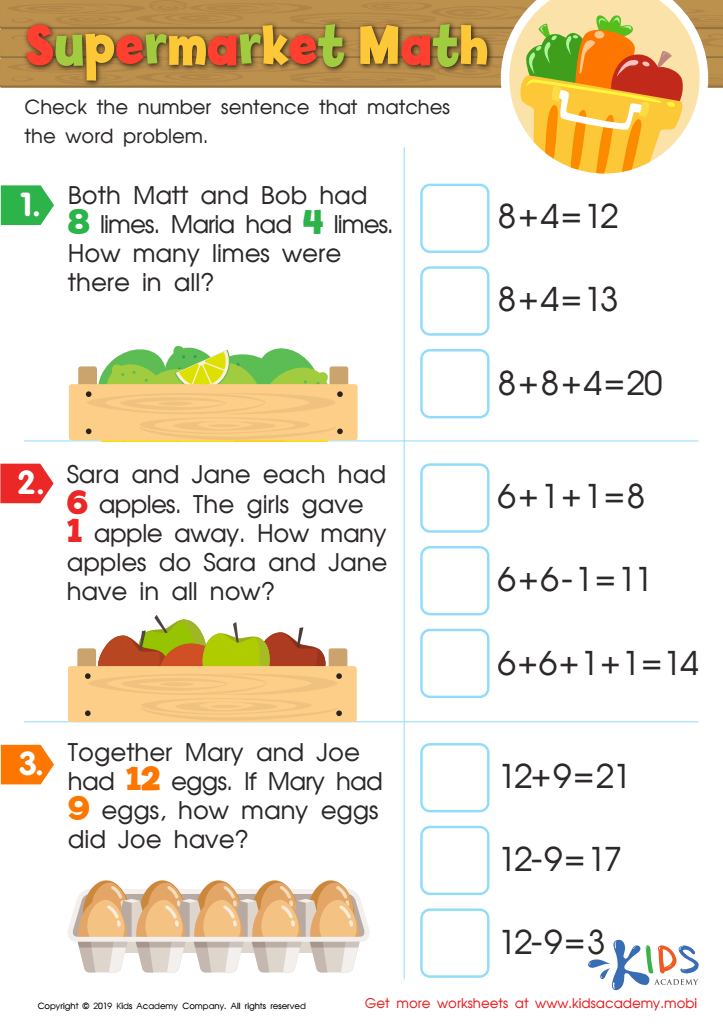
Supermarket Math Worksheet
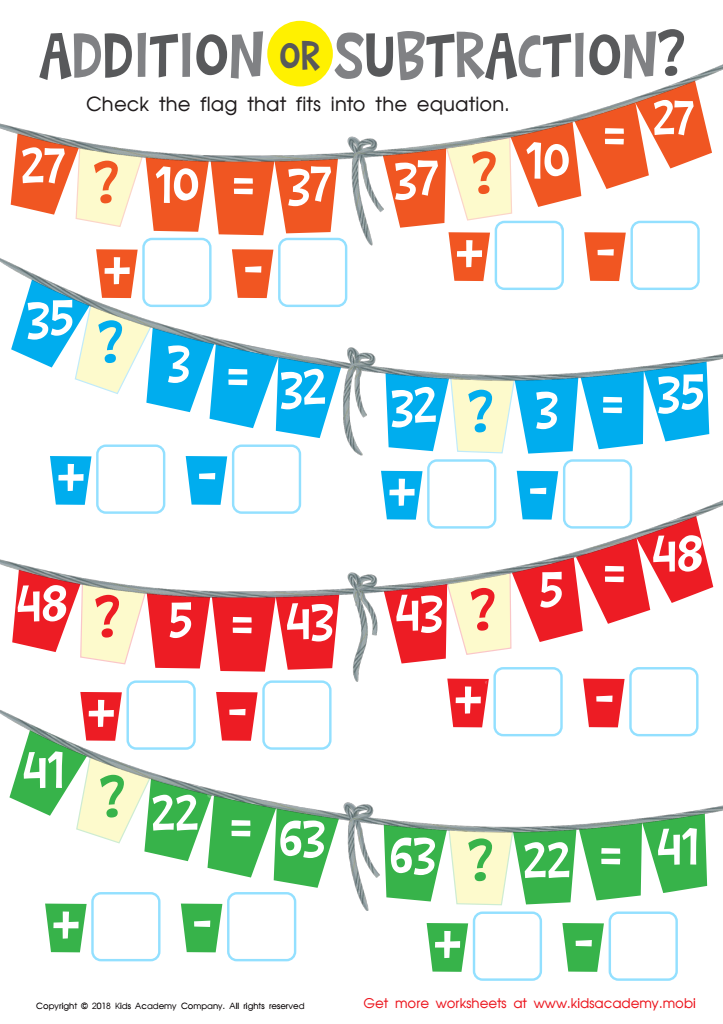
Addition or Subtraction? Worksheet







Subtraction skills are essential for children aged 6-7, significantly impacting their overall mathematical development and cognitive growth. At this young age, children are building the foundational skills that will influence their future learning across all subjects. Subtraction is not just about taking numbers away; it develops critical thinking and problem-solving abilities. Understanding how to subtract helps children grasp the concept of 'taking away' and 'difference,' which are necessary for everyday situations, such as calculating change, sharing equally, and understanding the passage of time.
Moreover, mastering subtraction contributes to numeric fluency, which is foundational for more advanced math topics, such as multiplication and division. When children grasp these basic skills early, they are more confident and less likely to develop math anxiety, which can be a significant hurdle in educational achievement.
Subtraction also enhances logical reasoning. As children solve subtraction problems, they learn to make connections and recognize patterns, thereby refining their analytical skills. This cognitive exercise is vital for brain development and aids in subjects beyond mathematics, like science and reading comprehension.
Parents and teachers should therefore prioritize teaching subtraction skills to foster a positive attitude toward math, build critical life skills, and lay the groundwork for academic success in higher grades.








