Understanding biodiversity Normal Math Worksheets for Ages 6-7
3 filtered results
-
From - To
Introduce young learners to the wonders of biodiversity with our "Understanding Biodiversity Worksheets for Ages 6-7." These engaging, colorful math worksheets integrate fundamental arithmetic skills with lessons about various species and ecosystems. Kids will enjoy fun, easy-to-follow activities that challenge them to count, compare, and explore mathematical concepts while learning about the incredible diversity of life on our planet. Perfectly tailored for curious minds, these worksheets foster both numeracy and a love for the natural world—providing an ideal blend of education and environmental awareness for early grade students. Unlock the joy of discovery and problem-solving today!
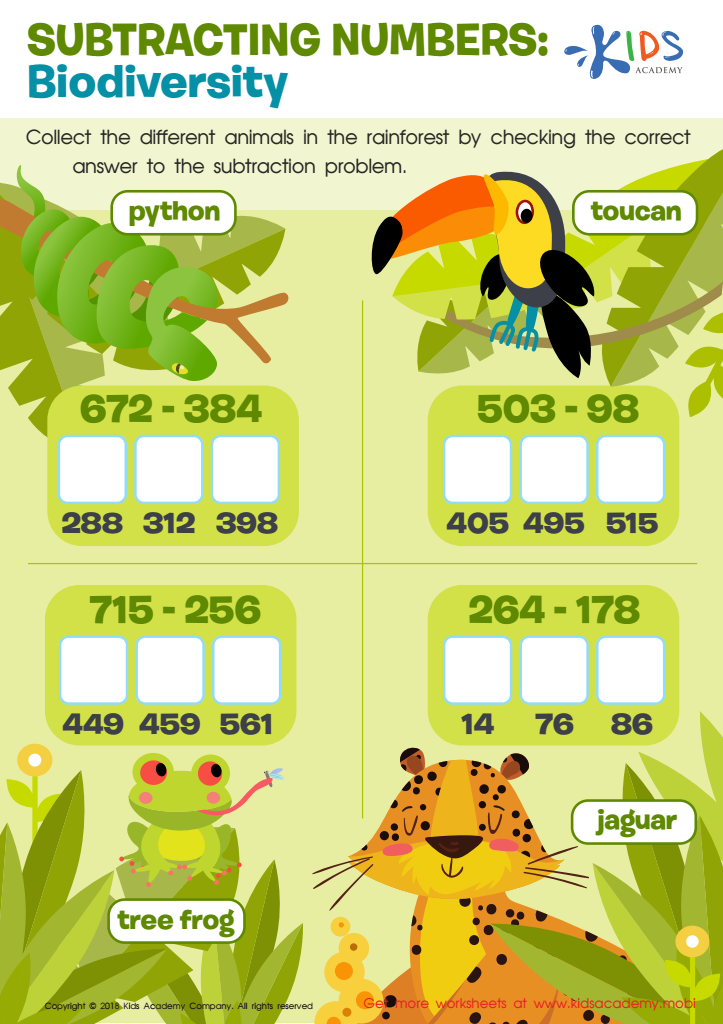
Subtracting Numbers: Biodiversity Worksheet
 Assign to My Students
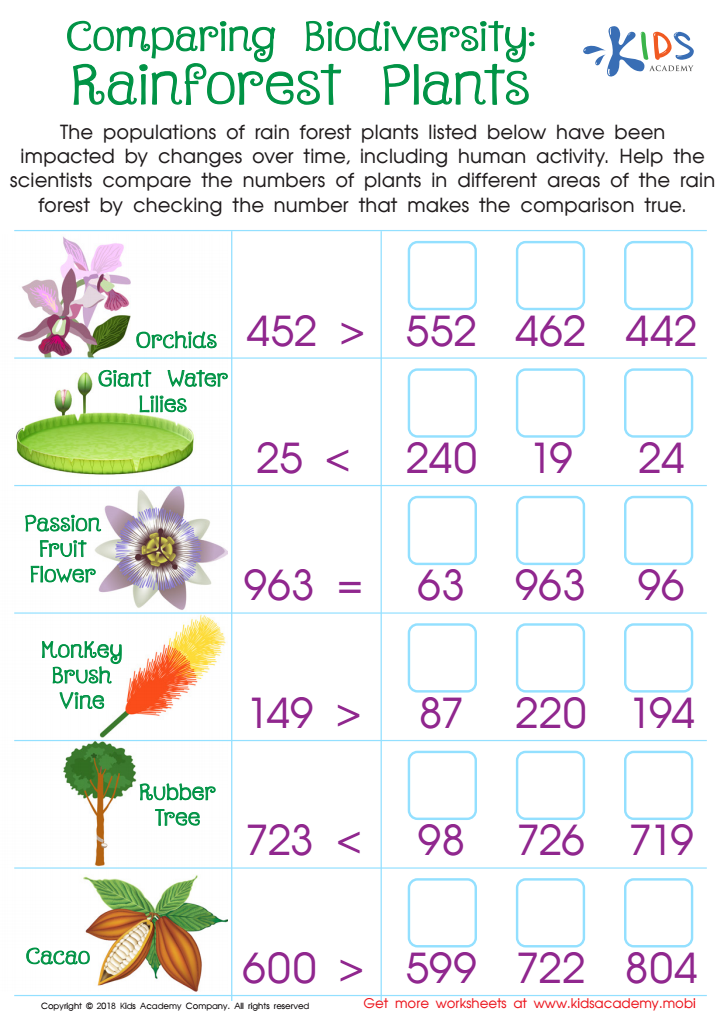
Comparing Biodiversity: Rainforest Plants Worksheet
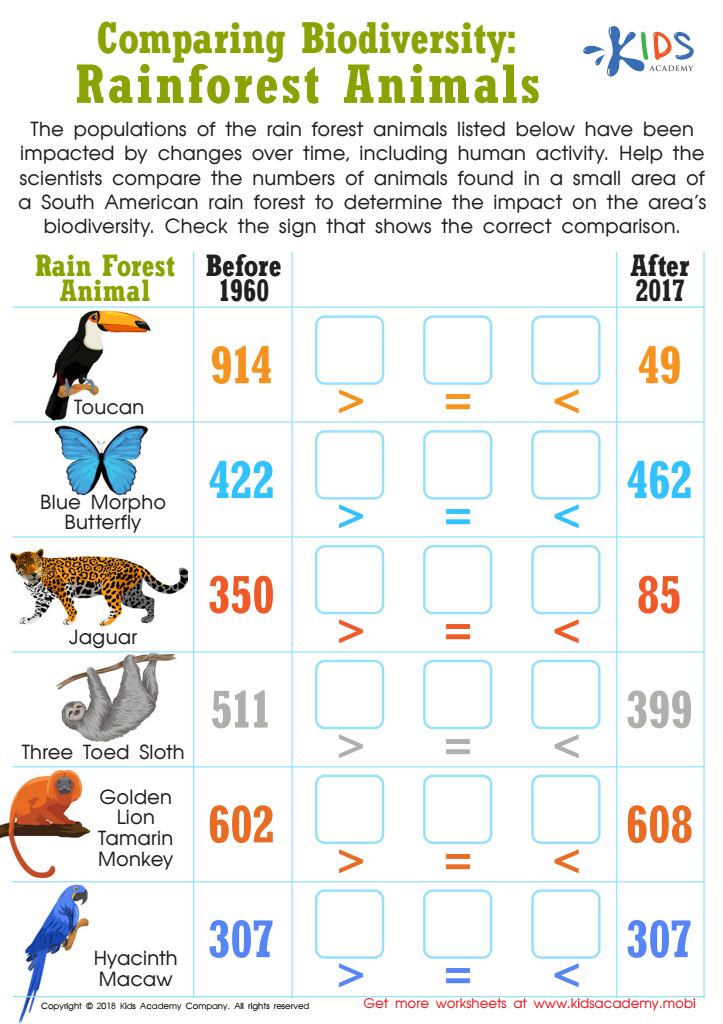
Comparing Biodiversity: Rainforest Animals Worksheet







Understanding biodiversity is essential for young children because it sets the foundation for a lifetime of environmental stewardship. Parents and teachers should care about this for several reasons. First, introducing the concept of biodiversity at an early age helps children appreciate the variety of life forms on Earth, including plants, animals, and microorganisms. By observing different species and understanding their roles within various ecosystems, children develop a sense of wonder and curiosity about the natural world.
Second, learning about biodiversity can enhance children's problem-solving and critical thinking skills. Through simple activities like counting different types of leaves or categorizing animals, young learners practice essential math skills while gaining an understanding of the complex relationships in nature.
Moreover, fostering an awareness of biodiversity early encourages compassion and respect for all living things. It teaches the importance of conservation and the impacts of human activities on our planet, nurturing a sense of responsibility towards protecting the environment.
Finally, engaging in discussions and activities around biodiversity can strengthen parent-child or teacher-student bonds, providing meaningful moments of shared discovery. As children learn to value biodiversity, they are more likely to grow into informed adults who advocate for sustainable living, ensuring a healthier planet for future generations.








