Number Sequencing Normal Numbers up to 100 Worksheets for Ages 6-7
3 filtered results
-
From - To
Explore our engaging Number Sequencing Worksheets designed for children aged 6-7, focusing on normal numbers up to 100. These resources help young learners develop essential math skills through fun and interactive activities. As children practice number sequencing, they enhance their understanding of number patterns, improve their counting abilities, and boost their overall confidence in math. With vibrant visuals and age-appropriate challenges, our worksheets bring excitement to learning, making it enjoyable for every child. Ideal for home or classroom use, these worksheets support your child's educational journey by preparing them for future math concepts. Download now and start the adventure in numbers!
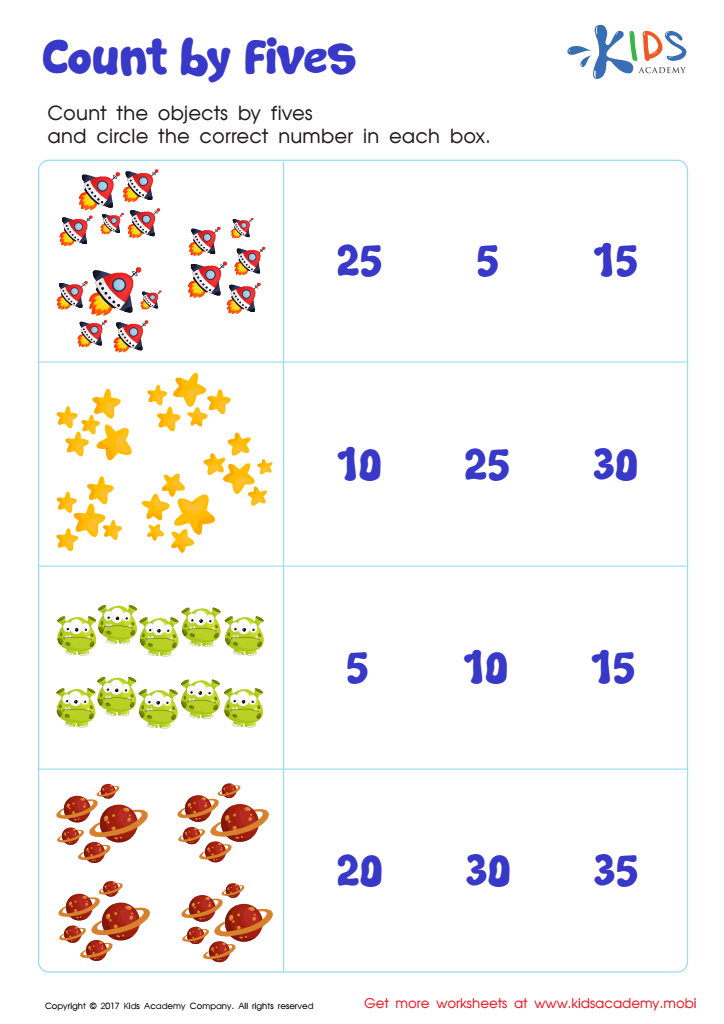
Skip Counting by 5s: Space Math Printable
 Assign to My Students
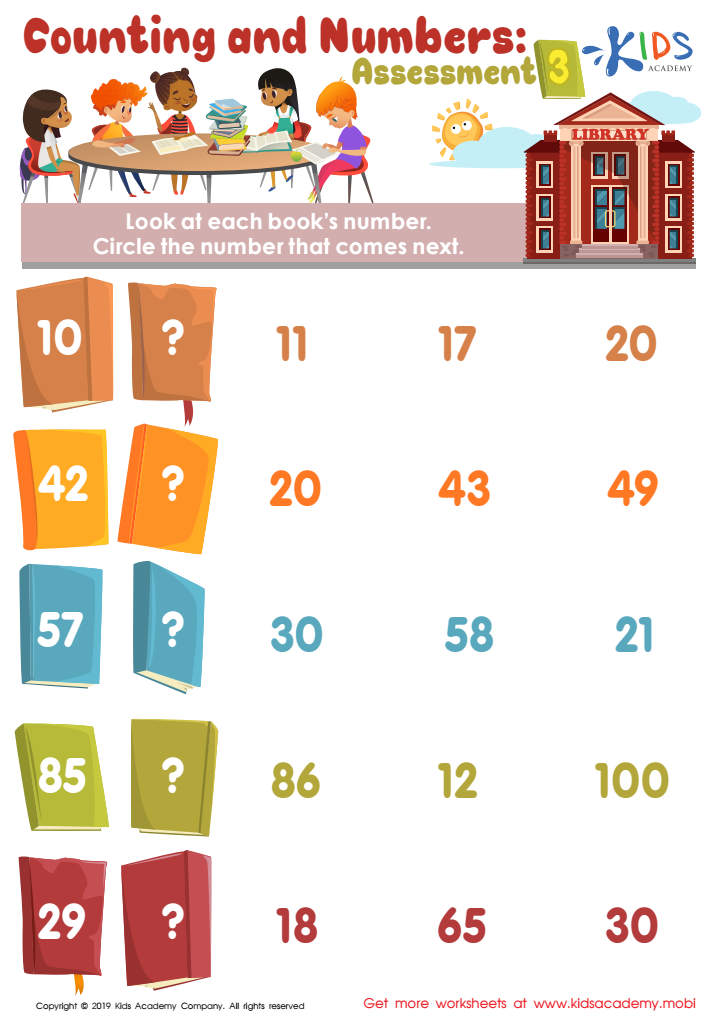
Counting and Numbers: Assessment Worksheet
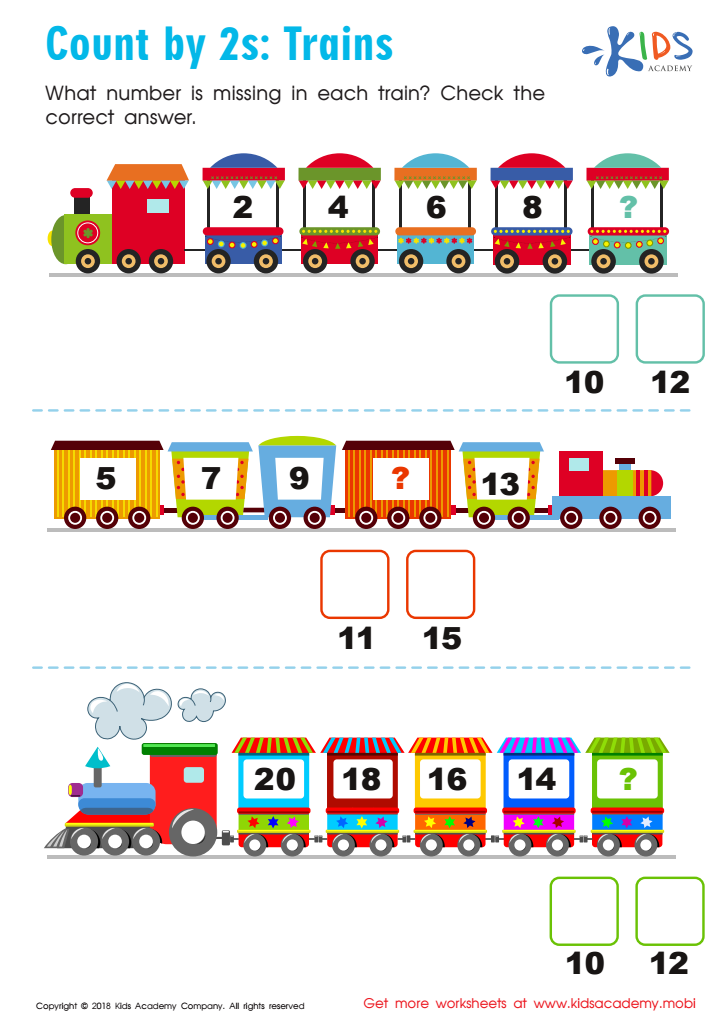
Count by 2's: Trains Worksheet







Number sequencing with normal numbers up to 100 is a fundamental skill for children ages 6-7, and understanding its importance is crucial for parents and teachers. First, mastering number sequences builds a solid foundation for future math concepts, including addition, subtraction, and place value understanding. Sequencing teaches children the order of numbers, which aids in developing a logical thought process—an essential skill not just in math but across various subjects.
Moreover, a strong grasp of number sequencing enhances children's ability to recognize patterns, fostering critical thinking and problem-solving abilities. This recognition of numerical patterns can also translate to later studies in geometry and algebra, making early exposure vital.
Additionally, number sequencing encourages confidence in math. As children learn to count and arrange numbers, they gain self-assurance, making them more eager to tackle complex mathematical tasks. Furthermore, helping children understand and practice number sequences nurtures a supportive environment for their learning, promoting cooperative engagement between parents and teachers.
Ultimately, caring about number sequencing equips children with essential life skills, paving the way for both academic success and everyday problem-solving in their lives. Thus, parents and teachers play a vital role in nurturing these foundational skills for children’s holistic development.