Number Recognition Normal Skip Counting Worksheets for Ages 6-7
3 filtered results
-
From - To
Enhance your child's math skills with our engaging Number Recognition and Normal Skip Counting Worksheets designed for ages 6-7. These worksheets provide a fun and interactive way for young learners to practice skip counting, which lays a strong foundation for number recognition and overall math proficiency. Each worksheet features colorful illustrations and activities that keep children motivated while they develop essential counting skills. Perfect for home or classroom use, our resources cater to various learning styles and ensure children gain confidence in their abilities. Explore our collection today and watch your child's number sense flourish with these effective learning tools!
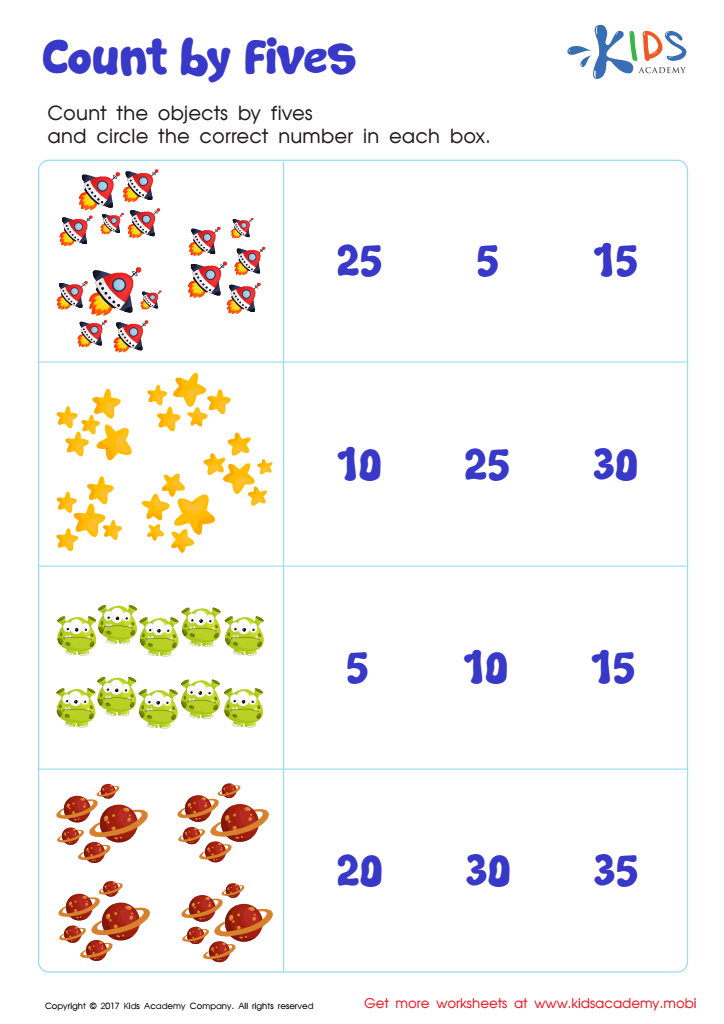
Skip Counting by 5s: Space Math Printable
 Assign to My Students
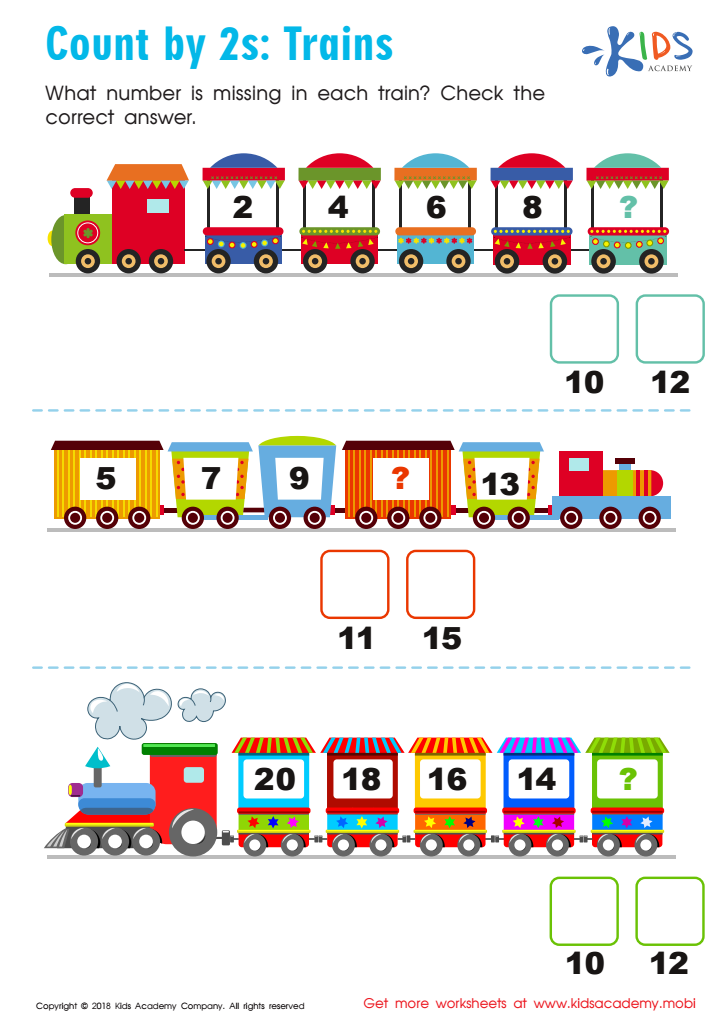
Count by 2's: Trains Worksheet
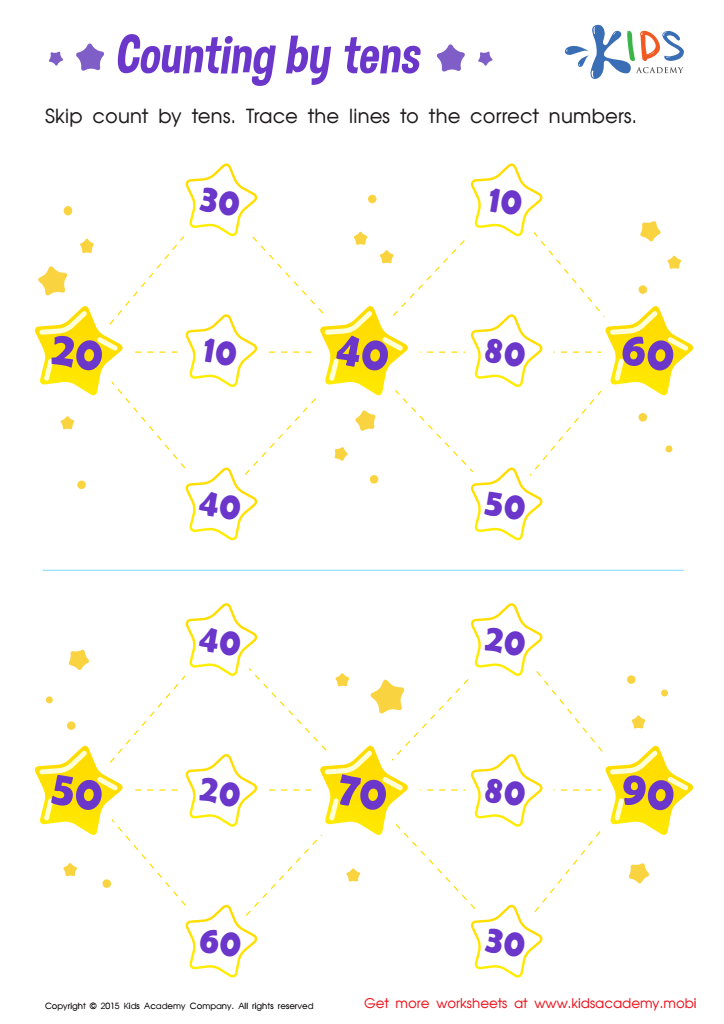
Learn Dozens: Counting by Tens Printable








Number recognition and skip counting are vital foundational skills in early mathematics for children aged 6-7. For parents and teachers, fostering these skills is crucial for several reasons.
Firstly, number recognition enables children to identify and understand numbers in various contexts, including everyday situations like reading time, handling money, and understanding quantities. This skill sets the stage for more advanced mathematical concepts.
Secondly, skip counting, which involves counting by twos, threes, fives, and tens, enhances children's understanding of number patterns, sequencing, and increased mathematical fluency. It helps them grasp the concept of addition, multiplication, and the relationships between numbers.
Moreover, these skills promote confidence and independence in young learners. Children who are proficient in number recognition and skip counting are often more engaged in math-related activities, leading to positive attitudes toward the subject.
Additionally, as math is a critical component in various academic areas, encouraging these skills can help prevent future learning gaps, ensuring that children are well-prepared as they progress in their education.
In summary, cultivating number recognition and skip counting in early learners is essential for mathematical understanding, confidence, engagement, and academic success. Therefore, parents and teachers should prioritize these skills in their teaching strategies.








