Filters

9 filtered results

Clear all filters
Favorites
With answer key
Interactive

9 filtered results

Difficulty Level

Grade


Enhance your child's problem-solving skills with our engaging two-step word problems worksheets designed for ages 6-7. These worksheets offer a variety of scenarios that encourage young learners to think critically and apply their math knowledge. Each problem requires students to analyze information, make calculations, and arrive at solutions in a fun, interactive way. By practicing these normal two-step word problems, children will develop essential skills such as logical reasoning and comprehension, setting a solid foundation for future mathematical success. Perfect for home use or classroom activities, these worksheets make math enjoyable and accessible for early learners!

Check out this FREE Trial Lesson on Two-step Word Problems for age 6-7!

More Word Problems

Favorites
With answer key
Interactive
  • 6-7
  • Problem-Solving Skills
  • Two-step Word Problems
  • Normal
Tricky Problems Worksheet: Part 1

Tricky Problems Worksheet: Part 1

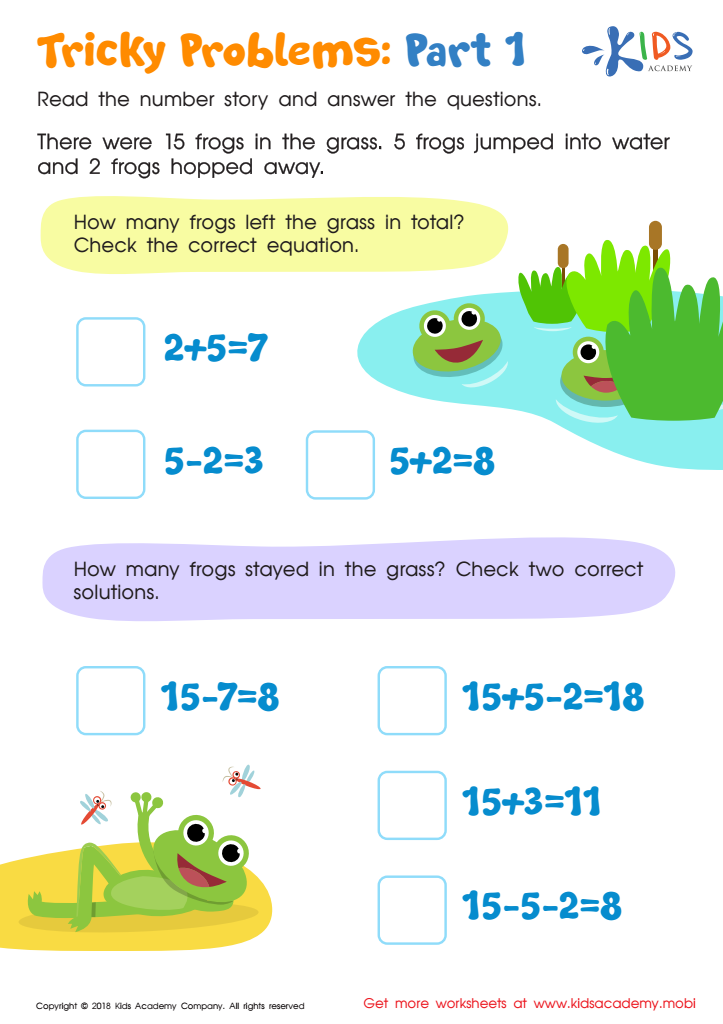
Visualizing word problems can help students solve them. This fun PDF worksheet encourages students to create mental images using math facts, then check boxes to match the equations for basic addition problems. It's a great way to build confidence in solving math.
Tricky Problems Worksheet: Part 1
Worksheet
Enrichment -2 Step Word Problems Worksheet

Enrichment -2 Step Word Problems Worksheet

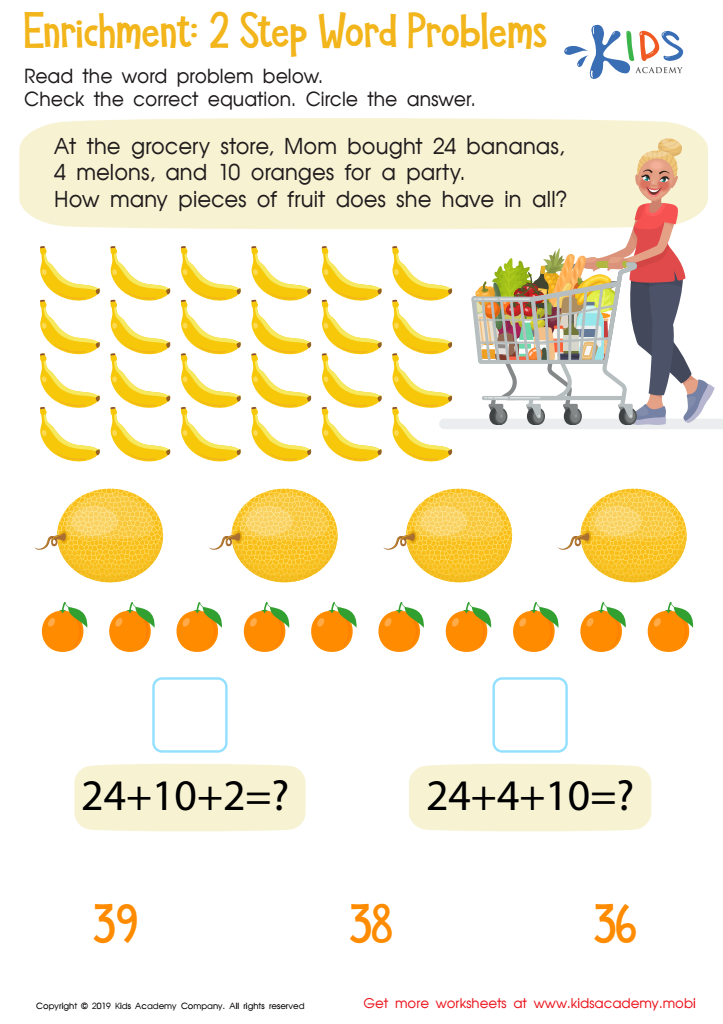
Help your students learn math easier and faster with this colorful worksheet. Read the word problem and then guide them in checking the correct equation and finding the answer. Your students will benefit from the extra help, as they work through new concepts each day.
Enrichment -2 Step Word Problems Worksheet
Worksheet
Fruity Problem Solving Worksheet

Fruity Problem Solving Worksheet

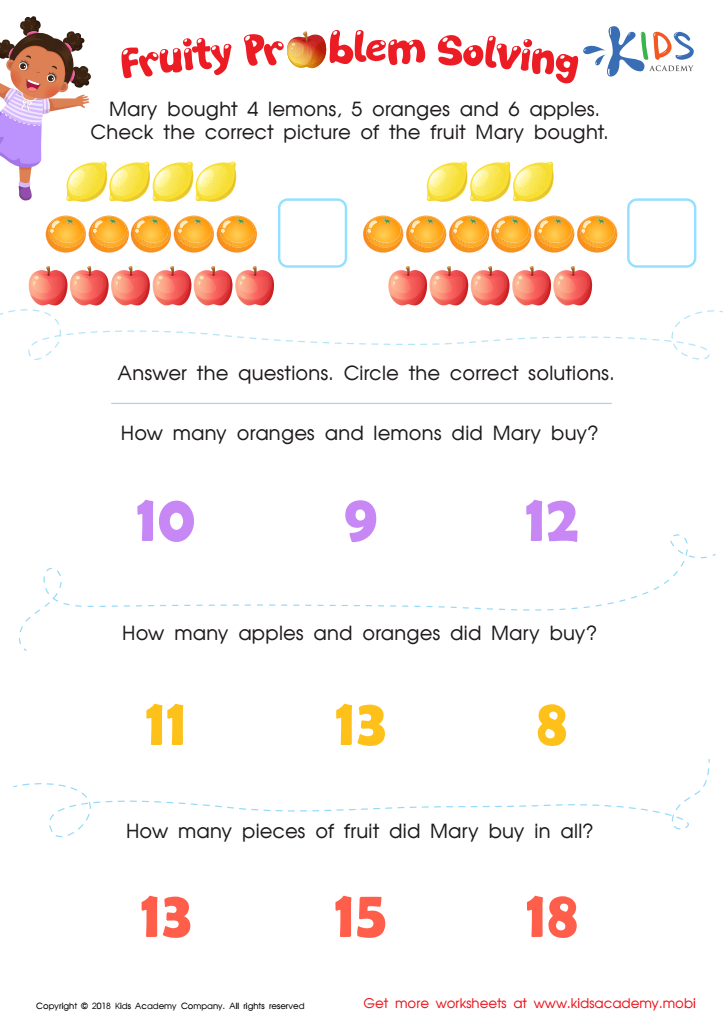
Practice addition word problems with young mathematicians using this PDF worksheet featuring fruit. As they read each problem carefully and circle the correct sums, they'll reinforce attention to detail and fine motor skills. Tangible representations are key to helping them with basic addition.
Fruity Problem Solving Worksheet
Worksheet
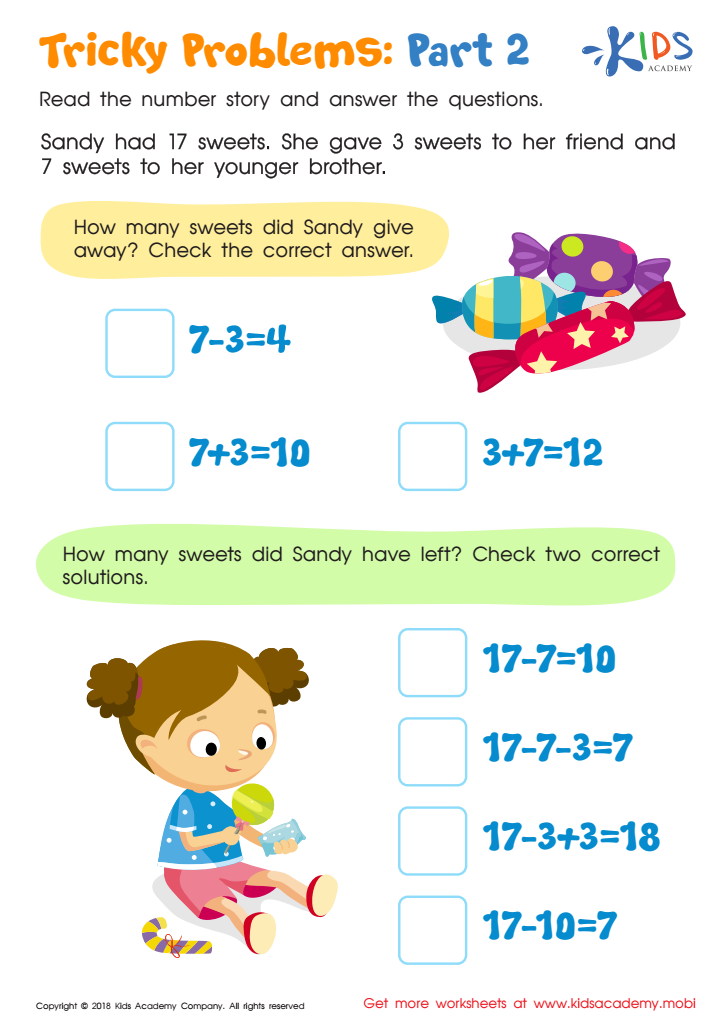
Tricky Problems Worksheet: Part 2

Tricky Problems Worksheet: Part 2

Help your little math learner visualize number stories with this engaging worksheet. They'll connect pictures to the story and use math facts to find the sums. After that, they'll be able to identify the correct number sentences to match. Let them practice and get better at problem solving!
Tricky Problems Worksheet: Part 2
Worksheet
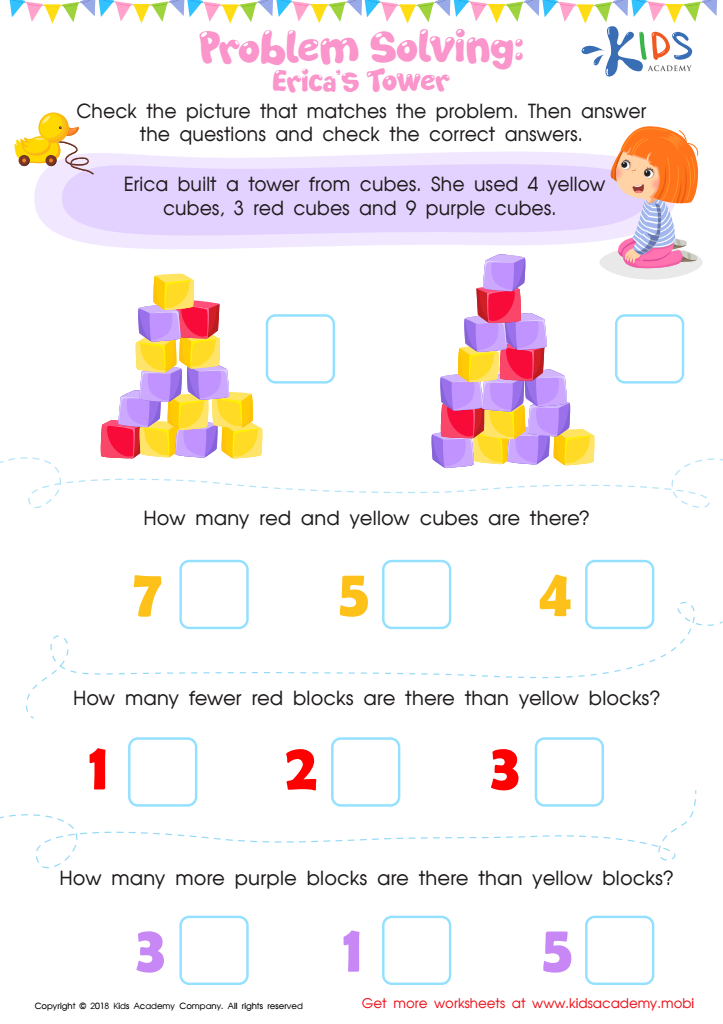
Problem Solving: Erica's Tower Worksheet

Problem Solving: Erica's Tower Worksheet

Sweet Erica needs your math student's help! Download the PDF worksheet and have your little math whiz read the word problems, match the pictures and solve basic addition/subtraction problems with two/three addends, minuends and subtrahends. They'll be having fun while strengthening their math fact skills!
Problem Solving: Erica's Tower Worksheet
Worksheet
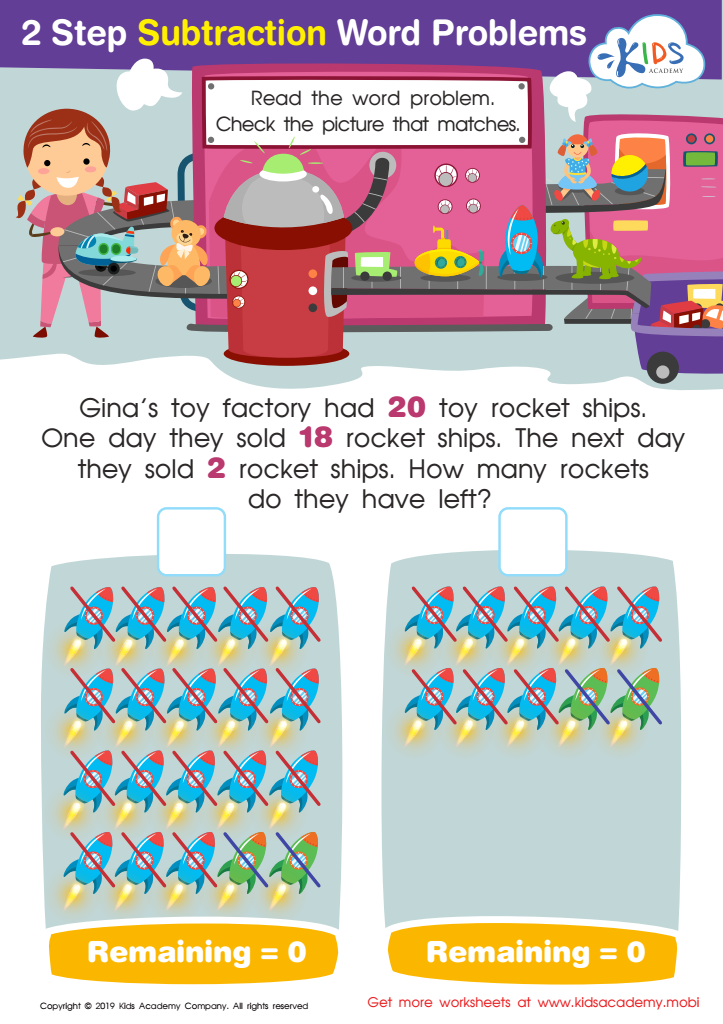
Step Subtraction Word Problems Worksheet

Step Subtraction Word Problems Worksheet

With this worksheet, kids can solve a multi-step subtraction problem with one-to-one number representation, helping Gina figure out her rocket count. Visualizing word problems is key, and this PDF will give your child a concrete image to work with. They'll be successful problem solvers in no time!
Step Subtraction Word Problems Worksheet
Worksheet
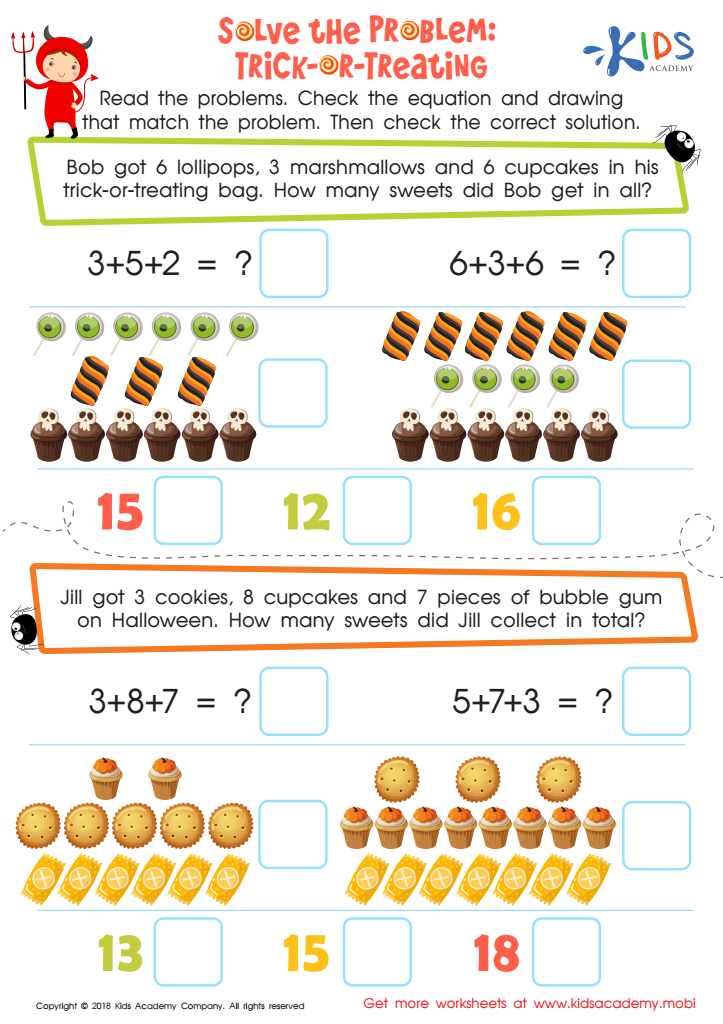
Solve the Problem: Trick–or–treating Worksheet

Solve the Problem: Trick–or–treating Worksheet

Kids will love this fun PDF worksheet for trick-or-treating! It's packed with yummy images and math practice. They can read the word problems, count and add numbers, check their answers, and match the addition equations with the pictures. Math made delicious!
Solve the Problem: Trick–or–treating Worksheet
Worksheet
Addition and subtraction word problem worksheet for 3rd grade

Addition and Subtraction: Word Problems Worksheet
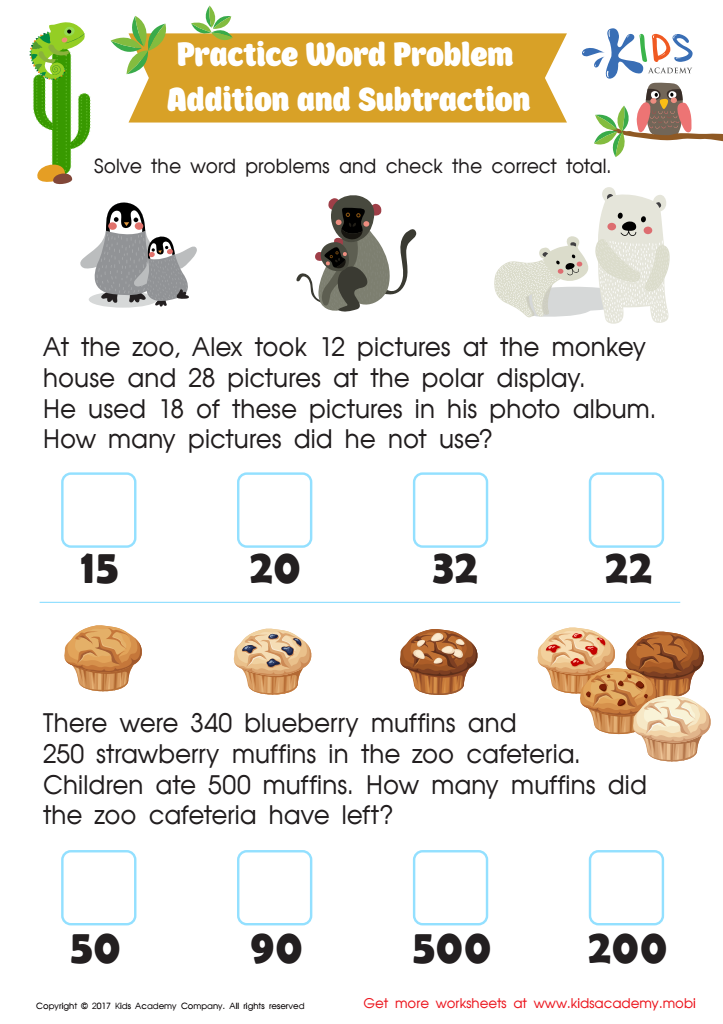
Word problems can be difficult, but they offer another way to understand math. Our 3rd grade worksheet takes your child to the zoo; two intriguing word problems will test their thinking skills and help them find the total.
Addition and Subtraction: Word Problems Worksheet
Worksheet
Vegetable Gardens Worksheet


Vegetable Gardens Worksheet

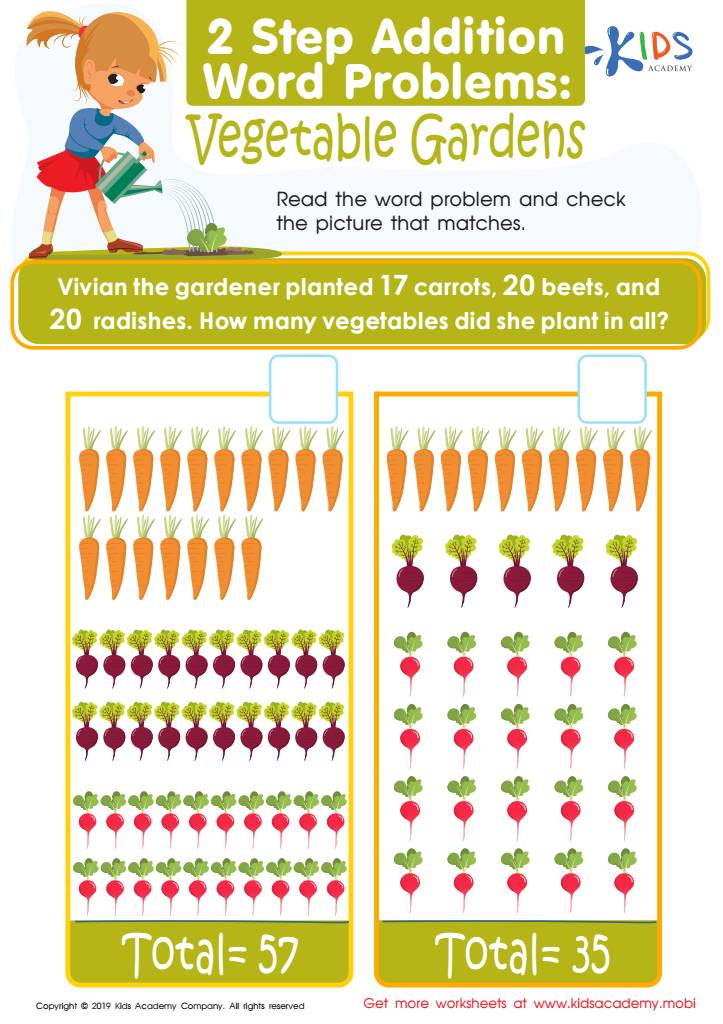
Kids will have fun helping their buddy Vivian solve the addition word problems. Using one-to-one representation, they'll count the beets, carrots and radishes, then figure out the multi-step word problems. After, they'll check the picture that matches the answer, boosting their understanding of adding multiple numbers for one answer.
Vegetable Gardens Worksheet
Worksheet


Parents and teachers should care about problem-solving skills in normal two-step word problems for children ages 6-7 because these skills are foundational to mathematical understanding and critical thinking. At this developmental stage, children are beginning to make connections between concrete concepts, like addition and subtraction, and more abstract problem-solving. Two-step word problems require students to interpret information, organize their thoughts, and apply their knowledge in a logical sequence, thus fostering cognitive development.

Moreover, honing these skills supports children's confidence in mathematics. When children successfully navigate problems that involve multiple steps, they gain a sense of accomplishment, which encourages further exploration and persistence in learning. Problem-solving also cultivates creativity, as students learn to think outside the box and explore various strategies to arrive at an answer.

Additionally, strong problem-solving abilities are essential for real-life situations. By engaging with two-step problems, children not only prepare for future academic challenges but also develop skills that are applicable in daily life, such as critical thinking, planning, and decision-making. Ultimately, nurturing these skills during early education positions children for success across all areas of learning and personal development.