Comprehension skills Normal Reading Fiction Worksheets for Ages 6-7
6 filtered results
-
From - To
Enhance your child's reading abilities with our "Comprehension Skills Normal Reading Fiction Worksheets" tailored for ages 6-7. These engaging worksheets are designed to improve understanding and analytical skills through delightful stories that capture the imagination. Each worksheet encourages young readers to make connections, infer meanings, and answer questions that develop critical thinking. With vibrant illustrations and age-appropriate language, these resources make learning fun and accessible. Perfect for home or classroom use, our worksheets support early literacy development, ensuring your child gains confidence and enjoyment in reading. Foster a love for literature while enhancing comprehension skills with our expertly crafted activities!
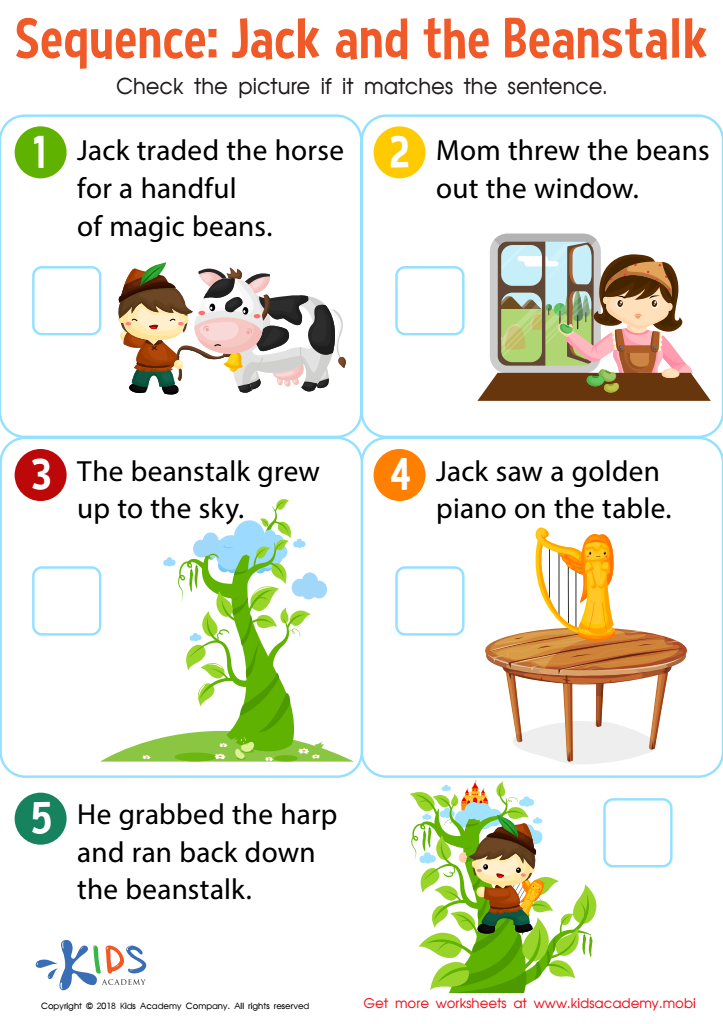
Sequence: Jack and The Beanstalk Worksheet
 Assign to My Students
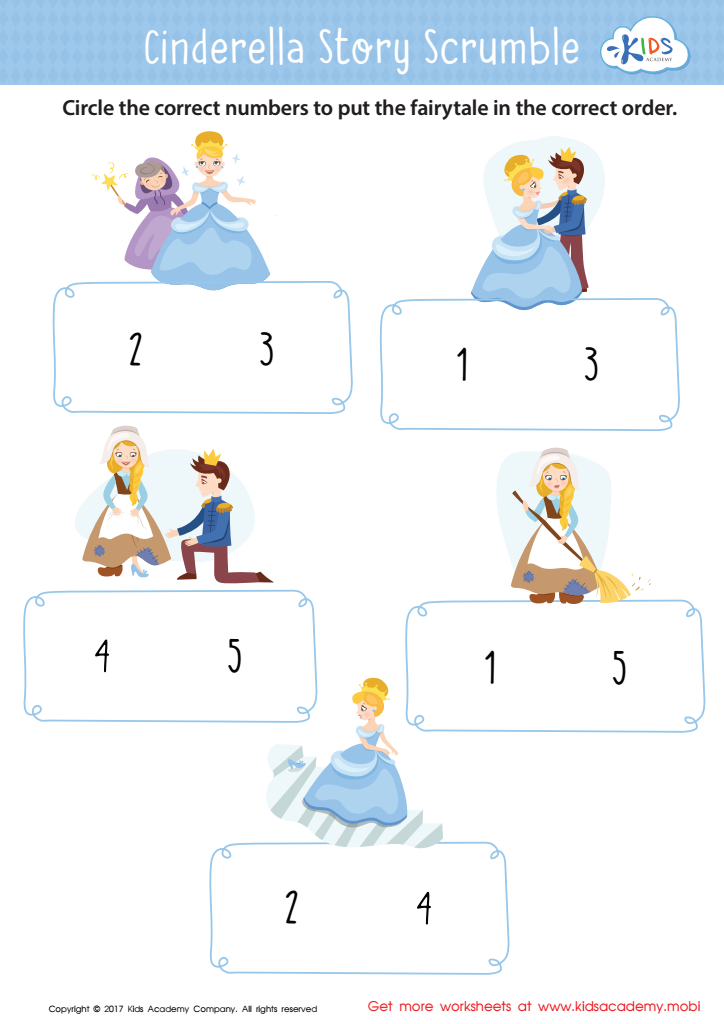
Cinderella Story Sequencing Worksheet
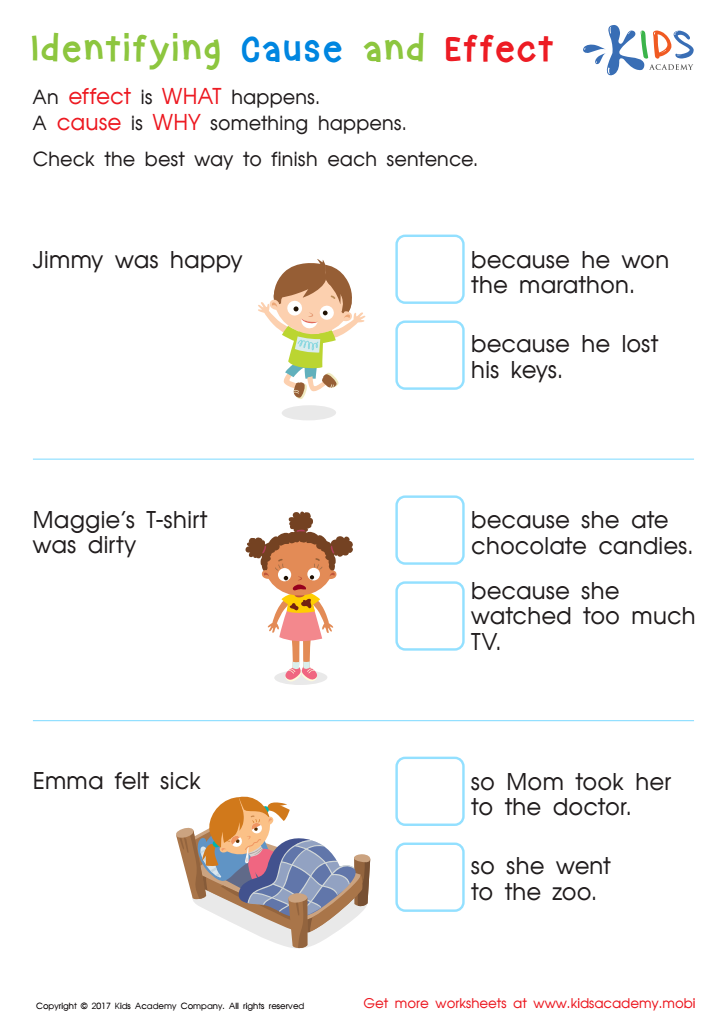
Indentifying Cause and Effect Worksheet
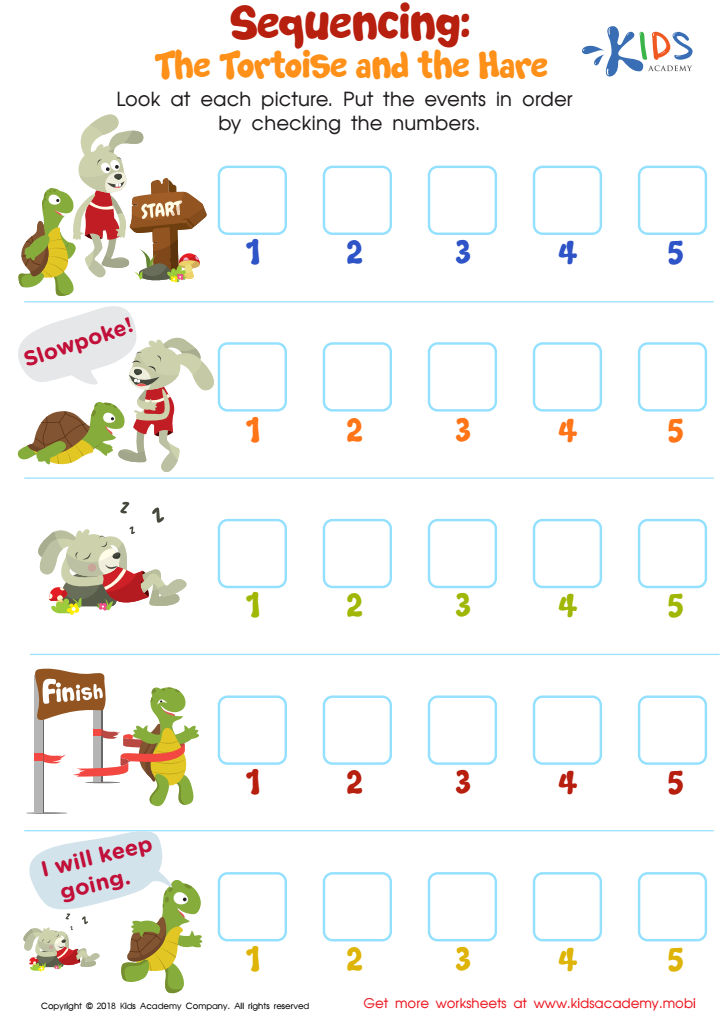
Sequencing: The Tortoise and the Hare Worksheet
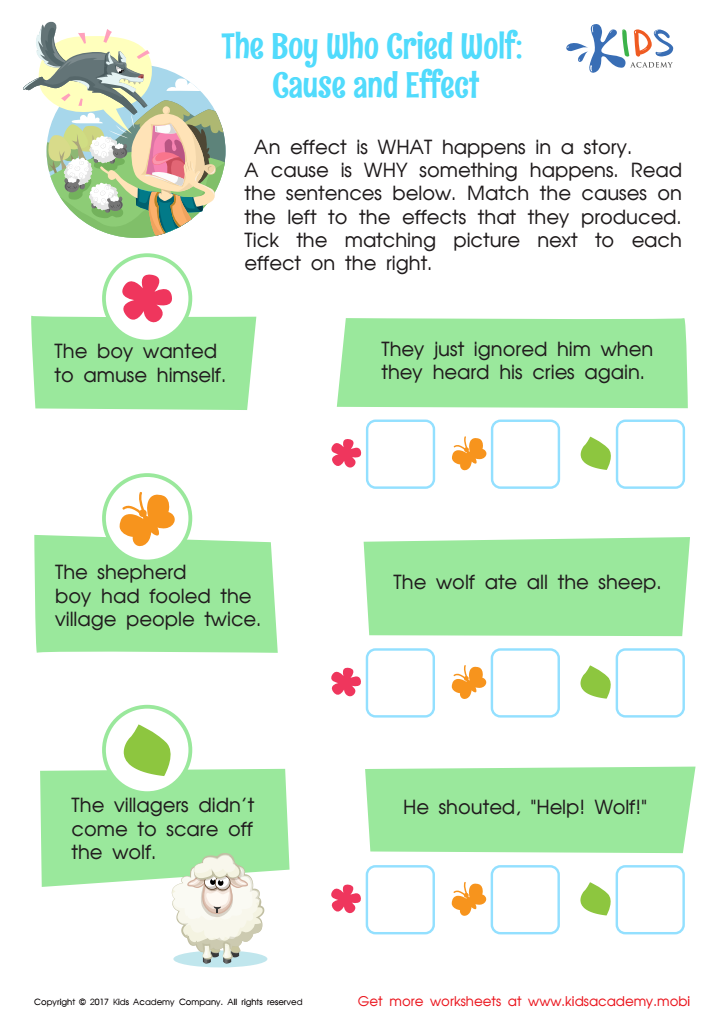
The Boy Who Cried Wolf: Cause and Effect Worksheet
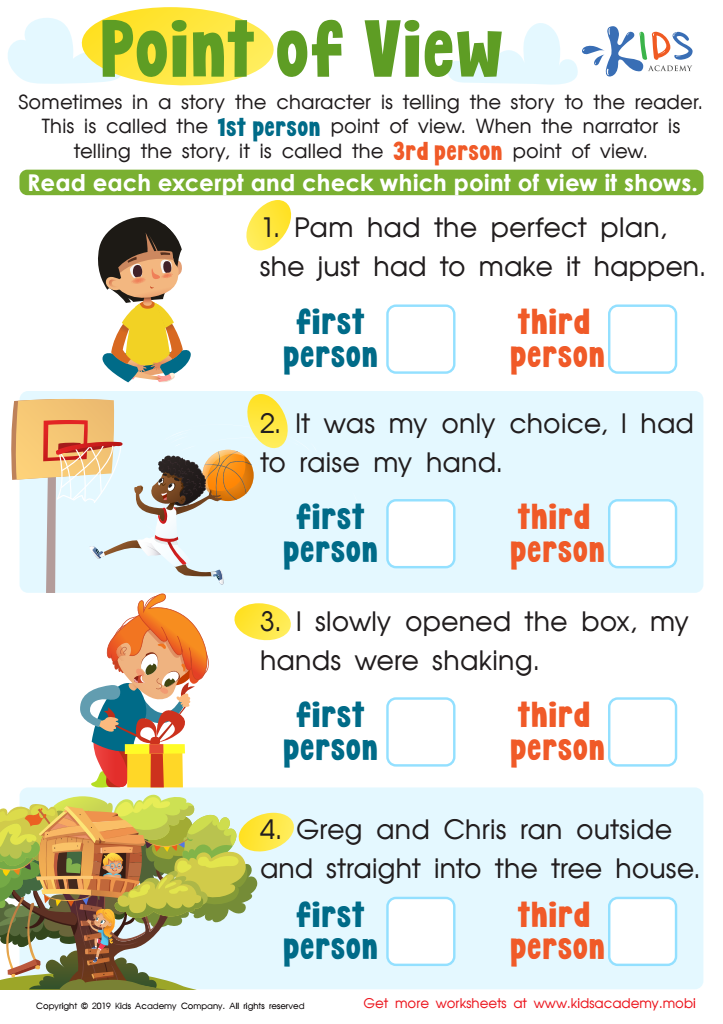
Point of View Printable








Comprehension skills in reading, particularly for children aged 6-7, are crucial for their overall academic success and lifelong learning. At this age, children are transitioning from learning to read to reading to learn, making comprehension a pivotal part of their development. Normal reading fiction not only fosters their engagement and motivation to read but also enhances their ability to understand and connect with the material.
Parents and teachers should care about comprehension skills because they are foundational for critical thinking and problem-solving. Mastering these skills enables young learners to grasp character motivations, plot developments, and underlying themes in stories, which are essential in forming their analytical abilities. Additionally, strong comprehension skills support vocabulary acquisition, as children learn to decode new words in context.
Furthermore, reading fiction encourages empathy and emotional intelligence, allowing children to relate to characters' experiences and perspectives. This emotional engagement can enhance their social skills and improve their interactions with peers. By prioritizing comprehension skills through normal reading fiction, parents and teachers can create a rich literacy environment that promotes curiosity, reinforces learning objectives, and fosters a love for reading, setting the stage for a successful educational journey.







