Moral understanding Normal Reading Fiction Worksheets for Ages 6-7
4 filtered results
-
From - To
Explore our engaging "Moral Understanding Normal Reading Fiction Worksheets" designed specifically for children aged 6-7. These worksheets encourage young learners to delve into stories and uncover important moral lessons, helping them develop critical thinking and empathy. Each worksheet features age-appropriate fiction texts, accompanied by thought-provoking questions that challenge students to reflect on characters' choices and consequences. Perfect for classroom or home use, our resources foster a love for reading while building essential literacy skills and moral reasoning. Support your child's development with our effective and fun worksheets that pave the way for a deeper understanding of right and wrong through storytelling!
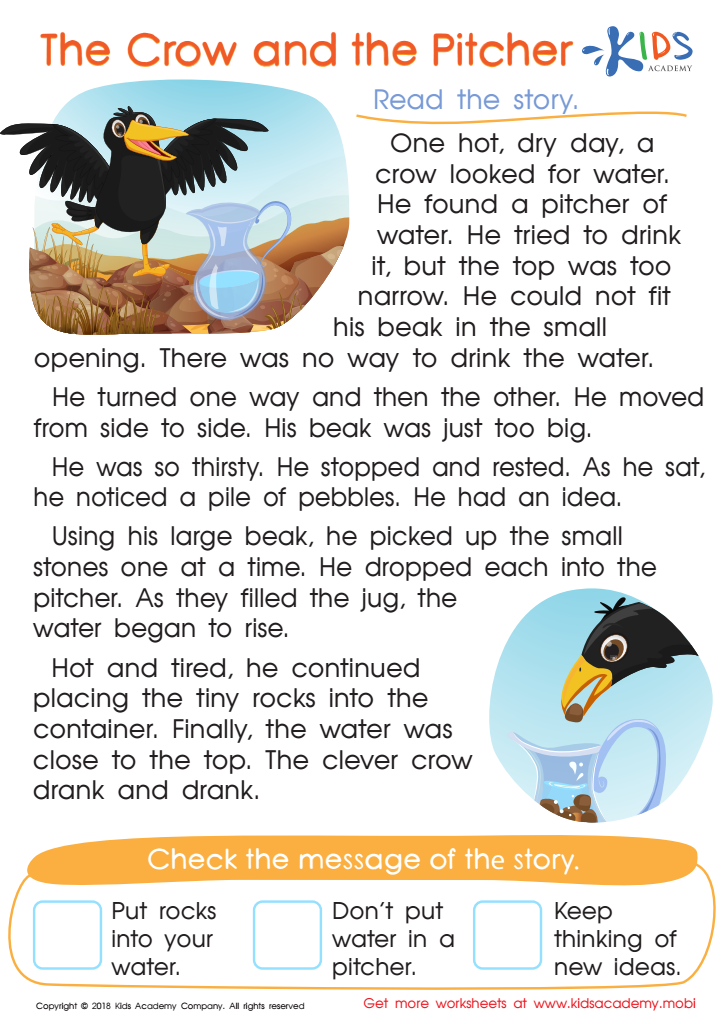
The Crow and the Pitcher Worksheet
 Assign to My Students
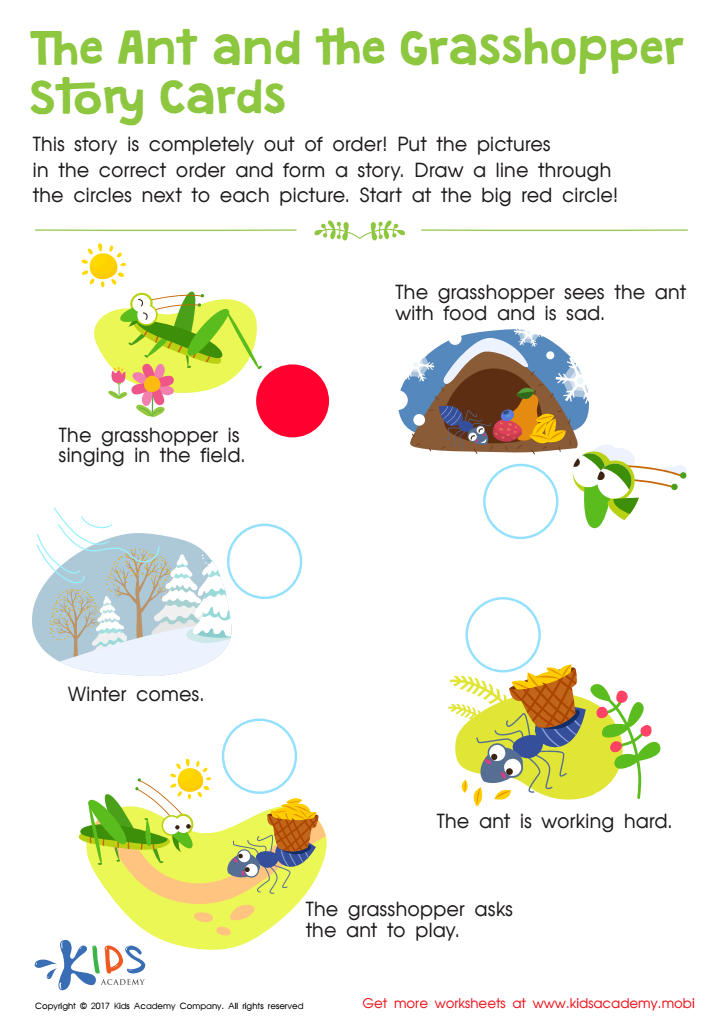
The Ant and The Grasshopper Worksheet
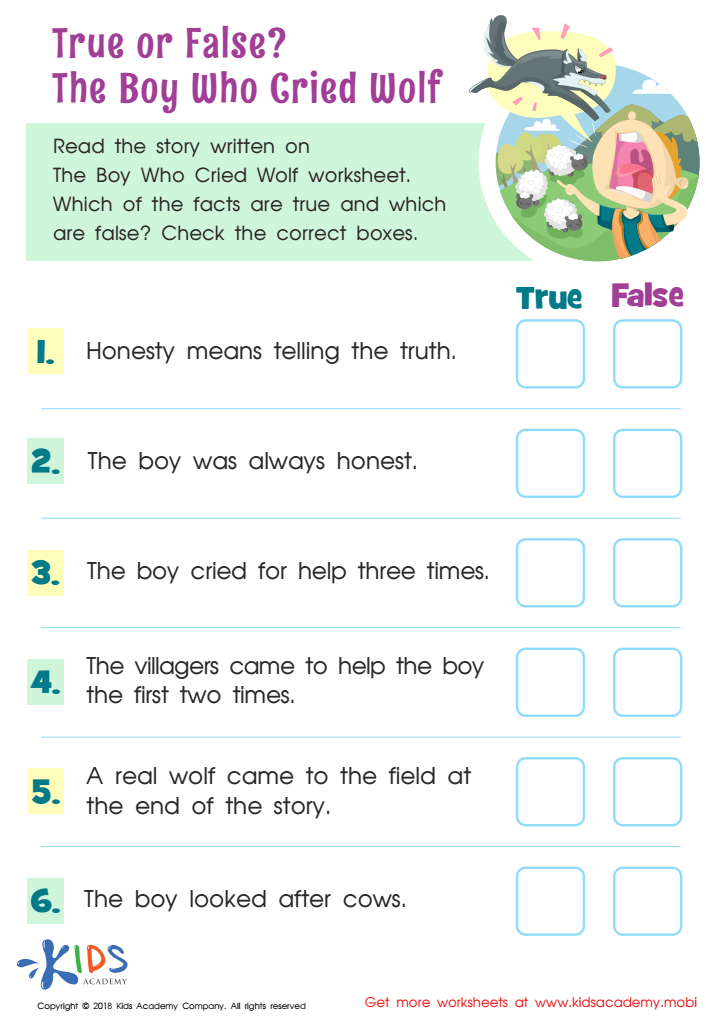
True or False? The Boy Who Cried Wolf Worksheet
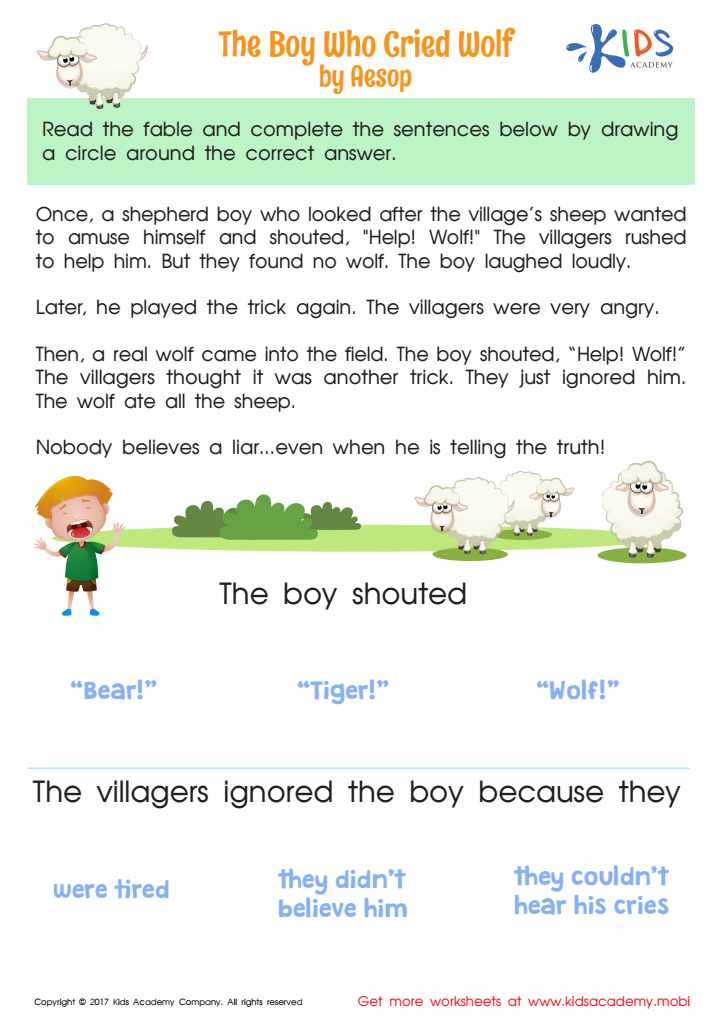
The Boy Who Cried Wolf Worksheet







Moral understanding is a crucial aspect of a child's development, particularly during the ages of 6 to 7, when they begin to navigate social interactions and build their identities. Reading fiction tailored for this age group can foster empathy, compassion, and a sense of fairness. Stories featuring relatable characters who face moral dilemmas encourage young readers to reflect on their values and the consequences of actions, fostering critical thinking and ethical reasoning.
For parents and teachers, incorporating moral themes into reading not only enhances literacy skills but also instills important life lessons. This age group is particularly impressionable and intuitive; they are adept at absorbing messages from narratives. Engaging with fiction allows children to experience diverse perspectives and to recognize emotions in themselves and others, promoting emotional intelligence.
Additionally, discussing moral lessons from stories strengthens the bond between adults and children, providing an opportunity for meaningful conversations. These discussions help children articulate their thoughts and opinions, enhancing their communication skills. Ultimately, emphasizing moral understanding in literature can nurture conscientious, responsible individuals who contribute positively to their communities, making it an essential focus for parents and educators alike.







