Geography knowledge Normal Our Planet and Environment Worksheets for Ages 6-7
3 filtered results
-
From - To
Explore our engaging Geography Knowledge worksheets designed for children ages 6-7, centered around "Our Planet and Environment." These resources provide a fun and interactive way for young learners to grasp essential concepts related to Earth, nature, and environmental awareness. Each worksheet incorporates colorful visuals and age-appropriate activities that foster curiosity and creativity. From identifying landforms to understanding ecosystems, our materials encourage collaboration, critical thinking, and observation skills. Perfect for both the classroom and at-home learning, our worksheets are an excellent tool to inspire a lifelong love for geography and awareness of the world around them. Dive into learning today!
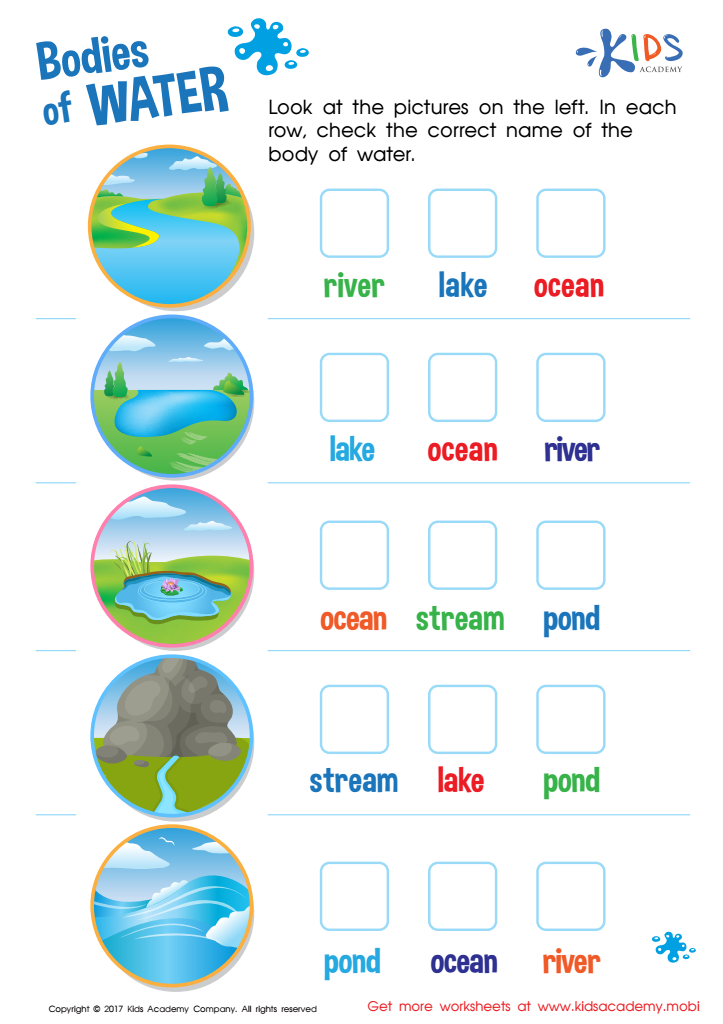
Bodies of Water Worksheet
 Assign to My Students
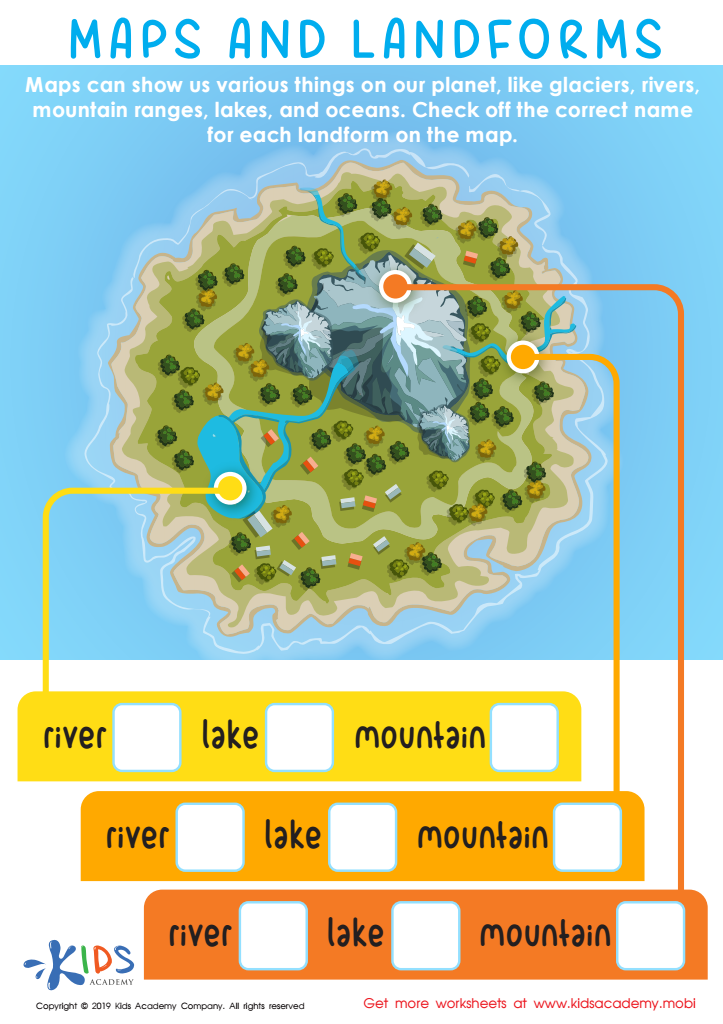
Maps and Landforms Worksheet
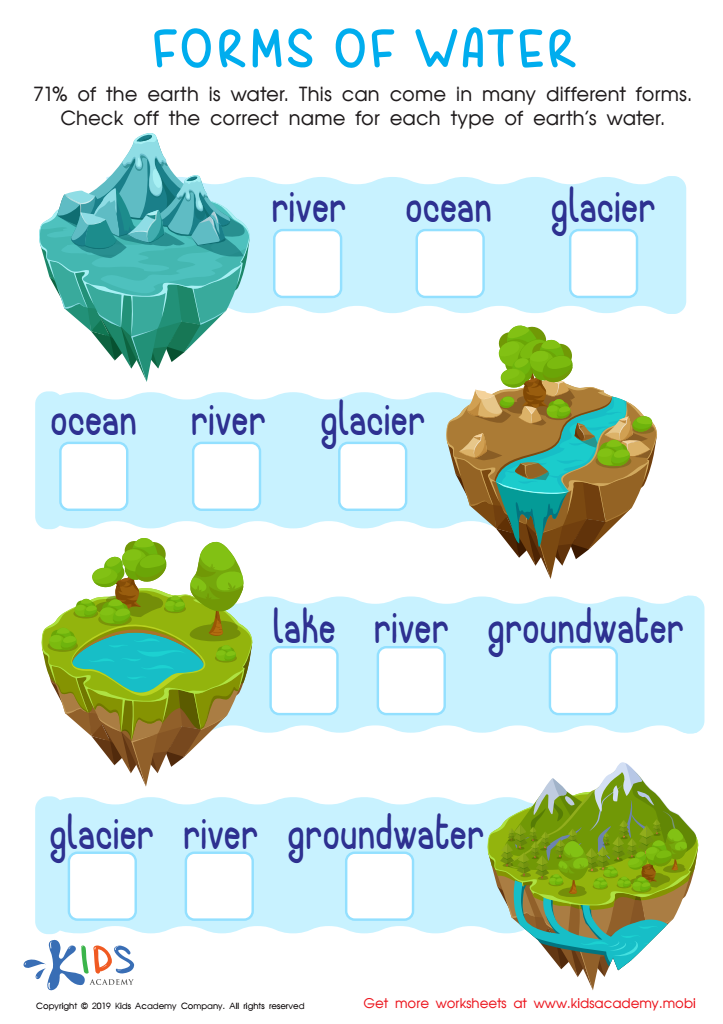
Forms of Water Worksheet




Understanding Geography is essential for children aged 6-7 because it shapes their awareness of the world and fosters a sense of connection to their environment. At this developmental stage, children are naturally curious about their surroundings. Introducing them to concepts from "Our Planet and Environment" engages their curiosity, helping them learn about different places, cultures, and ecological systems.
Geography education fosters critical thinking by encouraging young learners to ask questions such as “Why do certain plants grow in some areas but not others?” or “How do people live in different countries?” This inquiry nurtures a sense of empathy and respect for diversity, preparing them to navigate an increasingly interconnected world.
Moreover, knowledge of geography equips children with the skills necessary to tackle environmental issues. As they learn about natural resources, climate change, and sustainable practices, they become informed stewards of the planet, cultivating a sense of responsibility for its health and future.
For both parents and teachers, emphasizing geography knowledge supports educational development, enriches children’s understanding of global matters, and inspires them to become proactive citizens. By investing in geography education at an early age, we lay the groundwork for a more informed, caring, and environmentally aware generation.







