
Enhancing observational skills Normal Physical Science Worksheets for Ages 6-7
5 filtered results
Difficulty Level
Grade
Age
-
From - To
Subject
Activity
Standards
Enhance your child's observational skills with our engaging Normal Physical Science Worksheets designed specifically for ages 6-7. Tailored to foster curiosity and critical thinking, these worksheets encourage young learners to explore and discover the fascinating world of physical science. Activities are crafted to develop keen observation through interactive tasks and visual aids that captivate their attention. Children will learn to identify patterns, make comparisons, and document findings, laying a strong foundation for future scientific inquiry. Introduce your little ones to the joys of discovery while sharpening their observational skills and nurturing their love for learning. Perfect for home or classroom use!
Favorites
With answer key
Interactive
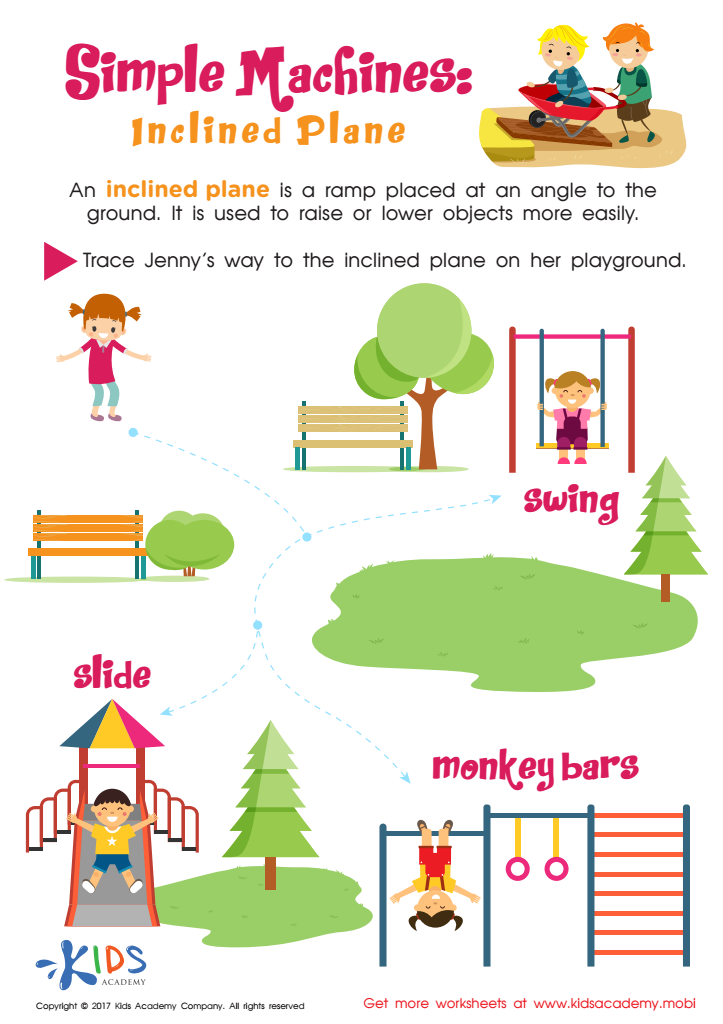
Simple Machines Inclined Plane Worksheet
This fun worksheet will help them increase their science skills while they have fun.
 Assign to My Students
Simple Machines Inclined Plane Worksheet
Worksheet
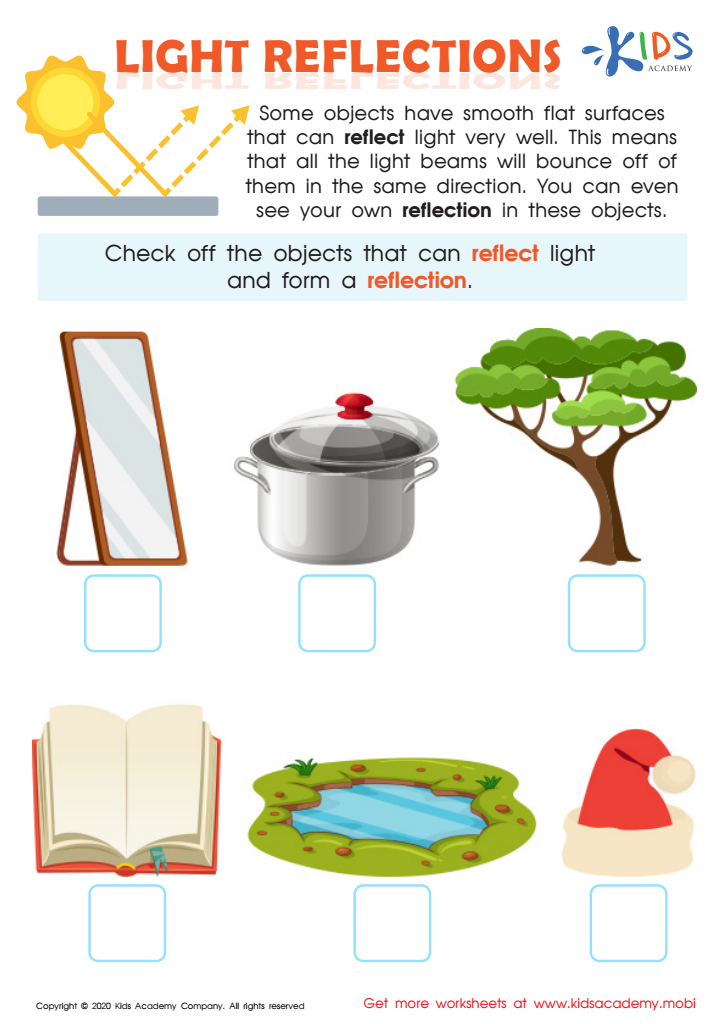
Light Reflections Worksheet
Teach your students that some objects reflect light and form a reflection. Ask them to name examples, then look at pictures and check off which objects can do this. Have them note how the light bounces off these surfaces, and observe their own reflections.
Light Reflections Worksheet
Worksheet
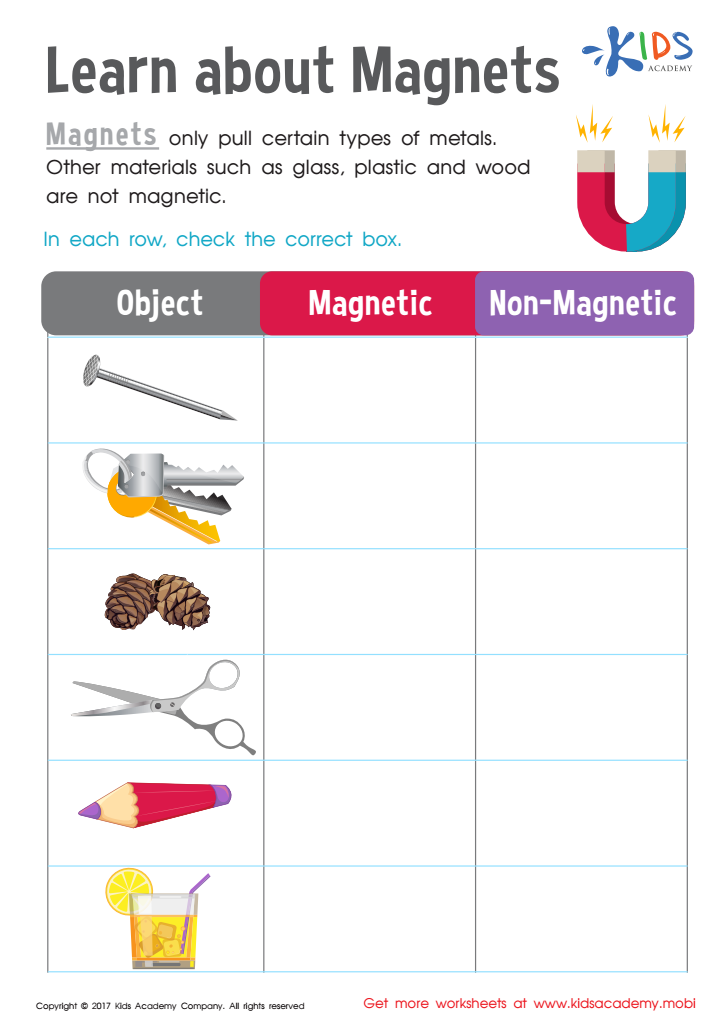
Magnetic Or Not Worksheet
Kids will love discovering the magical power of magnetism with this fun worksheet.
Uncover the magic of magnetism with this fun worksheet! Kids will love identifying objects that are magnetic and those that are not. Objects made of metal and those that aren't can be identified, helping your child to gain valuable practice and explore the mysterious power of magnetism!
Magnetic Or Not Worksheet
Worksheet
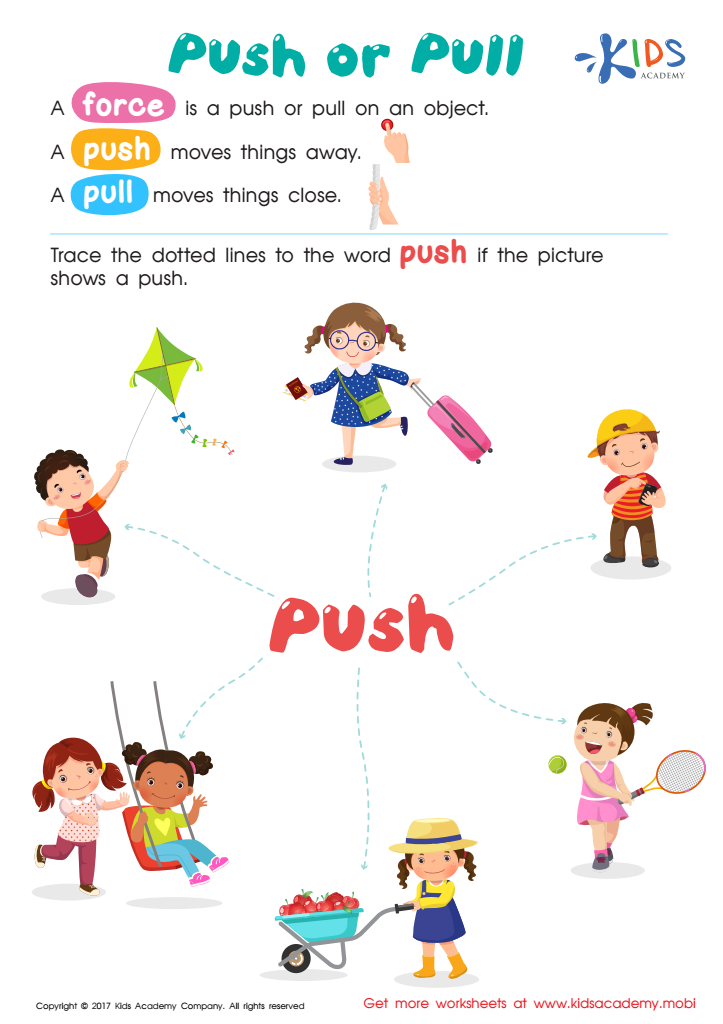
Push or Pull Worksheet
and which involve pulling! With this fun worksheet, your child will learn about force and its simple application in everyday activities. Get them started with Push or Pull! (80 words)
Push or Pull Worksheet
Worksheet
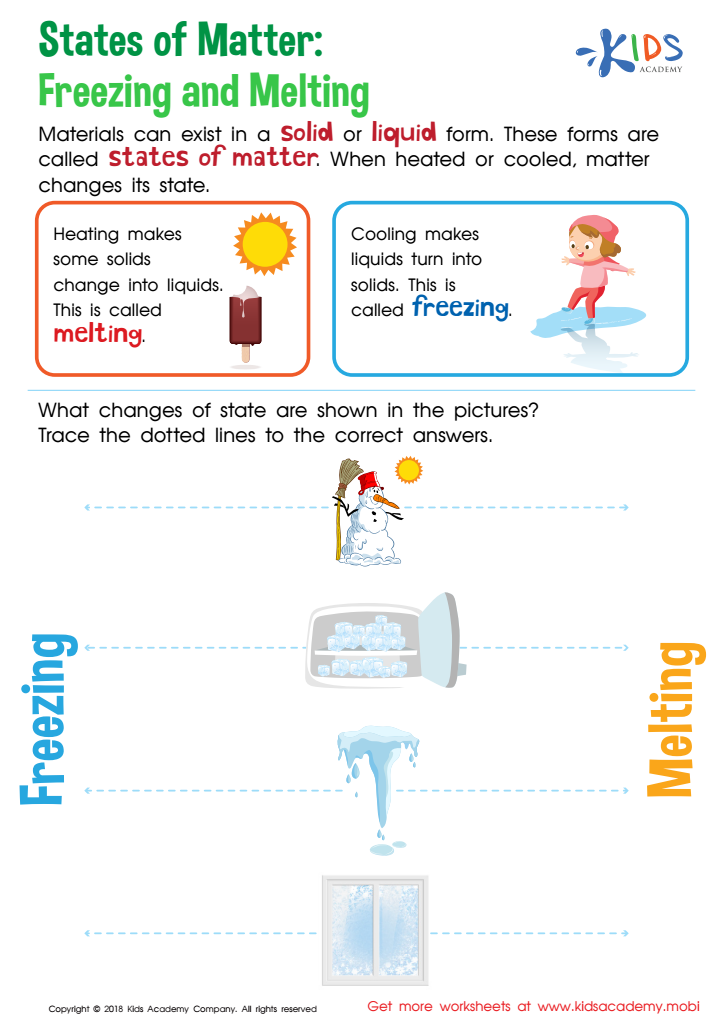
States of Matter: Freezing and Melting Worksheet
Have students look through the pics in the worksheet. Ask them what changes of state are shown, then trace the lines to the right answers. Matter can come in liquid or solid form, and changes between the two when heated or cooled (melting/freezing).
States of Matter: Freezing and Melting Worksheet
Worksheet
Join Kids Academy for Free
Who is primarily going to use this learning content?







.jpg)
Enhancing observational skills in normal physical science for ages 6-7 is crucial for several reasons. Firstly, young children are naturally curious about their environment, and observing the world around them fosters this curiosity. By cultivating observational skills, parents and teachers can help children develop critical thinking and analytical skills early on, laying the groundwork for future scientific learning.
Secondly, observational skills promote active learning. When children engage in hands-on activities, they learn to notice details, ask questions, and draw conclusions. This process boosts engagement and retention of scientific concepts, making learning both enjoyable and effective.
Moreover, enhancing observational skills supports cognitive development. As children learn to recognize patterns, compare and contrast, and make inferences based on their observations, they enhance their problem-solving abilities. This skill is applicable not only in science but across various subjects.
Lastly, fostering these skills can strengthen the parent-child and teacher-student relationship. Engaging in science-related discussions and activities provides excellent opportunities for collaboration and communication, reinforcing these bonds and making learning a shared experience. By prioritizing observational skills, parents and teachers equip children with a crucial toolset for understanding the world and navigating future academic challenges.







