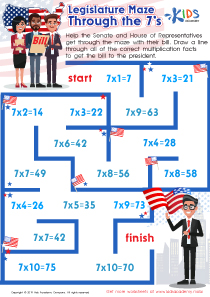
Visual recognition Normal Community Worksheets for Ages 6-7
3 filtered results
-
From - To
Discover our engaging Visual Recognition Worksheets designed specifically for children ages 6-7, focusing on normal community themes. These worksheets help young learners identify and understand various community elements, enhancing their visual recognition skills. With colorful illustrations and age-appropriate activities, your child will explore essential community roles and structures in a fun and interactive way. Perfect for social studies lessons, these printable resources encourage critical thinking and support cognitive development. Give your child the tools to succeed in recognizing familiar objects and people in their community while fostering a love for learning. Explore our collection today to enrich your teaching experience!
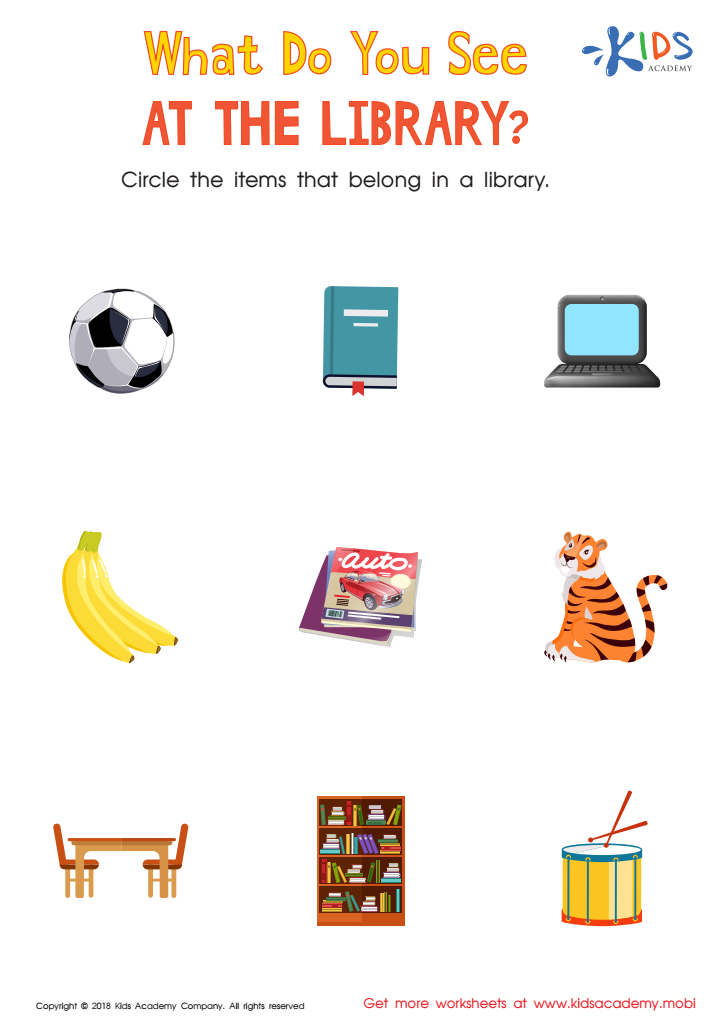
What Do you See at the Library? Worksheet
 Assign to My Students
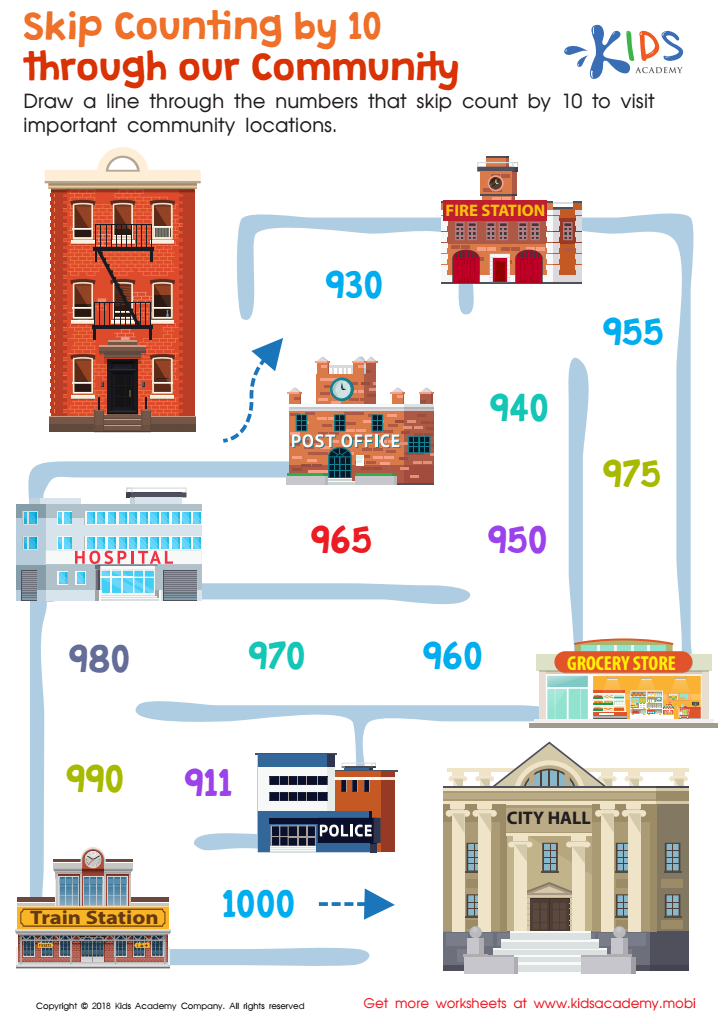
Skip Counting by 10 Through Our Community Worksheet
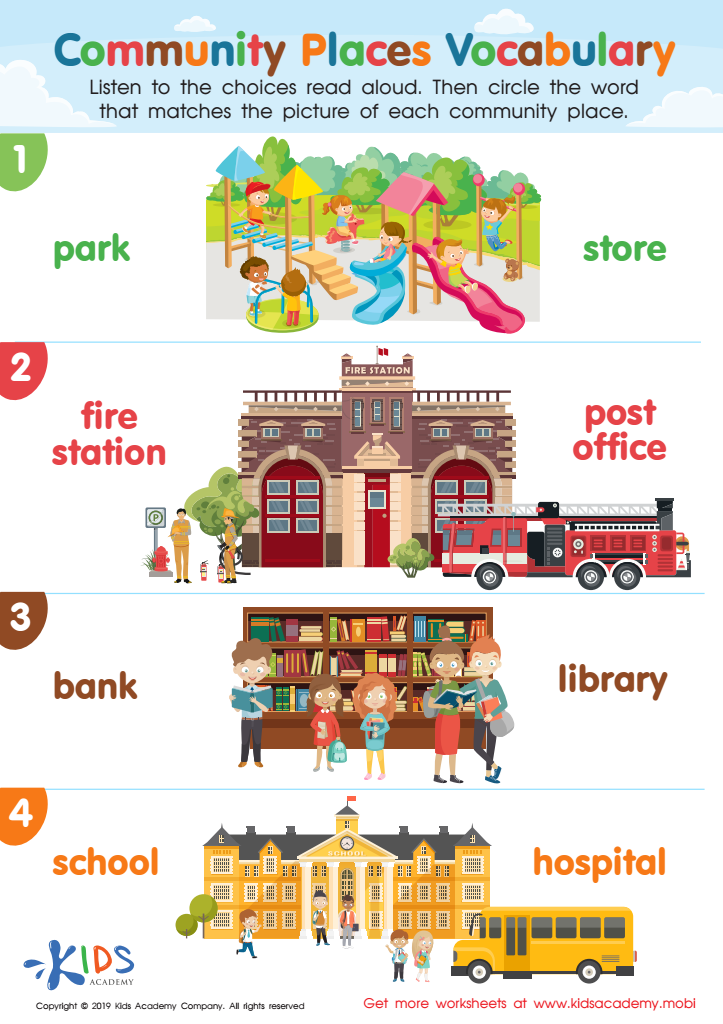
Community Places Vocabulary Worksheet





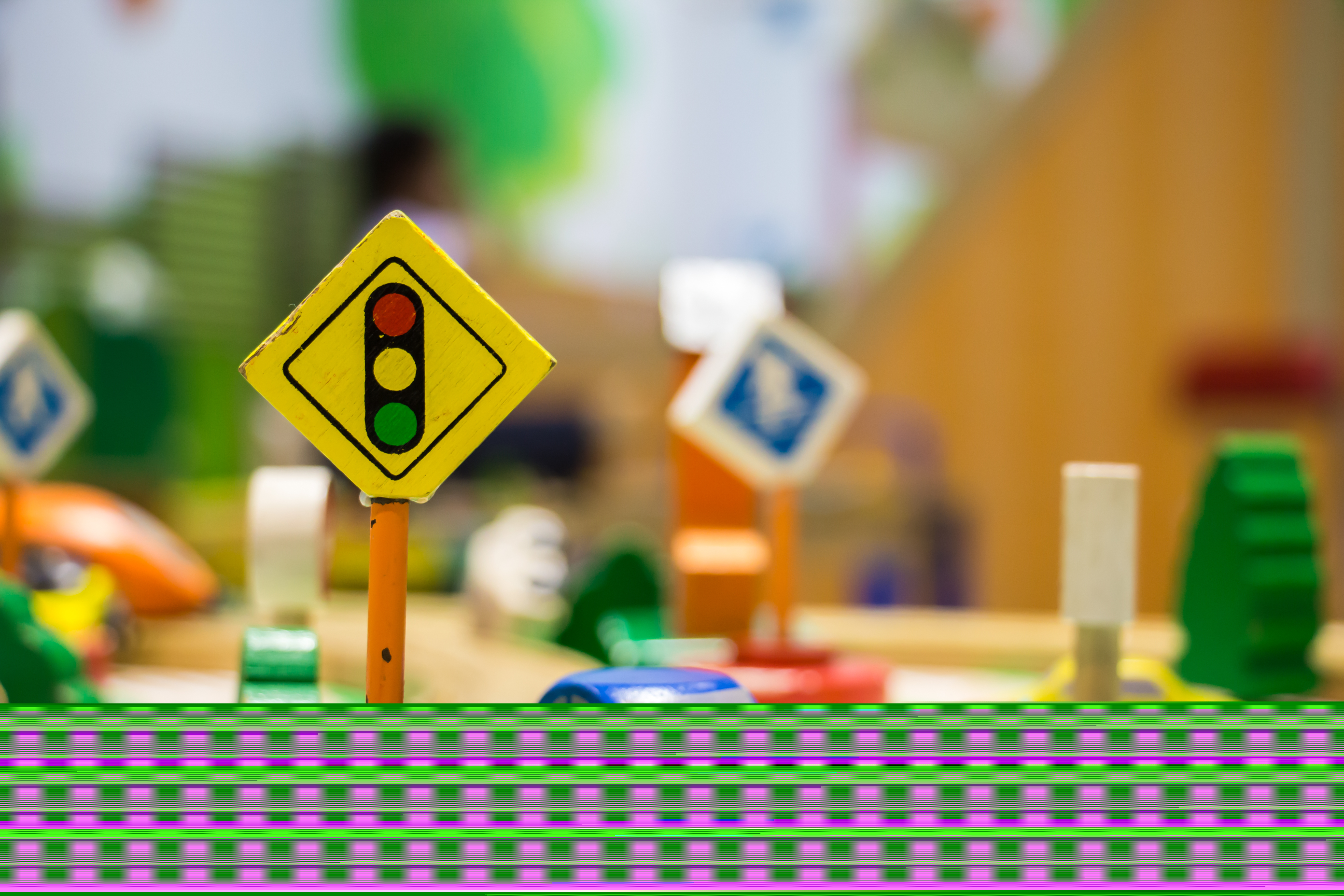


Visual recognition is a crucial developmental skill for children aged 6-7, significantly impacting their learning experiences and social interactions. During these formative years, children refine their ability to recognize and interpret visual stimuli, which aids in literacy, mathematics, and general cognitive growth. For parents and teachers, fostering strong visual recognition skills rewards children with enhanced reading comprehension as they become adept at recognizing letters, words, and patterns.
Understanding a normal community also plays a critical role in a child's social development. As they learn to identify various community helpers, symbols, and everyday objects visually, they gain insights into navigating their surroundings, promoting safety and awareness. Conversations surrounding community members and their roles can deepen a child’s understanding of collaboration, diversity, and empathy.
Furthermore, visual recognition lays the groundwork for skills such as critical thinking and problem-solving, which are vital for long-term academic success. By investing time and resources into activities that strengthen these skills, parents and teachers not only support children's immediate learning goals but also boost their confidence and independence, preparing them for future challenges in both school and life. Ultimately, nurturing visual recognition helps create well-rounded individuals who can analyze and engage thoughtfully with the world around them.