Understanding seasons Normal Social Studies Worksheets for Ages 6-7
3 filtered results
-
From - To
Introduce your child to the wonders of the changing seasons with our "Understanding Seasons" Social Studies Worksheets, perfect for children ages 6-7. These engaging and educational activities will help young learners grasp the concepts of spring, summer, fall, and winter through fun exercises. Children will identify seasonal changes, understand weather patterns, and explore how these shifts impact our daily lives. Crafted by educators, these worksheets aim to enhance observation skills and environmental awareness in a normal, easy-to-understand manner. Prepare your kids for future learning with these foundational resources, available now on Kids Academy.
Visit Kid's Academy for more information and printable worksheets.
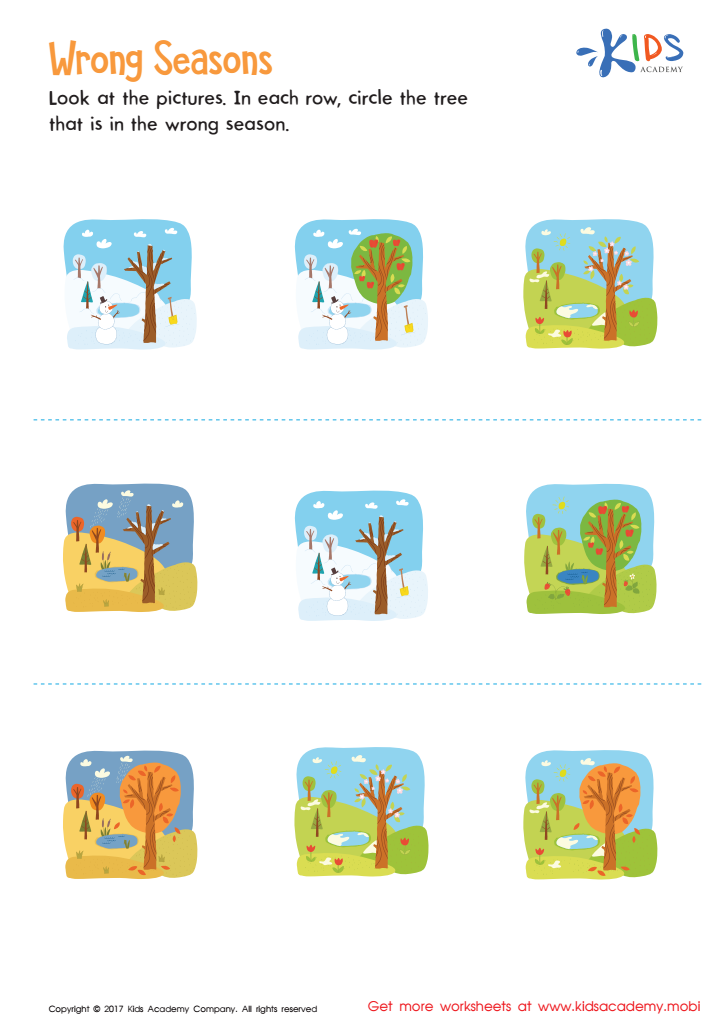
Wrong Seasons Worksheet
 Assign to My Students
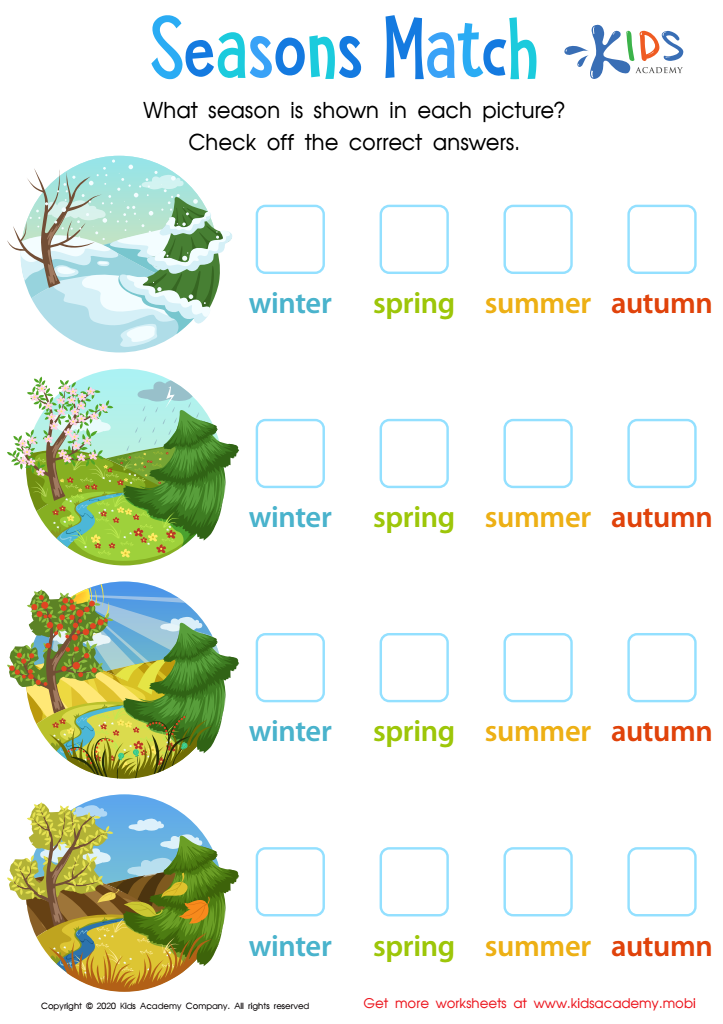
Seasons Match Worksheet
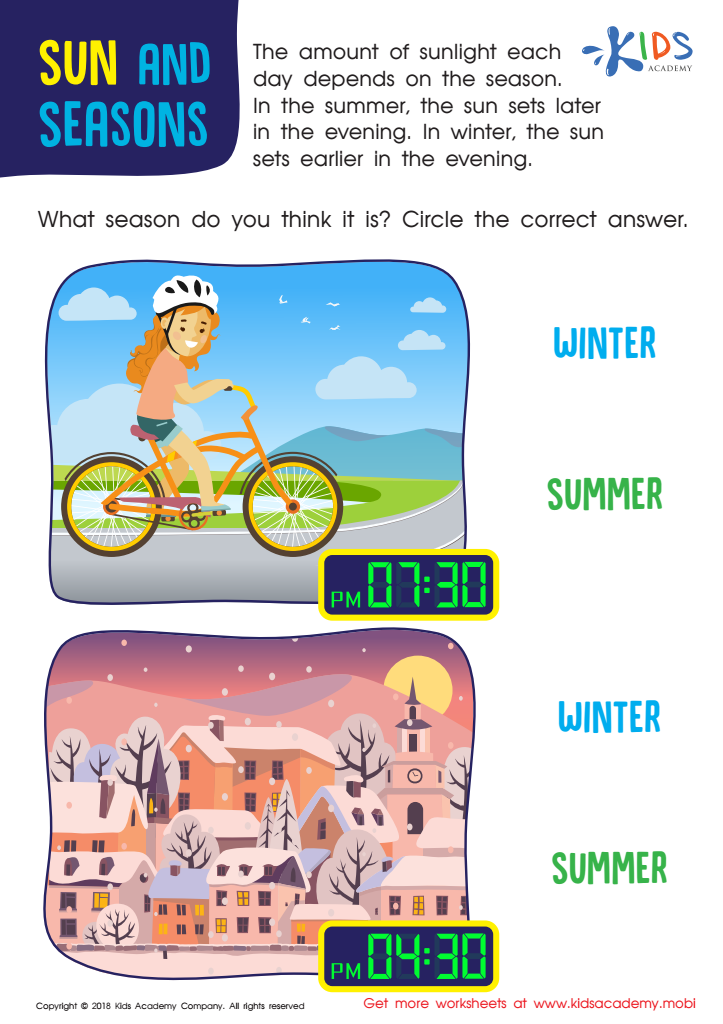
Sun and Seasons Worksheet


.jpg)



Understanding the seasons is essential for young children, ages 6-7, as it provides foundational knowledge about the world around them. For parents and teachers, fostering this understanding builds curiosity and a sense of wonder in kids. It aids in developing their observation skills as they notice changes in weather, daylight, and nature throughout the year.
From an academic standpoint, learning about the seasons is part of a well-rounded Social Studies curriculum. It anchors young learners in concepts of time and cycles, which are critical for understanding more complex scientific ideas later on. Season-based lessons can also be interdisciplinary, enriching vocabulary in language arts, providing themes for art projects, and introducing basic geographical concepts.
Socially, discussing seasons can connect children to cultural traditions and practices, broadening their worldviews. For example, they can learn why different holidays are celebrated and how different cultures around the world adapt to seasonal changes. This cultivates empathy and an appreciation for diversity.
Moreover, practical knowledge about the seasons helps children understand appropriate clothing choices and outdoor safety. Overall, awareness of the seasons supports a child's cognitive development, emotional growth, and social skills—making it a critical component of early education.








