Vocabulary development Normal Social Studies Worksheets for Ages 6-7
6 filtered results
Difficulty Level
Grade
Age
-
From - To
Subject
Activity
Standards
Boost your child's language skills with our engaging Vocabulary Development Social Studies Worksheets designed for ages 6-7. These worksheets combine critical thinking with essential vocabulary-building activities, fostering a deeper understanding of social studies topics. Each worksheet captivates young learners through dynamic exercises, including matching words, reading passages, and fill-in-the-blank activities. Our expertly crafted materials not only expand your child's vocabulary but also enhance reading comprehension and critical analysis. Perfect for at-home learning or classroom use, these worksheets make vocabulary mastery an exciting journey, setting a strong foundation for academic success in social studies and beyond.
Favorites
With answer key
Interactive

Let's Go to the Library! Worksheet
How often does your child visit the library? If they're a frequent visitor, they'll breeze through this worksheet. It requires them to look at pictures that depict activities done in the library and activities not allowed. Ask them to circle the correct picture. It's a fun way to reinforce library knowledge.
 Assign to My Students
Let's Go to the Library! Worksheet
Worksheet
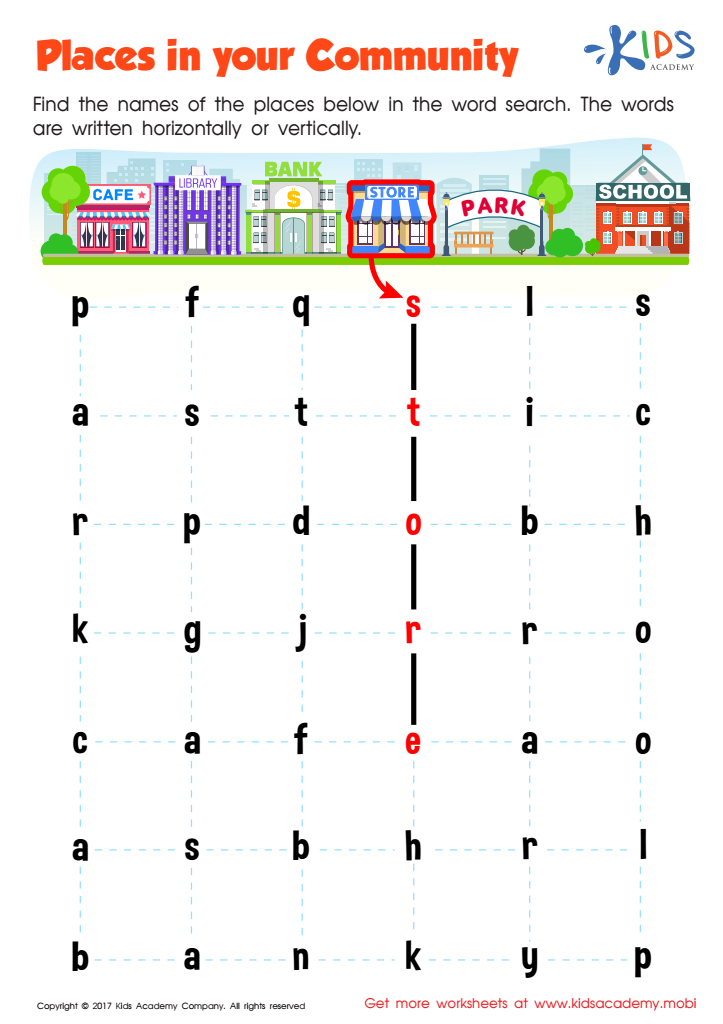
Places in Your Community Worksheet
Find and circle words related to common places in your community, like library, fire station, and more. Practicing vocabulary and spelling, your child will gain a better understanding of their community.
Places in Your Community Worksheet
Worksheet
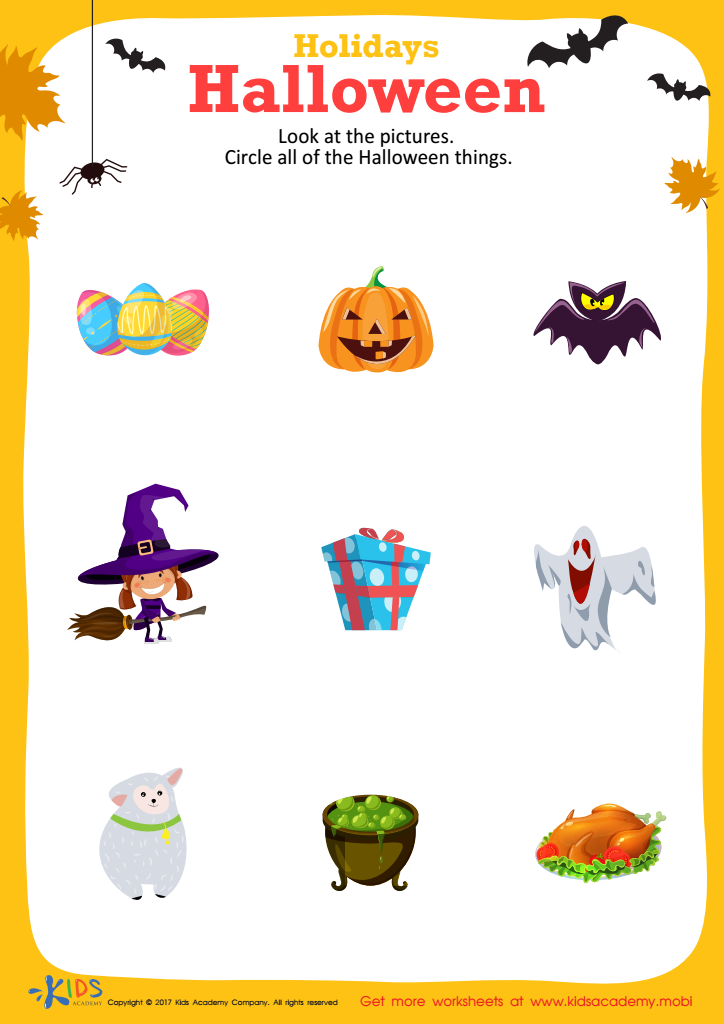
Halloween Holiday Worksheet
Gather your kids and get ready for a spooky review of Halloween symbols with this fun exercise! Max. 80 words
Gather your goblins and ghouls for a fun Halloween exercise! Review prominent symbols of the holiday with our free printable worksheet. It will excite your kids and reinforce the concept of symbolism. Get ready for a spooky review!
Halloween Holiday Worksheet
Worksheet
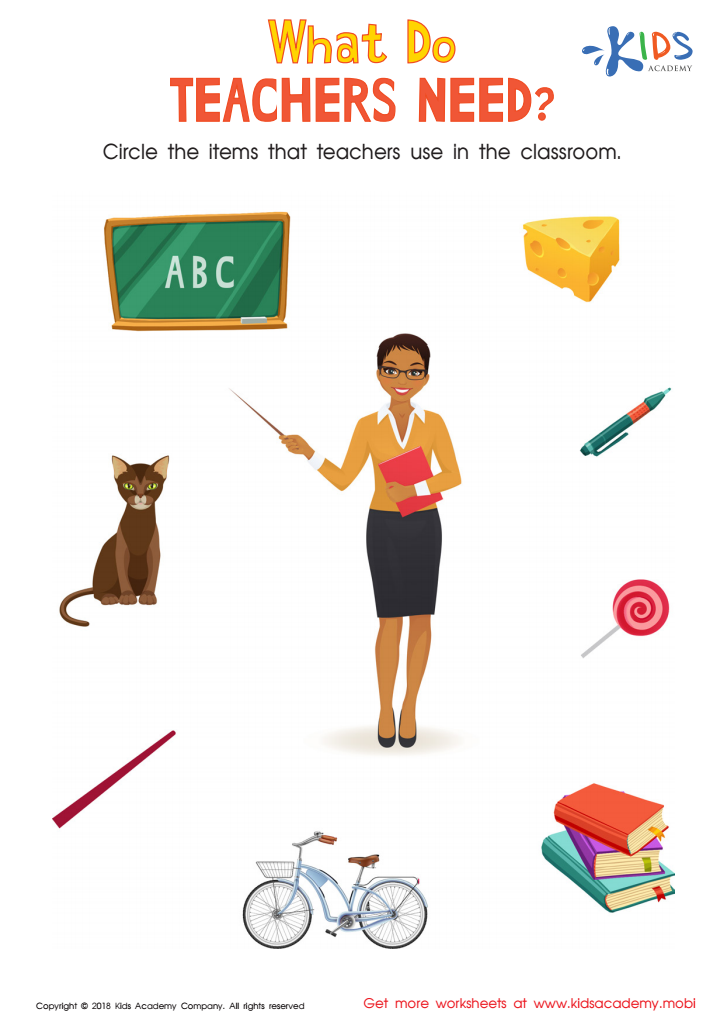
What Do Teachers Need Worksheet
This interactive worksheet tasks kindergarten students with identifying essential items a teacher needs in a classroom. They will be asked to circle items, helping them learn what teachers need to have in their classrooms.
What Do Teachers Need Worksheet
Worksheet
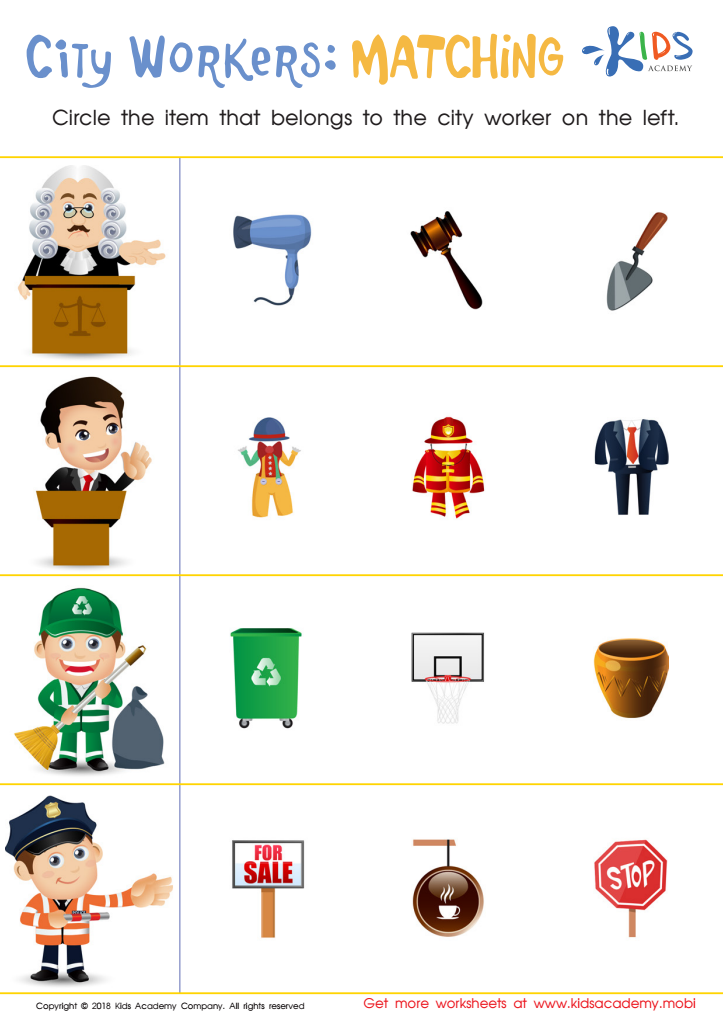
City Workers: Matching Worksheet
Examine the worksheet with your kid. Identify the individuals on the left and their jobs. Have your child circle the correct items on the right that pertain to the city workers. Help your child learn about city workers with this activity.
City Workers: Matching Worksheet
Worksheet
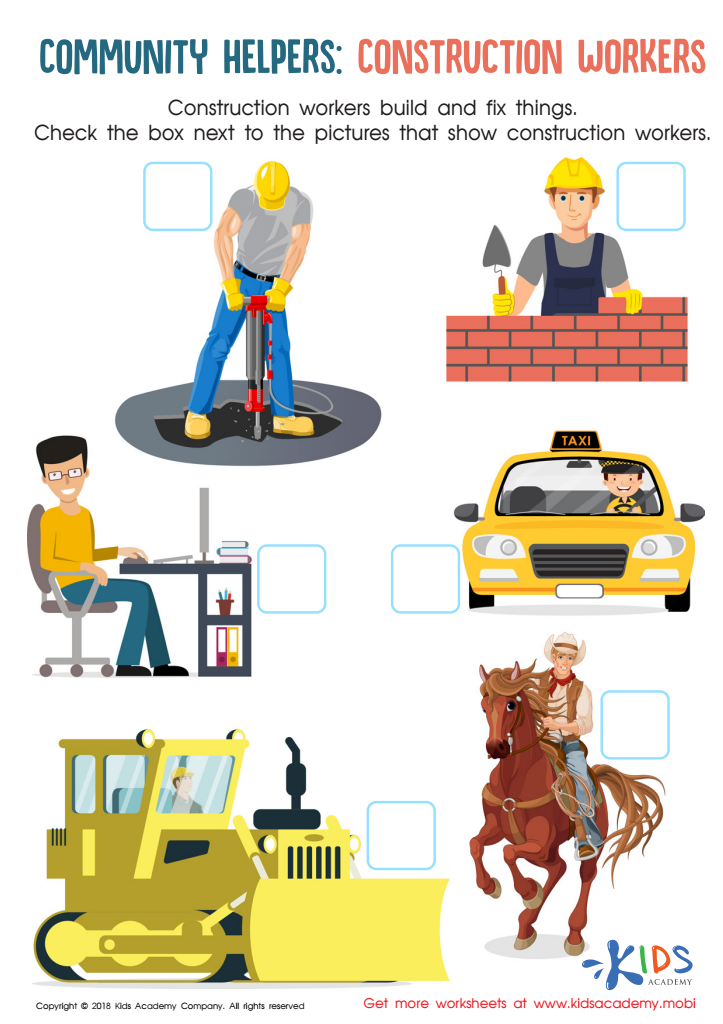
Construction Workers Community Helpers Worksheet
Construction workers build and repair roads, keeping them accessible for the community. Ask your child if they've ever seen one at work, and talk about what they do. Go through the worksheet together and check the pictures that show construction workers in action.
Construction Workers Community Helpers Worksheet
Worksheet
Join Kids Academy for Free
Who is primarily going to use this learning content?








Vocabulary development is crucial for young children's overall learning and cognitive development, especially in foundational subjects like social studies. By the age of 6-7, children are naturally curious about the world around them. Expanding their vocabulary at this stage helps them more effectively understand and engage with key social studies concepts such as community, history, culture, and geography.
A strong vocabulary enables children to better comprehend stories, follow instructions, and communicate their ideas clearly. This foundation is essential for reading comprehension, which is a pivotal skill in every subject. For example, understanding terms like "community," "responsibility," or "tradition" allows students to grasp deeper lessons about how societies function and relate to one another.
In social studies, where much learning comes from discussing historical events, diverse cultures, and civic responsibilities, students benefit from having the words they need to understand and participate in these discussions. This can foster a greater interest in and appreciation for the subject.
Moreover, enhancing vocabulary supports critical thinking skills. A child who knows the word "environment" can begin to understand and discuss broader concepts such as conservation and sustainability. Consequently, vocabulary development is not just about acquiring words; it's about giving young learners the tools they need to think more deeply, ask questions, and connect ideas.
Thus, parents and teachers should prioritize vocabulary development to support comprehensive educational growth and create a strong base for future learning across all subjects.