Vocabulary enhancement Normal Grammar Worksheets for Ages 6-7 - Page 2
28 filtered results
-
From - To
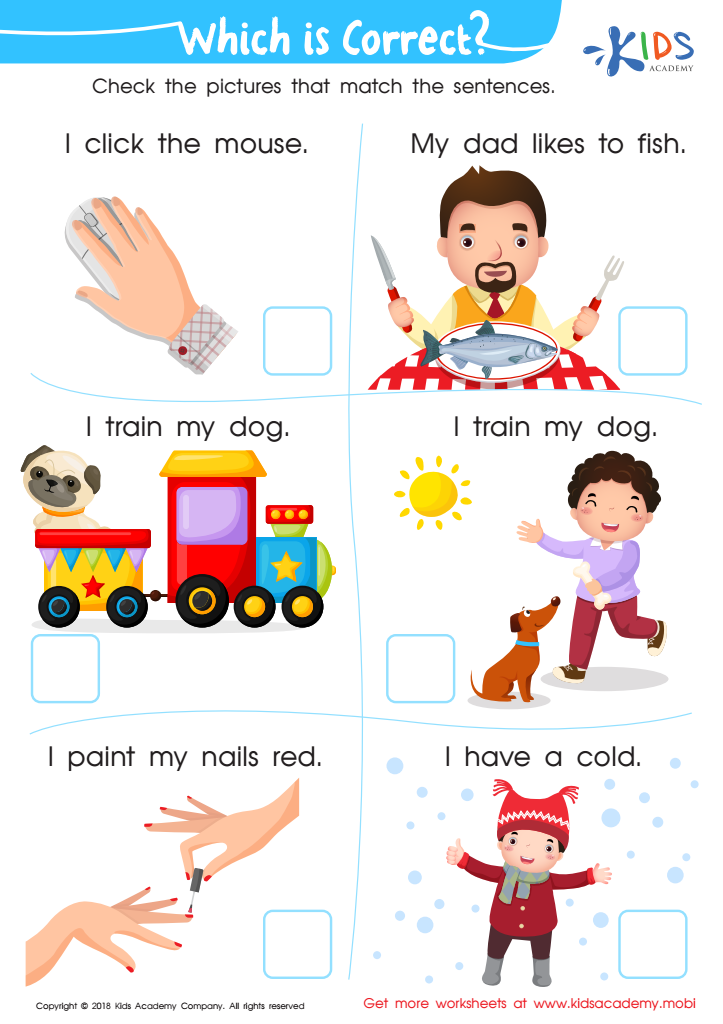
Which Is Correct? Worksheet
 Assign to My Students
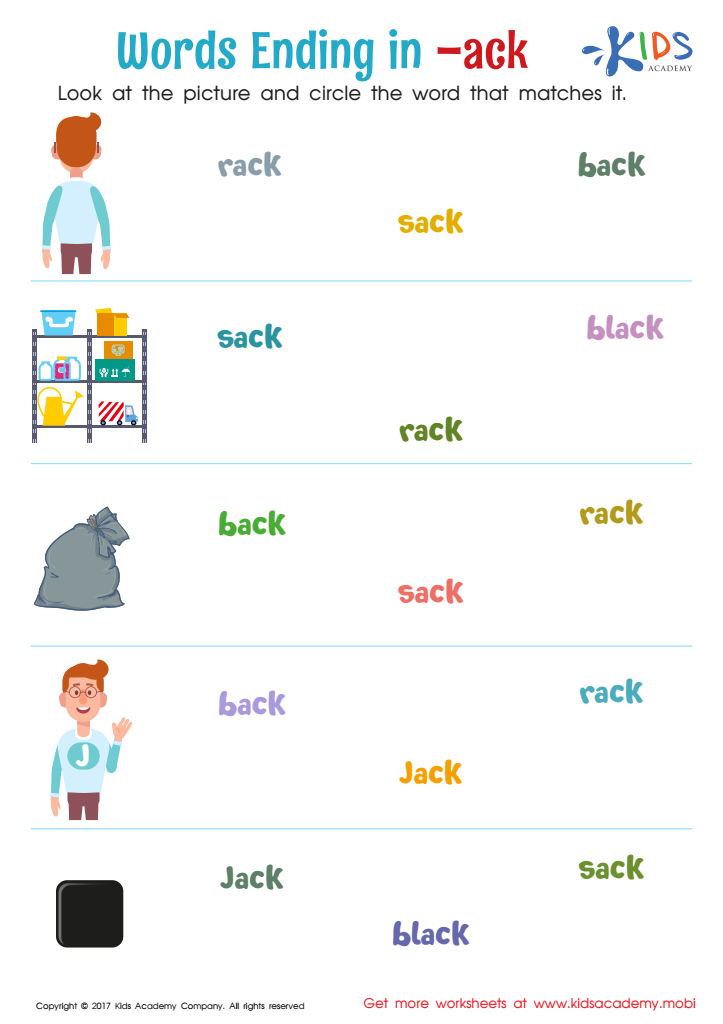
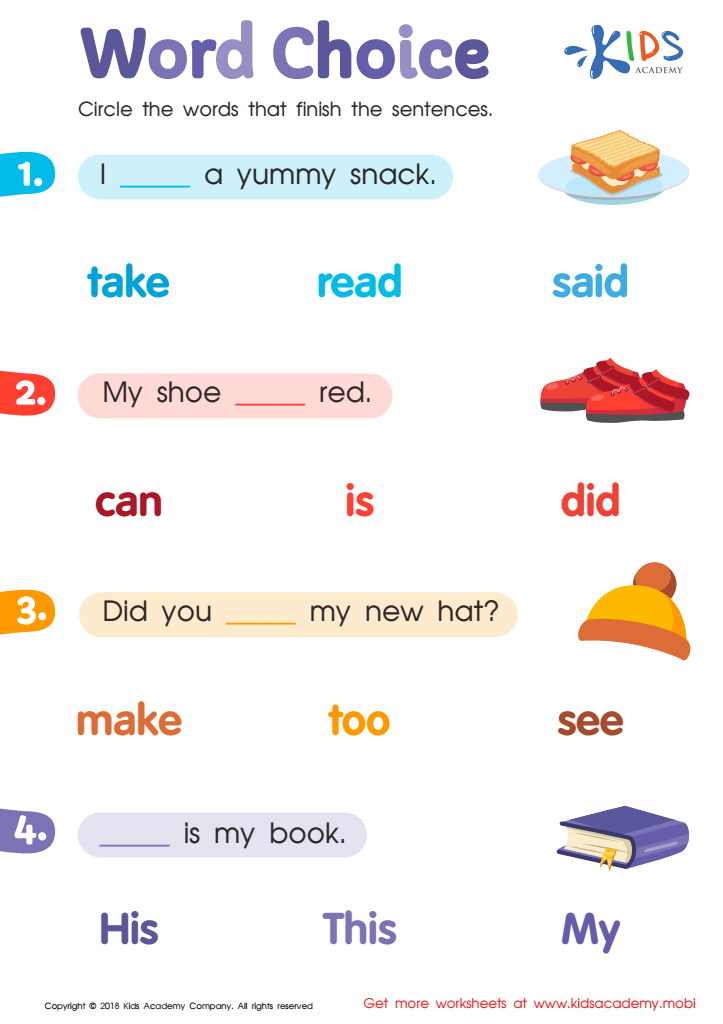
Word Choice Worksheet
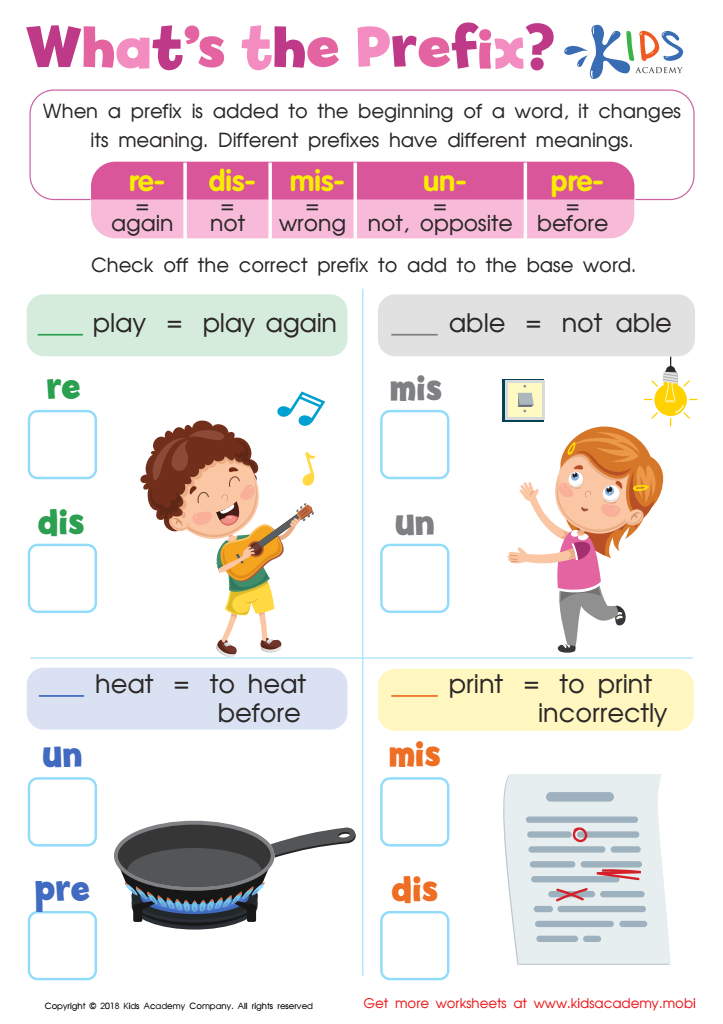
Reading: What Is the Prefix Worksheet






.jpg)

Parents and teachers play a crucial role in vocabulary enhancement and normal grammar development for children aged 6-7 because these early years form the foundation for future academic achievement and effective communication. This period is critical as it coincides with the brain’s rapid growth and development, making it an opportune time to enrich a child's language abilities.
Having a robust vocabulary aids children in expressing their thoughts, emotions, and questions clearly. It also enhances their reading comprehension, enabling them to engage fully with the texts they encounter in school. When young children grasp normal grammar rules, they better understand sentence structure, facilitating smoother communication and writing skills.
Furthermore, a strong vocabulary and grammatical mastery help children perform better across all subjects, as almost every area of learning involves reading and interpreting information. This early investment in language skills can also foster a lifelong love for reading by making the process less intimidating and more enjoyable.
In addition, such foundational skills promote self-confidence. Children who articulate their ideas clearly are more likely to participate in classroom activities, ask questions, and collaborate effectively with peers. Therefore, focusing on vocabulary enhancement and grammar during these formative years equips children with essential tools for academic and personal success.