Contextual understanding Normal Writing Worksheets for Ages 6-7
4 filtered results
Difficulty Level
Grade
Age
-
From - To
Subject
Activity
Standards
Enhance your child's writing skills with our "Contextual Understanding Normal Writing Worksheets" designed specifically for ages 6-7. These worksheets focus on helping young learners apply their knowledge in real-life contexts, ensuring they grasp the significance of words and phrases within various scenarios. Engaging and age-appropriate, these activities blend fun with education, fostering creativity and critical thinking. As kids explore context clues, they develop fluency and confidence in their writing abilities. Perfect for both classroom and home use, our worksheets make learning enjoyable while building essential literacy skills that will last a lifetime. Download and inspire your child's writing journey today!
Favorites
With answer key
Interactive
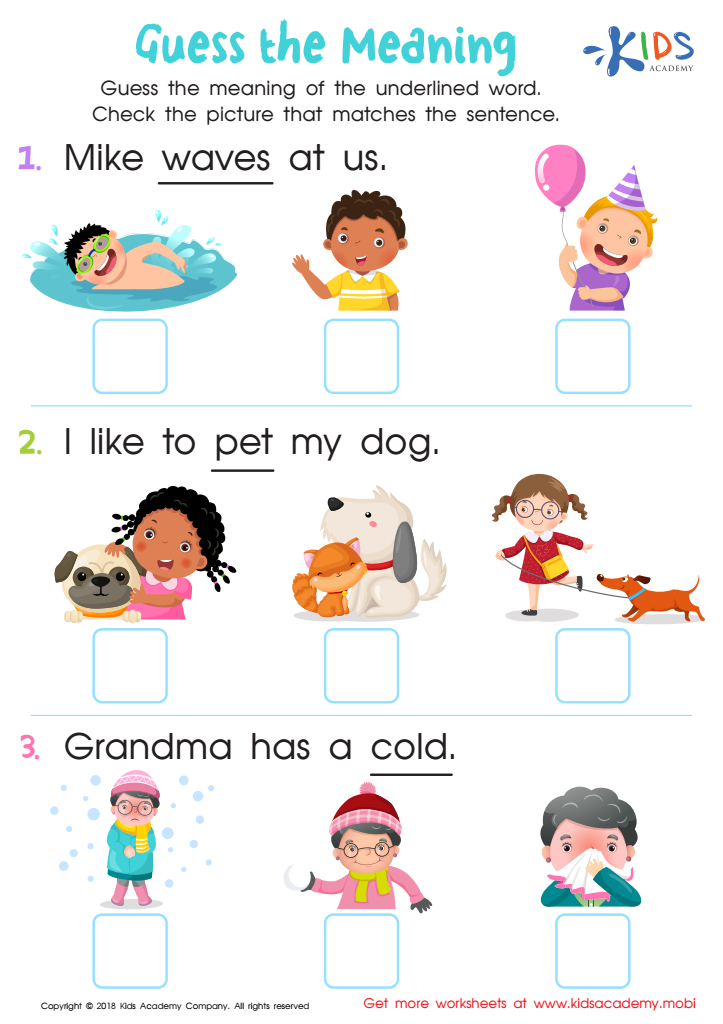
Guess the Meaning Worksheet
Help your child learn the meanings of words in different contexts by using this colourful, free worksheet. What is the meaning of the underlined words in each sentence? Look at the images and pick the one that accurately describes the word's context.
 Assign to My Students
Guess the Meaning Worksheet
Worksheet
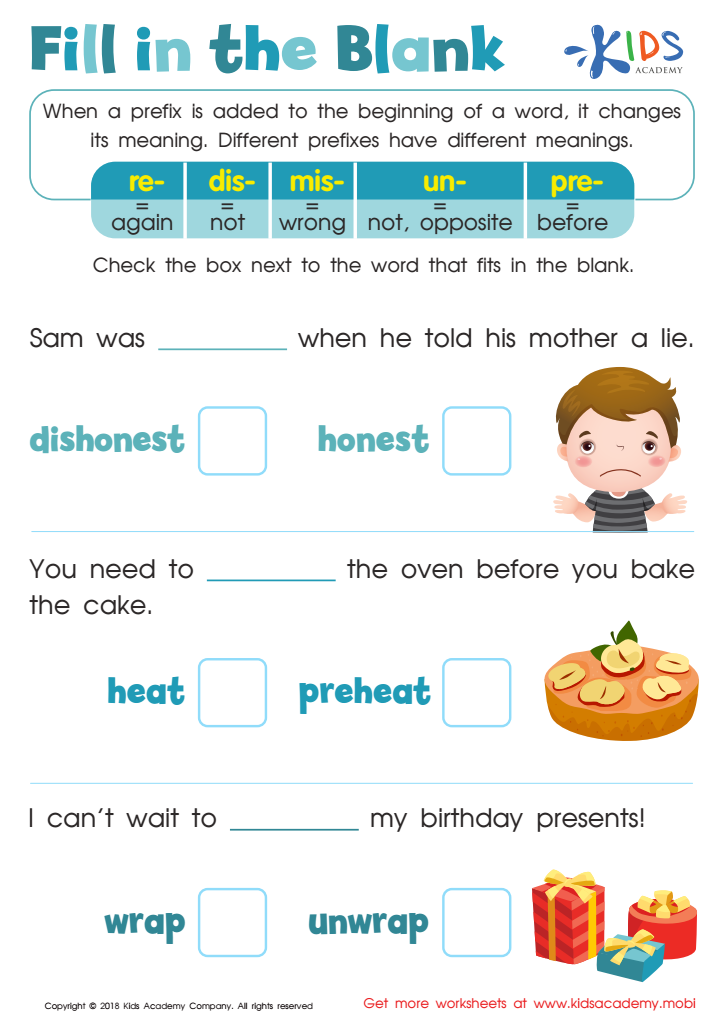
Reading: Fill in the Blank Worksheet
Students can practice understanding the meaning of common prefixes with this worksheet. They read sentences and pick the correct word with the appropriate prefix to complete it. Downloadable and a great addition to reading and vocabulary resources, this helps improve comprehension with mastery of the skill!
Reading: Fill in the Blank Worksheet
Worksheet
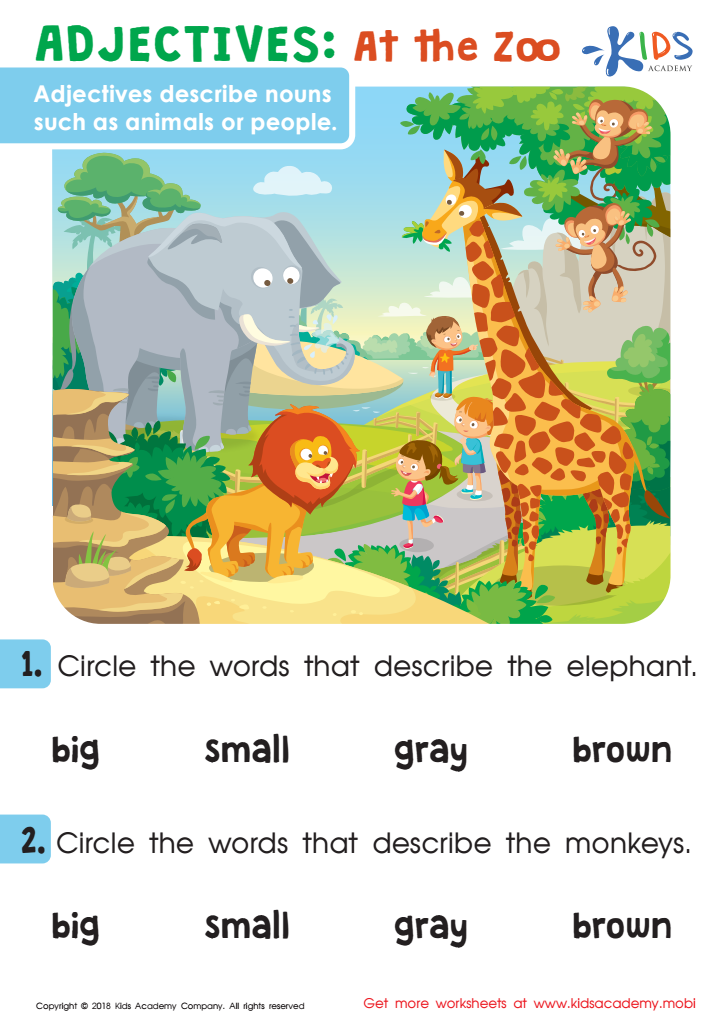
Adjectives: At The Zoo Worksheet
Take your kids to the zoo and ask them about their favorite activities and animals. This worksheet is a great way for kids to learn about adjectives. Explain that adjectives describe nouns like people or animals (e.g. big, tall, dark). Look at the printout with your kids and help them circle words that describe the animals in the picture.
Adjectives: At The Zoo Worksheet
Worksheet
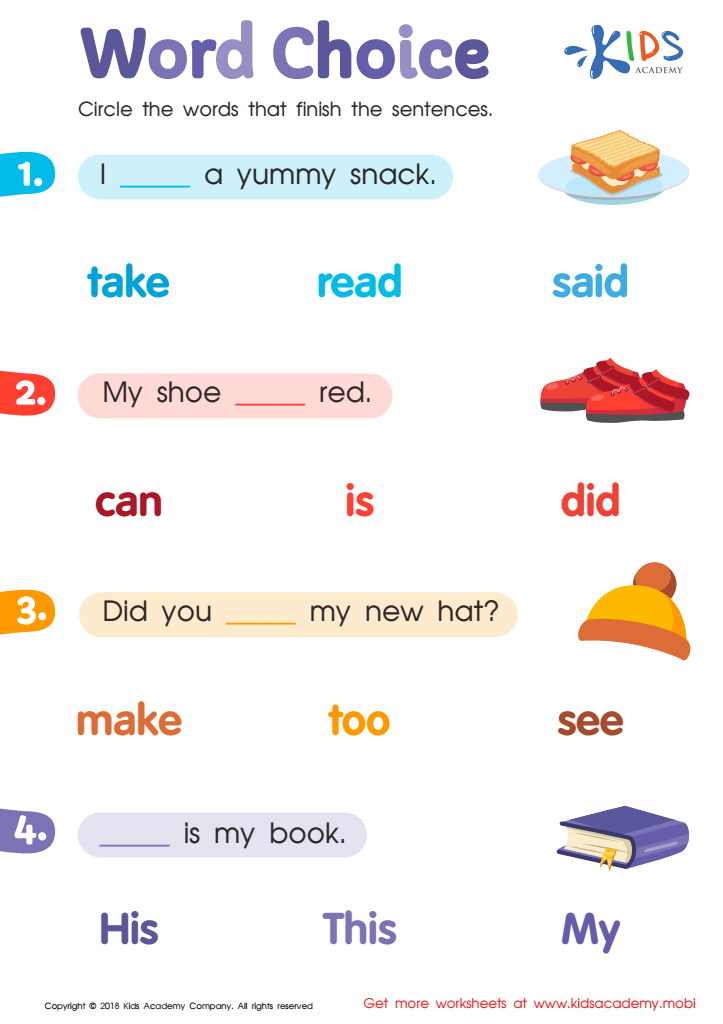
Word Choice Worksheet
This worksheet can help your children become better readers. By now, you should have an idea of their reading level. Read the incomplete sentences aloud and point to the missing piece. Have your students pick the correct word they think best fits the sentence out of the options given.
Word Choice Worksheet
Worksheet
Join Kids Academy for Free
Who is primarily going to use this learning content?







Contextual understanding in writing is crucial for children aged 6-7 because it helps them make sense of the world around them. At this stage, children are developing their ability to communicate thoughts and feelings through words. They need to learn how letters and words fit within the context of sentences and stories, which is essential for effective communication.
When parents and teachers focus on contextual writing, they teach children how to use their background knowledge to interpret and create meaningful sentences. This ability helps children understand narrative structures, character development, and the mood of stories, making reading more enjoyable and relatable. For instance, when a child learns to identify settings that influence character actions, they deepen their engagement with the material.
Additionally, mastering contextual understanding supports literacy development and critical thinking skills. Children who can connect new information with prior experiences are more likely to retain concepts and apply them creatively in their writing. This process also helps foster empathy and social skills as they learn to consider different perspectives.
Ultimately, supporting contextual understanding in writing lays a foundation for lifelong communication skills, encouraging children to express themselves and connect with others effectively. It’s an essential part of nurturing confident and competent young writers.