Enhance your child's writing skills with our Grammar Practice Normal Writing Worksheets for ages 6-7. These engaging worksheets are designed to help young learners grasp fundamental grammar rules in a fun and interactive way. From punctuation and sentence structure to verb tenses and more, each activity aims to build a solid grammar foundation. Perfect for classroom use or additional home practice, these worksheets encourage independent learning while instilling confidence in your child's writing abilities. Boost your child's language mastery with Kids Academy’s expertly crafted grammar practice worksheets, tailored specifically for first and second graders.

Check out this FREE Trial Lesson on Writing for age 6-7!

Determine the Meaning of Words with Common Prefixes

Favorites
With answer key
Interactive
  • 6-7
  • Grammar practice
  • Writing
  • Normal
Verbs and Nouns Worksheet

Verbs and Nouns Worksheet

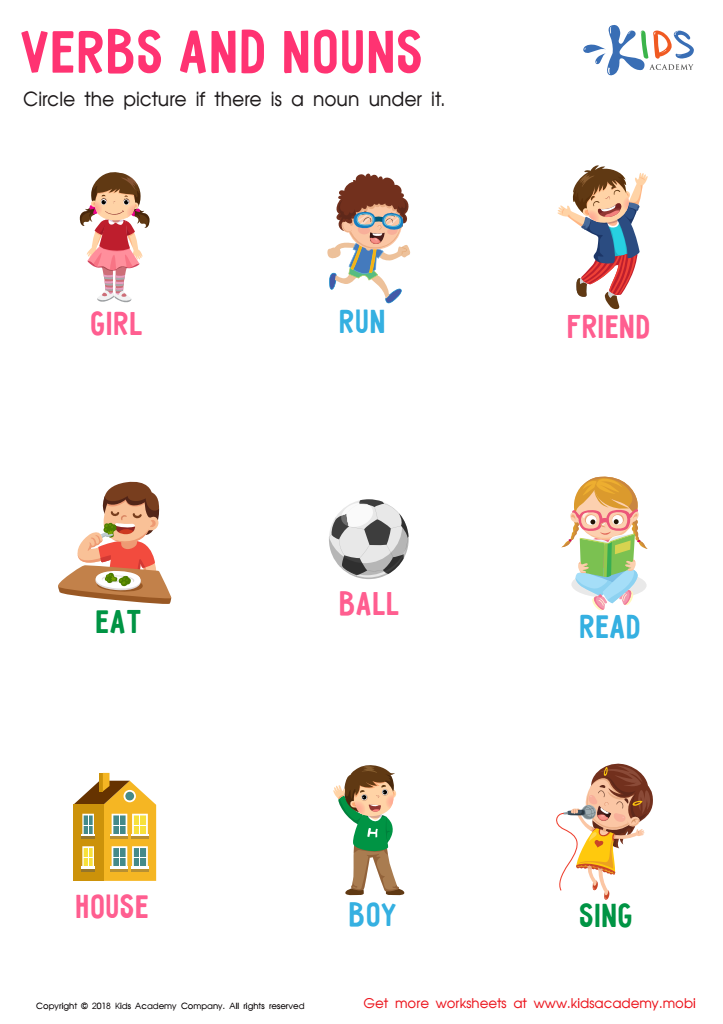
Your child should have basic knowledge of verbs and nouns before starting this worksheet. Go through it with them and ask them to circle the pictures with nouns under them. This way, they'll become more familiar with parts of speech.
Verbs and Nouns Worksheet
Worksheet
Reading: Fill in the Blank Worksheet

Reading: Fill in the Blank Worksheet

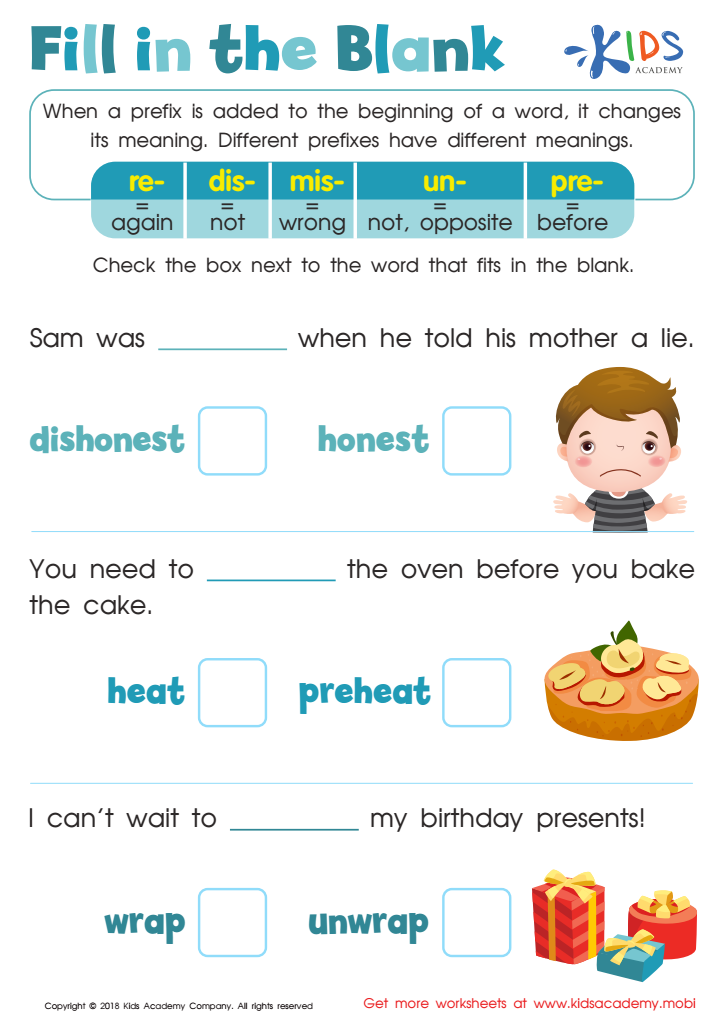
Students can practice understanding the meaning of common prefixes with this worksheet. They read sentences and pick the correct word with the appropriate prefix to complete it. Downloadable and a great addition to reading and vocabulary resources, this helps improve comprehension with mastery of the skill!
Reading: Fill in the Blank Worksheet
Worksheet
Adjectives: At The Zoo Worksheet

Adjectives: At The Zoo Worksheet

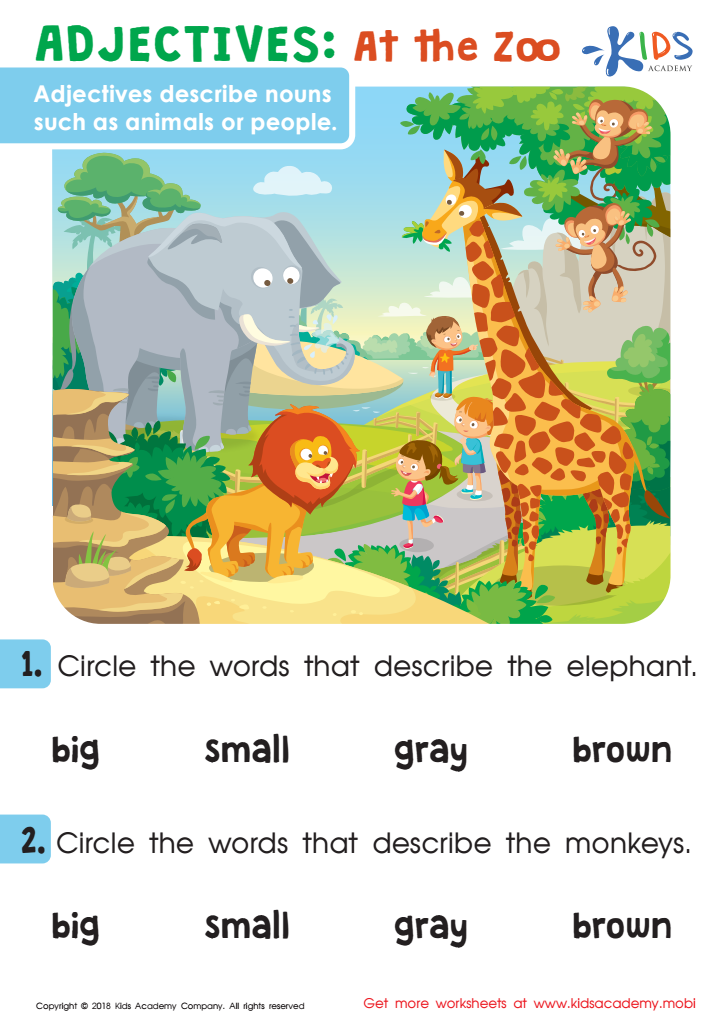
Take your kids to the zoo and ask them about their favorite activities and animals. This worksheet is a great way for kids to learn about adjectives. Explain that adjectives describe nouns like people or animals (e.g. big, tall, dark). Look at the printout with your kids and help them circle words that describe the animals in the picture.
Adjectives: At The Zoo Worksheet
Worksheet
Forming Sentences: Assessment 2 Worksheet

Forming Sentences: Assessment 2 Worksheet

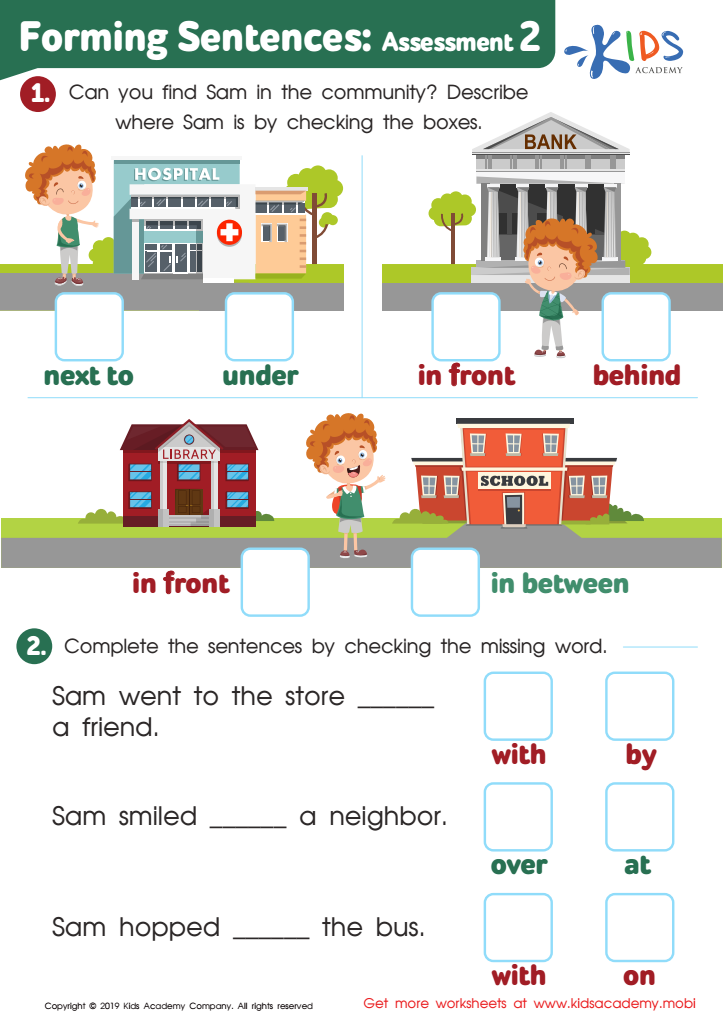
A community is an area with different people, buildings and professionals. Ask students to list buildings in their area, then help find Sam. Describe where he is and check the boxes in the worksheet. At the bottom, help complete the sentences by checking the missing word.
Forming Sentences: Assessment 2 Worksheet
Worksheet
Finish the Sentence Worksheet

Finish the Sentence Worksheet

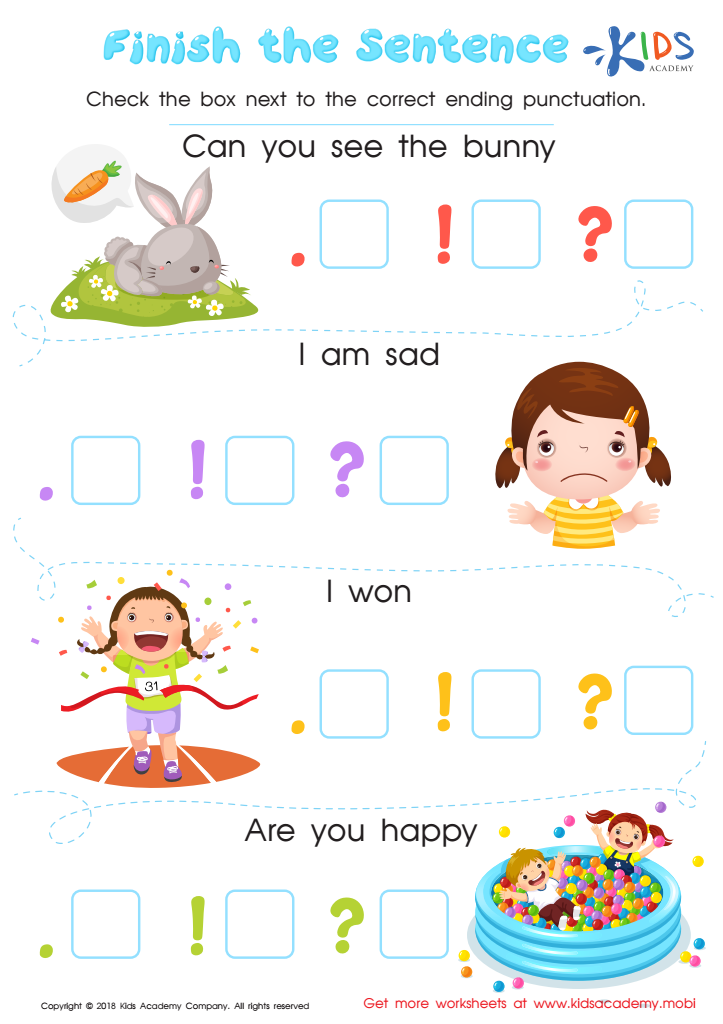
If your students have difficulty with punctuation, have them read sentences aloud and check the box next to the correct ending punctuation with this simple worksheet. Punctuation signals the tone and meaning of sentences. It helps students understand what is being communicated.
Finish the Sentence Worksheet
Worksheet
Start the Sentence Worksheet

Start the Sentence Worksheet

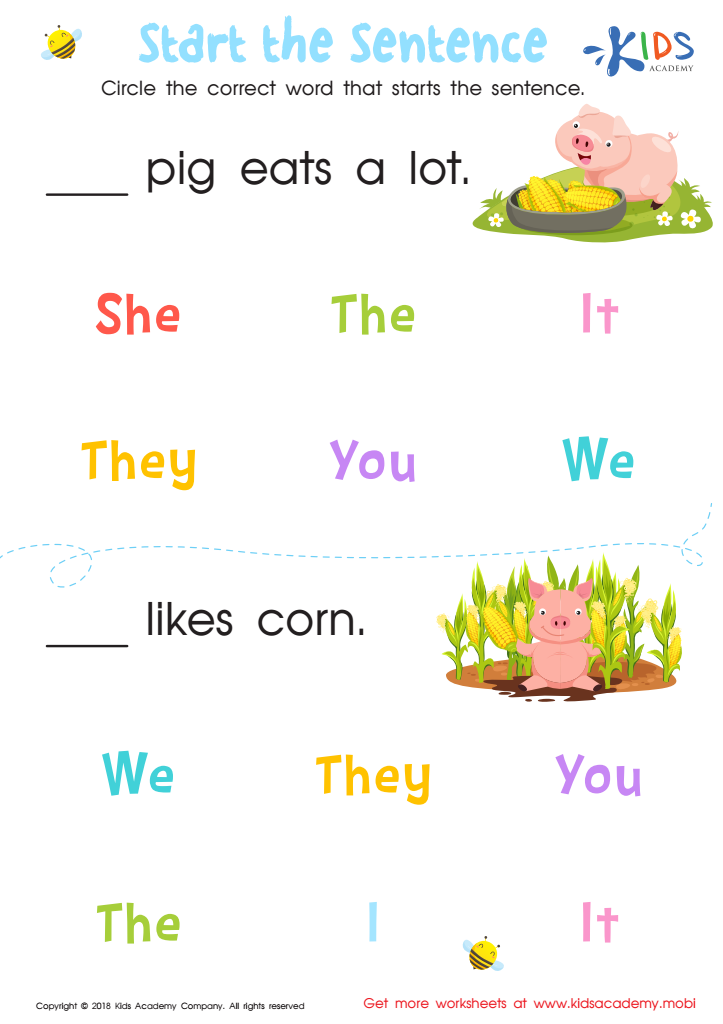
Test your students' understanding of sentences with this easy worksheet. Ask them to read the sentences and circle the correct word that starts each. This will show how well their lessons have paid off and if they can construct short simple sentences.
Start the Sentence Worksheet
Worksheet
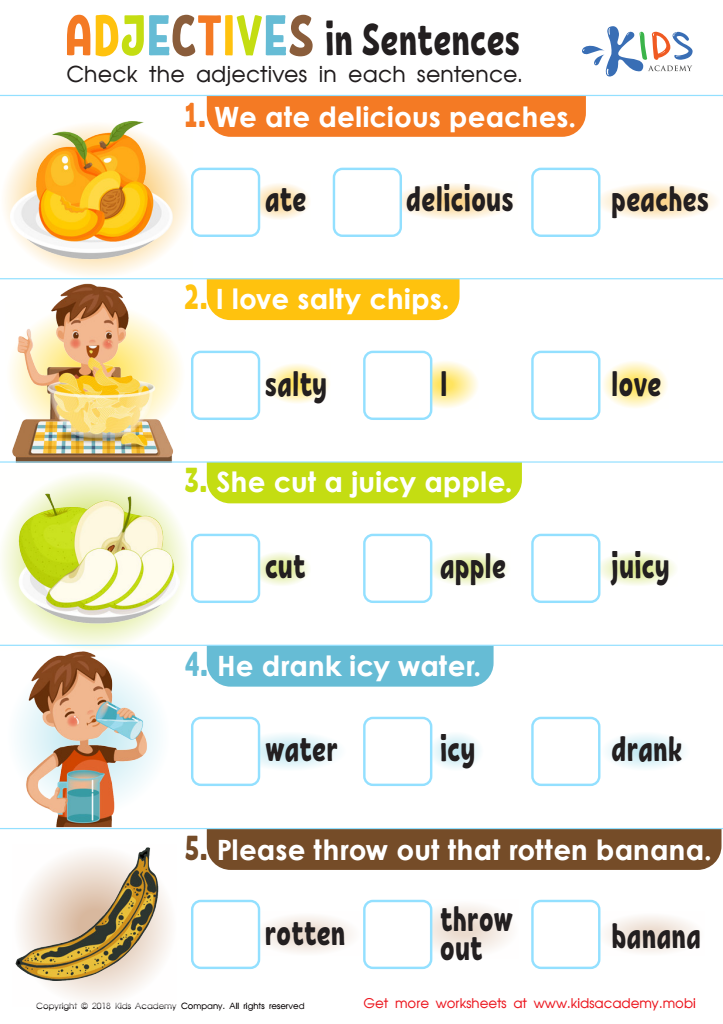
Adjectives in Sentences Worksheet


Adjectives in Sentences Worksheet
Our learners can find it hard to use writing to add detail, but adjectives can help. With this fun worksheet, kids can identify adjectives that describe food and drink. Guide them through each sentence, discussing the words and having them choose the one that gives information about the food/drink.
Adjectives in Sentences Worksheet

Worksheet


Grammar practice is foundational for children aged 6-7 as it equips them with essential communication skills. At this age, kids are rapidly expanding their vocabulary and learning to express their thoughts coherently. Proper grammar helps them form clear, understandable sentences, enhancing their ability to communicate effectively both in writing and speaking. This is crucial for academic success and social interaction.

Parents and teachers play a pivotal role in fostering this development. By focusing on grammar, they can help children avoid common language pitfalls and misunderstandings. Mastery of grammar rules, such as correct verb tenses, punctuation, and sentence structure, lays the groundwork for future learning. It supports reading comprehension by allowing kids to understand and parse written text accurately.

Additionally, grammar practice boosts confidence. When children know how to use language correctly, they feel more self-assured in their abilities to participate in classroom discussions, share their ideas, and write creatively. Early mastery of grammar also benefits cognitive development by enhancing critical thinking and promoting logical sequencing skills.

In summary, emphasizing grammar practice during these formative years empowers children with the tools they need for effective communication, thorough comprehension, and confident self-expression, thereby setting them up for long-term academic and social success.