Enhance your child's cognitive abilities with our Strategic Thinking Development Normal Chess Worksheets for Ages 6-8. Designed to engage young minds, these worksheets introduce fundamental chess concepts while promoting critical thinking and problem-solving skills. Each activity is carefully crafted to challenge students and encourage strategic planning, making learning both fun and educational. Ideal for beginners and young chess enthusiasts, our worksheets provide a strong foundation in chess principles and strategies, helping to develop confidence and resilience. Equip your child with the tools to excel in chess and beyond with our expertly designed printable resources.

Check out this FREE Trial Lesson on Chess for age 6-8!

What Is Chess?

Favorites
With answer key
Interactive
  • 6-8
  • Strategic thinking development
  • Chess
  • Normal
Chess Pieces Quest Worksheet

Chess Pieces Quest Worksheet

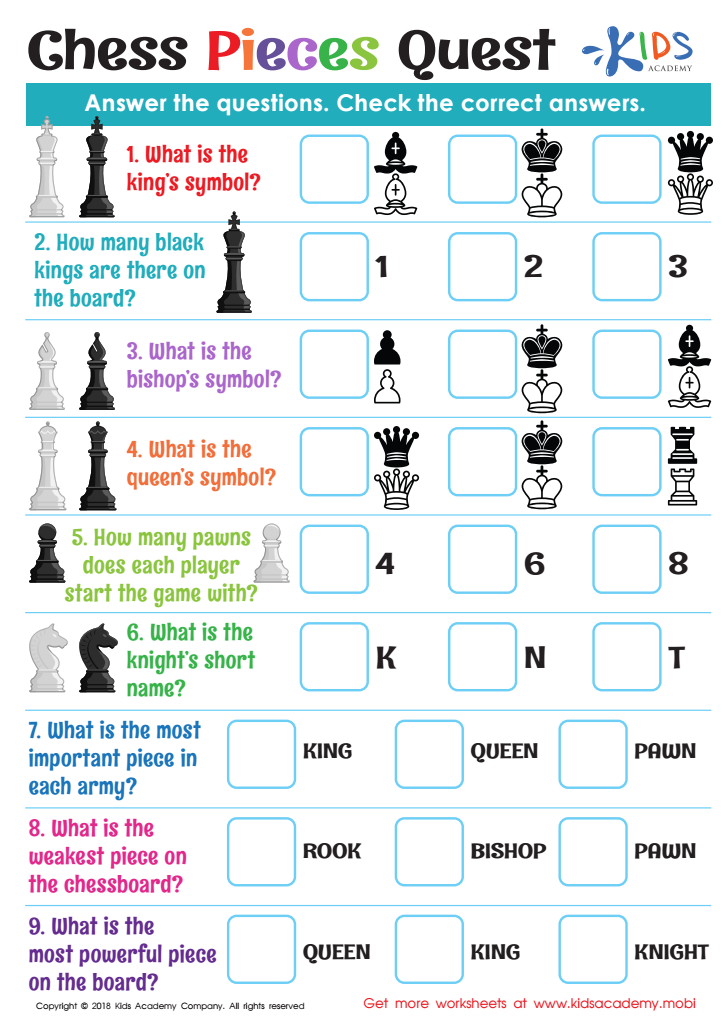
Help your child prepare for the chess quest by refreshing their knowledge of the symbols and characteristics of each chess piece. Then, have them try the 9 questions on this worksheet. These questions will assess their understanding of the symbols and how many pieces each player starts with.
Chess Pieces Quest Worksheet
Worksheet
Notation of Moves Writing it Down Worksheet

Notation of Moves Writing it Down Worksheet

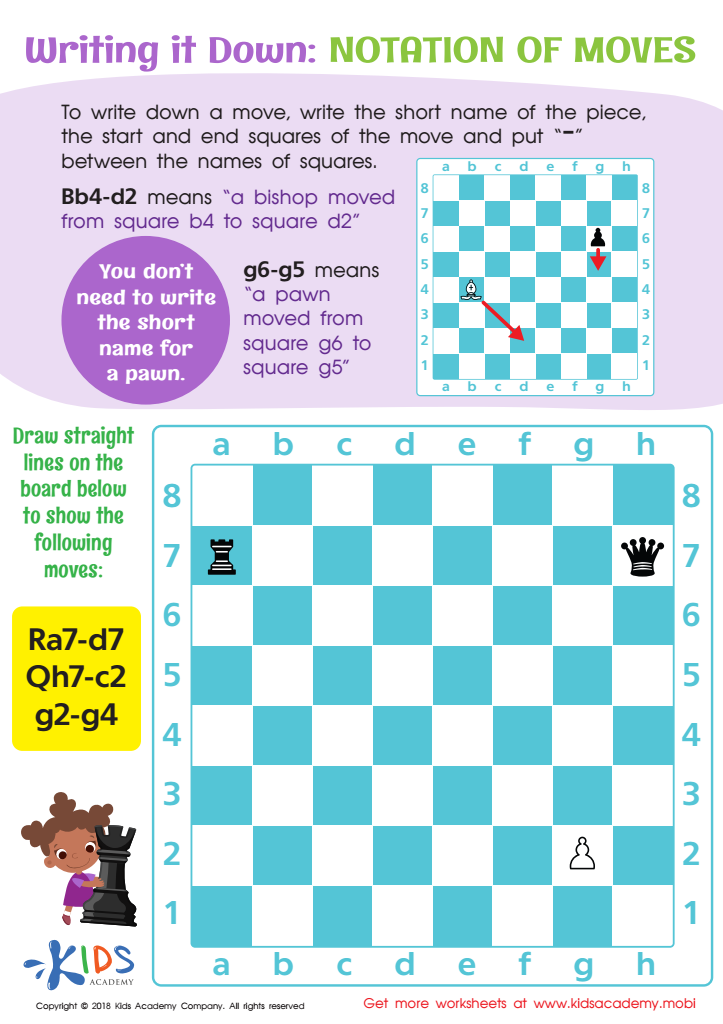
Notating chess moves can be tricky for kids to learn. This worksheet will help them better understand it. To notate a move, write the piece's short name, start and end squares, and separate them with a "-". For instance, Bd4-d2 means a bishop moved from b4 to d2. No need to write pawns' short names.
Notation of Moves Writing it Down Worksheet
Worksheet
How Rooks Capture Worksheet

How Rooks Capture Worksheet

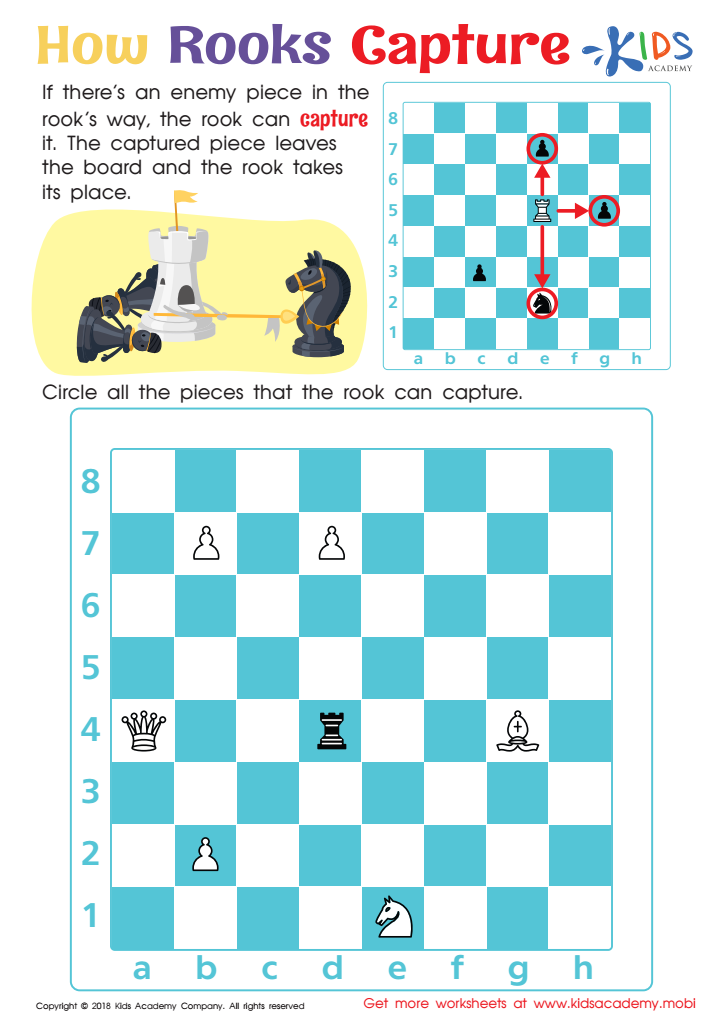
Chess is a game that requires skill, concentration and planning. Players must move their chess pieces strategically to capture pieces from their opponent. Do your kids know how to use the rook to capture pieces? Go through the worksheet with them and circle the pieces the rook can capture.
How Rooks Capture Worksheet
Worksheet
How Queen Captures Worksheet

How Queen Captures Worksheet

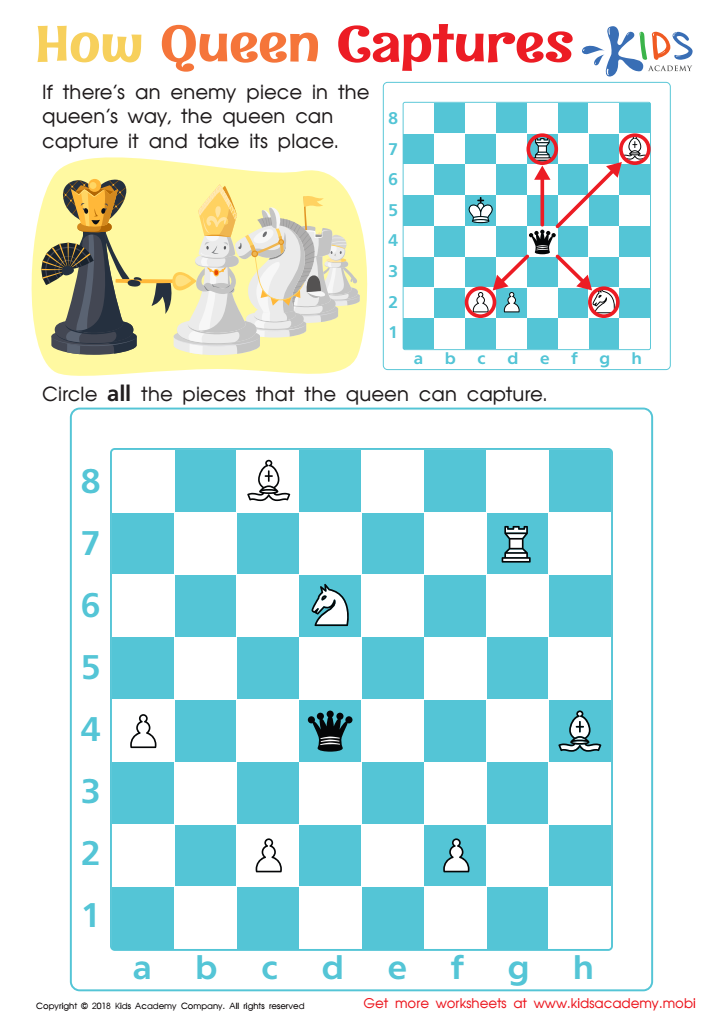
Chess is a great game for sharpening math skills, strategic thinking, and knowledge of how each piece moves. If your child is interested, introduce them with this worksheet. It demonstrates how the queen can capture opposing pieces, such as another queen, and take their place.
How Queen Captures Worksheet
Worksheet
Chess Manners Worksheet

Chess Manners Worksheet

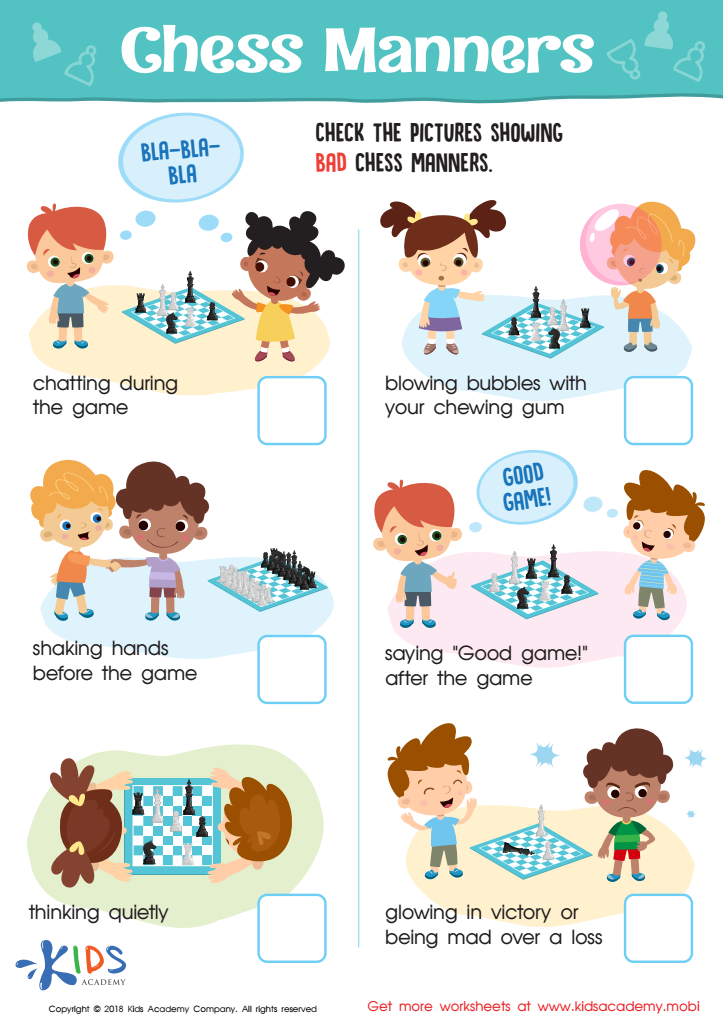
Teach your child chess manners in addition to table and social ones. Chess has clear rules and etiquette which must be followed for a proper game. Review this worksheet with your kid and discuss the pictures that show inappropriate behaviours. This will help them understand how to play the game correctly and with good manners.
Chess Manners Worksheet
Worksheet
Moves Notation Bingo Worksheet

Moves Notation Bingo Worksheet

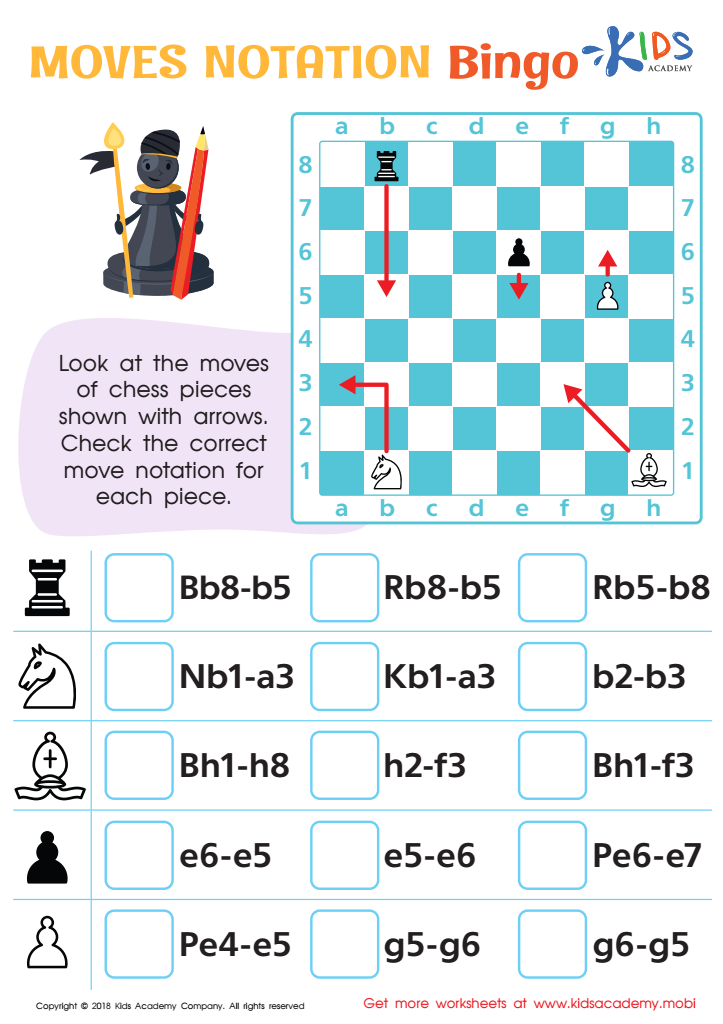
Test your child's chess notation skills with this simple worksheet. Download the PDF which shows a chess board and arrows pointing to pieces. Ask your child to identify the moves and note them down correctly. The notations needed are for bishop, pawn, rook and knight. Up to 80 words.
Moves Notation Bingo Worksheet
Worksheet
How Bishops Move Worksheet


How Bishops Move Worksheet

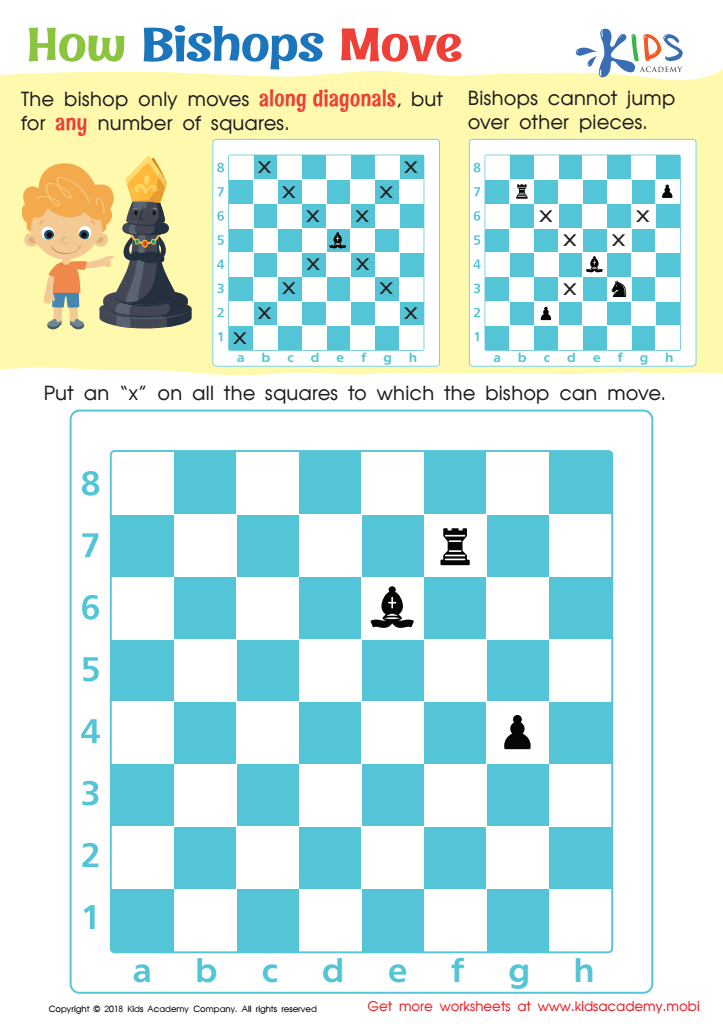
There is no such thing as too much sharpening of skills. Encourage your child to learn more about chess technicalities with this simple worksheet. It shows them how a bishop moves: along diagonals any number of squares, but it can't jump over other pieces.
How Bishops Move Worksheet
Worksheet


Encouraging children aged 6-8 to engage in games like normal chess can significantly enhance their strategic thinking skills, which are fundamental for cognitive development and future success. At this young, formative stage, children's brains are highly adaptable and eager to absorb new information and skills.

  1. Cognitive Development: Chess requires thinking several steps ahead, teaching children to anticipate consequences and plan strategically. This cultivates critical thinking and problem-solving abilities, which are transferable to academic subjects like math and science.

  2. Focus and Patience: The game demands attention and calm, helping children develop the ability to concentrate for extended periods and exercise patience as they wait for their turn and process their moves.

  3. Decision Making: Chess helps children learn to make decisions from multiple options, assess risks, and understand the outcomes of their actions, which is crucial for responsible decision-making in life.

  4. Resilience and Adaptability: Learning how to handle both victory and defeat plays a key role in nurturing emotional resilience. Children understand that making mistakes is part of learning, encouraging a growth mindset.

  5. Social Skills: Playing chess with peers or adults encourages healthy social interaction, teaching respect, fair play, and humble sportsmanship.

Parents and teachers should foster strategic thinking through chess as it lays a strong foundation for various essential life skills, shaping well-rounded and successful individuals.