Contextual understanding Normal Worksheets for Ages 6-8
6 filtered results
-
From - To
Discover our engaging Contextual Understanding Normal Worksheets, designed specifically for children aged 6 to 8. These worksheets aim to enhance reading comprehension by helping young learners grasp the relationship between different contexts and narratives. Through fun and interactive exercises, students will develop essential skills such as critical thinking and inference, enabling them to draw conclusions from various scenarios. With age-appropriate content and vibrant illustrations, these worksheets are perfect for both classroom and at-home learning. Foster your child's love for reading while improving their understanding of context with our curated collection of worksheets. Explore the fun of learning today with Kids Academy!
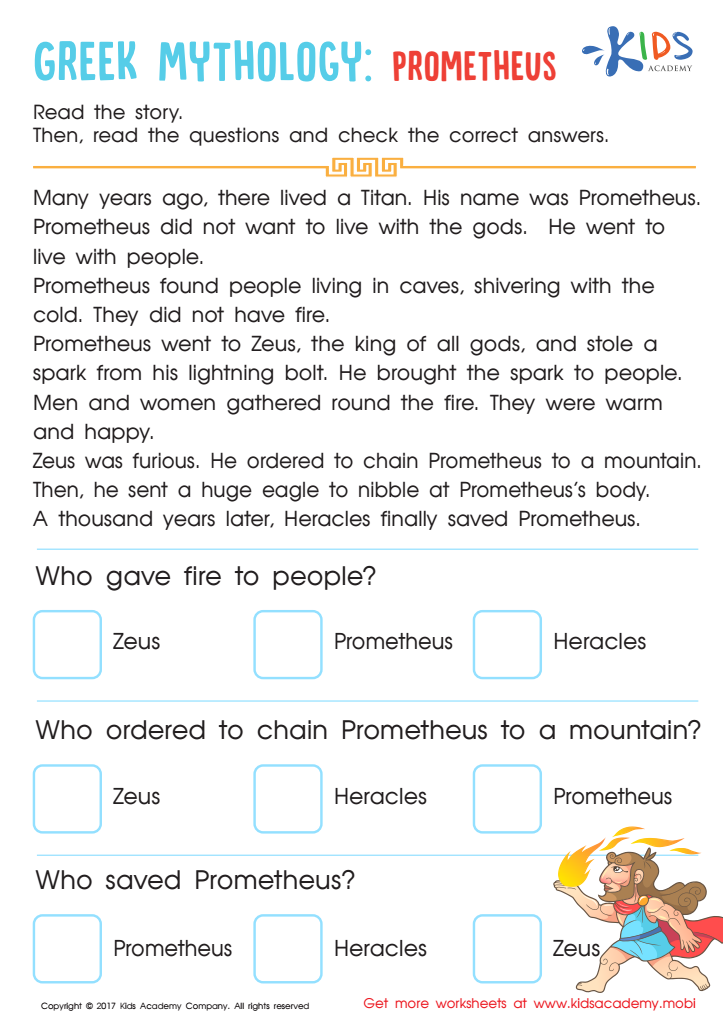
Prometheus Story Worksheet
 Assign to My Students
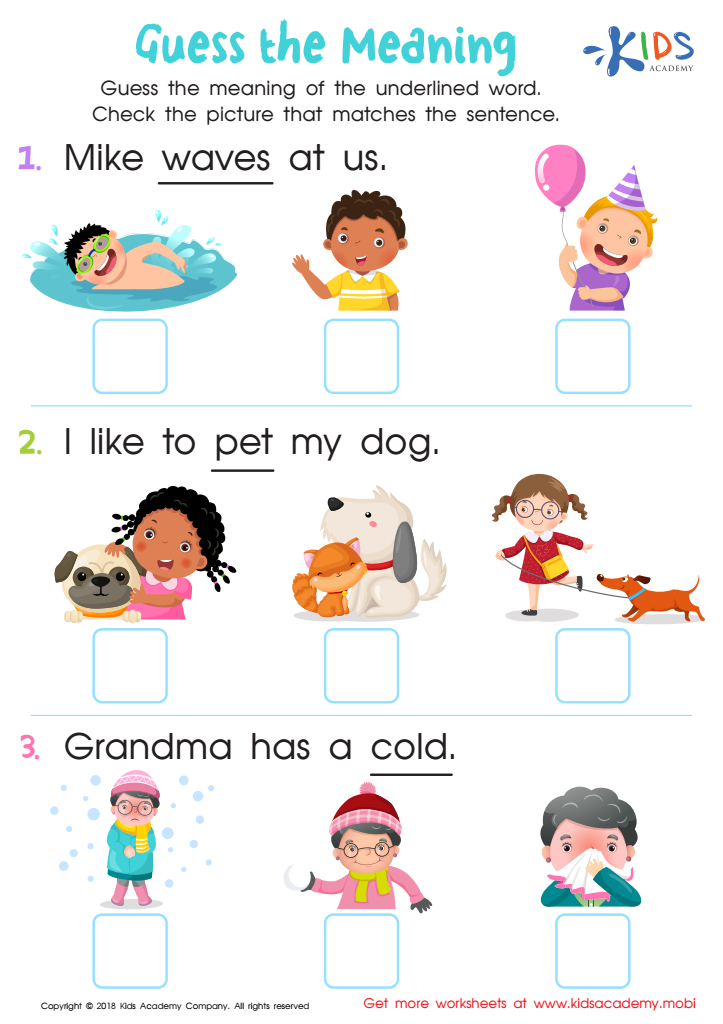
Guess the Meaning Worksheet
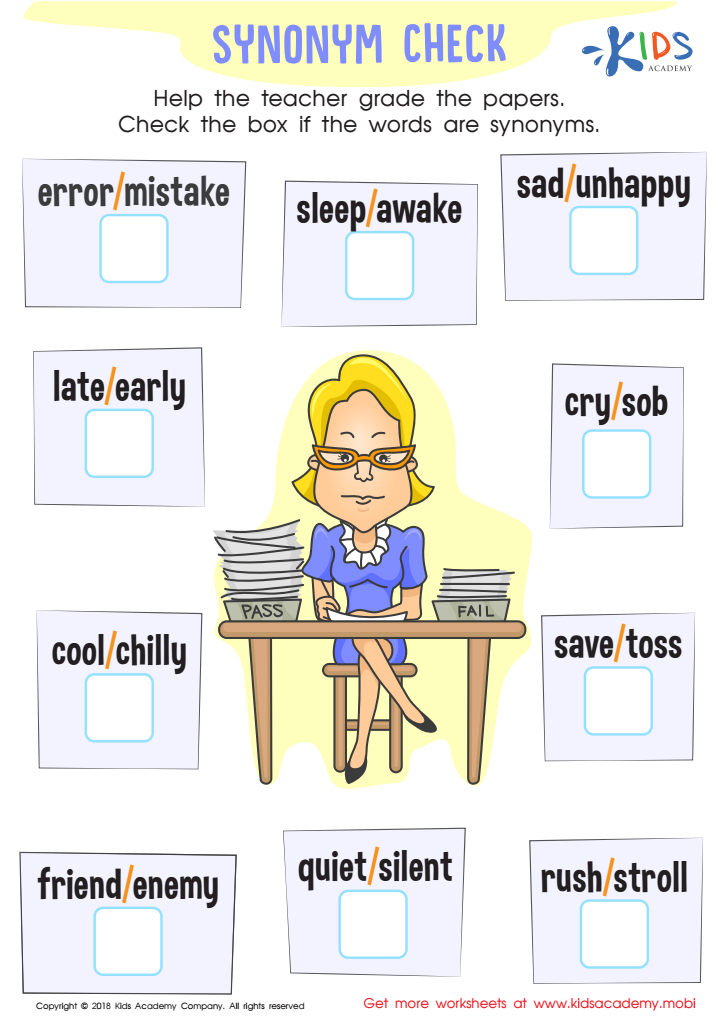
Synonym Check Worksheet
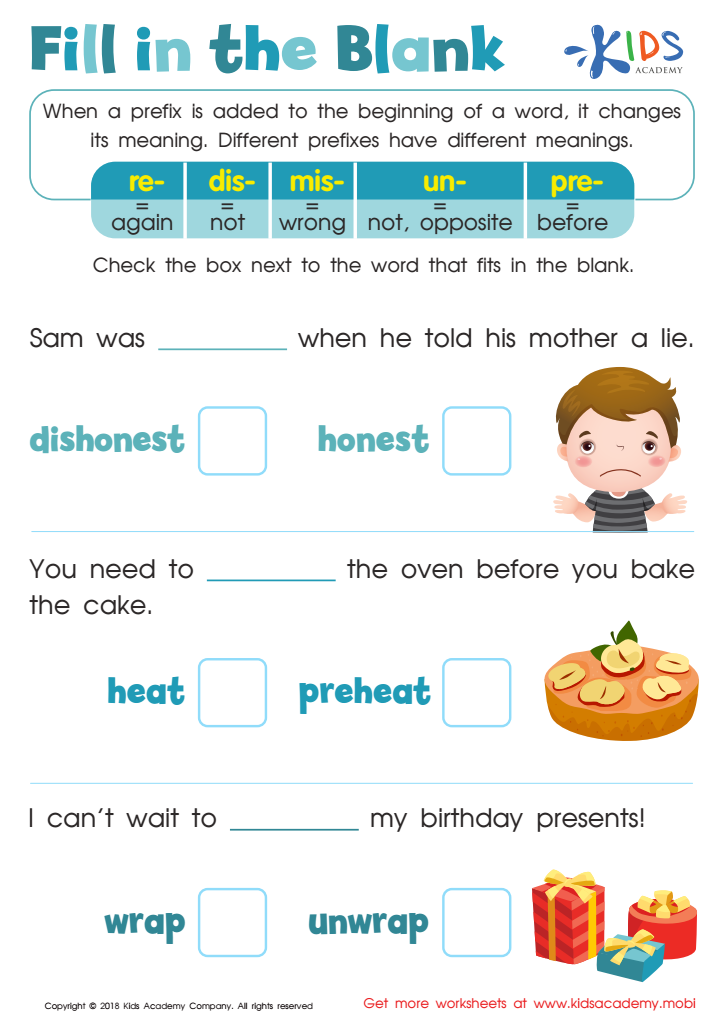
Reading: Fill in the Blank Worksheet
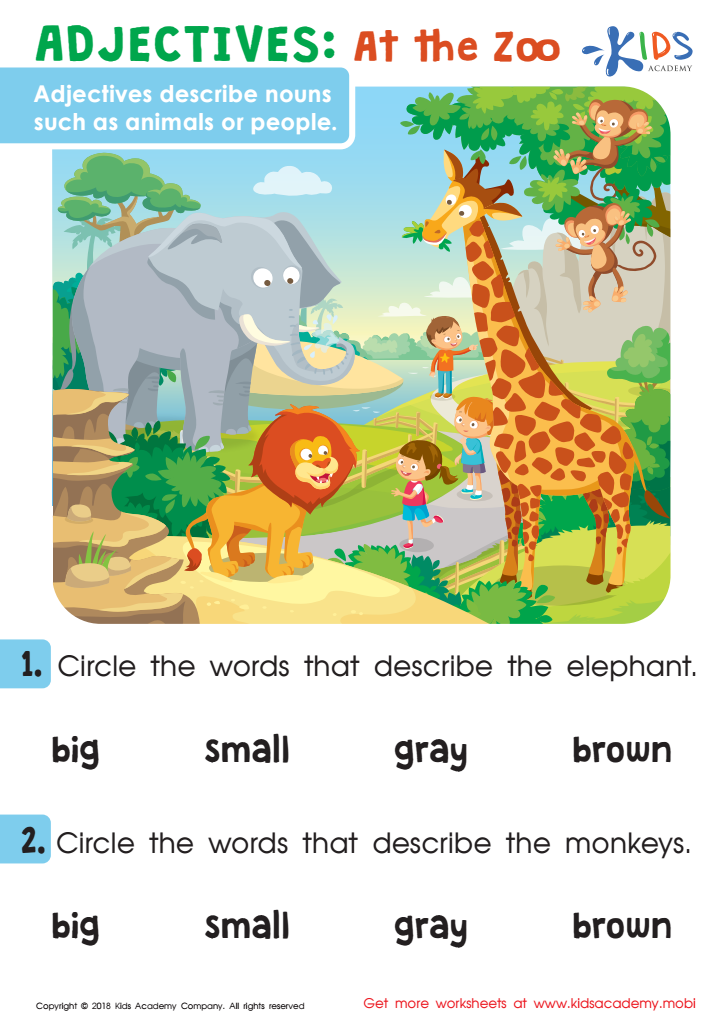
Adjectives: At The Zoo Worksheet
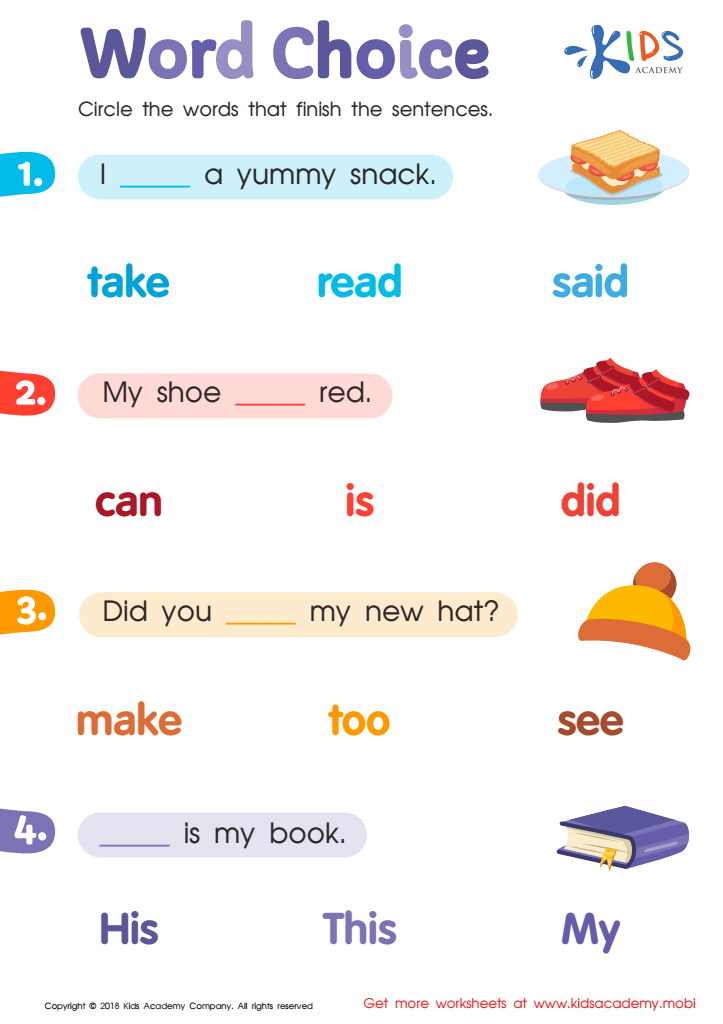
Word Choice Worksheet








Contextual understanding is crucial for children aged 6-8, as it lays the foundation for their overall cognitive and social development. This skill enables young learners to interpret information within the framework of their experiences and knowledge, helping them connect new concepts to what they already know. Parents and teachers should care about this because it enhances critical thinking and comprehension, allowing children to grasp more complex ideas in reading, math, and science.
Moreover, contextual understanding fosters empathy and social skills. When children understand the context behind emotions and actions, whether in stories or real life, they become better equipped to navigate social situations. This awareness encourages them to engage positively with peers and understand differing perspectives.
Encouraging contextual understanding also promotes language development. As children learn to relate words to their meanings in specific contexts, their vocabulary and communication skills flourish.
By prioritizing contextual learning, parents and teachers can create a more engaging and effective learning environment, ensuring that children grow into compassionate, knowledgeable, and well-rounded individuals. Ultimately, nurturing this vital skill supports students in becoming successful lifelong learners.








