
Pronoun identification Normal Worksheets for Ages 6-8
3 filtered results
Difficulty Level
Grade
Age
-
From - To
Subject
Activity
Standards
Our “Pronoun Identification Worksheets for Ages 6-8” are designed to help young learners master the use of pronouns in fun and engaging ways. These worksheets offer various exercises aimed at recognizing and correctly using pronouns, ultimately enhancing grammar skills and language development. Perfect for both classroom and home use, these activities incorporate colorful visuals and simple instructions, catering specifically to children’s learning styles. With our printables, kids will gain confidence in using pronouns, which is an essential step in building strong reading and writing abilities. Begin your journey to grammar excellence with these kid-friendly resources!
Favorites
With answer key
Interactive
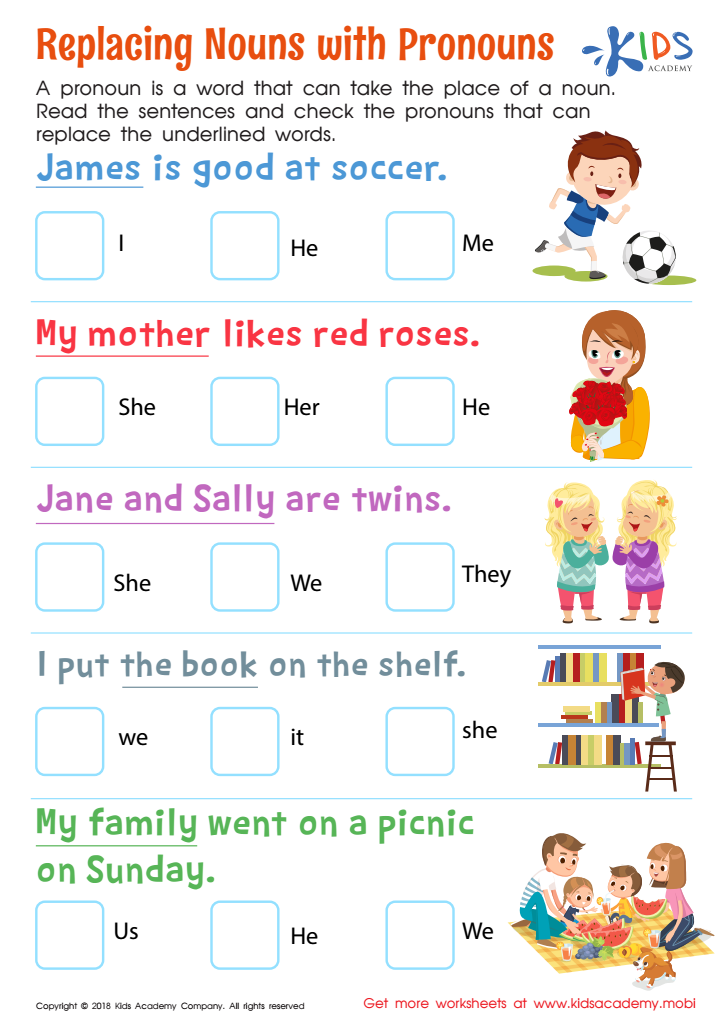
Replacing Nouns with Pronouns Worksheet
This colorful worksheet helps kids grow their writing skills by replacing nouns with pronouns. Read each sentence and select a pronoun for the underlined phrase. Then read the sentence again with the new pronoun.
 Assign to My Students
Replacing Nouns with Pronouns Worksheet
Worksheet
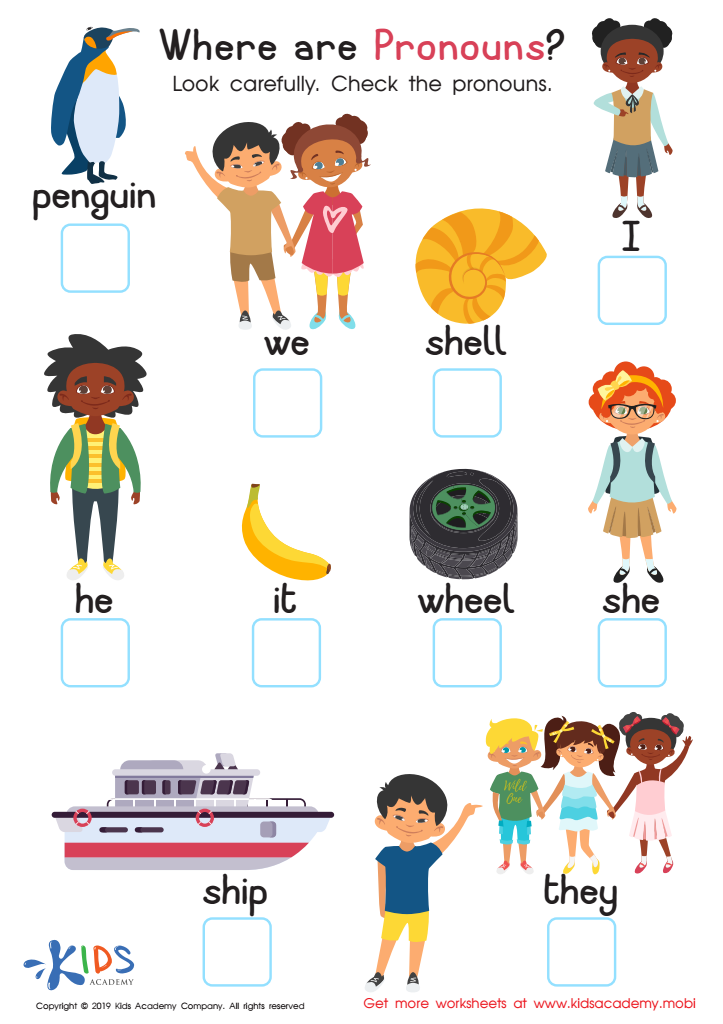
Where Are Pronouns? Worksheet
Pronouns make language flow, substituting "he" or "she" for names. Kids know and use them in their speech, but identifying pronouns in grammar helps build writing skills. This worksheet challenges kids to pick out pronouns from other nouns. Go through the worksheet, view the pictures and read the words. Ask kids to check boxes in front of pronouns to mark answers.
Where Are Pronouns? Worksheet
Worksheet
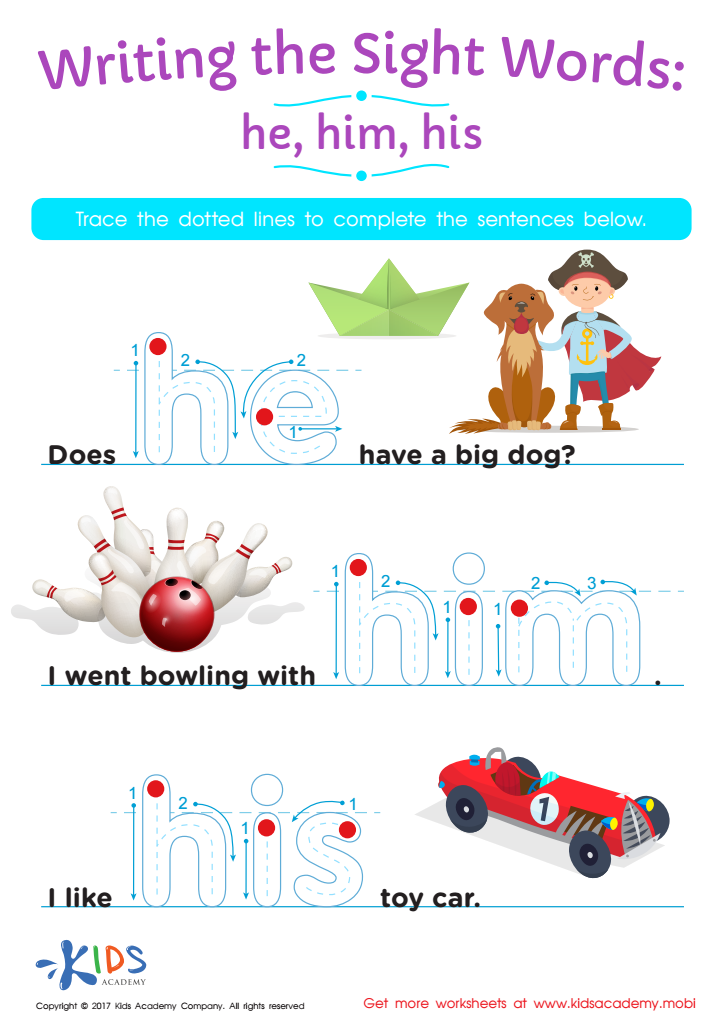
He, Him, His Printable Sight Words Worksheet
He, Him, His worksheet includes colorful pictures, simple sentences, and lots of fun. Guaranteed to engage and make learning enjoyable!
He, Him, His Printable Sight Words Worksheet
Worksheet
Join Kids Academy for Free
Who is primarily going to use this learning content?







Parents and teachers should care about pronoun identification for children ages 6-8 because it is fundamental to their language and social development. Pronouns like "he," "she," "it," and "they" are essential building blocks of grammar. Learning to use them correctly helps children create coherent sentences and improve their communication skills. When children can identify and use pronouns correctly, they're better able to describe stories, express ideas, and engage in conversations, bolstering their confidence and comprehension.
Additionally, understanding pronouns aids in social interaction and inclusivity. Proper use fosters respect and empathy, allowing children to address others respectfully, particularly in increasingly diverse communities where gender-inclusive language is vital. Misuse of pronouns can lead to confusion or unintended social faux pas, impacting peer relationships and self-esteem.
Early identification and correct usage of pronouns also contribute to academic success. Reading comprehension and writing assignments often assume knowledge of pronouns. If children struggle with this concept, it may hinder their ability to follow instructions and contribute effectively in class.
Thus, focusing on pronoun identification for children ages 6-8 lays a foundational skill set crucial for language competence, social harmony, and academic achievement. Parents and teachers who emphasize this aspect of language development are investing in their children's broader success and well-being.








