Mathematical reasoning Normal Addition & Subtraction Worksheets for Ages 6-8
10 filtered results
-
From - To
Unlock your child’s potential with our Mathematical Reasoning Normal Addition and Subtraction Worksheets designed for ages 6-8. These engaging worksheets help young learners develop critical thinking skills while mastering essential addition and subtraction concepts. Each activity is crafted to challenge your child's reasoning abilities, encouraging them to solve problems with confidence. From simple equations to multi-step challenges, our worksheets promote a deep understanding of mathematical operations, making learning both fun and effective. Perfect for classrooms or home practice, these resources support skill development at this crucial stage in their educational journey. Start fostering your child's mathematical reasoning today!
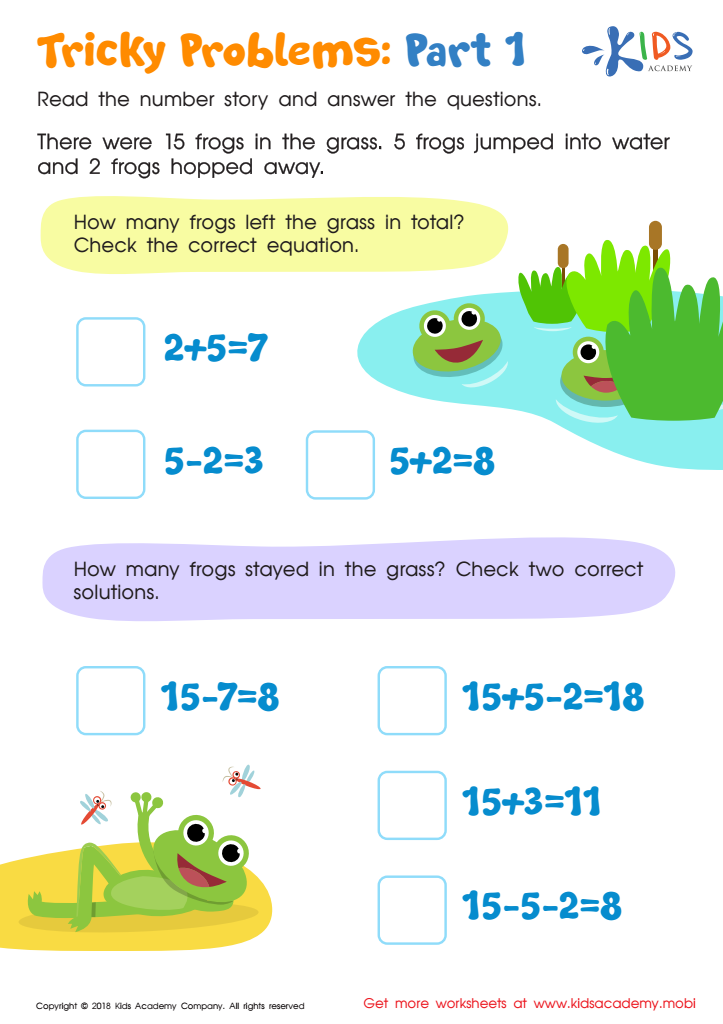
Tricky Problems Worksheet: Part 1
 Assign to My Students
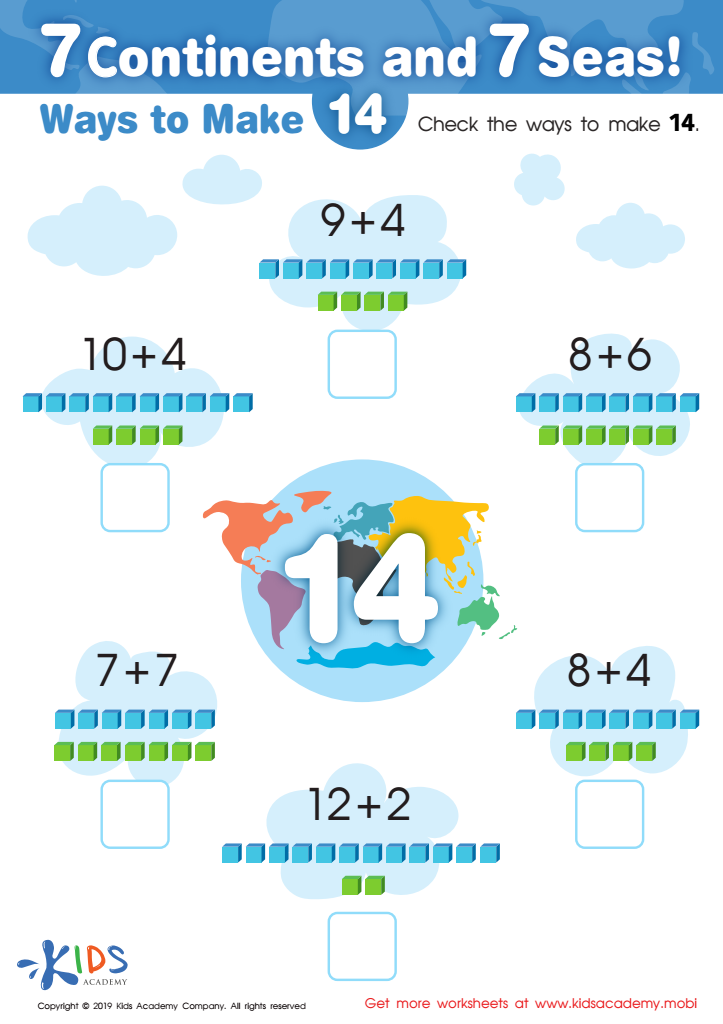
7 Continents and 7 Seas Worksheet
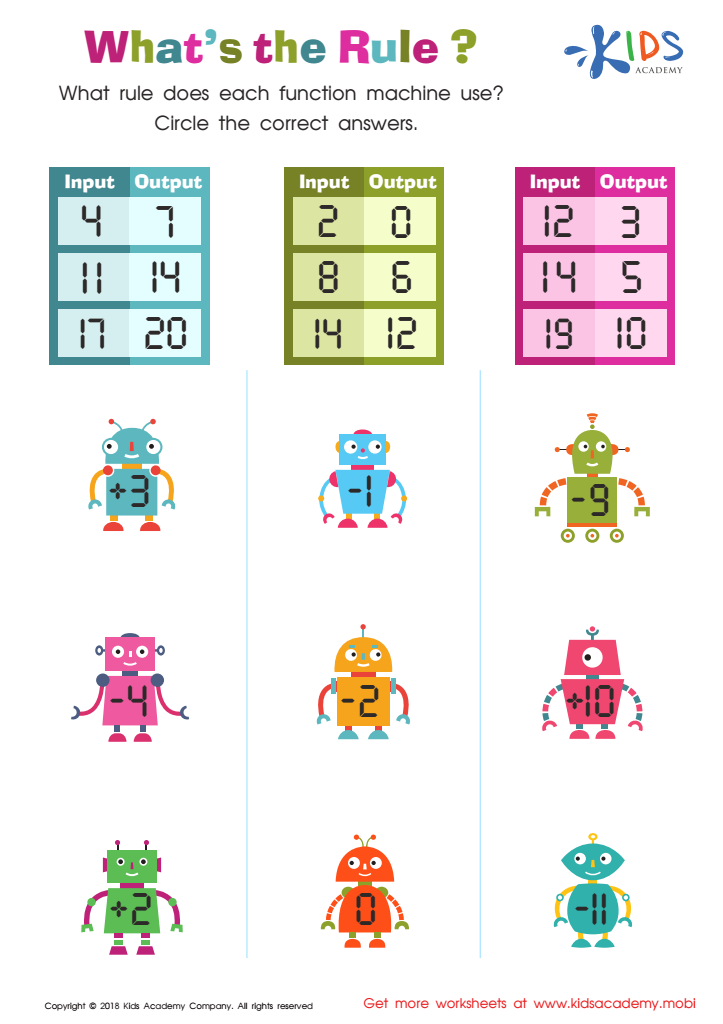
What's the Rule Worksheet
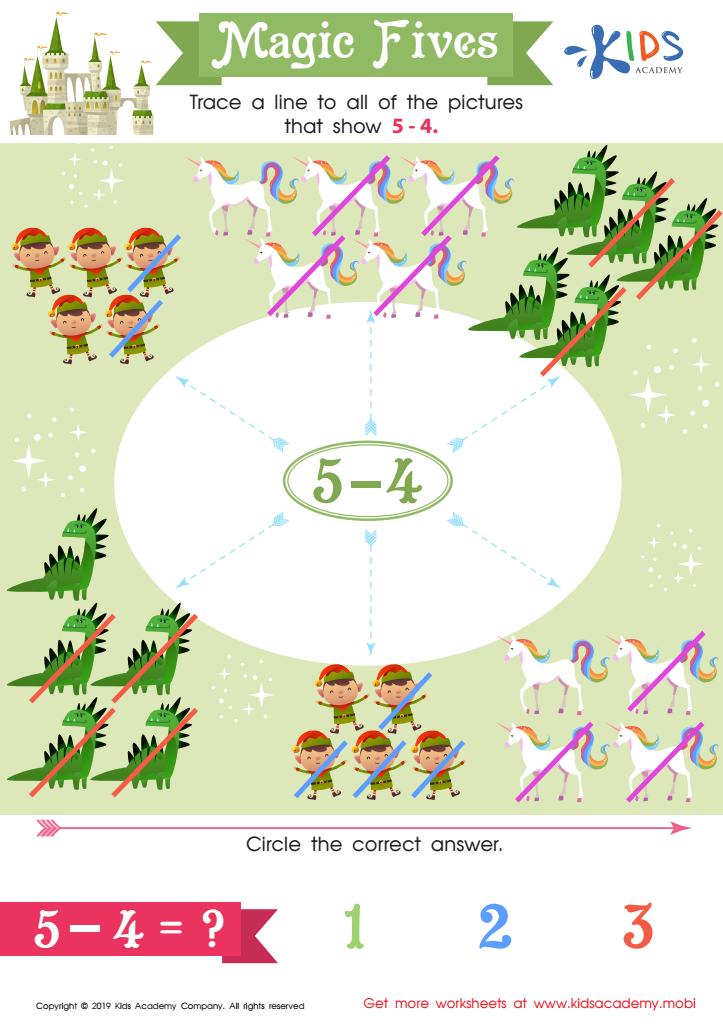
Magic Fives Worksheet
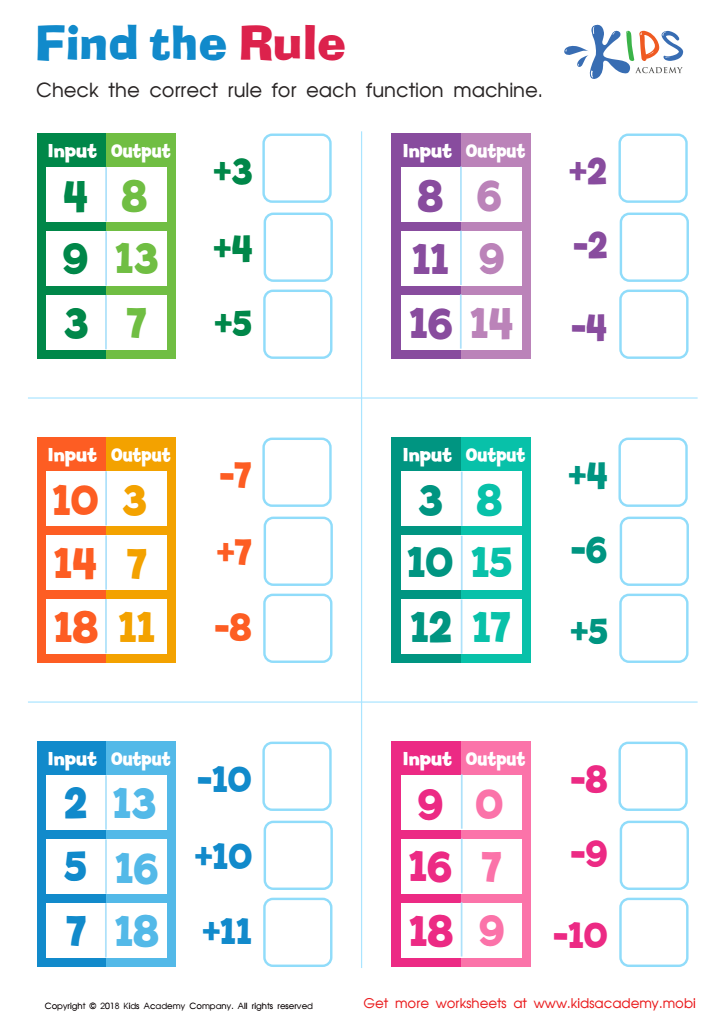
Find the Rule Worksheet
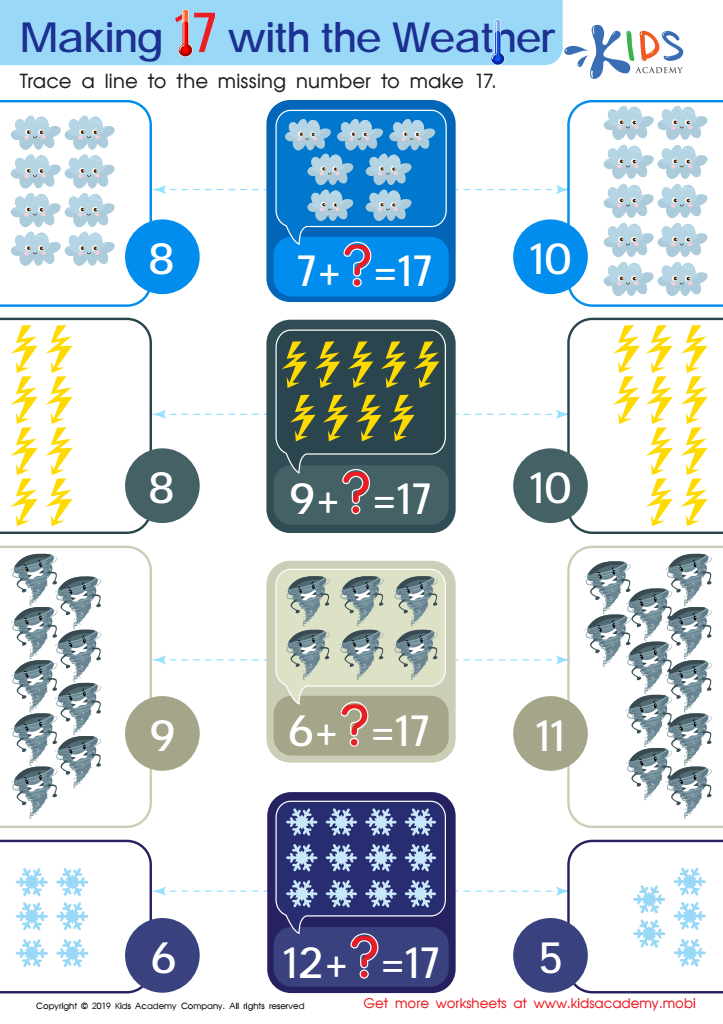
Making 17 with the Weather Worksheet
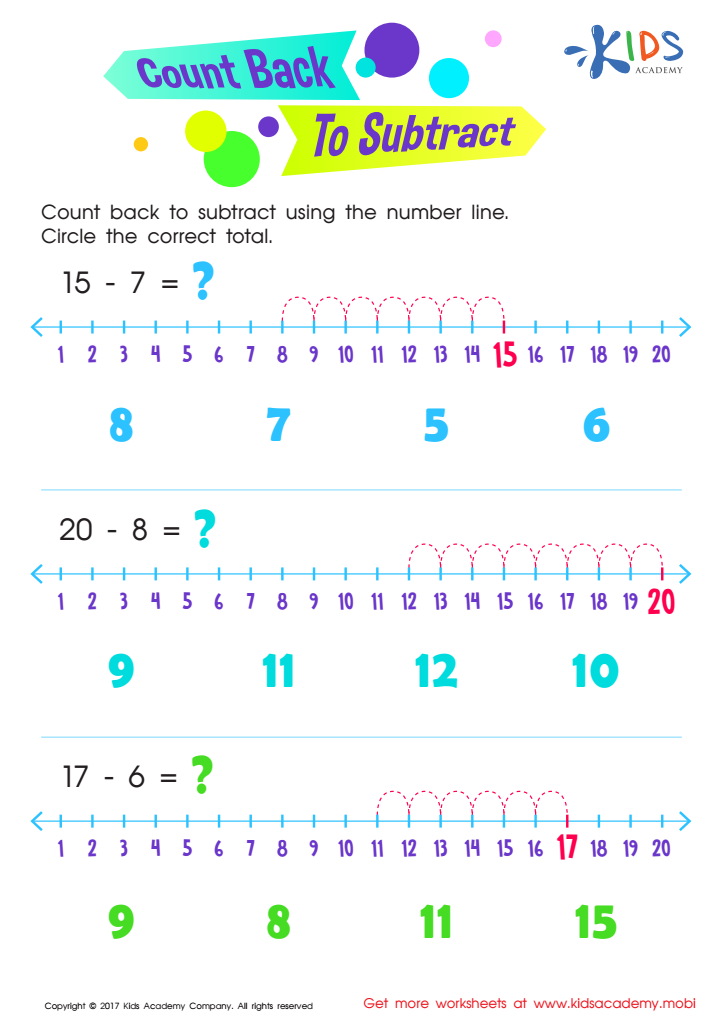
Count Back to Subtract Substraction Worksheet
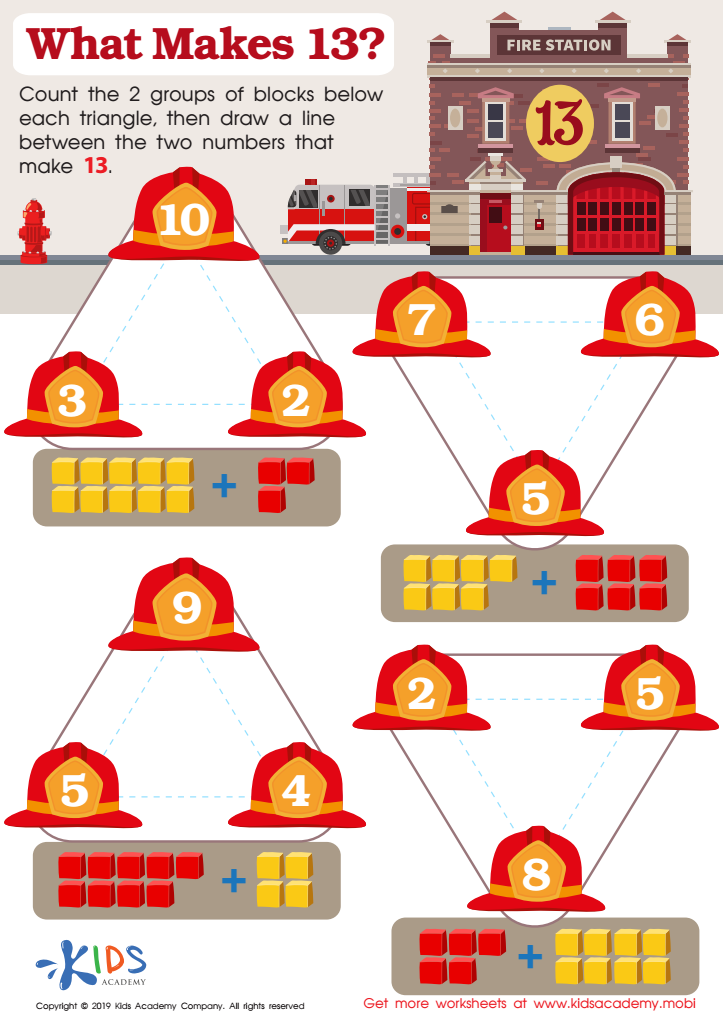
What Makes 13 Worksheet
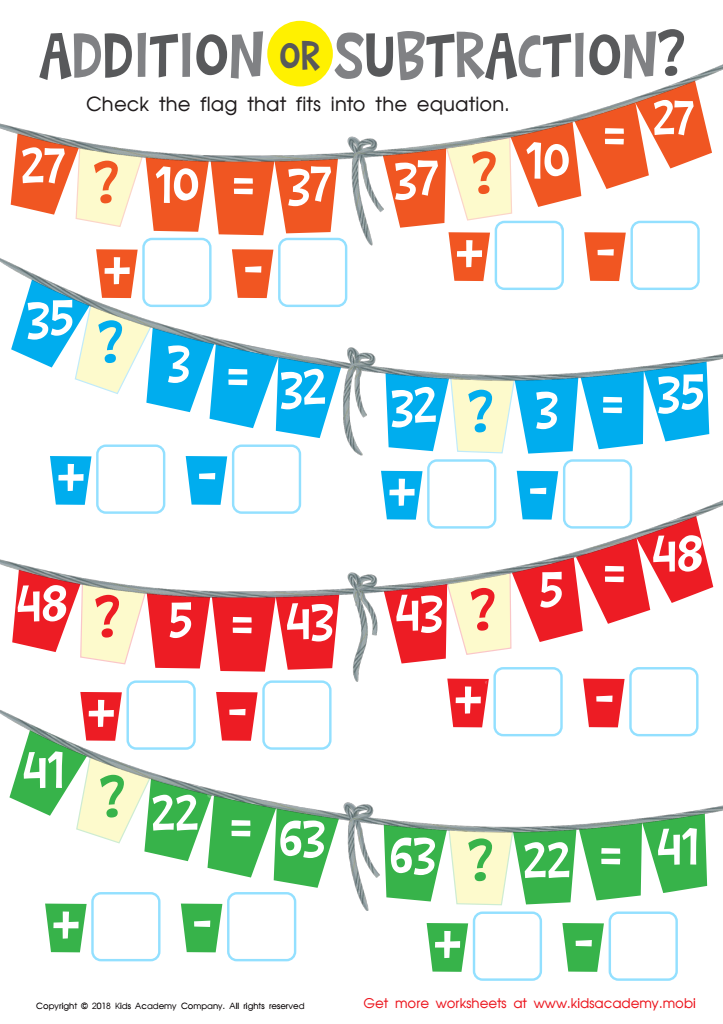
Addition or Subtraction? Worksheet
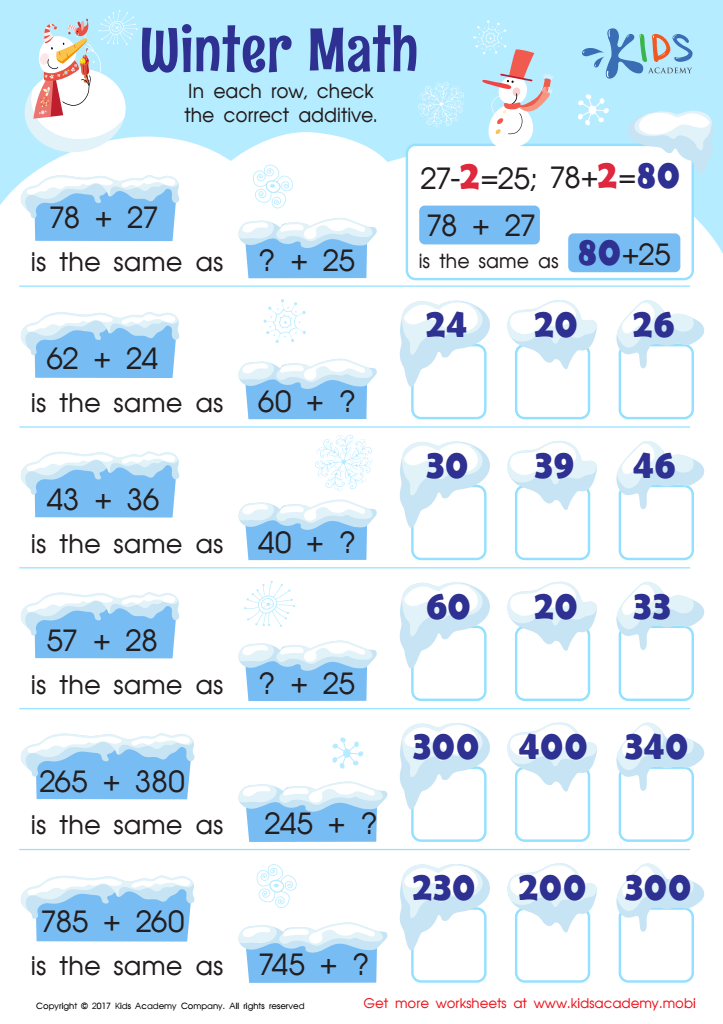
Free Addition Worksheet








Mathematical reasoning in normal addition and subtraction is vital for children ages 6-8, as it lays a foundational understanding of mathematics that extends beyond basic calculations. During these developmental years, children begin to grasp the concepts of numbers and their relationships, which is key to effective problem-solving and critical thinking skills.
Parents and teachers should prioritize this learning area because it fosters cognitive development and nurtures a growth mindset. Engaging children in activities that encourage mathematical reasoning helps them make connections between addition and subtraction concepts; for example, understanding that subtraction is the inverse of addition. This interconnected thinking not only aids fluency in arithmetic but also builds resilience and encourages persistence in the face of challenges.
Additionally, nurturing these skills at this age prepares children for more advanced mathematical concepts in later years, such as multiplication and division, geometry, and measurement. Strong mathematical reasoning also enhances overall academic performance across subjects as it cultivates logical thinking and analytical abilities.
Involving parents and educators in creating supportive environments for practice and exploration encourages a positive attitude towards mathematics, laying the groundwork for a lifelong appreciation of the subject. Ultimately, equipping children with these essential skills empowers them for future learning, self-confidence, and success.








