
Understanding fractions Normal Fractions Worksheets for Ages 6-8
8 filtered results
Difficulty Level
Grade
Age
-
From - To
Subject
Activity
Standards
Welcome to our "Understanding Fractions Normal Fractions Worksheets" designed for children ages 6-8! Our engaging and interactive worksheets help young learners grasp the fundamentals of fractions through various exciting activities. Each worksheet introduces concepts like identifying, comparing, and simplifying fractions in a fun and age-appropriate way. With colorful visuals and relatable examples, children will build confidence and reinforce their understanding of this essential math skill. Perfect for classroom use or at-home practice, these worksheets promote a strong mathematical foundation while making learning enjoyable. Dive into the world of fractions and watch your child's math skills flourish!
Favorites
With answer key
Interactive
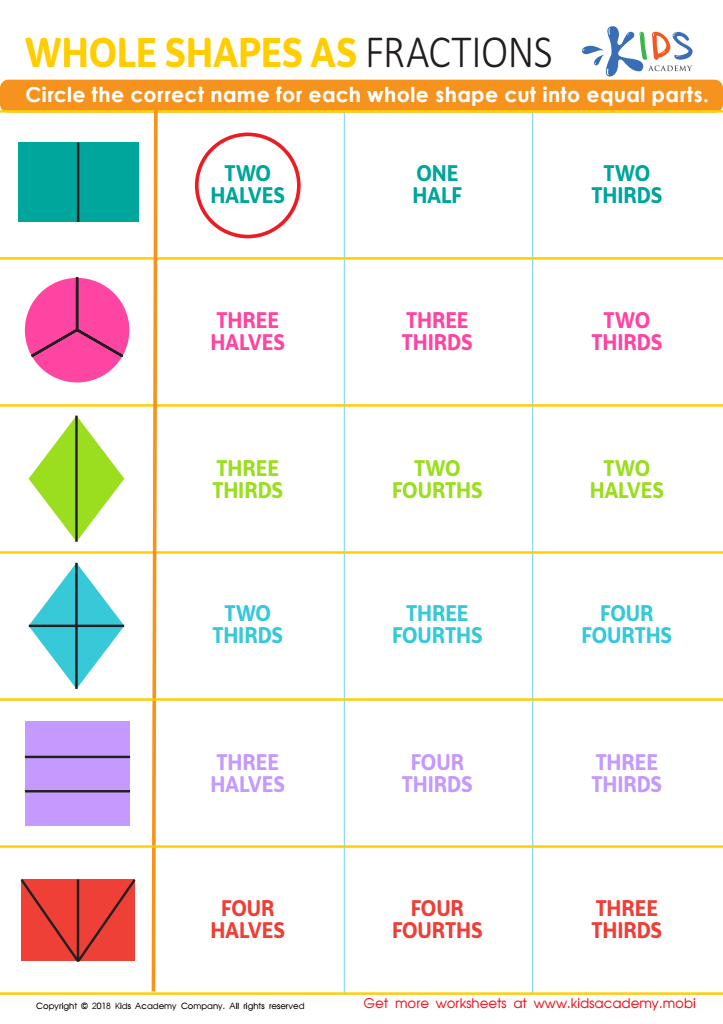
Whole Shapes as Fractions Worksheet
Introduce your child to fractions! After they can draw whole shapes, have them represent them as fractions using a simple worksheet. This will help improve their understanding of naming whole shapes cut into equal parts.
 Assign to My Students
Whole Shapes as Fractions Worksheet
Worksheet
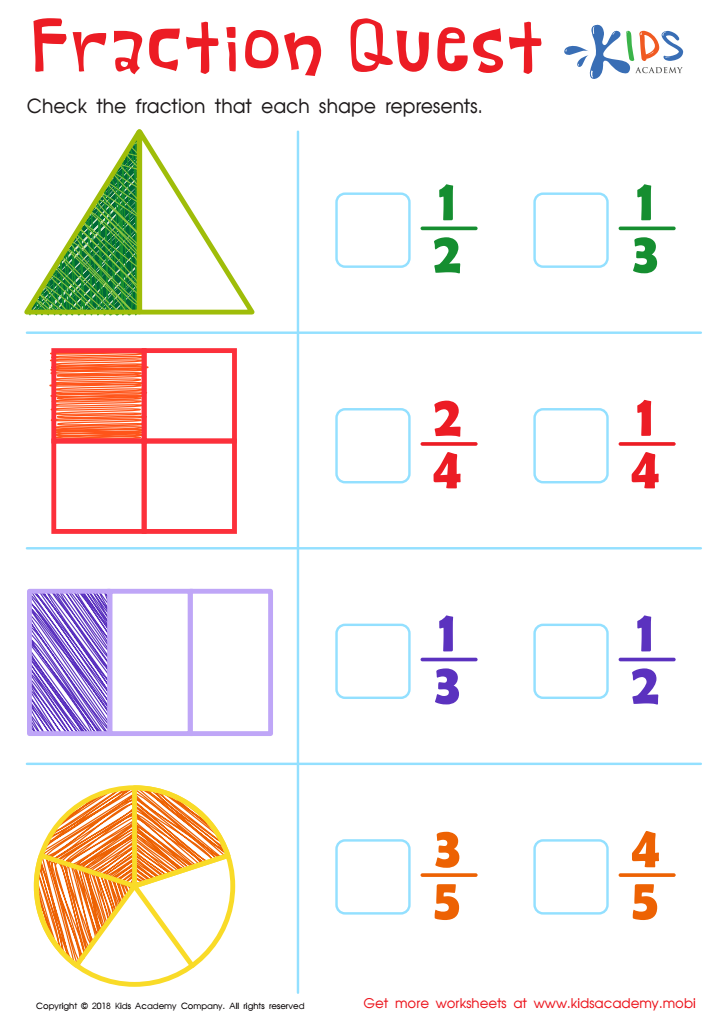
Fraction Quest Worksheet
This colorful and educative worksheet can help kids conquer their fractions struggles. Ask them to identify the four shapes, then the fractions they represent. They can then check the correct answers from the options given.
Fraction Quest Worksheet
Worksheet
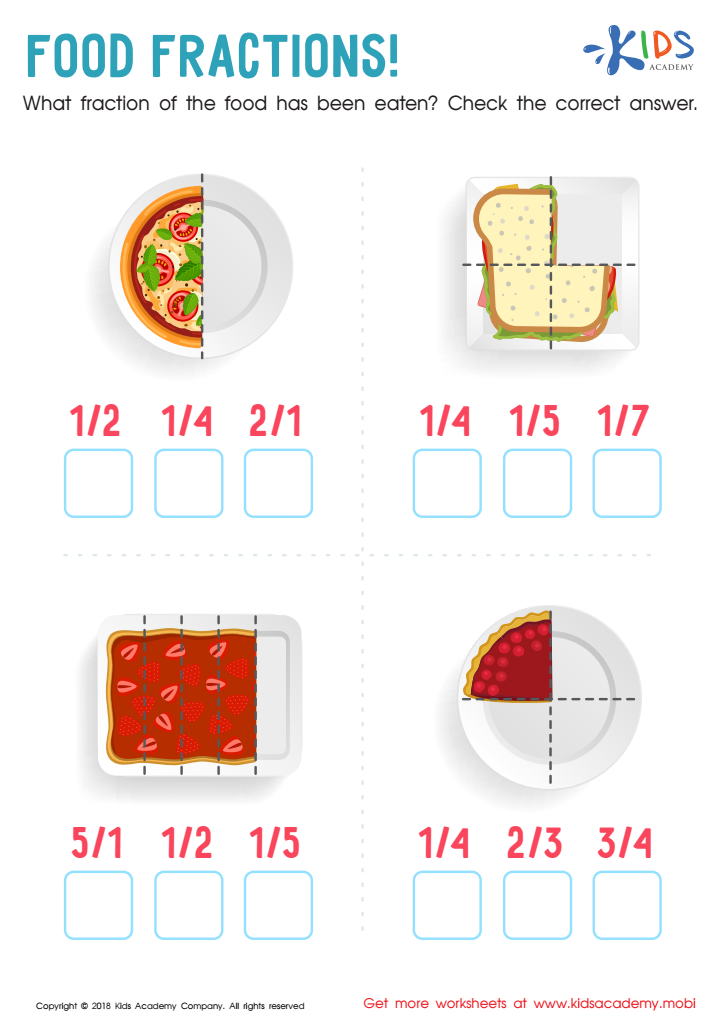
Food Fractions Worksheet
Test your child's understanding of fractions with this Food Fractions worksheet. Ask them to identify what fraction of the food in the four pictures has been eaten and select the correct answer from the options provided. See how well they understand your lessons!
Food Fractions Worksheet
Worksheet
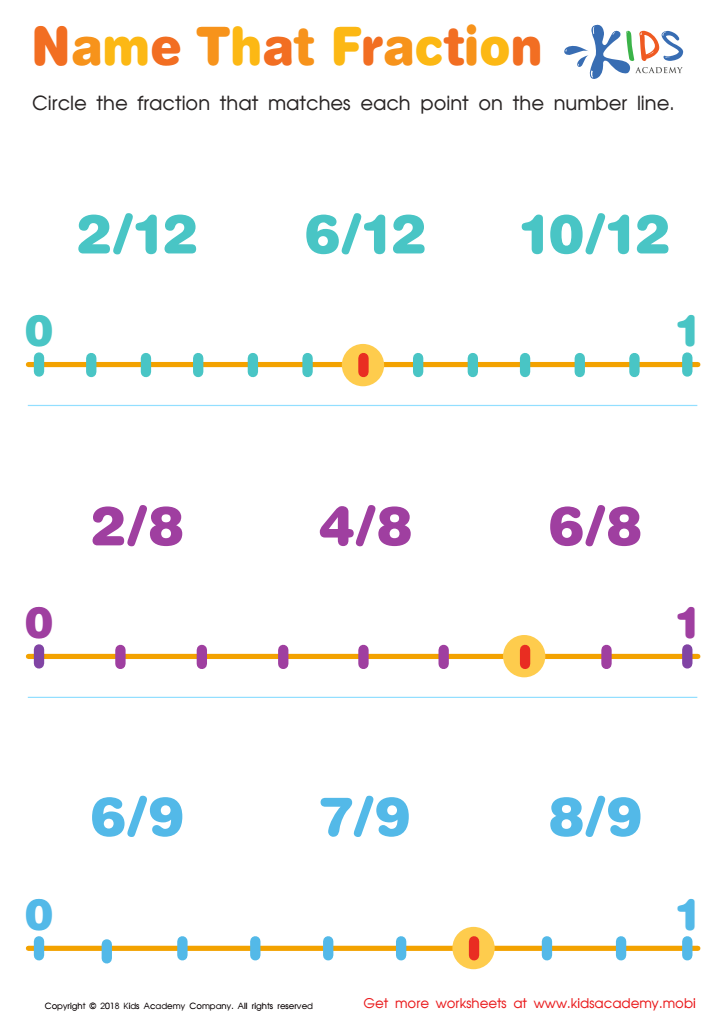
Name That Fraction Worksheet
Kids must learn to identify and name fractions to solve equations. Included in this worksheet are three equations that need solving. Have your child match each point on the number line with the correct fraction and circle it. This exercise helps build their fraction skills.
Name That Fraction Worksheet
Worksheet
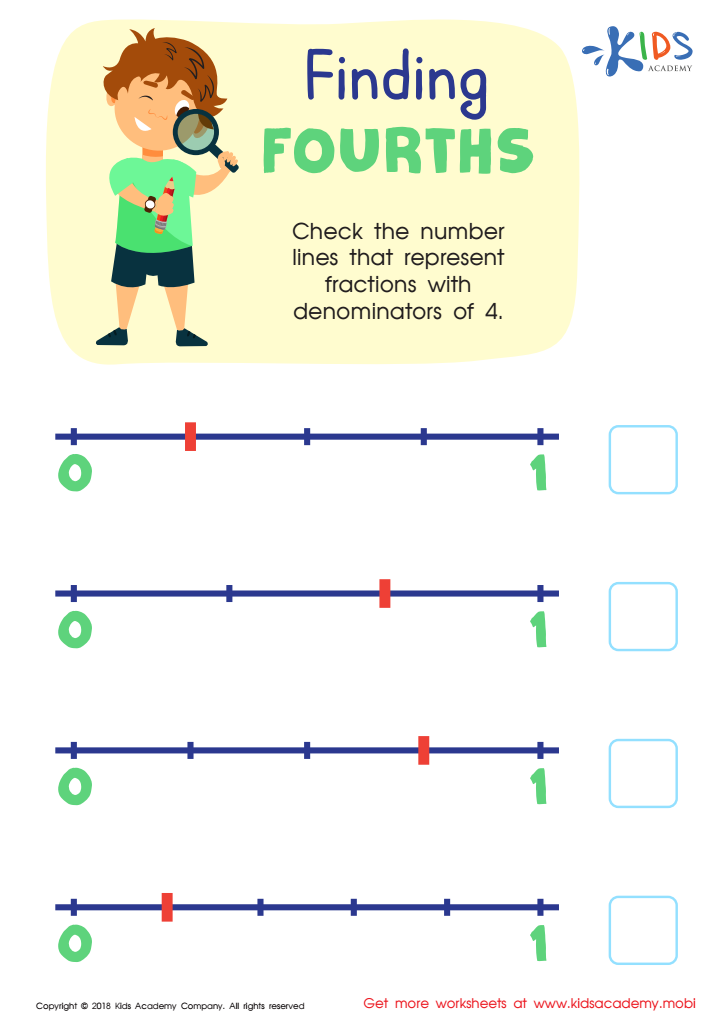
Finding Fourths Worksheet
Help your kids sharpen math skills with extra homework, stimulating exercises, and fun worksheets. This printout features four equations with fractions and number lines. Your child's task is to check the number lines with denominators of 4. Enough to get them thinking and learning.
Finding Fourths Worksheet
Worksheet
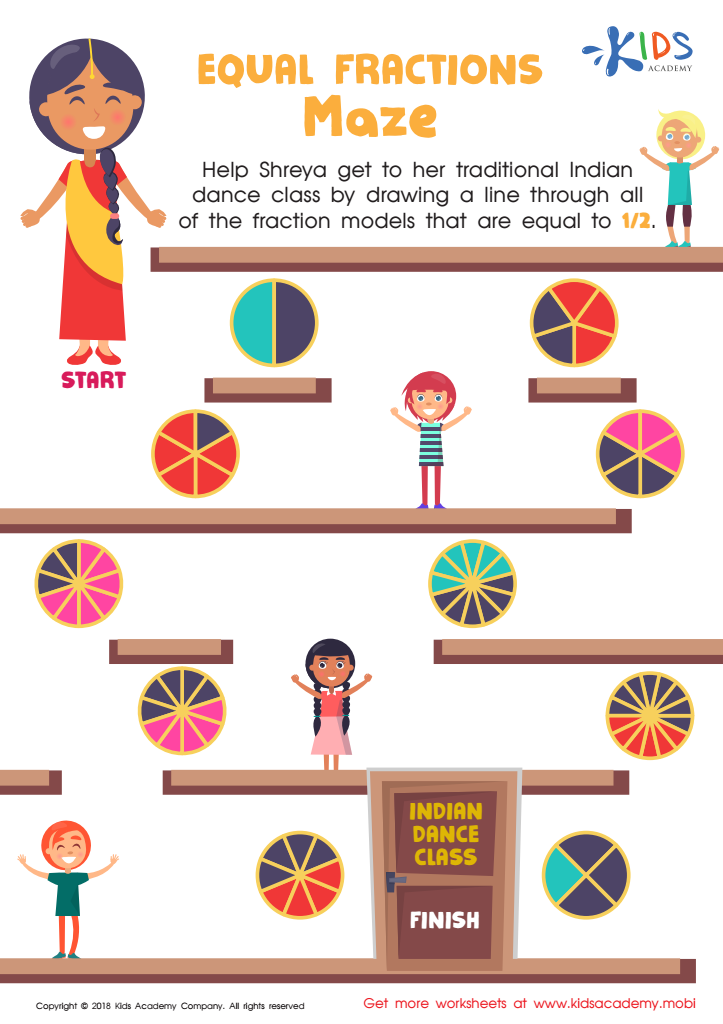
Equal Fractions Maze Worksheet
Help Shreya get to dance class! Draw a line through all fraction models that are equal to ½, starting at the entrance marked 'start'. Guide your kids through the maze paths and help Shreya -- she's an Indian girl who practices her cultures and traditions -- reach the door to her class.
Equal Fractions Maze Worksheet
Worksheet
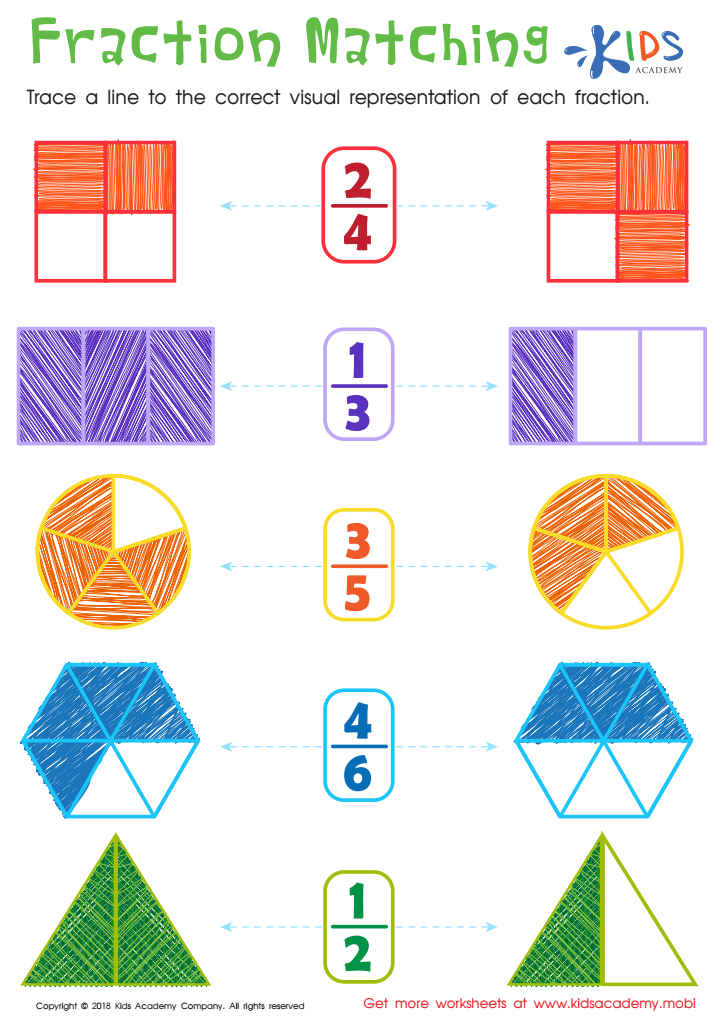
Fraction Matching Worksheet
Teach your kindergartners fractions with this colorful worksheet. Make sure they understand numerators and denominators, then have them trace a line to the correct visual representation of each equation. There are five fractions for them to work on. With the foundation of fractions, mathematics will be much easier for them.
Fraction Matching Worksheet
Worksheet
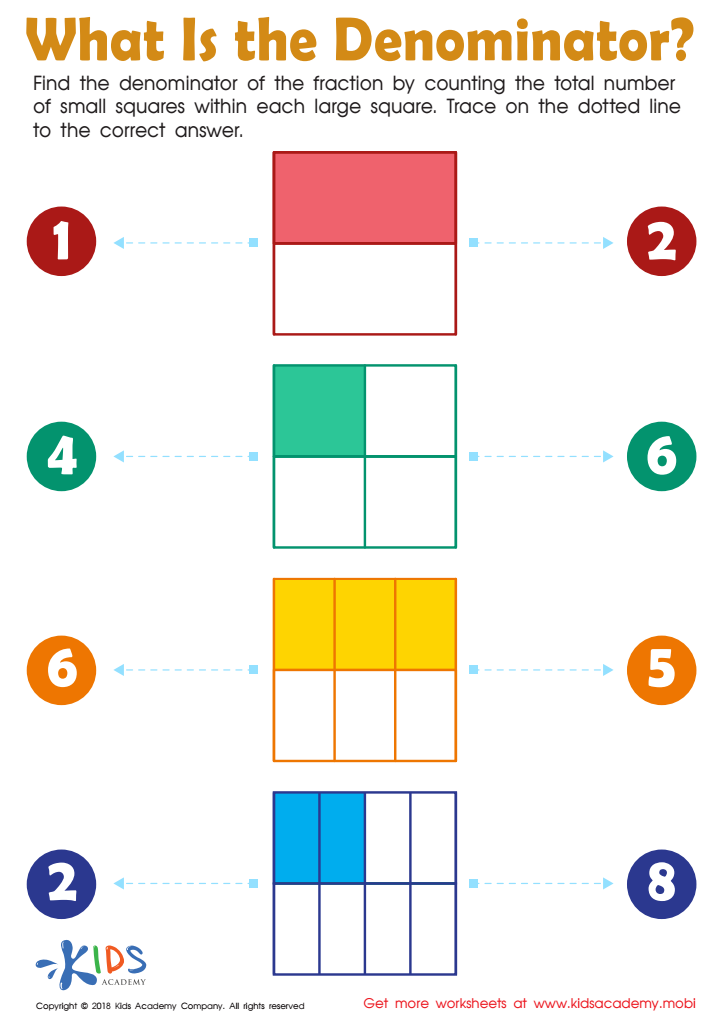
What Is the Denominator? Worksheet
If your kindergartener is struggling with fractions, don't worry. Use this worksheet to help them understand better. Ask them to count the total small squares in each large square to find the denominator, then trace on the dotted line to answer. This printable tracing sheet will help them learn fractions easier.
What Is the Denominator? Worksheet
Worksheet
Join Kids Academy for Free
Who is primarily going to use this learning content?








Understanding fractions is crucial for children aged 6-8 as it forms a foundational skill for their mathematical development. At this age, children are beginning to encounter fractions in everyday contexts, such as sharing food or dividing groups of objects. Teachers and parents should care about this concept, as it helps children develop critical thinking and problem-solving abilities. Grasping fractions not only fosters numerical fluency but also lays the groundwork for more complex math concepts encountered in later years, including geometry and algebra.
Moreover, recognizing fractions aids children in understanding proportionality and relationships, which are essential skills for making sense of the world around them. Engaging with fractions can also boost their confidence in math, encouraging a positive attitude toward learning. When parents and teachers actively introduce and reinforce fractional concepts, whether through hands-on activities or relatable examples, they effectively support children's curiosity and cognitive growth.
By creating a strong understanding of normal fractions at a young age, parents and teachers equip children with the tools they need to tackle not only future mathematical challenges but also real-world scenarios, fostering both academic success and practical life skills. Ultimately, this understanding helps to cultivate a lifelong appreciation for mathematics.








