Understanding fractions Normal Geometry Worksheets for Ages 6-8
6 filtered results
-
From - To
Discover the magic of fractions with our "Understanding Fractions Normal Geometry Worksheets" designed specifically for ages 6-8. These engaging and interactive worksheets simplify the concept of fractions through visual aids and fun activities, ensuring your child masters the basics effortlessly. Our expert-crafted materials support learning with easy-to-understand explanations and exercises tailored to young minds. Perfect for classroom and home use, these geometry worksheets help children build strong mathematical foundations, improve critical thinking, and nurture a love for learning. Explore our variety of printable worksheets to make fractions fascinating and enjoyable for your child today!
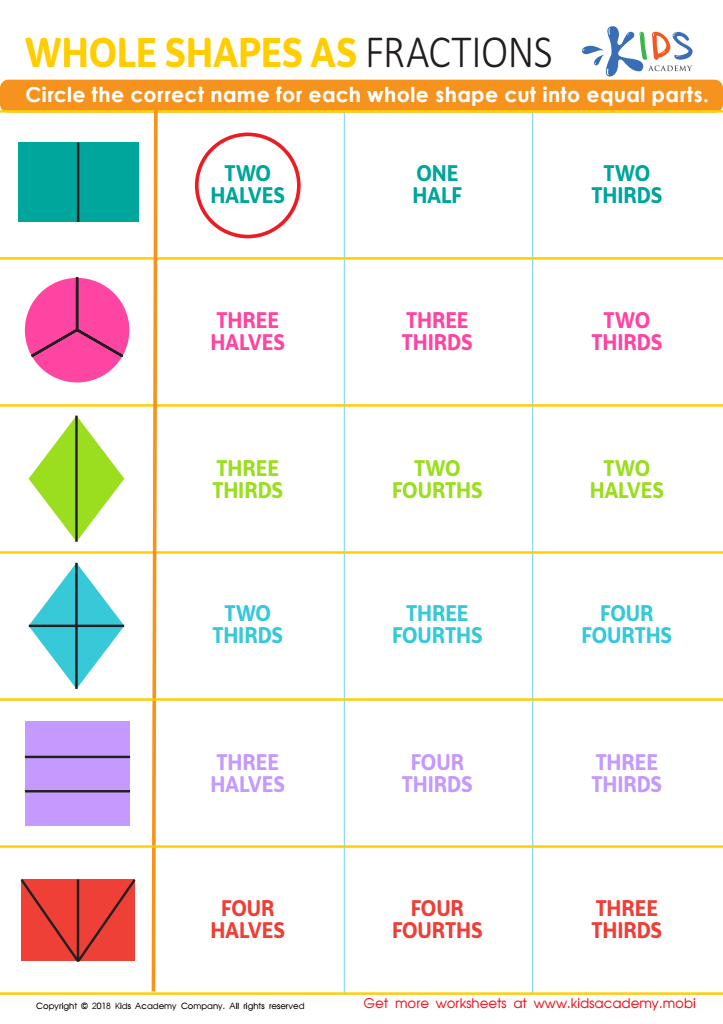
Whole Shapes as Fractions Worksheet
 Assign to My Students











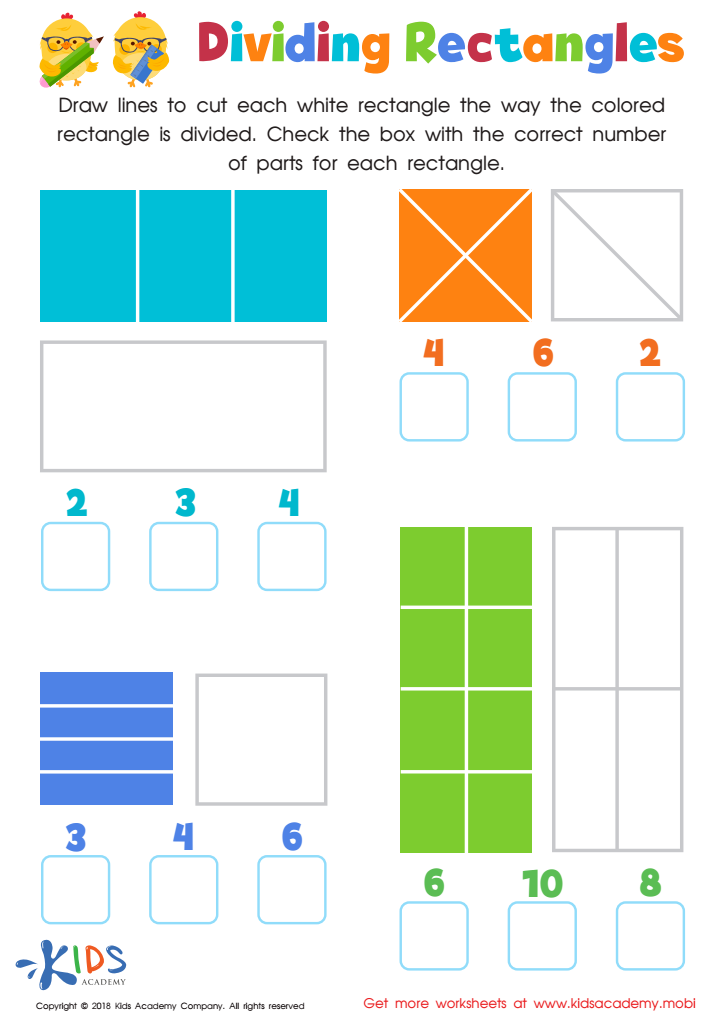
Dividing Rectangles Worksheet
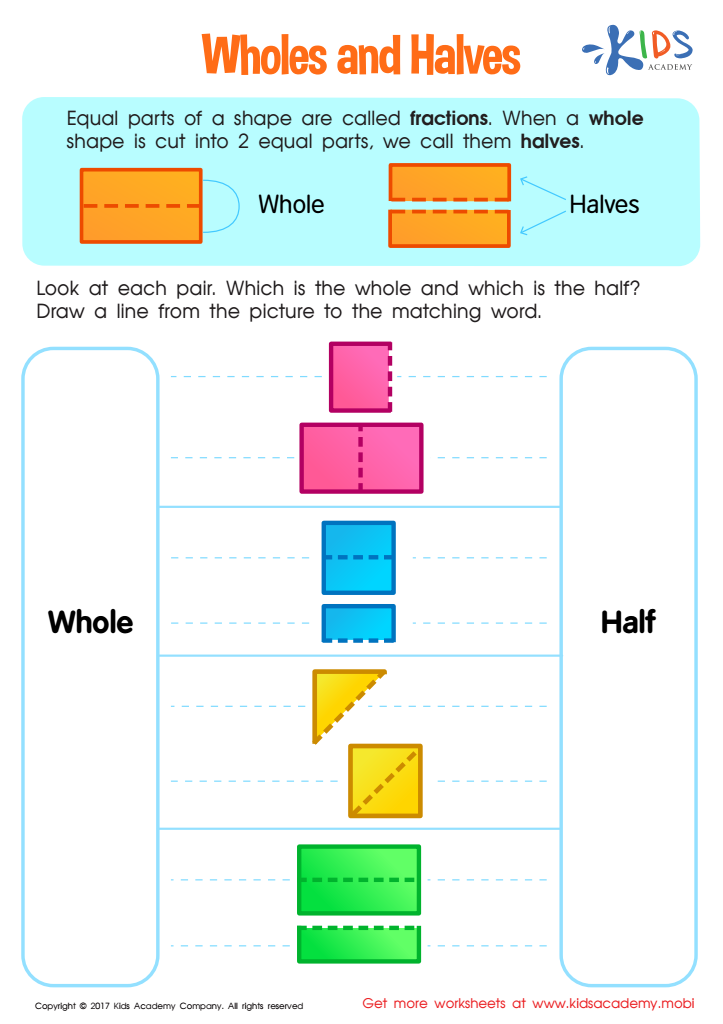
Wholes and Halves Worksheet
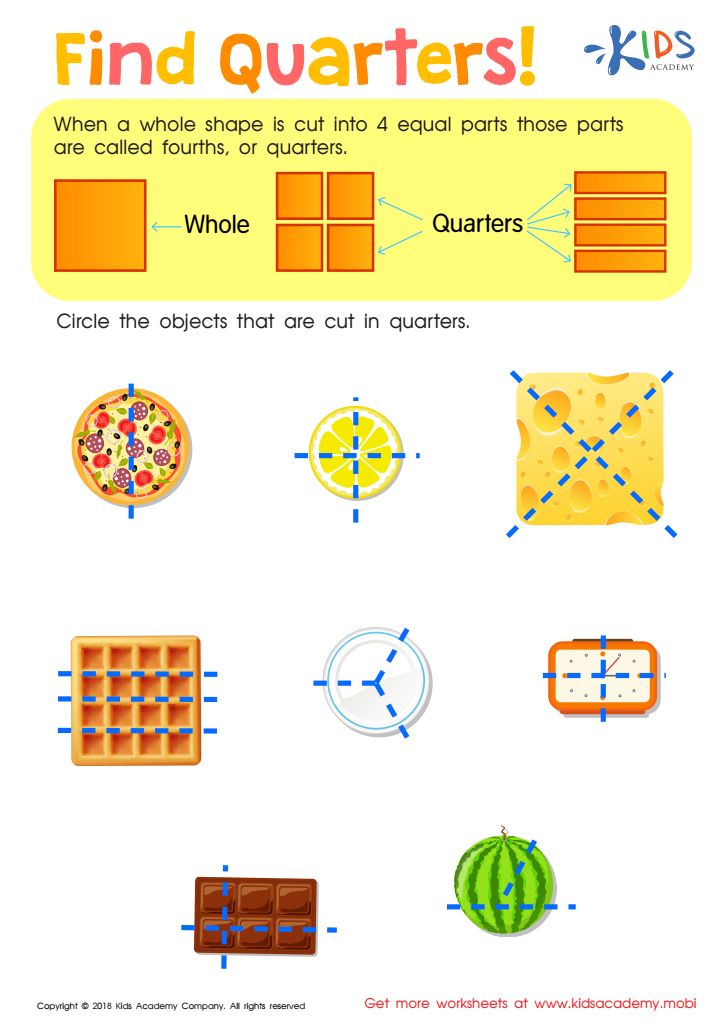
Find Quarters Worksheet
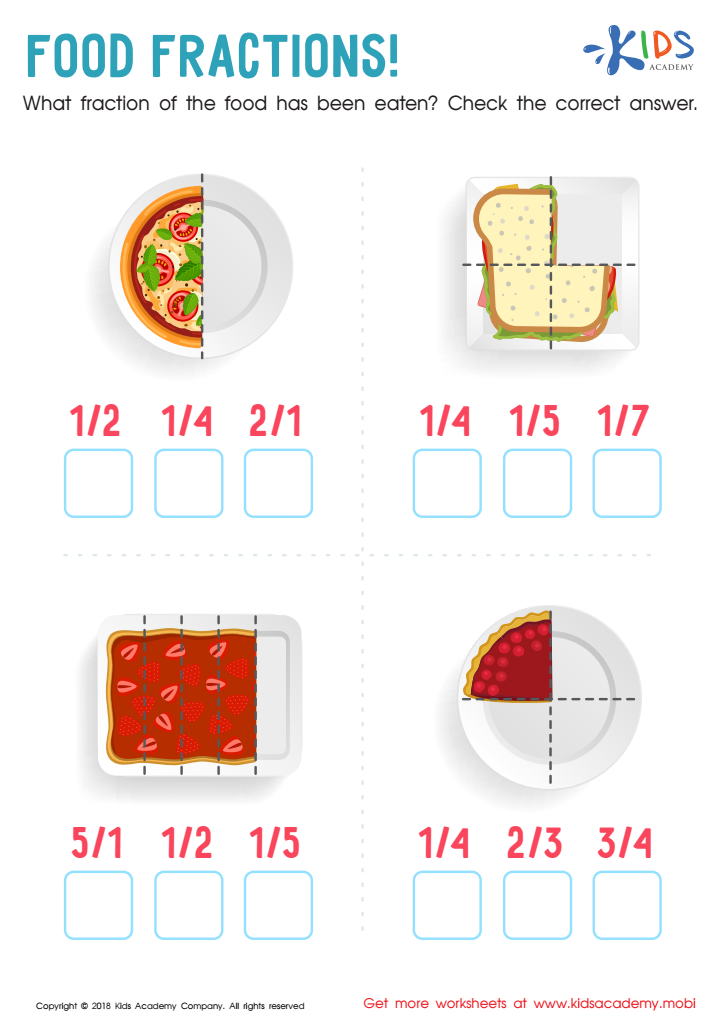
Food Fractions Worksheet
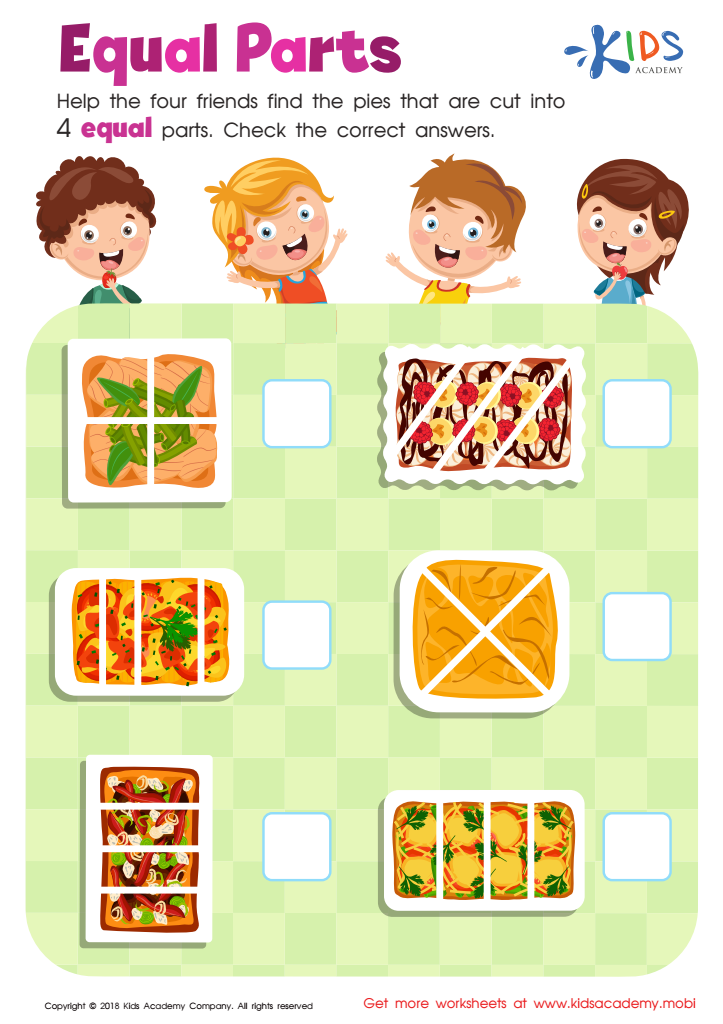
Equal Parts: Food Worksheet








Understanding fractions and basic geometry at an early age lays a crucial foundation for children's future success in math and other problem-solving areas. For children ages 6-8, these concepts build fundamental cognitive skills such as logical thinking, spatial reasoning, and the ability to understand parts of a whole. By mastering fractions, students can intuitively grasp ideas of proportion, division, and even basic algebra in later years. For example, understanding that 1/2 is the same as 0.5 enables them to interpret real-world scenarios like cutting a pizza or sharing a candy bar.
Normal geometry, on the other hand, fosters their ability to recognize shapes, understand spatial relationships, and visualize scenarios. Skills like identifying triangles, circles, and squares, understanding symmetry, and recognizing patterns are significant milestones. These concepts also play a pivotal role in daily activities and in the future learning demands of advanced arithmetic, science, technology, and even sports or art.
Teachers and parents who prioritize these areas help cultivate a child's confidence in their problem-solving abilities. They also contribute to laying a robust academic foundation, nurturing a more comprehensive understanding, and fostering a lifelong love of learning. Embracing these concepts actively therefore equips children with essential skills necessary for an inquisitive, mathematical mindset.








