Cognitive Development Normal Matching Worksheets for Ages 6-8
3 filtered results
-
From - To
Welcome to our Cognitive Development Normal Matching Worksheets for Ages 6-8! Designed specifically to enhance cognitive skills in early learners, these engaging worksheets provide fun and interactive activities that promote critical thinking, problem-solving, and pattern recognition. Tailored for children aged 6 to 8, our resources support various learning styles and ensure a comprehensive understanding of essential concepts. Through matching exercises, kids will hone their abilities to make connections, boost memory, and develop logic skills while enjoying captivating themes. Explore our collection and empower young minds to reach their full potential! Perfect for both classroom and home learning environments.
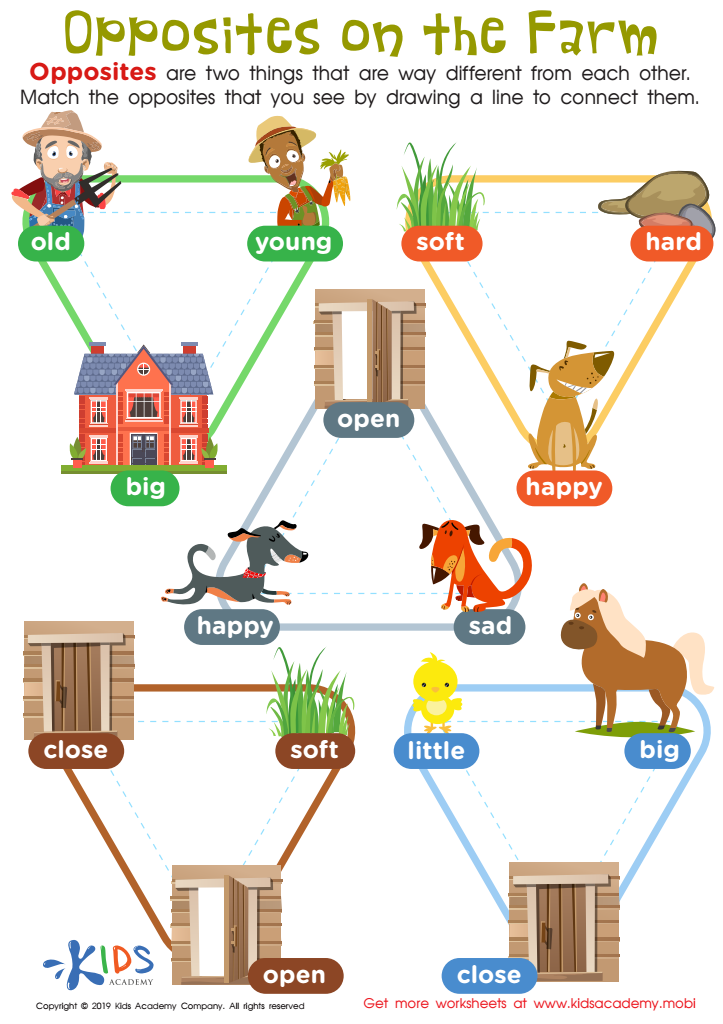
Opposites on the Farm Worksheet
 Assign to My Students
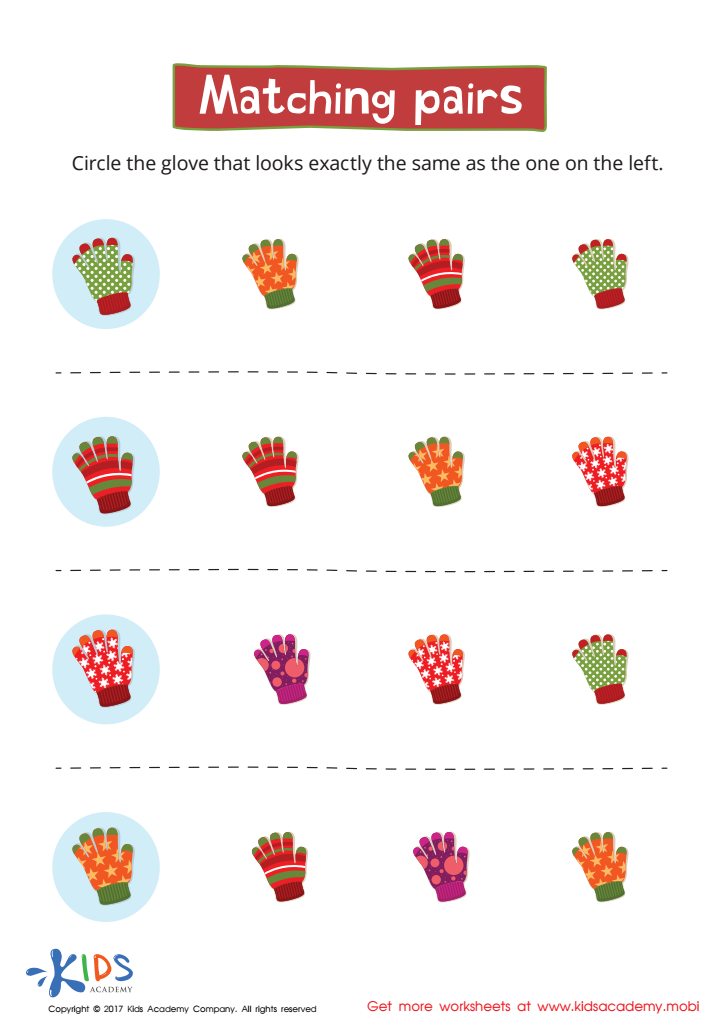
Matching: Matching Pairs Worksheet
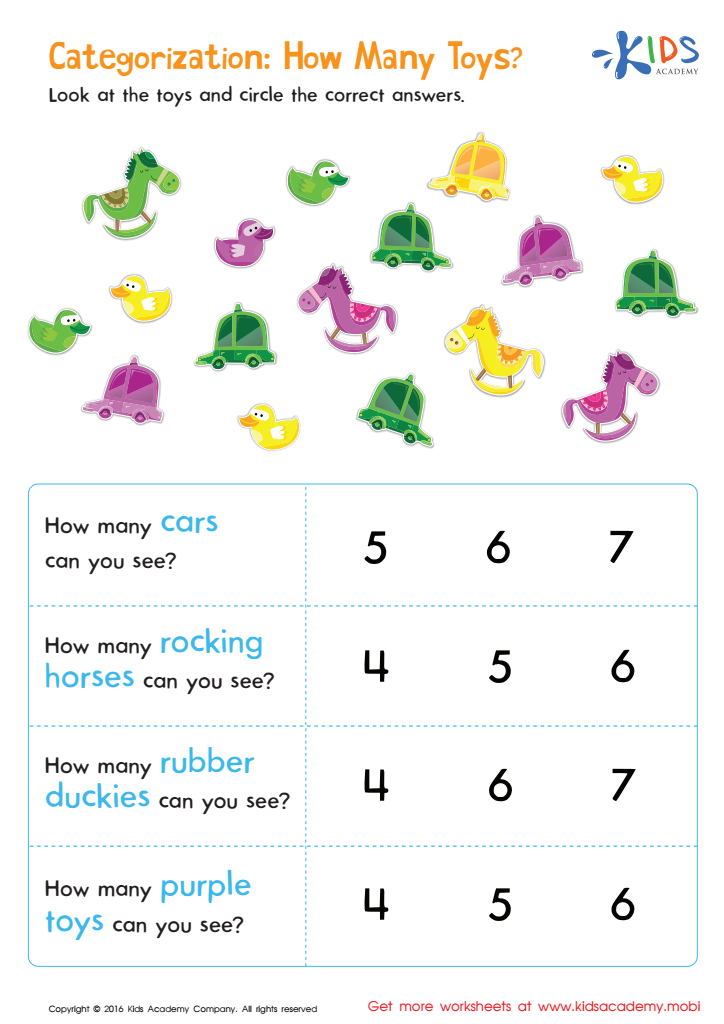
Classifying Toys by Type and Color Sorting Worksheet








Cognitive Development Normal Matching for Ages 6-8 is crucial for parents and teachers to understand because it provides a framework to assess children's intellectual growth and learning capabilities. During this developmental stage, children transition from concrete operational thought to more abstract reasoning. Understanding the benchmarks of cognitive development helps educators tailor their teaching strategies and parents support learning at home effectively.
If children are meeting or exceeding these cognitive milestones, it mirrors their readiness for complex problem-solving, critical thinking, and cooperative learning. Conversely, identifying gaps early enables timely intervention and support, ensuring that children do not fall behind academically or socially. Engaging with cognitive development norms fosters collaborative discussions between educators and parents about a child's overall well-being and intellectual health.
Moreover, being attentive to cognitive development promotes a richer learning environment where curiosity is encouraged, and skills are reinforced. Parents and teachers who actively monitor and adapt their approaches can cultivate resilient learners who thrive in school and life. Ultimately, emphasizing Normal Matching during ages 6-8 builds a solid foundation for lifelong learning, emotional intelligence, and social skills, paving the way for successful future educational experiences.








