Normal Numbers 11–20 Worksheets for Ages 6-8
4 filtered results
Difficulty Level
Grade
Age
-
From - To
Subject
Activity
Standards
Discover engaging Normal Numbers worksheets for ages 6-8, focusing on numbers 11 to 20! Our collection offers fun activities designed to help young learners grasp the concept of numbers in this critical range. Each worksheet promotes essential skills like counting, identification, and basic mathematical operations. Tailored to suit early grade students, these worksheets facilitate hands-on learning with a mix of interactive exercises and clear instructions. Best of all, they can be printed for easy access at home or in the classroom. Encourage your child's mathematical journey and instill confidence as they master numbers 11-20 with our thoughtfully crafted resources!
Favorites
With answer key
Interactive
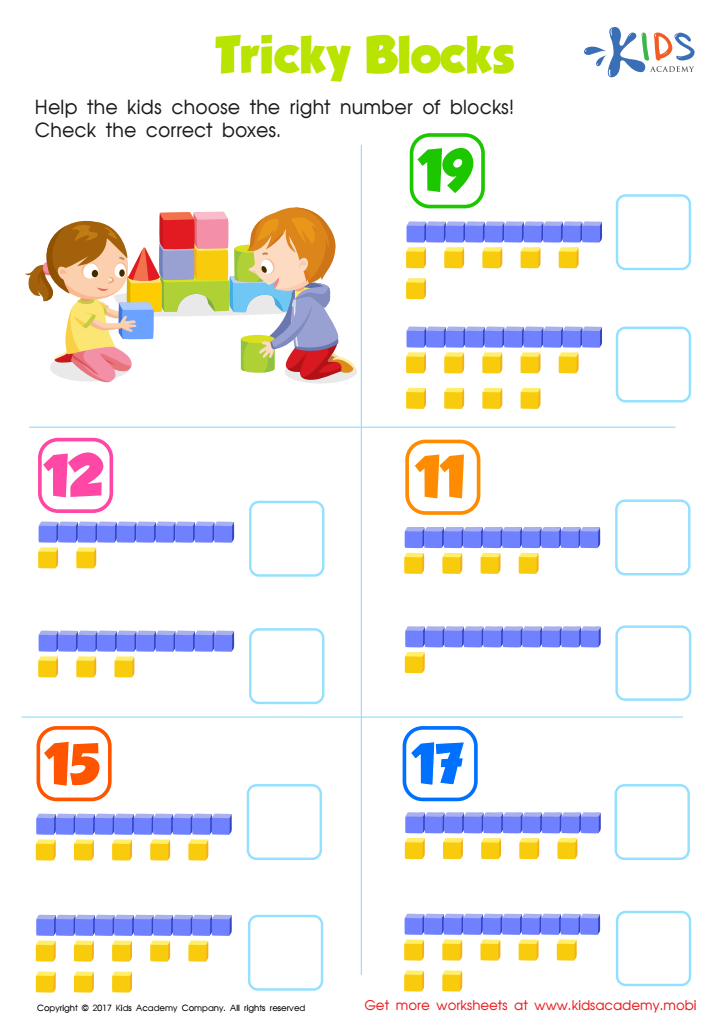
Tricky Blocks Worksheet
Help your child count with this printable worksheet. You'll be able to explain the technicalities of each answer as you work together to count the boxes and choose the correct number in the spaces provided. This will help your child better understand the concept and will go faster than if they do it alone.
 Assign to My Students
Tricky Blocks Worksheet
Worksheet
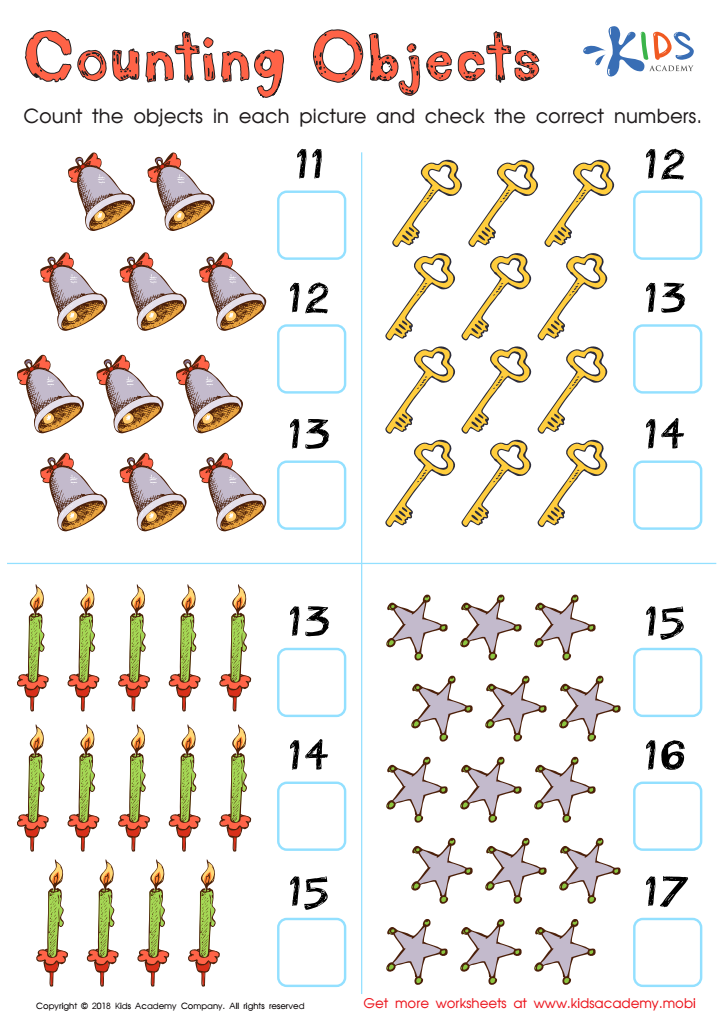
Counting Numbers Worksheet For Kindergarten
This worksheet is a great way to get your child practicing foundational math skills. With bright pictures to count, counting numbers just got a lot more fun! Get them ready for future math success and help them hone their early math skills.
Counting Numbers Worksheet For Kindergarten
Worksheet
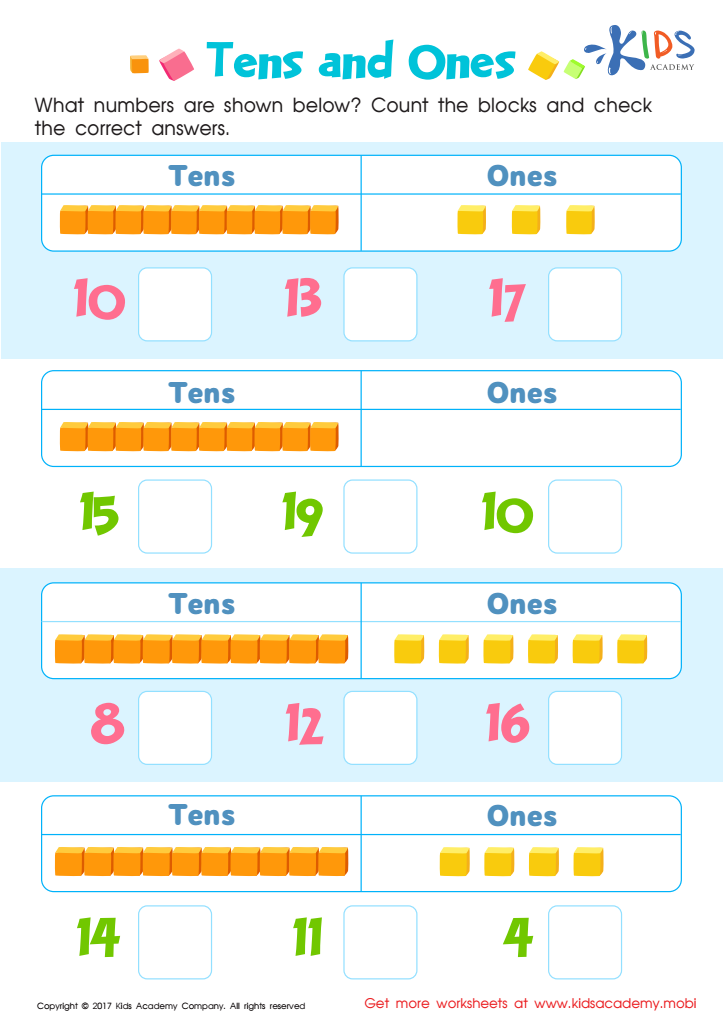
Tens and Ones Worksheet
Help your child make math fun with this worksheet! Count the blocks on both sides and enter the total in the box below the figures. This will help them overcome any math-related anxieties they might have and let them enjoy the learning process.
Tens and Ones Worksheet
Worksheet
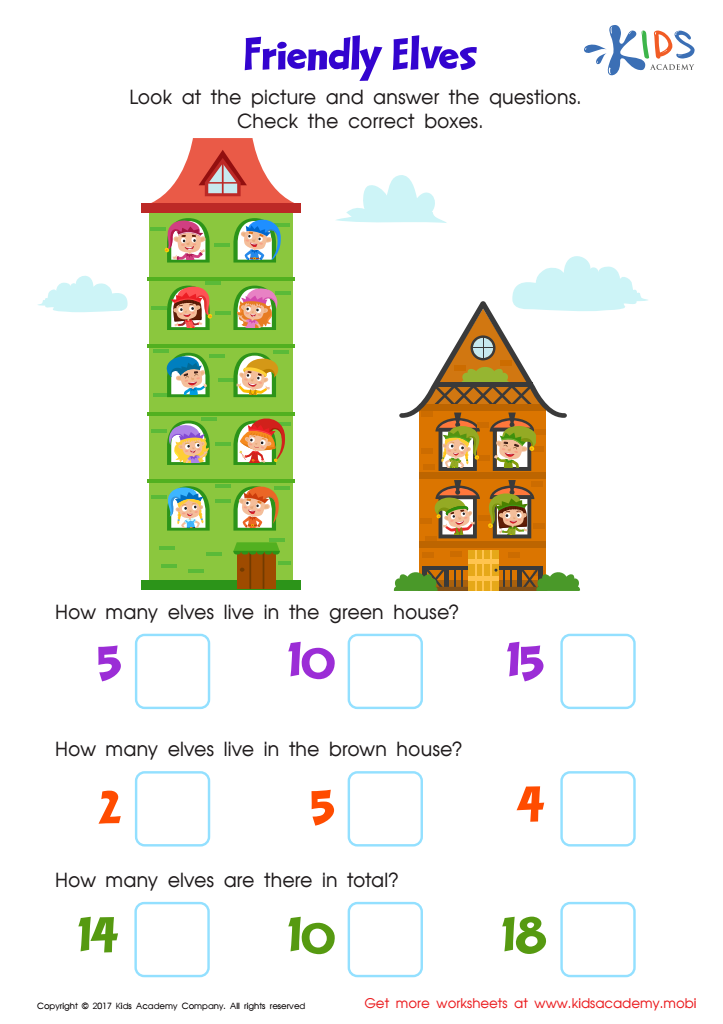
Place Value: Friendly Elves Worksheet
This fun worksheet teaches kids to count elves, answer questions about houses, and practice math! Look at the picture and count the elves in each house. How many are in the green and brown house? Tick the correct answer boxes. Perfect for young learners!
Place Value: Friendly Elves Worksheet
Worksheet
Join Kids Academy for Free
Who is primarily going to use this learning content?



Understanding normal numbers (11–20) is crucial for children aged 6-8 as it forms the foundation for their mathematical skills. At this age, children typically transition from simple counting to recognizing and mastering these two-digit numbers. Mastery of normal numbers enhances their number sense, allowing them to comprehend the relationships between quantities and the concept of place value, which is vital for future math success.
Parents and teachers should care because a solid grasp of numbers 11–20 supports key skills such as addition and subtraction. Familiarity with these numbers prepares children for more complex mathematical operations, including grouping and estimation, which they will encounter in later grades. Furthermore, this knowledge aids in the development of critical thinking skills, helping children to solve problems and think logically.
Engaging children in fun, interactive activities involving normal numbers can create a positive early learning environment. Practical applications, such as counting objects, measuring ingredients in cooking, or playful games, make learning exciting and relevant. By fostering a strong numerical foundation during these formative years, parents and teachers play a vital role in cultivating confident learners who are eager to explore and engage with the world of mathematics.