Number Recognition Normal Skip Counting Worksheets for Ages 6-8
3 filtered results
-
From - To
Welcome to our engaging "Number Recognition Normal Skip Counting Worksheets" designed for children aged 6-8! These worksheets aim to enhance young learners' number recognition skills while introducing them to the concept of skip counting. With vibrant illustrations and age-appropriate exercises, kids will have fun practicing counting by twos, fives, and tens. Our resources support foundational math skills, promoting both confidence and proficiency. Ideal for classroom use or at-home learning, these worksheets foster a love for math and prepare students for more advanced concepts. Help your child master number recognition and skip counting today—learning has never been this fun!
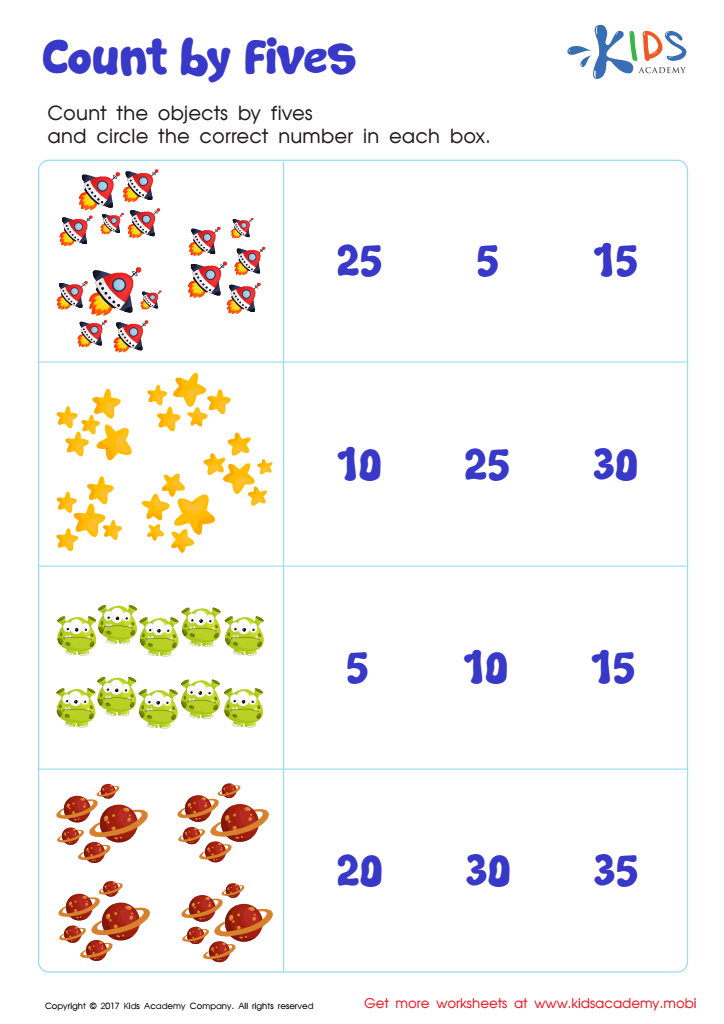
Skip Counting by 5s: Space Math Printable
 Assign to My Students
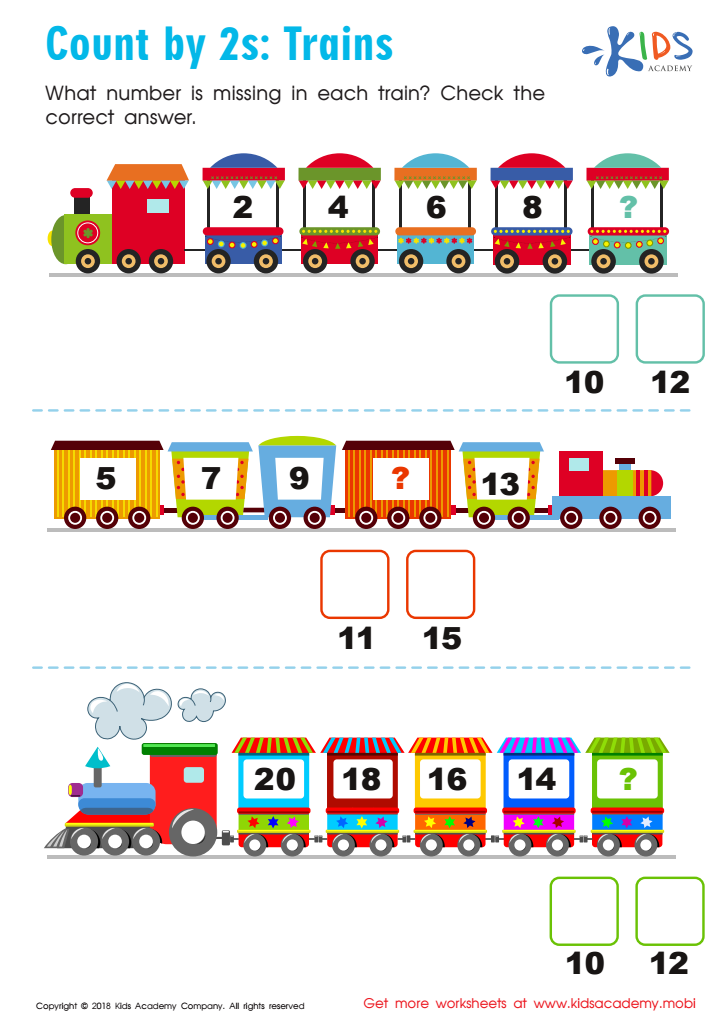
Count by 2's: Trains Worksheet
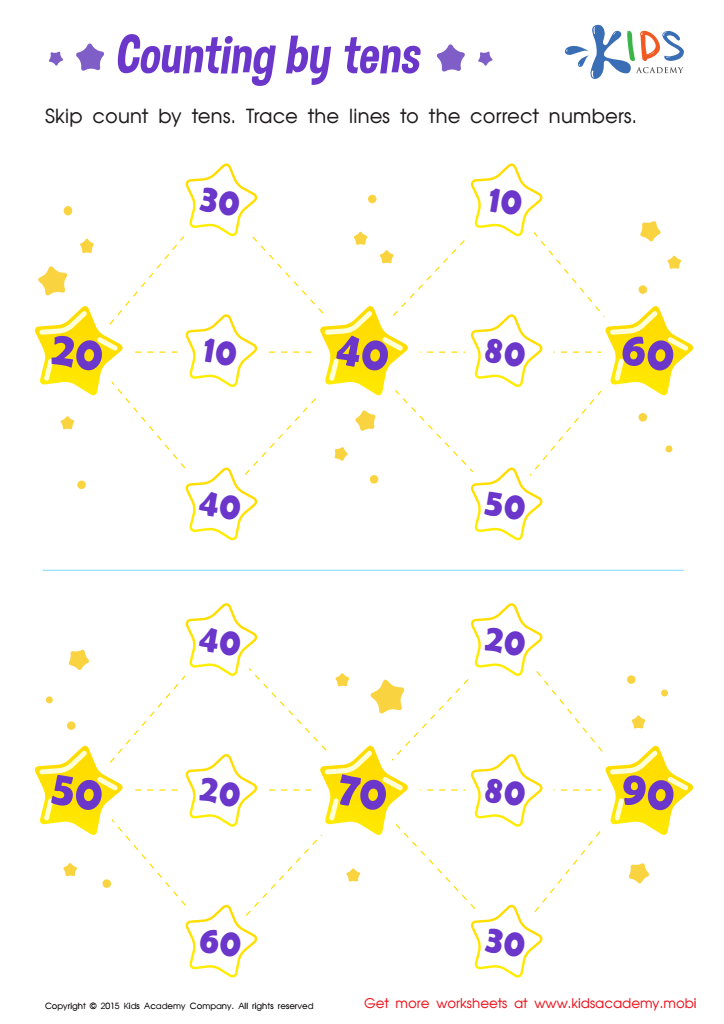
Learn Dozens: Counting by Tens Printable




%20(1).jpg)



Number recognition and skip counting are foundational skills in early mathematics education, particularly for children aged 6 to 8. Parent and teacher involvement in fostering these skills is crucial for several reasons.
Firstly, number recognition—understanding and identifying numbers—is a fundamental building block for more advanced mathematical concepts. It helps children grasp the relationship between quantities and symbols, which is essential for future operations like addition and subtraction.
Skip counting, on the other hand, involves counting in intervals (e.g., by twos, threes, or fives) and reinforces addition. This practice not only aids in developing multiplication skills but also enhances a child’s number sense, allowing them to recognize patterns and understand the structure of number systems.
Furthermore, mastery of these skills boosts children's confidence in math, reducing anxiety and encouraging a positive attitude toward learning. Parents and teachers can provide engaging activities, such as songs, games, and hands-on exercises, making learning enjoyable and effective.
Lastly, strong numerical skills set the stage for success in higher-grade math and everyday problem-solving, empowering children for future academic achievements. By prioritizing these areas, parents and teachers can play a pivotal role in nurturing lifelong learners.








